Lash Supplier Evaluation Scorecard for Wholesale Buyers
Share
Direct answer: what should buyers score before choosing a lash supplier?
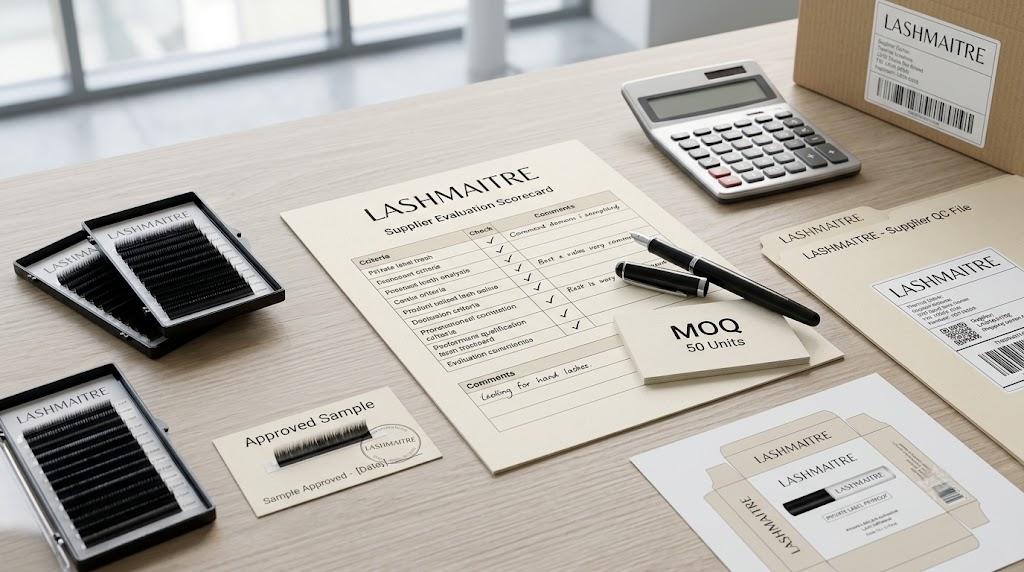
Wholesale lash buyers should use a 40-point lash supplier evaluation scorecard to rate sample quality, curl and thickness consistency, MOQ fit, quote clarity, private label support, QC documentation, lead time reliability, communication accuracy, and carton/shipping documentation. A low tray price is not enough if the supplier cannot keep approved samples, production batches, labels, packaging, and reorders consistent.
Use this scorecard before sending a first inquiry, after receiving samples, and again before moving from sample approval to bulk production.
If you only need a side-by-side supplier comparison, use a supplier comparison matrix. This page is more specific: it helps buyers assign a score, record evidence, and decide whether a supplier is ready for samples, bulk production, or a reorder.
Why a supplier scorecard matters
Many lash buyers compare suppliers by unit price first. That is understandable, but it can hide the real purchasing risk.
A supplier with a lower tray price may still create higher total cost if:
- samples do not match the final production batch
- curl, thickness, finish, or row layout changes between orders
- MOQ is too high for a first product test
- private label packaging takes too long to approve
- carton labels or invoice details are incomplete
- reorder information is not stored clearly
For wholesale buyers, the right supplier is not just the cheapest supplier. The right supplier is the one that can move from sample approval to repeat production with fewer surprises.
Scorecard overview: 8 supplier evaluation areas
Score each supplier from 1 to 5 in each area. The total possible score is 40 points.
- 1 = weak, unclear, or high risk
- 3 = acceptable but needs follow-up
- 5 = strong, documented, and repeatable
| Evaluation area | What to check | Evidence to request | Score 1-5 | Buyer note | LASHMAITRE support path |
|---|---|---|---|---|---|
| Sample quality | Does the sample match your expected style, curl, length, thickness, finish and strip behavior? | Approved sample card or sample record | Samples | ||
| Spec consistency | Can the supplier keep curl, thickness, length map, row count and finish stable across batches? | Tray label, SKU, batch record or QC note | Quality Control | ||
| MOQ and quote clarity | Is the MOQ clear by SKU, style, packaging and reorder quantity? | Quote sheet with separated product, packaging and shipping terms | MOQ 50 | ||
| Private label support | Can the supplier support tray card, box, logo, barcode, carton and proof approval? | Packaging proof and artwork approval record | Private Label | ||
| QC documentation | Are sample approval, batch records, carton labels and inspection notes documented? | QC file, inspection note or batch ID | Quality Control | ||
| Lead time reliability | Are sample, proof, production, QC and shipping timelines realistic and trackable? | Timeline with sample, proof, production, QC and shipping steps | Inquiry | ||
| Communication accuracy | Does the supplier answer with specific specs, prices, quantities and next steps? | Written quote or reply that confirms buyer specs | Inquiry | ||
| Shipping and carton documents | Are packing list, commercial invoice, carton mark and tracking details aligned? | Carton label, packing list, invoice or tracking record | Inquiry |
1. Sample quality and approval process
Start with samples, not a bulk order.
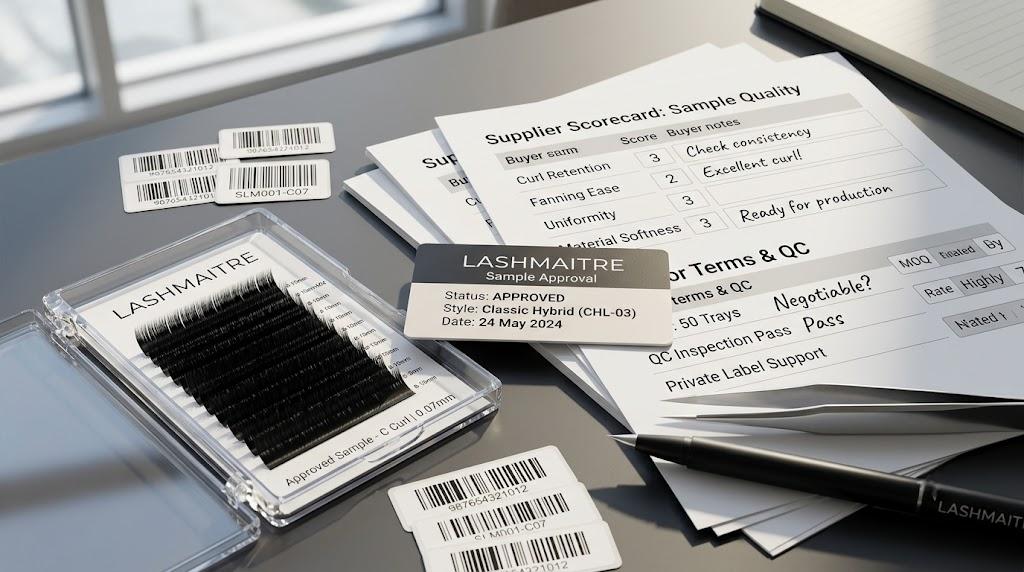
The first score should ask whether the supplier can send samples that match your buyer brief. For lash extensions, the sample should confirm the product itself and the supplier's attention to detail.
Check:
- curl type
- thickness
- length range or map
- finish, such as matte or glossy
- softness and fiber feel
- strip release
- row alignment
- tray label accuracy
- sample approval notes
Give a high score only if the supplier can clearly connect the approved sample to the future production batch. A sample tray without a record is not enough. You need a way to say: this is the sample we approved, and this is what the bulk order should match.
Internal support:
- Review how LASHMAITRE handles
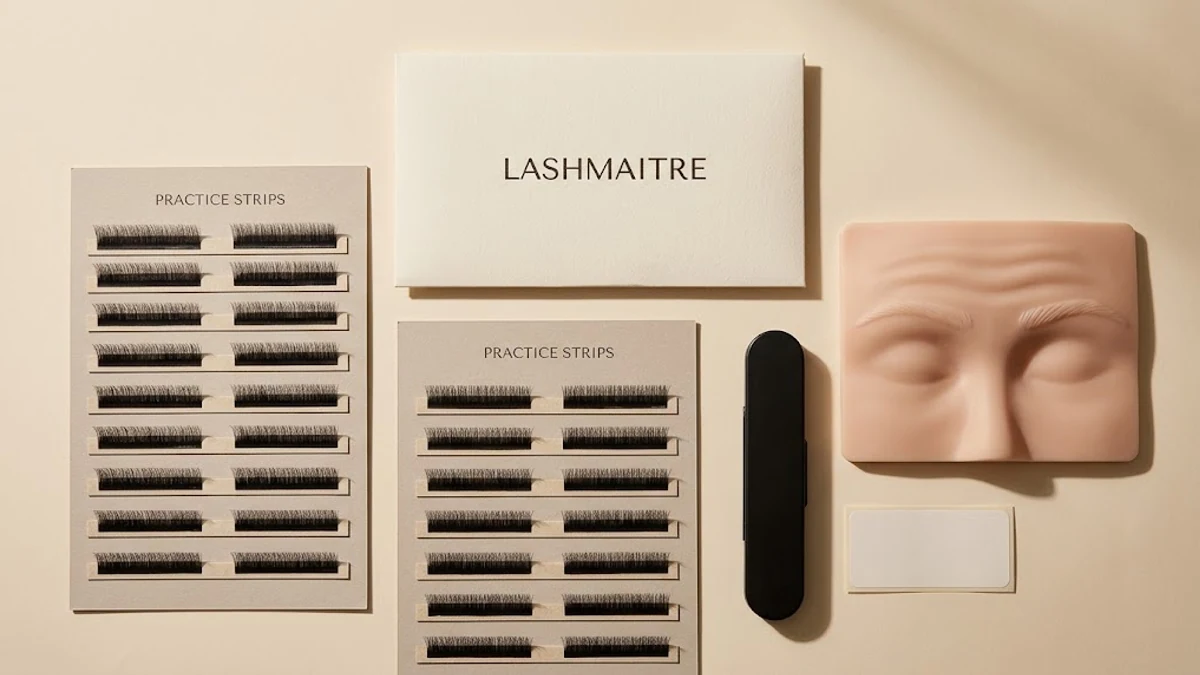
approved lash samplesthrough the samples page.
2. Curl, thickness, length and finish consistency
Consistency is where many suppliers look similar in photos but very different in repeat orders.
A wholesale buyer should score whether the supplier can keep the technical specs stable across:
- sample order
- first bulk order
- reorder
- mixed SKU production
- private label packaging batch
For example, if you approve a C curl 0.07 mm 8-15 mm mixed tray, the reorder should not drift into a different curl lift, a heavier fiber feel, or a different row balance.
Score high when the supplier can provide:
- clear SKU naming
- tray labels
- batch records
- QC notes
- approved sample reference
Internal support:
- Use the
lash quality control processpage when the buyer needs deeper QC details.
3. MOQ, quote clarity and landed cost
MOQ should be evaluated by business risk, not only by whether the number looks low.
A good supplier explains:
- MOQ by SKU or style
- MOQ for private label packaging
- sample order quantity
- first bulk quantity
- reorder quantity
- packaging cost
- shipping method
- landed cost inputs
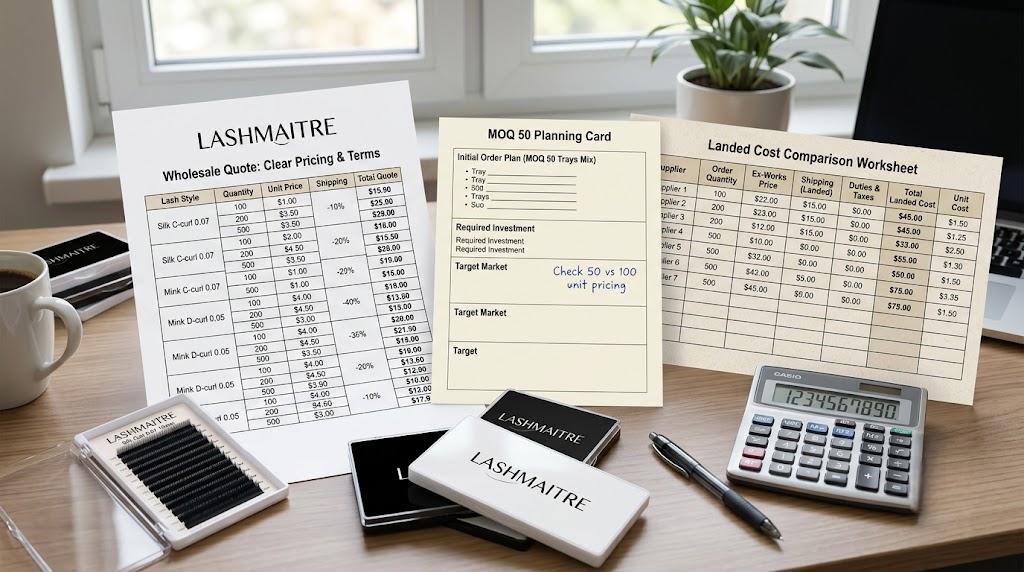
If a buyer is testing a new lash line, MOQ 50 can be useful because it allows smaller SKU tests before a large order. But MOQ only helps when the quote is clear enough to compare.
Score high when the supplier gives a quote that separates:
- tray price
- packaging cost
- shipping cost
- possible duties or import costs
- lead time
- reorder terms
Internal support:
- Use
MOQ 50 planningbefore comparing sample, first order and reorder quantities.
4. Private label and packaging support
Private label support should include more than putting a logo on a box.
For wholesale and OEM buyers, score the supplier on whether they can control the full packaging chain:
- logo placement
- tray card design
- box proof
- label sheet
- barcode or SKU labels
- carton mark
- production file
- proof approval record
A supplier should make it clear which parts are included, which parts need buyer approval, and which parts may affect production lead time.
Score low if the supplier cannot show how artwork approval connects to production. Score high when packaging proof, product specs, and carton labels are stored in a repeatable file.
Internal support:
- Use the
private label lash extensionspage for packaging and OEM planning.
5. QC documentation and batch records
Quality control should be visible.
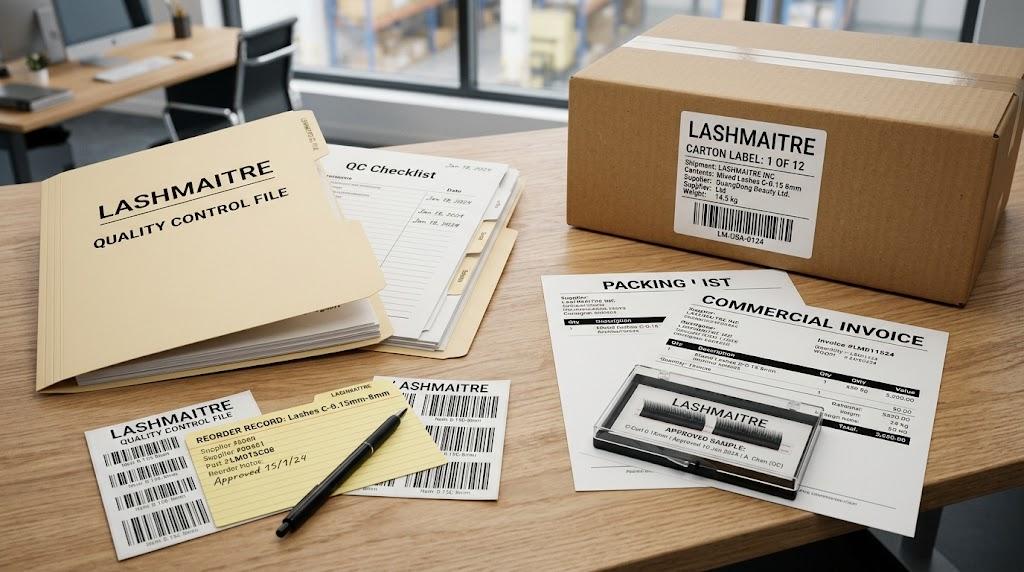
A buyer should not need to guess whether the supplier checked a production batch. The supplier should be able to show the basic inspection path from sample to shipment.
Useful records include:
- approved sample card
- batch ID
- curl and thickness check
- length map check
- tray label check
- carton label check
- packaging proof
- inspection notes
- reorder file
Score high if the supplier can show how these records support reorders. Score low if every order feels like a new conversation with no history.
6. Lead time and reorder reliability
Lead time is not just the number of production days.
A buyer should score whether the supplier can explain the full timeline:
- sample preparation
- sample shipping
- buyer approval
- packaging proof
- material preparation
- production
- QC
- packing
- shipping
- reorder preparation
A supplier who says "about two weeks" without breaking down the process may still be usable, but the risk is higher for private label or multi-SKU orders.
Score high when the supplier gives a realistic timeline and confirms what can delay the order.
7. Communication and quote accuracy
Communication quality becomes operational quality.
Score whether the supplier answers with specific details instead of vague replies.
Strong answers include:
- exact curl, thickness and length
- SKU or tray type
- MOQ
- packaging option
- sample cost
- bulk price
- lead time
- shipping method
- required buyer approval
Weak answers leave too many questions open, such as "we can do it" without confirming specs, proof steps, or cost structure.
Before sending an inquiry, prepare your desired product style, quantity, packaging direction, destination country and expected timeline.
8. Shipping documents and carton labeling
Shipping and carton details are part of supplier quality.
A buyer should score whether the supplier can keep carton and shipment records aligned with the order.
Check:
- carton label
- SKU and quantity
- carton count
- batch ID
- packing list
- commercial invoice
- destination
- tracking details
This matters more when the buyer is ordering multiple SKUs, private label products, or stock for retail distribution.
Supplier scorecard table
Use this table before moving from supplier conversation to sample order or bulk order.
| Area | 1 point | 3 points | 5 points | Evidence checked | Supplier score |
|---|---|---|---|---|---|
| Sample quality | No clear sample approval record | Sample acceptable but notes are limited | Sample is documented and ready for production reference | ||
| Spec consistency | Specs are vague or change often | Specs are listed but not tied to batch records | Specs are locked with labels, SKU and QC notes | ||
| MOQ and quote | MOQ or pricing unclear | Quote is usable but needs follow-up | MOQ, sample, bulk, packaging and shipping costs are separated | ||
| Private label | Logo only, no proof workflow | Basic proof available | Tray, box, labels, carton and production file are connected | ||
| QC records | No visible records | Some inspection notes | Sample, batch, label, packaging and reorder records are kept | ||
| Lead time | Vague or unrealistic | Basic production time given | Sample, proof, production, QC and shipping timeline is clear | ||
| Communication | Generic answers | Mostly clear but incomplete | Specific answers with next steps and decision points | ||
| Shipping documents | Missing or unclear | Basic shipping info | Carton, invoice, packing list and tracking align with order |
Score guide:
- 32-40: strong candidate for sample order or first controlled bulk order
- 24-31: usable, but clarify weak areas before payment
- 16-23: high risk; request more evidence before moving forward
- Under 16: do not proceed unless the buyer has a strong reason and a risk-control plan
How to use the score before sending an inquiry
Do not wait until after payment to build the scorecard.
Use it in three stages:
- Before inquiry: list the questions you need answered.
- After sample: score product quality, spec match and sample approval process.
- Before bulk order: rescore quote clarity, QC, packaging, lead time and shipping records.
If the score is low because of missing information, ask for clarification. If the score is low because the supplier cannot control specs or records, choose another supplier or reduce the first order size.
LASHMAITRE supplier evaluation path
For LASHMAITRE buyers, a practical path is:
- Define the lash style, curl, thickness, length map and finish.
- Request samples or a sample plan.
- Confirm MOQ, first order quantity and packaging direction.
- Approve sample and packaging proof.
- Review QC and batch records before shipment.
- Keep reorder records for future consistency.
Use the inquiry page when you are ready to send specs, quantity, destination and packaging requirements for a quote.
Related LASHMAITRE Sourcing Pages
- Lash extension wholesale supplier gives the broader supplier support context behind this scorecard.
- Supplier comparison matrix is useful when buyers need a side-by-side comparison before using this scoring worksheet.
- Approved lash samples help buyers confirm product feel before bulk production.
- Lash quality control process explains how sample approval, batch records and shipment checks connect.
- Private label lash extensions should be reviewed when packaging proof, tray card or carton label support affects supplier selection.
- MOQ 50 planning helps buyers connect first-order quantity with quote clarity and reorder planning.
- Send a wholesale lash inquiry when you are ready to share specs, quantity, packaging direction and destination.
External References
- ISO quality management overview gives a general reference for documented quality systems.
- U.S. CBP importer and exporter tips gives a general reference for import documentation awareness.
FAQ
What should a wholesale buyer score before choosing a lash supplier?
A wholesale buyer should score sample quality, spec consistency, MOQ, quote clarity, private label support, QC records, lead time, communication and shipping documentation. These areas show whether the supplier can support repeatable orders, not just one attractive sample.
Should sample quality or unit price matter more?
Sample quality should come first. A low unit price can become expensive if the production batch does not match the approved sample, if packaging needs to be remade, or if the supplier cannot support stable reorders.
How can buyers compare private label support between suppliers?
Compare the full workflow: logo placement, tray card, box proof, barcode labels, carton label, production file and proof approval. A supplier with a clear proof and production file process is usually safer than one that only says it can add a logo.
What score means a supplier is ready for a bulk order?
A supplier scoring 32-40 out of 40 is usually ready for a controlled sample order or first bulk order. A score below 24 should trigger more questions, smaller test quantities or a supplier change.
Should buyers rescore suppliers before reorders?
Yes. Reorders should be scored again for batch consistency, label accuracy, carton information and lead time. A supplier may pass the first sample but still need controls before repeat production.
Soft CTA
Ready to compare suppliers with clearer specs? Send LASHMAITRE your desired curl, thickness, length map, quantity, packaging direction and destination. We can help you build a sample-first wholesale plan before bulk production.
Primary CTA:
Secondary CTA:
Use the scorecard to prioritize risk, then verify the evidence on site or remotely with a structured lash factory audit checklist covering production, QC, traceability, packaging and corrective action.

Lash Maitre: Your Trusted Partner in Eyelash extension Solutions
Lash Maitre is dedicated to providing professional insights and tips in the eyelash extension industry. Sharing the latest trends, techniques, and product knowledge, Lash Maitre helps lash artists and enthusiasts enhance their skills, stay inspired, and achieve the perfect lash experience.