Beauty Extension Chemical Transparency: 8 Lash Buyer Checks
Share
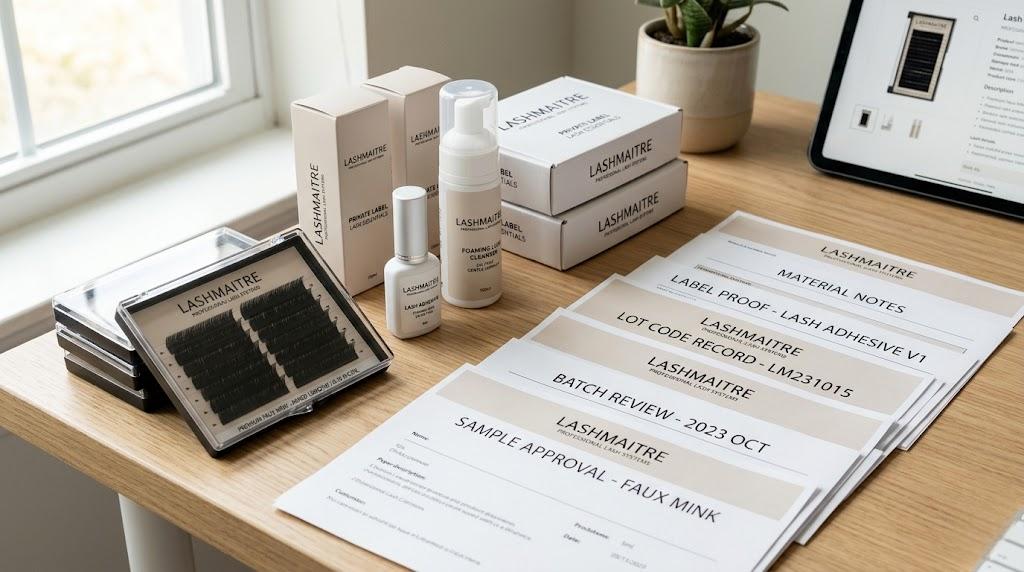
Beauty extension chemical transparency is becoming a practical sourcing issue for lash buyers. Recent beauty and hair-extension chemical transparency coverage is a useful reminder that supplier claims are not enough. Before placing private label or wholesale orders, buyers should ask for documentation that supports product identity, label wording, lot traceability, sample approval and repeat-order quality control.
This does not mean lash extensions, lash adhesives or lash aftercare products should be treated as the same category as synthetic hair extensions or hair dyes. It means international beauty buyers are becoming more careful about supplier evidence, especially when the product will carry their brand name.
Beauty Extension Chemical Transparency: Key Takeaways for B2B Lash Buyers
- Do not rely only on words like "clean", "safe", "premium" or "non-toxic" unless the supplier can support the claim.
- Ask for label proof, lot-code format, ingredient or material notes where relevant, batch records and sample approval records.
- Private label buyers should review packaging text before production, especially warning, storage and usage language.
- A good supplier should help buyers compare samples before bulk orders, not pressure them to scale too early.
- For US-facing cosmetic products, buyers should understand MoCRA-related registration, product listing and responsible-person concepts.
Why Beauty Extension Chemical Transparency Is Back in the Buyer Conversation
Recent reporting on synthetic hair extensions and at-home hair dyes has put beauty-product chemical transparency back in front of consumers, salons and brand owners. The coverage focused on categories outside lash trays, but the sourcing lesson is broader: beauty buyers should expect clearer documentation from suppliers.
For lash brands, salon distributors and ecommerce sellers, this matters because a private label order is not only a product purchase. It is also a packaging, claim, batch and customer-service decision. If a buyer cannot explain what is on the label, how lots are tracked, or what sample was approved, the risk moves from the supplier to the brand.
What Lash Buyers Should Ask Suppliers Before Bulk Orders
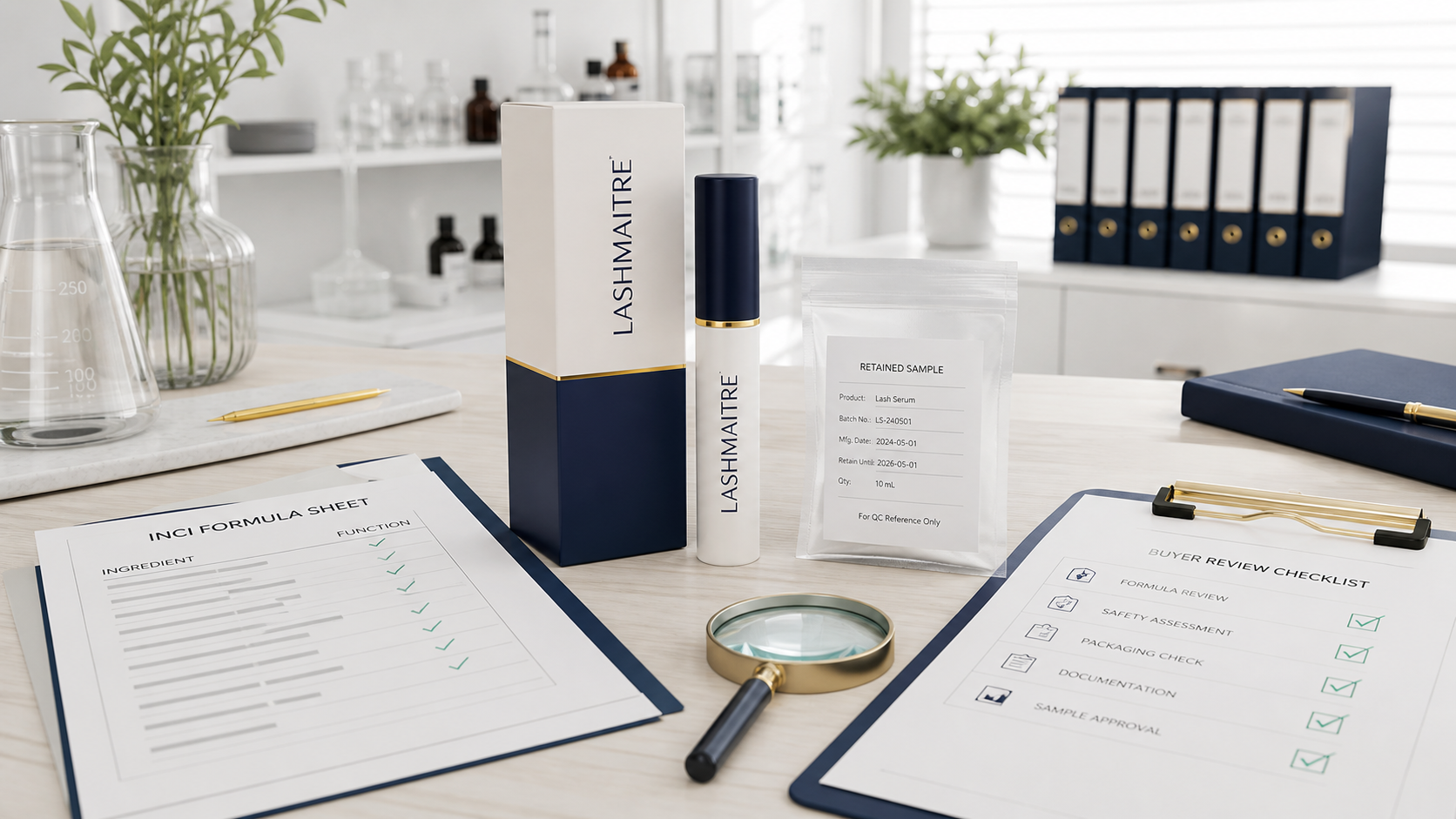
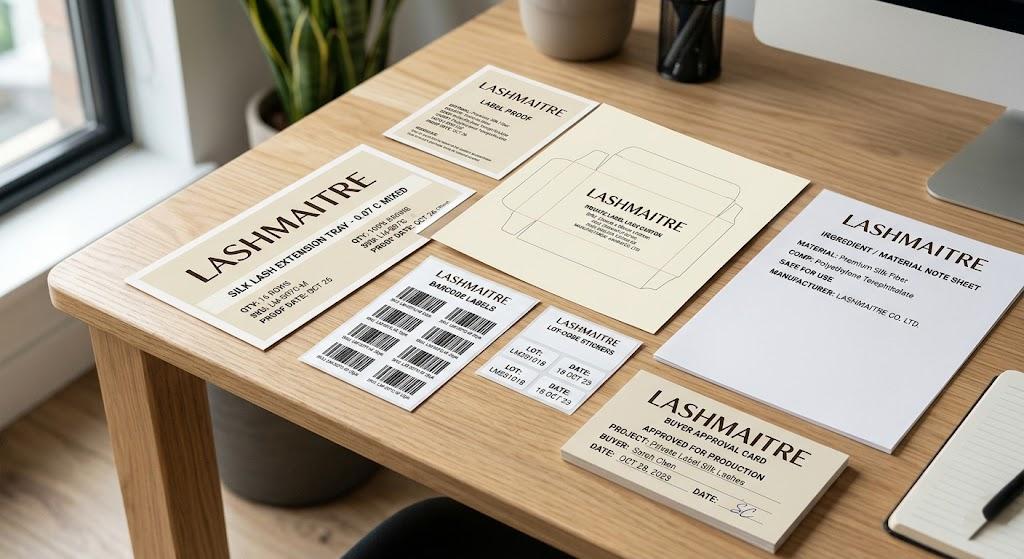
A practical supplier review should start before payment for a full production order. Buyers can ask for:
| Buyer check | What to request | Why it matters |
|---|---|---|
| Product identity | product name, style, curl, diameter, length, color and pack format | prevents wrong SKU production |
| Sample approval | dated sample notes, photos and buyer approval record | reduces dispute risk before bulk orders |
| Label proof | tray label, carton proof, warning text and barcode placement | avoids packaging mistakes |
| Lot tracking | lot-code format and batch record example | supports reorder consistency |
| Material / ingredient notes | fiber notes for lash trays, ingredient list or SDS where relevant for liquids | supports buyer documentation |
| Claims review | supported wording only, no unsupported medical or regulatory claims | protects brand credibility |
This beauty extension chemical transparency checklist is especially important when a buyer is building a new private label range, combining lash trays with adhesives or aftercare products, or preparing to sell into stricter retail and ecommerce channels. Buyers can connect this review with LASHMAITRE’s MOQ 50 planning, lash quality control process and private label packaging support before scaling the order.
Be Careful With Unsupported "Clean" or "Non-Toxic" Claims
Consumer Reports-related coverage of at-home hair dyes has highlighted a familiar issue in beauty: marketing terms can sound reassuring, but the real question is whether the claim is supported. A buyer should not treat broad language as proof.
For lash sourcing, the safer approach is to keep claims specific and document-based. For example:
- "lot-coded packaging" is more concrete than "safe packaging".
- "sample approved before bulk order" is more concrete than "premium quality".
- "label proof reviewed before production" is more concrete than "retail ready".
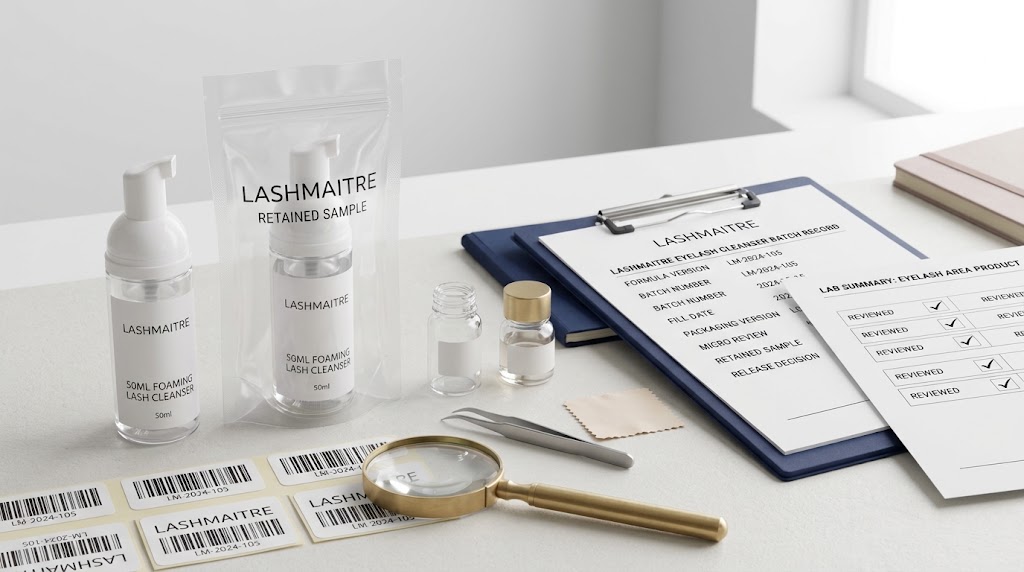
- "ingredient list provided for adhesive or cleanser" is more concrete than "clean formula".
If a buyer wants to use sensitive claims on private label packaging, those claims should be reviewed before printing.
How MoCRA Changes the Documentation Mindset
The FDA’s MoCRA pages explain that cosmetic facility registration and product listing are now part of the US cosmetics compliance environment. FDA also states that cosmetic product listing includes ingredients, and that registration / listing is not an approval program or a promotional certificate.
That distinction matters for lash buyers. A supplier should not turn registration language into a marketing badge. Instead, the useful sourcing question is: can the supplier support the buyer with product identity, label data, lot tracking and documentation that helps the responsible brand make better decisions?
For products that regularly come into contact with the eye area, buyers should be extra careful with labeling, warning text, use instructions, storage notes and complaint handling.
A Sample-First Workflow Reduces Risk
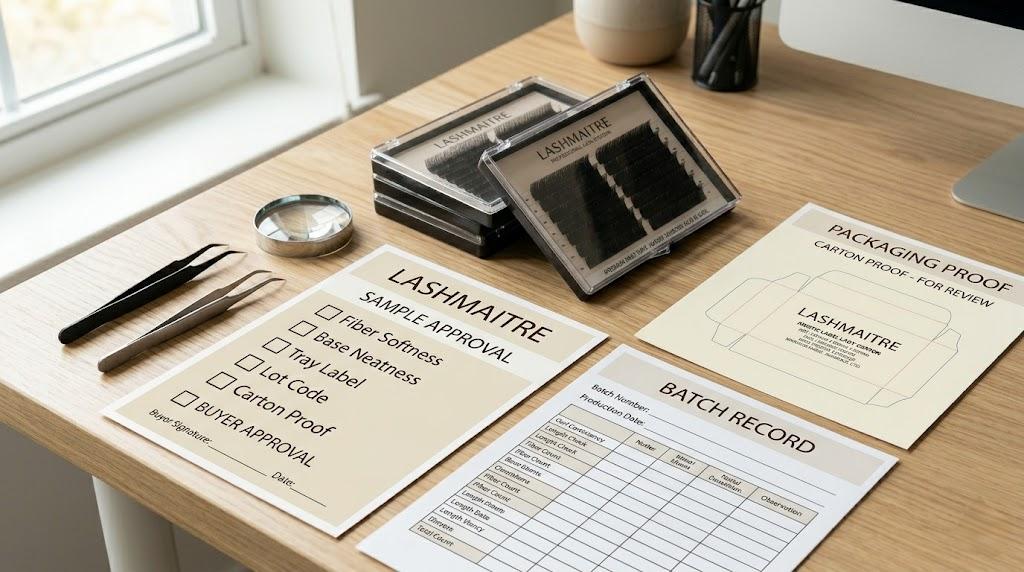
For LASHMAITRE buyers, the safest route is still sample-first sourcing. Beauty extension chemical transparency works best when the buyer connects physical samples, supplier documentation and packaging proof before bulk production.
- Start with a small sample set instead of a full bulk order.
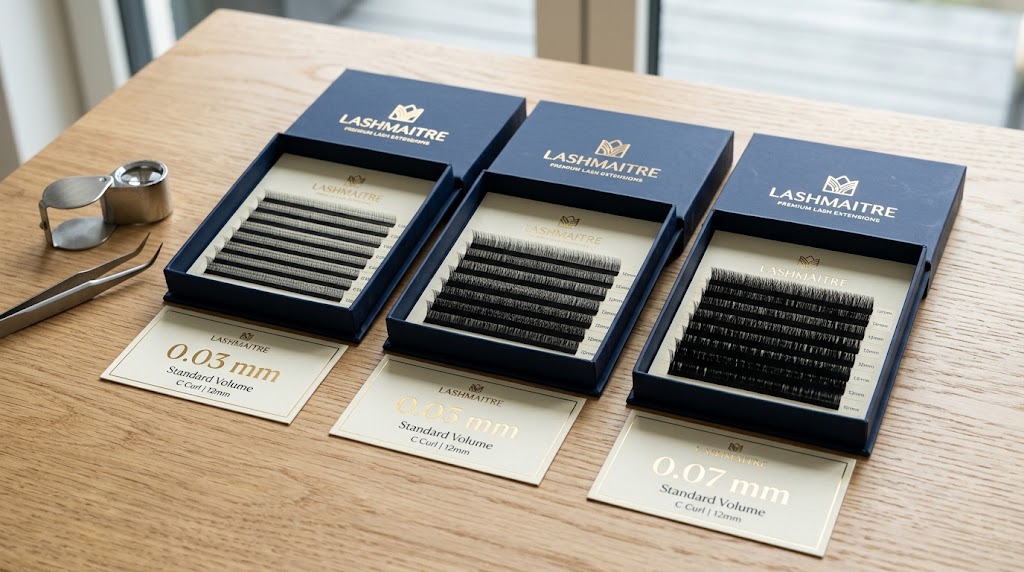
- Compare curl, length, fiber softness, base neatness, strip pickup and tray labeling.
- Review packaging proof before production.
- Confirm MOQ 50 planning if the buyer needs a controlled first launch.
- Record feedback before reorder.
- Keep lot and batch notes for repeat-order consistency.
This process does not remove every sourcing risk, but it gives the buyer a documented path from sample to production.
Use these LASHMAITRE support pages during the review:
- MOQ 50 planning: https://lashmaitretrade.com/moq-50-wholesale-lash-extensions/
- Lash quality control: https://lashmaitretrade.com/lash-quality-control/
- Private label lash extensions: https://lashmaitretrade.com/private-label-lash-extensions/
What Private Label Buyers Should Review Before Printing
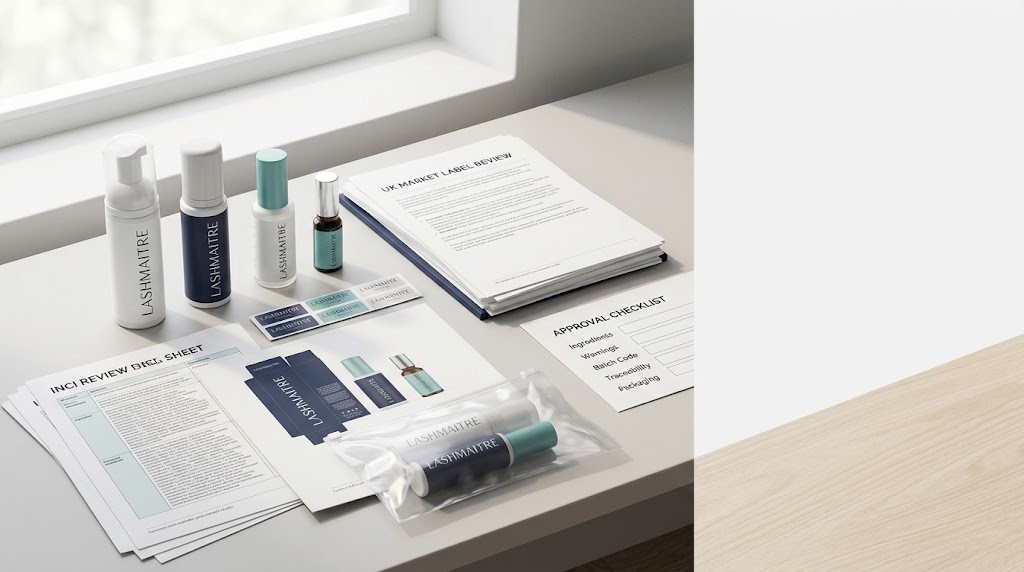
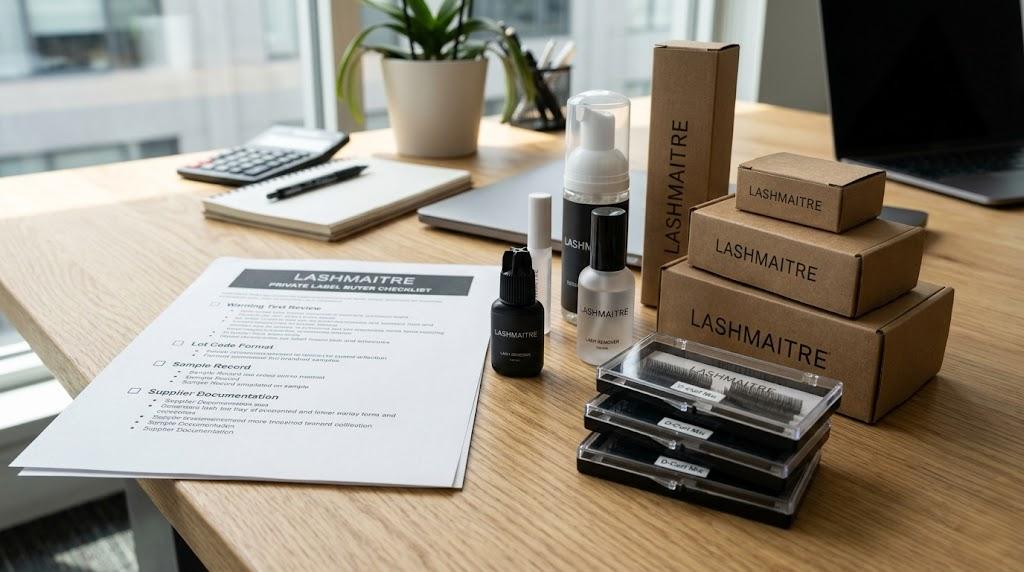
Before approving private label lash packaging, review:
- brand name and logo placement
- product name and SKU
- curl, thickness, length and color
- lot-code area
- barcode area if needed
- warning and storage text for liquids where relevant
- net content for liquid products
- carton dieline and label placement
- buyer approval date
Packaging mistakes are expensive because they often appear late. A label proof review is much cheaper than reprinting cartons after production.
Supplier Documentation Checklist
Use this short checklist before approving a new supplier:
- Does the supplier provide sample records before bulk production?
- Are tray labels, carton proofs and barcode positions reviewed?
- Is there a lot-code format for repeat orders?
- Are batch records available for relevant products?
- Are adhesive, cleanser or remover ingredient lists available where relevant?
- Are warnings and usage instructions reviewed before printing?
- Are unsupported claims removed from packaging?
- Is the inquiry path clear if the buyer needs a custom quote?
FAQ
Does this news mean lash extensions contain the same chemicals as hair extensions?
No. The current sourcing lesson is about documentation and buyer diligence, not a claim that lash products have the same chemical profile as hair extensions or hair dyes. Lash buyers should still ask suppliers for product-specific evidence before private label or wholesale orders.
Should private label lash buyers ask for ingredient lists?
For lash trays, buyers usually focus on fiber, curl, thickness, length, tray label and batch consistency. For adhesives, cleansers, removers or other liquids, buyers should ask for ingredient information, warning text, storage guidance and other documentation relevant to the target market.
Can a supplier use FDA approval language for a cosmetic product?
Buyers should be careful with that wording. FDA states that cosmetic registration and product listing are not a cosmetic approval program or promotional certificate. It is safer to use accurate documentation language instead of unsupported approval claims.
What is the first step for a new lash buyer?
Start with samples. Compare the physical product, review label proof, confirm MOQ and packaging needs, and keep approval notes before moving into a full wholesale or private label order.
Conclusion
Beauty extension chemical transparency is becoming a stronger buyer concern, even when the news comes from adjacent categories. For lash buyers, the practical response is not panic. It is better supplier documentation, better sample approval and better packaging review before bulk orders.
LASHMAITRE supports sample-first sourcing, MOQ 50 starter planning, private label packaging review and repeat-order QC for B2B buyers. Request samples or send your target lash tray, adhesive, cleanser or private label packaging requirements for review.
Sources
- NY Post: beauty-extension and synthetic hair chemical transparency coverage
- NY Post: Consumer Reports hair dye testing coverage
- FDA: Registration and listing of cosmetic product facilities and products
- FDA: Modernization of Cosmetics Regulation Act of 2022
This article is buyer-side sourcing guidance for lash brands, salons and distributors. It is not legal, medical or regulatory advice.

Lash Maitre: Your Trusted Partner in Eyelash extension Solutions
Lash Maitre is dedicated to providing professional insights and tips in the eyelash extension industry. Sharing the latest trends, techniques, and product knowledge, Lash Maitre helps lash artists and enthusiasts enhance their skills, stay inspired, and achieve the perfect lash experience.