How to Work With a Lash Manufacturer: 8 Sample, MOQ and Packaging Checks
Share
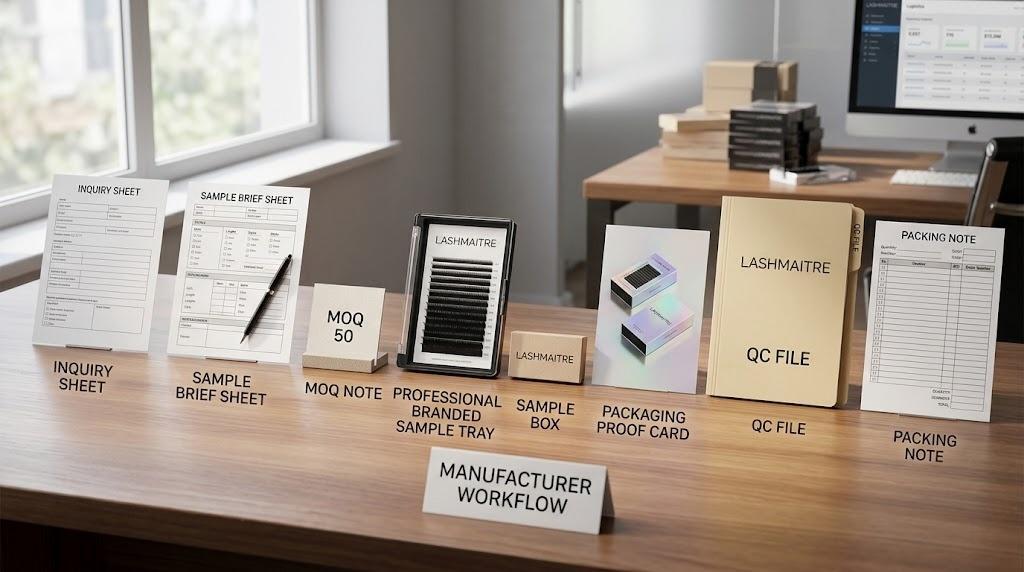
Learning how to work with a lash manufacturer is not only about asking for the lowest tray price. A good manufacturer workflow should help the buyer move from product specs to samples, MOQ planning, packaging proof, quality control, shipping documents, and repeat-order records.
Many sourcing problems begin with a vague message: "Please send your lash price list." That can start a conversation, but it rarely gives the manufacturer enough information to prepare the right sample or quote. A better process gives the manufacturer a clear buyer brief and gives the buyer a way to compare results.
Direct answer: To work with a lash manufacturer, start with clear product specs, request samples before bulk quotes, confirm MOQ after the sample range is defined, connect packaging artwork to tray specs, review QC records, confirm document expectations, and save an approved reorder file before the next order.
1. Start With Product Specs, Not Only Price
A lash manufacturer can give better guidance when the buyer describes the product range clearly. If the first message only asks for "best price," the buyer may receive a quote for a tray that does not match the target market, product family, packaging plan, or MOQ stage.
Before asking for a quote, prepare:
| Field | Example |
|---|---|
| Product family | Classic, flat, volume, premade fan, YY, W |
| Curl | C, CC, D, M, L, or target range |
| Thickness | 0.03, 0.05, 0.07, 0.10, 0.15, or buyer-approved option |
| Length plan | Mixed 8-15mm, mixed 8-16mm, or single length |
| Finish | Matte, soft black, or another confirmed option |
| Packaging | Stock tray, private label tray card, box, sleeve, label |
| Buyer stage | Sample test, first order, reorder, distributor stock |
| Target quantity | Sample quantity, MOQ target, or reorder quantity |
This does not mean every buyer must know every detail before contacting a manufacturer. It means the buyer should separate what is already decided from what needs supplier advice.
If you need a first-contact structure, use the LASHMAITRE lash supplier brief email template before moving into the deeper manufacturer workflow below.
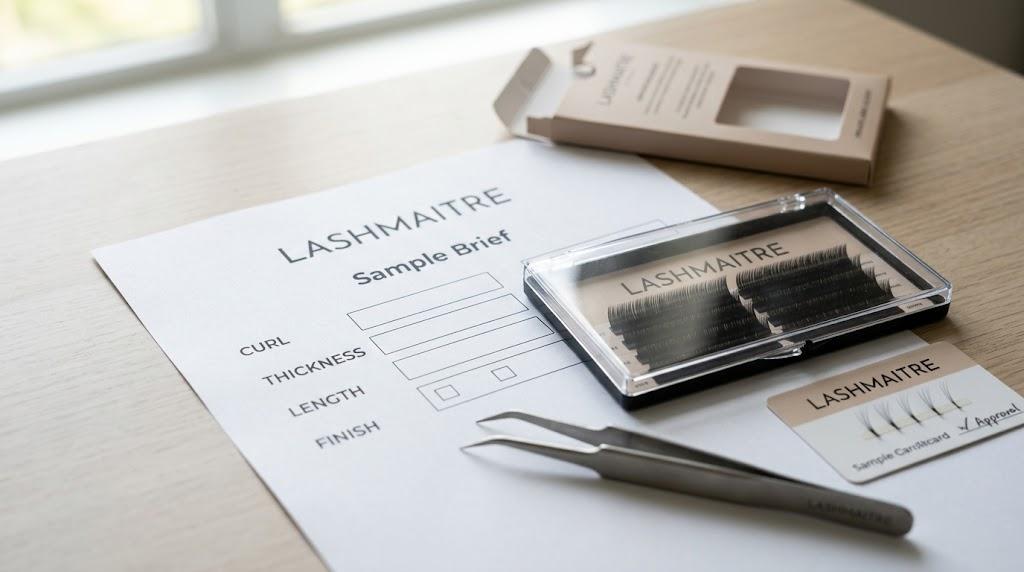
2. Send a Sample Brief Before Asking for Bulk Quotes
Samples protect both buyer and manufacturer. They let the buyer test tray quality, label clarity, packaging direction, and product fit before the first bulk order.
A sample brief should include:
- Buyer type and market
- Product families to test
- Curl, thickness, and length preferences
- Tray type
- Packaging expectation
- Quantity target after sample approval
- Any approved reference
- Decision deadline
- Destination country or region
The goal is not to make the first sample order too large. The goal is to make it useful. A new private label buyer may only need a focused sample range. A distributor may need several tray types, but still should organize samples by decision stage.
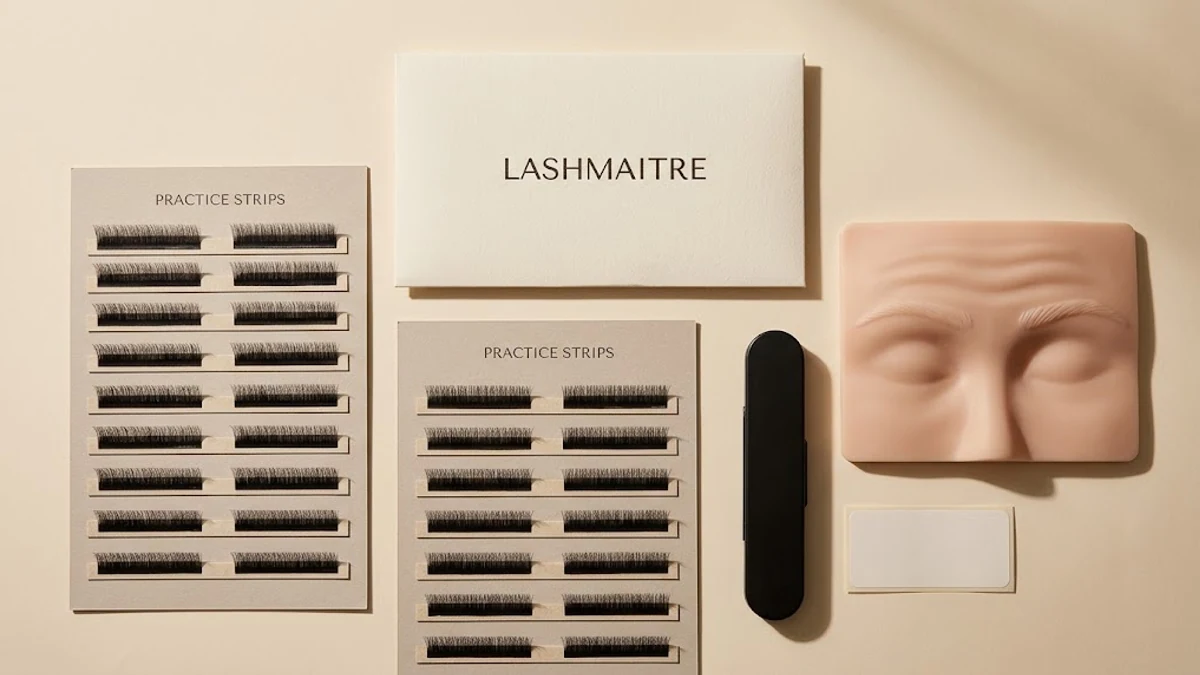
LASHMAITRE lash extension samples can help buyers plan a sample-first route before committing to bulk production.
3. Compare Samples With a Written Review
Do not approve lash samples only from memory or a quick photo. Each tray should be reviewed against the same fields the buyer sent in the sample brief.
Use a simple sample review table:
| Review field | What to check |
|---|---|
| Curl | Matches target curl and buyer expectation |
| Thickness | Supports the intended product family |
| Length range | Matches mixed or single length plan |
| Row clarity | Tray rows are easy to inspect and label |
| Fiber finish | Matches the brand look and sample request |
| Pickup feel | Fits the buyer's artist or customer feedback |
| Packaging sample | Tray card, box, sleeve, or label proof is usable |
| Correction note | Any needed change is written before bulk quote |
This review becomes the foundation for the MOQ discussion. If the buyer has not approved a sample direction yet, MOQ planning can become guesswork.
4. Confirm MOQ After the Sample Range Is Clear
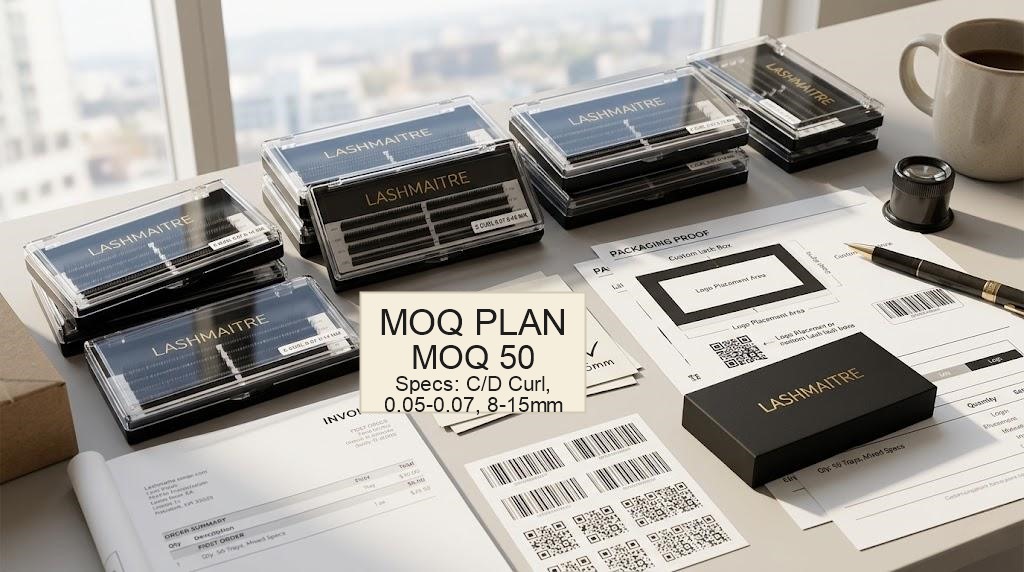
MOQ should not be discussed as an isolated number. The right MOQ depends on product family, number of SKUs, packaging needs, and the buyer's stage.
A private label startup may need a smaller first production plan so it can test demand and avoid slow-moving inventory. A salon chain may already know which trays move weekly. A distributor may need broader depth, but only if warehouse records can handle the SKU count.
Use MOQ planning to answer:
- Which trays are approved for first order?
- Which specs are still in testing?
- Which packaging version is ready?
- Which products need deeper quantity?
- Which products should wait for reorder data?
Buyers who want a controlled first order can review MOQ 50 wholesale lash extensions before turning the sample set into bulk production.
5. Connect Packaging Artwork to Tray Specs
Private label packaging should not be approved separately from the tray specification. A tray card or box proof may look good, but it still needs to match the product inside.
Before approving artwork, check:
- Brand name
- Product family
- Curl
- Thickness
- Length range
- Tray type
- SKU or style code
- Barcode or label space
- Packaging version
- Any market-sensitive wording
If the packaging proof says one spec and the approved tray says another, the buyer may create confusion for customers, warehouse teams, and future reorders. Keep the artwork file, product spec, and approved sample photo in the same reorder folder.
Buyers preparing OEM or private label work can review LASHMAITRE private label lash extensions, custom lash packaging, and OEM lash extensions manufacturer pages for the broader production path.
6. Ask What QC Record Will Be Available Before Bulk Approval
Quality control should be discussed before bulk approval, not after goods arrive. The buyer does not need a complicated technical report for every small sample order, but the buyer should know what will be checked and how the approved sample will be used.
Ask the manufacturer:
- How will bulk trays be compared with the approved sample?
- Which specs will be checked before packing?
- Can tray labels and carton labels be matched to the order file?
- How are correction notes handled?
- What photos or records can be provided before shipment?
- Who confirms the final packaging version?
LASHMAITRE lash quality control gives buyers a broader view of sample-to-bulk checks, tray consistency, packaging records, and repeat-order control.
7. Confirm Packing, Invoice, Carton Marks, and Incoterms Expectations
Manufacturer work also includes transaction details. Product approval is only one part of the process. Buyers should confirm shipping terms, packing records, invoice details, and carton marks early enough to avoid late changes.
Trade.gov explains that Incoterms clarify tasks, costs, and risks for buyers and sellers in export transactions. Trade.gov also describes common export documents and notes that commercial invoices and packing lists are used in import and cargo-checking processes. References: Trade.gov Know Your Incoterms, Common Export Documents, and Commercial Invoice.
For a lash order, buyers should clarify:
- Which Incoterms or shipping terms are being discussed
- What appears on the commercial invoice
- What appears on the packing list
- How cartons are marked
- Whether product descriptions match the order file
- Whether the buyer needs market-specific import checks
This article is not legal or customs advice. Buyers should confirm rules for their own market, product category, and import process. The practical point is that documents should not be an afterthought.
8. Save Approved Samples and Reorder Files
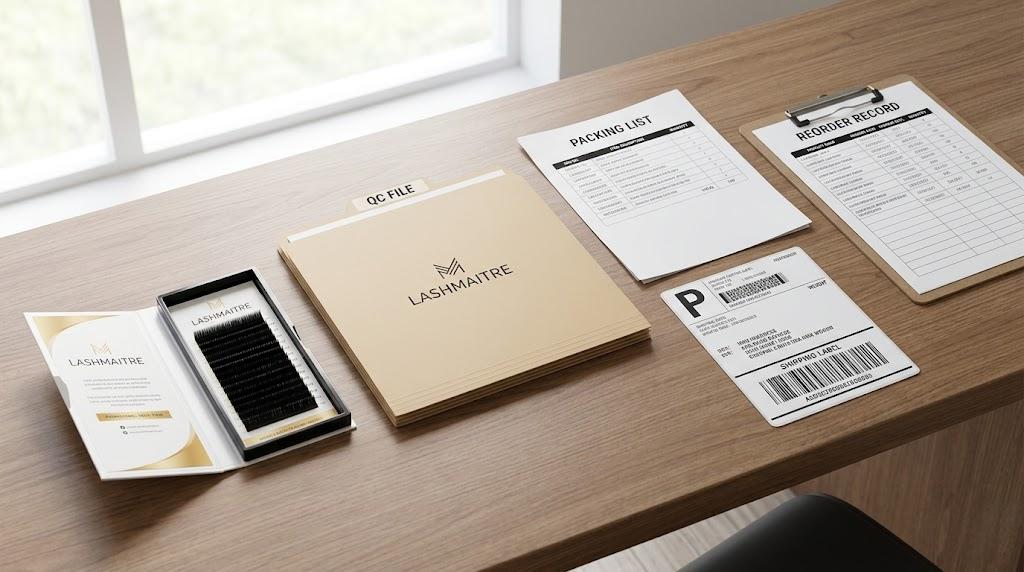
The first successful order is not the end of the manufacturer workflow. It should become the reference for the second order.
Save:
- Approved sample photo
- Physical sample ID
- Product spec sheet
- MOQ and quantity record
- Packaging proof version
- QC notes
- Commercial invoice or order reference
- Packing list reference
- Carton label photo
- Correction notes
- Reorder date or reorder trigger
This record helps the buyer avoid repeating the same discussion every time. It also helps a manufacturer understand whether the next order is a repeat, a corrected repeat, or a new product version.
For buyers evaluating manufacturer reliability, Trade.gov offers an International Company Profile service that provides background information on foreign companies. Reference: Trade.gov International Company Profile. This can be useful context for business partner review, especially for buyers building a long-term sourcing program.
How LASHMAITRE Helps Buyers Work With a Lash Manufacturer
LASHMAITRE works with wholesale buyers, private label brands, salon businesses, and distributors that need practical support from samples to repeat orders. The best starting point is a clear inquiry that includes buyer type, sample goals, product specs, packaging needs, MOQ expectations, destination market, and any current reference photos.
If you are comparing suppliers, review the LASHMAITRE wholesale lash supplier and wholesale eyelash extensions manufacturer pages. If you are ready to send a project, use the wholesale lash extensions inquiry page with your sample, MOQ, packaging, and reorder details.
FAQ: How to Work With a Lash Manufacturer
What should I send before working with a lash manufacturer?
Send your buyer type, target market, product family, curl, thickness, length range, tray type, packaging expectation, sample quantity, MOQ target, and destination country. If you already have approved references, include them.
Should buyers confirm samples or MOQ first?
Buyers should usually define the sample range first, then discuss MOQ around the products that are actually being tested. MOQ is more useful when the buyer knows which tray specs and packaging level are being quoted.
What packaging files should a lash manufacturer receive?
A lash manufacturer should receive logo files, tray card artwork, box or sleeve artwork, label requirements, barcode or QR space notes, product spec text, and any packaging version record. Keep artwork tied to the approved tray spec.
What records help repeat orders from a lash manufacturer?
Approved sample photos, physical sample IDs, product specs, packaging proof versions, QC notes, carton labels, packing list references, and correction notes all help repeat orders stay consistent.
How can buyers avoid vague lash manufacturer quotes?
Avoid asking only for a price list. Send product specs, sample goals, packaging expectations, and quantity targets. A clear brief makes quotes easier to compare and reduces the risk that suppliers quote different products.
Conclusion: Treat the Manufacturer Workflow as a Repeatable System
Working with a lash manufacturer is easier when the buyer treats each step as part of one system: specs, samples, MOQ, packaging, QC, documents, and reorder records. A clear process helps both sides move faster and reduces the chance of bulk-order surprises.
Before sending the next inquiry, prepare the information your manufacturer needs to make the first sample useful and the second order repeatable.

Lash Maitre: Your Trusted Partner in Eyelash extension Solutions
Lash Maitre is dedicated to providing professional insights and tips in the eyelash extension industry. Sharing the latest trends, techniques, and product knowledge, Lash Maitre helps lash artists and enthusiasts enhance their skills, stay inspired, and achieve the perfect lash experience.