B2B Procurement Guide for an oil free cleanser for eyelash extensions: pH-Balanced Formulations & Retail Bundling
Share
Wholesale Buyer Summary
B2B Procurement Guide for an oil free cleanser for eyelash extensions: pH-Balanced Formulations & Retail Bundling: sourcing notes for lash buyers
- Best for: salons, lash brands, academies and distributors researching wholesale lash extension products.
- Buyer focus: product specs, samples, packaging, MOQ, private label options and repeat-order consistency.
- Next step: request current pricing through the wholesale lash extensions inquiry form.
The Strategic Shift to Retail Aftercare Revenue
When procurement directors and wholesale cosmetic buyers evaluate their B2B salon inventory, the primary capital expenditure is almost exclusively directed toward the treatment room: cyanoacrylate adhesives, synthetic PBT fibers, and surgical isolation tweezers. However, ignoring the front desk retail space leaves massive salon revenue unrealized. Exceptional lash retention is a two-part equation; it relies 50% on the artist’s application technique and 50% on the client’s daily at-home aftercare. If a salon client washes their face with generic, oil-heavy makeup removers or harsh baby shampoos, the cyanoacrylate bonds will rapidly degrade, leading to premature shedding, furious client complaints, and ultimately, salon chargebacks to the distributor.
Scale Differentiation: Unlike our preceding procurement manuals that dissect the tensile strength of virgin PBT fibers or the thermal baking protocols of specific lash curls, this technical guide pivots entirely to retail-focused liquid cosmetics. We are shifting our focus from the application phase to the critical aftercare phase. We will deconstruct the specific surfactant chemistry required to clean volume lash fans without melting cyanoacrylate, analyze the packaging mechanics of micro-foaming pumps, and outline how B2B distributors can leverage retail aftercare bundles to exponentially increase a salon’s Average Order Value (AOV).
To protect the integrity of the professional adhesives you supply and to unlock a highly lucrative, recurring revenue stream for your salon partners, sourcing a medical-grade, purpose-built oil free cleanser for eyelash extensions is a non-negotiable supply chain imperative.
Defining an oil free cleanser for eyelash extensions in B2B Manufacturing
In the heavily regulated landscape of global cosmetic manufacturing, an oil free cleanser for eyelash extensions is defined as a specialized, water-based liquid cosmetic formulated explicitly to safely sanitize synthetic lash extensions and the human eyelid margin. Chemically, it must be completely devoid of lipids, glycols, and heavy humectants that break down cyanoacrylate polymers. Instead, it utilizes mild, micellar-based surfactants (such as Cocamidopropyl Betaine) to dissolve sebum, dead skin cells, and cosmetic residue without mechanical scrubbing. Furthermore, in an OEM (Original Equipment Manufacturer) context, this liquid is paired with a specific pneumatic pump mechanism designed to aerate the fluid into a dense, micro-bubble foam, allowing it to penetrate dense Russian volume fans without causing friction or pulling on the natural follicle. Procuring this liquid demands rigorous microbiological testing, precise pH calibration, and strict adherence to FDA cosmetic labeling laws.
Author: Alex, LASHMAITRE — B2B eyelash extensions manufacturing & private-label programs (https://www.lashmaitretrade.com)
Chemical Engineering: The Science of Lash Aftercare
To build a defensible wholesale catalog that commands absolute trust from high-end salon franchises, procurement officers must rigorously audit the chemical formulation of their cosmetic liquids. You are not merely sourcing soapy water; you are procuring a chemical solution that must actively clean the delicate ocular cavity without destroying an industrial-grade acrylic adhesive bond.
The Lipid Threat to Cyanoacrylate
Professional eyelash extensions are bonded using cyanoacrylate, a reactive monomer that cures into a rigid or semi-flexible acrylic mesh. While this polymer is highly resistant to water, it is fundamentally vulnerable to lipids (oils). Oils act as a slow-moving solvent. If a client uses an oil-based makeup remover, the lipids seep into the micro-pores of the cyanoacrylate bond, breaking down the polymer chains and causing the synthetic lash to slide cleanly off the natural hair.
Therefore, the foundational requirement for an oil free cleanser for eyelash extensions is the absolute omission of mineral oils, castor oils, PEG-based heavy emulsifiers, and thick glycols. Your OEM formulation must be strictly water-based (Aqua/Water serving as the primary solvent).
Surfactant Selection: Moving Beyond Harsh Sulfates
A cleanser works by utilizing surfactants (surface-active agents), which feature a hydrophilic (water-loving) head and a lipophilic (oil-loving) tail. They surround dirt and sebum, lifting it away from the skin to be rinsed off.
Historically, cheap cleansers rely on Sodium Lauryl Sulfate (SLS) or Sodium Laureth Sulfate (SLES). While these create massive amounts of foam, they are aggressive detergents. Using SLS near the eye strips the eyelid of its natural lipid barrier, causing severe contact dermatitis, dry eye syndrome, and extreme stinging. Furthermore, harsh sulfates can aggressively dry out the cyanoacrylate bond, making it brittle and prone to shattering.
When sourcing a premium oil free cleanser for eyelash extensions, your factory must utilize advanced, mild micellar technology.
- Cocamidopropyl Betaine: This is a mild, amphoteric surfactant derived from coconut oil (though the oil itself is processed out, leaving only the cleaning agent). It is exceptionally gentle on the ocular mucosa and generates a stable, luxurious foam without stripping the skin or degrading the lash adhesive.
- Sodium Lauroyl Sarcosinate: A gentle, amino-acid-based surfactant that acts as an excellent substitute for harsh sulfates, providing thorough cleansing of makeup residue without irritation.
pH Calibration for Ocular Safety
The human tear film and the delicate skin of the eyelid have a natural pH hovering around 7.0 (neutral) to slightly acidic (around 5.5 on the skin surface).
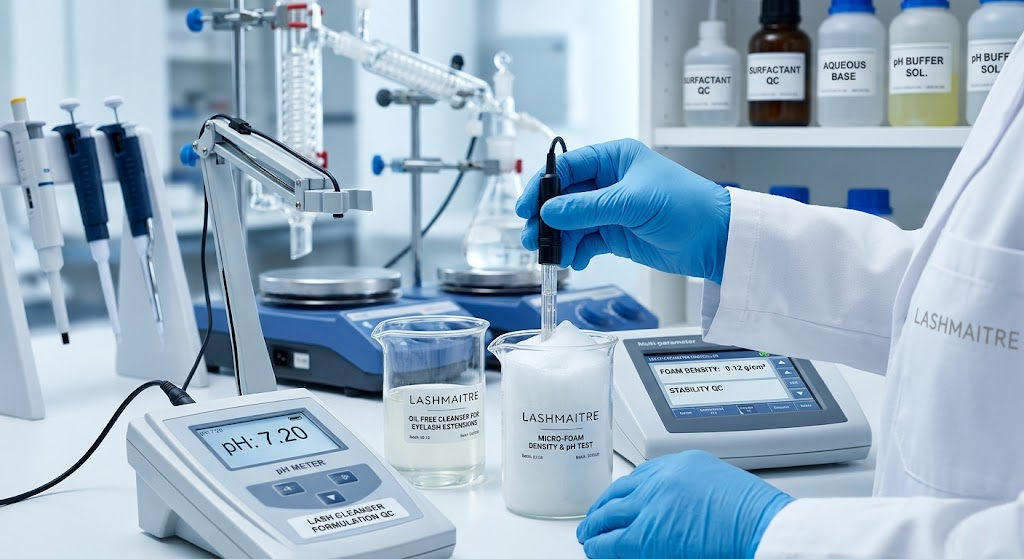
If a B2B distributor imports a cheap cleanser with a high alkaline pH (e.g., pH 8.0 or 9.0), it will cause immediate, severe stinging if it enters the client’s eye. More critically, high alkalinity can cause shock polymerization or microscopic blooming in fresh cyanoacrylate bonds. Your OEM contract must explicitly mandate that the oil free cleanser for eyelash extensions is strictly pH-balanced between 6.5 and 7.2. This ensures the product is completely “tear-free” and chemically inert to the lash adhesive.
Review our advanced chemical formulations and gentle surfactant profiles
Table 1: Surfactant & Chemistry Matrix for B2B Procurement
| Formulation Variable | Cheap Mass-Market Cleansers | OEM oil free cleanser for eyelash extensions | Strategic B2B Impact on Salon Operations |
| Primary Surfactants | SLS / SLES (Harsh Sulfates) | Cocamidopropyl Betaine / Micellar Tech | Eliminates ocular stinging and contact dermatitis; protects the client’s natural lipid barrier. |
| Lipid Content | Contains Glycols or Hidden Oils | Strictly 0% Oil (Water-Based) | Absolutely essential to prevent the cyanoacrylate adhesive from dissolving prematurely. |
| pH Calibration | Unregulated (Often highly alkaline) | Precision Balanced (pH 6.5 – 7.2) | Guarantees a “tear-free” formula that will not shock or degrade professional lash glues. |
| Preservative System | Parabens or Formaldehyde Donors | Phenoxyethanol / Ethylhexylglycerin | Meets modern “clean beauty” standards demanded by high-net-worth salon clientele. |
Packaging Mechanics: The Engineering of the Foam Pump
In the realm of liquid cosmetics, the physical packaging is just as critical as the chemical formulation. Supplying an oil free cleanser for eyelash extensions in a standard pour-bottle is a massive operational failure. Lash extensions—especially 5D to 15D handmade Russian volume fans—are incredibly dense. If a client attempts to rub a liquid gel into these fans, the mechanical friction of their fingers will rip the extensions out.
The Necessity of Micro-Foam
To clean volume lashes safely, the cleanser must be applied as a dense, aerated foam. The micro-bubbles of the foam penetrate deep between the synthetic fibers, dissolving sebum and dead skin cells (which can cause blepharitis and lash mites) without requiring aggressive physical rubbing.
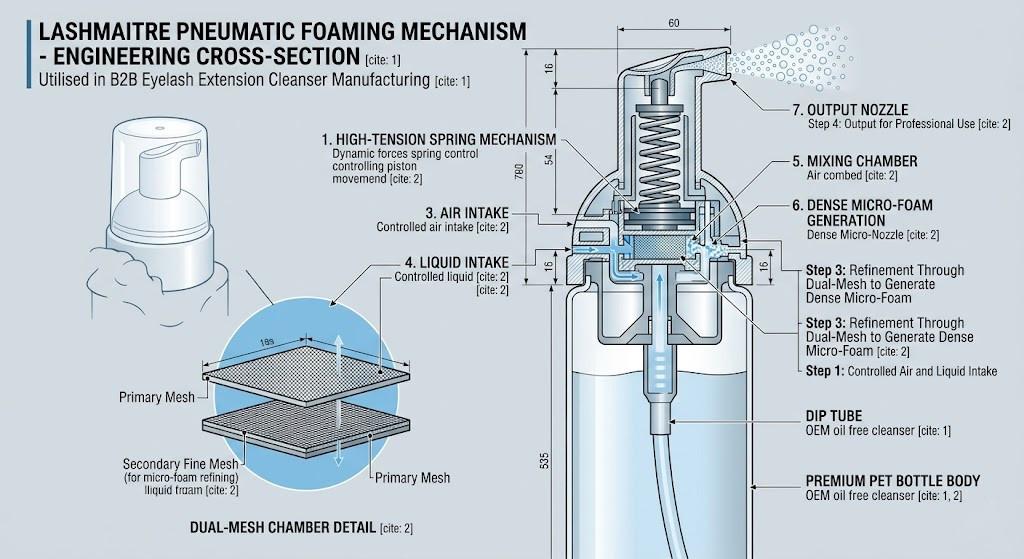
Sourcing the Pneumatic Foaming Pump
When procuring your OEM inventory, you must rigorously audit the internal mechanics of the PET (Polyethylene Terephthalate) foaming bottles.
- The Dual-Mesh Chamber: True micro-foam is generated not by chemical propellants, but by a mechanical process. As the pump is depressed, liquid and air are forced through an internal chamber containing microscopic nylon mesh screens. Your factory must utilize a dual-mesh system to create an ultra-dense, shaving-cream-like lather. Cheap, single-mesh pumps create a watery, runny bubble bath that immediately collapses when it touches the lashes.
- Spring Tension and Leak Prevention: A massive logistical liability in B2B liquid sourcing is pump leakage during air freight. The rapid pressure changes in an airplane cargo hold can force liquid up the pump straw, ruining the customized retail boxes. B2B buyers must mandate high-tension stainless steel springs and an integrated twist-lock or secure over-cap mechanism to guarantee zero leakage during international transit.
Private Label OEM: Mastering the Retail Aftercare Bundle
Transitioning from distributing bulk liquids to establishing a highly profitable private-label retail catalog requires a strategic approach to merchandising. Supplying a standalone bottle of an oil free cleanser for eyelash extensions is a missed opportunity. To provide massive value to your B2B salon partners, you must supply complete “Retail Aftercare Bundles.”
Increasing Salon Average Order Value (AOV)
Salon owners struggle with retail sales. If a distributor provides them with beautifully packaged, turnkey retail kits, the salon can simply place them on their front desk and add $25 to $40 to every client’s appointment ticket. This drastically increases the salon’s Average Order Value (AOV), making them heavily dependent on your wholesale supply chain.
When negotiating your OEM manufacturing contract, configure your MOQ (Minimum Order Quantity) to build a comprehensive kit:
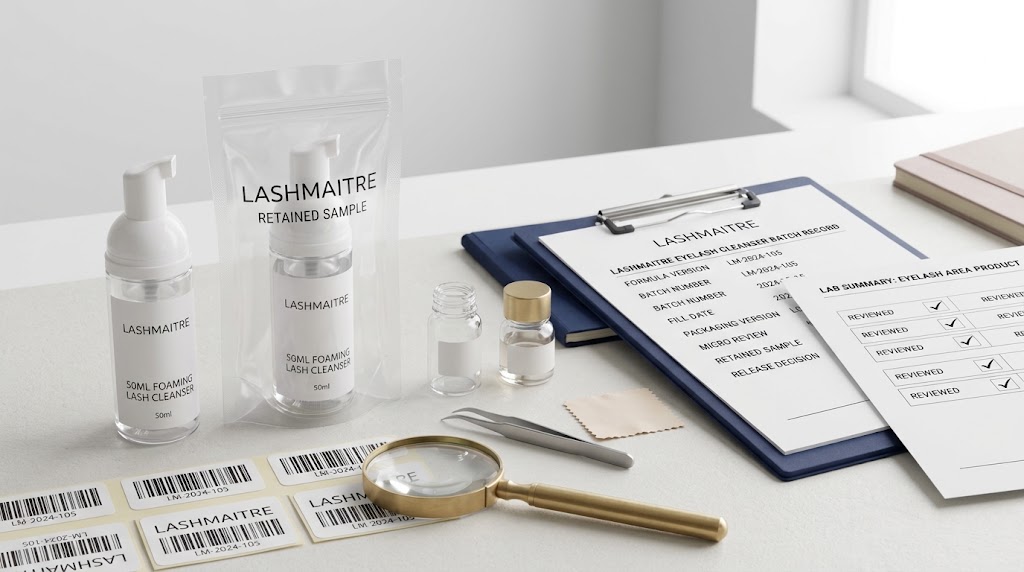
- The Core Liquid: A 50ml or 60ml custom-branded foaming bottle of the oil free cleanser for eyelash extensions.
- The Cleansing Brush: A specialized, ultra-soft cashmere or synthetic taklon bristle brush. The brush allows the client to gently work the foam into the lash line without catching on the cyanoacrylate bonds.
- The Grooming Tool: A hygienic, capped silicone or nylon mascara spoolie for daily detangling.
- The Master Packaging: A bespoke, minimalist magnetic box or a high-quality EVA zip pouch containing all three items, featuring your custom text-only brand logo.
Avoiding “Dead Stock” with Agile Packaging
One of the most significant barriers to scaling a private label cosmetics line is the factory MOQ for custom printing. Direct silk-screen printing on a PET bottle often requires an MOQ of 5,000 to 10,000 units per SKU. For an expanding distributor, tying up capital in 10,000 bottles is a severe financial risk.
Astute B2B procurement managers leverage “Agile Labeling” strategies. Instead of direct silk-screening, the distributor orders 5,000 generic, high-quality blank bottles and pumps at the lowest bulk commodity price. The branding is then applied using waterproof, oil-proof vinyl wrap labels. This allows the factory to execute micro-batches (e.g., 500 units at a time) for different sub-brands or private-label franchise clients, completely bypassing massive MOQs and keeping inventory highly liquid.
Explore our custom agile packaging solutions and retail bundle configurations
Table 2: OEM Retail Bundle Allocation Strategy
| Inventory Configuration | Target Salon Demographic | Retail Value Proposition | B2B Procurement Rationale |
| Complete Aftercare Kit (Cleanser, Brush, Spoolie in Box) | High-end boutiques; volume lash specialists. | Highest AOV. A turnkey retail solution that looks incredibly luxurious on the salon display shelf. | Core Focus. Drives massive B2B revenue as salons purchase these in bulk to gift or sell to new clients. |
| Standalone Cleanser (50ml Bottle) | High-traffic franchise salons; budget-conscious clients. | Lower entry price point for retail sales; easy impulse buy at the register. | Maintains high volume turnover; requires low initial capital expenditure for the B2B distributor. |
| Refill Pouches (100ml) | Eco-conscious salons; zero-waste demographics. | Promotes sustainability; clients reuse their original foaming pump bottle. | Highly strategic niche product; slashes volumetric freight costs for the distributor due to flexible packaging. |
Regulatory Compliance: Navigating FDA MoCRA
Successfully scaling a wholesale operation involving water-based liquid cosmetics requires navigating extremely strict international chemical regulations. Importing an oil free cleanser for eyelash extensions into primary markets such as the United States carries significant legal and financial responsibility. As the B2B distributor, you act as the official Importer of Record.
If a contaminated liquid cosmetic causes a severe bacterial eye infection (such as blepharitis or conjunctivitis) in a salon client, the legal liability falls heavily upon the distributor. Therefore, you must rigorously audit the factory’s regulatory compliance portfolio before authorizing mass production.
FDA MoCRA and Facility Registration
In the United States, the regulatory landscape for consumer beauty products is governed by the Modernization of Cosmetics Regulation Act (MoCRA). Under MoCRA, you cannot legally import liquid cosmetics from an unverified overseas facility. The B2B factory manufacturing your oil free cleanser for eyelash extensions must be officially registered with the FDA.
Furthermore, as the Responsible Person (the distributor), you are legally required to submit a cosmetic product listing to the FDA for every specific formulation and flavor variant (e.g., unscented, rose water, tea tree) that you import.
Microbiological Challenge Testing (USP <51>)
Water-based cosmetics are highly susceptible to bacterial and fungal growth. Your OEM manufacturer cannot simply mix soap and water. The formulation must include a robust, broad-spectrum preservative system (such as Phenoxyethanol combined with Ethylhexylglycerin).
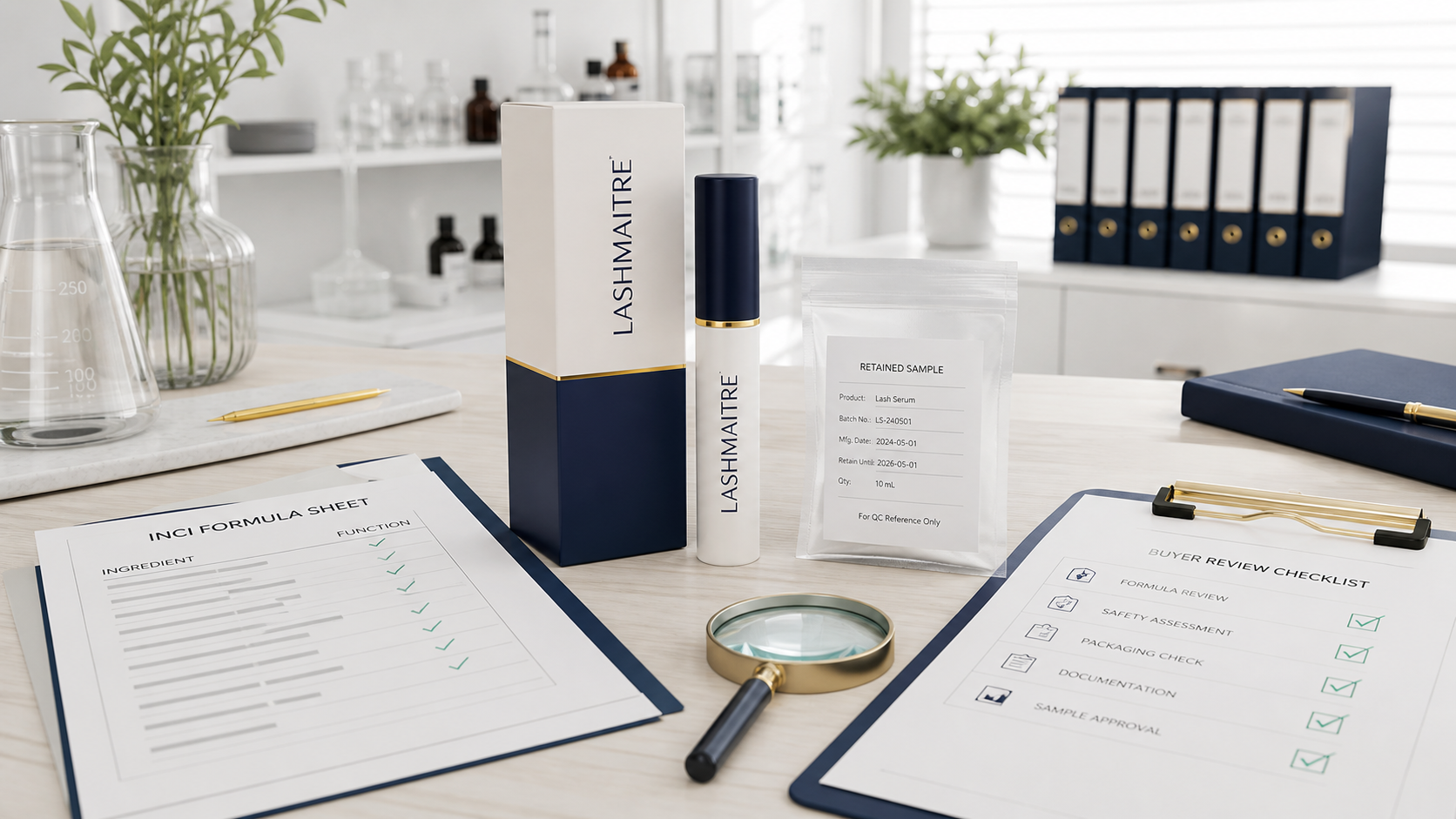
Before shipping your bulk order, the factory must provide Certificates of Analysis (COA) proving that the exact batch of your oil free cleanser for eyelash extensions has passed USP <51> Antimicrobial Effectiveness Testing (Preservative Challenge Testing). This rigorous laboratory test proves that if a consumer introduces bacteria into the bottle, the preservative system will actively kill the pathogens, preventing the liquid from becoming a biohazard over its 12-month shelf life.
INCI Labeling Requirements
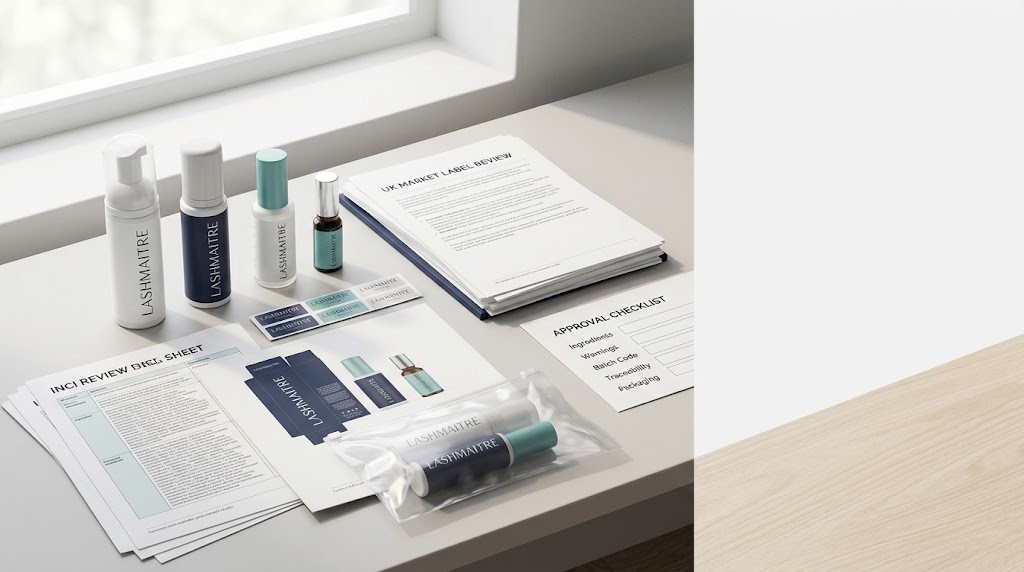
Your OEM contract must mandate that all private label packaging meets strict FDA cosmetic labeling requirements. This requires the explicit, descending-order declaration of all chemical ingredients using their standardized INCI (International Nomenclature of Cosmetic Ingredients) names on the outer retail carton and the bottle label. Failure to comply with INCI nomenclature, or failure to include proper domestic contact information on the label, will result in immediate shipment seizure by Customs and Border Protection (CBP).
Global Logistics: Bulk Liquid Freight and Freezing Risks
Successfully navigating the international supply chain from the compounding vats in Asia to your domestic distribution center requires a highly defensive logistical strategy when dealing with heavy liquids.
When evaluating the freight logistics for a massive wholesale order of an oil free cleanser for eyelash extensions, distributors must understand the interplay between “Volumetric Weight” and “Dead Weight.” Water is incredibly heavy. A master carton containing 200 bottles of 50ml cleanser represents significant dense, dead weight.
Ocean Freight vs. Air Express
Shipping heavy liquid cosmetics via international air express (DHL/FedEx) will result in punishing dead-weight penalties that instantly destroy your wholesale profit margins. To achieve profitable landed costs, B2B buyers must utilize FCL (Full Container Load) or LCL (Less than Container Load) ocean freight for bulk retail liquids.
The Winter Freezing Liability
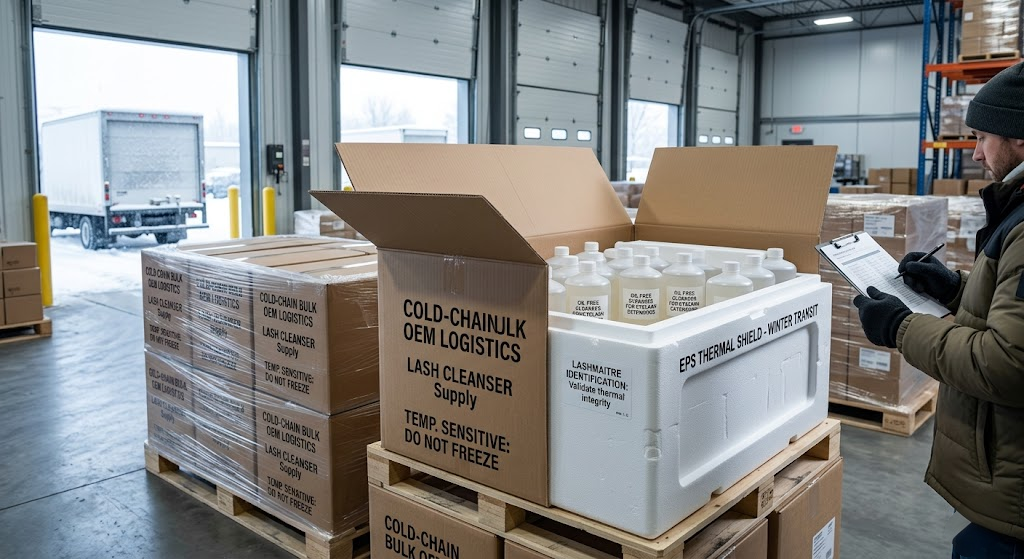
However, shipping liquids introduces a severe seasonal liability. If a bulk shipment of your oil free cleanser for eyelash extensions sits in a freezing rail yard in Chicago or New York during January, the water-based formulation will freeze and expand.
When the liquid freezes, it will physically crack the rigid PET plastic bottles and violently shatter the delicate internal dual-mesh screens of the foaming pumps. When the cargo thaws, the entire pallet will be soaked in leaked product, rendering the inventory completely unsellable.
If you must import liquids during winter months, you cannot utilize standard un-insulated freight. All bulk orders must be shipped with strict cold-chain packaging protocols. The factory must pack the customized bottles inside heavy-duty master cartons lined with two-inch-thick EPS (Expanded Polystyrene) thermal foam boards. This robust thermal barrier protects the internal temperature of the cargo, ensuring the liquid cosmetic remains stable and above freezing temperatures during its transit through cold-weather logistics hubs.
By prioritizing advanced micellar surfactant chemistry, mandating robust dual-mesh foaming packaging, optimizing AOV through comprehensive retail aftercare bundles, strictly adhering to FDA MoCRA microbiological guidelines, and mastering the dense-weight logistics of liquid ocean freight, B2B buyers can establish a highly profitable, scalable retail enterprise. The market heavily rewards distributors who engineer their supply chain meticulously, recognizing that an oil free cleanser for eyelash extensions is not just a cleaning product, but an indispensable tool for protecting the integrity of the professional adhesive bond.
FAQ: Wholesale & OEM — oil free cleanser for eyelash extensions
Why is it an absolute requirement that lash cleansers are strictly oil-free?
Professional eyelash extensions are bonded to the natural hair using cyanoacrylate, an industrial-grade acrylic resin. While cyanoacrylate is waterproof, it is highly susceptible to lipids (oils). Oils act as a slow-moving solvent; they penetrate the microscopic pores of the adhesive bond, causing the polymer to break down and the extension to slide off the natural lash prematurely. Providing salons with an oil free cleanser for eyelash extensions ensures that clients can effectively remove makeup and sebum without dissolving the adhesive, thereby guaranteeing the promised 6-to-8 week retention cycle.
What is the operational advantage of supplying a foaming pump rather than a standard liquid gel?
Russian volume extensions consist of highly dense, delicate handmade fans (often 5D to 15D). If a client applies a thick liquid gel to these fans, they must aggressively rub their eyes to create a lather, and this mechanical friction will rip the extensions out. Our OEM oil free cleanser for eyelash extensions utilizes a customized pneumatic pump featuring a dual-mesh internal chamber. This aerates the liquid into a dense, shaving-cream-like micro-foam. The micro-bubbles penetrate deep between the synthetic fibers, dissolving debris instantly without requiring any harsh physical rubbing, protecting the integrity of the lash fans.
How do retail aftercare bundles increase profitability for both the distributor and the salon?
Supplying a standalone bottle limits the retail potential. By configuring your MOQ to produce complete “Aftercare Kits” (which include the oil free cleanser for eyelash extensions, a specialized soft cleansing brush, a spoolie, and a bespoke magnetic box), you create a turnkey retail solution. Salons purchase these bulk kits from the distributor to sell at their front desk, instantly adding $25 to $40 to their Average Order Value (AOV) per client. Providing high-margin retail solutions makes the salon financially dependent on your B2B supply chain, cementing long-term wholesale loyalty.
What specific FDA MoCRA compliance documents are required to import liquid lash cleansers?
Because an oil free cleanser for eyelash extensions is a water-based cosmetic applied near the eye, it is heavily regulated to prevent bacterial infections. Under the FDA’s MoCRA guidelines, the manufacturing facility must be formally registered. Crucially, the factory must provide Certificates of Analysis (COA) proving the specific formulation has passed USP <51> Antimicrobial Effectiveness Testing to ensure the preservative system prevents pathogen growth. Additionally, the packaging must feature strict INCI (International Nomenclature of Cosmetic Ingredients) labeling, and the distributor must maintain an updated Material Safety Data Sheet (MSDS) to clear international customs safely.
References
- Modernization of Cosmetics Regulation Act (MoCRA) Compliance and Safety – U.S. Food and Drug Administration (FDA) – https://www.fda.gov/cosmetics
- Guidelines for Quality Management Systems and Precision Chemical Manufacturing – International Organization for Standardization (ISO 9001) – https://www.iso.org/iso-9001-quality-management.html
- Information on Surfactant Chemistry, Micellar Formulations, and Toxicology – National Center for Biotechnology Information (NCBI) / PubChem – https://pubchem.ncbi.nlm.nih.gov/
Are you ready to mathematically mitigate your supply chain risk, bypass generic domestic resellers, and launch a premium OEM retail product line engineered for absolute ocular safety and cyanoacrylate protection? Partner with a B2B manufacturing facility that understands the rigorous chemistry of micellar surfactants, strict MoCRA microbiological compliance, and the complex logistics of liquid ocean freight. Contact us today to request comprehensive MSDS documentation, order formulation samples, and secure a customized B2B manufacturing quote tailored to bringing your ultimate oil free cleanser for eyelash extensions to the wholesale market at https://www.lashmaitretrade.com.
Wholesale lash sourcing
Request samples, OEM/private label options and pricing
Share your lash extension category, specs, quantity, packaging needs and destination market. LASHMAITRE will recommend suitable SKUs, sample options, lead time and wholesale pricing.

Lash Maitre: Your Trusted Partner in Eyelash extension Solutions
Lash Maitre is dedicated to providing professional insights and tips in the eyelash extension industry. Sharing the latest trends, techniques, and product knowledge, Lash Maitre helps lash artists and enthusiasts enhance their skills, stay inspired, and achieve the perfect lash experience.