Eyelash Extension Removal Cream Wholesale: OEM Remover Formula and Packaging Guide
Share
Wholesale Buyer Summary
Before you source Glue & Liquids
This guide is written for buyers sourcing lash remover cream, gel remover and private label lash liquids. Use it to prepare a clearer eyelash extension removal cream wholesale request before asking for samples, MOQ, lead time, wholesale pricing, private label or OEM support.
- Main keyword: eyelash extension removal cream wholesale
- Best next step: compare specs, request samples and confirm packaging before bulk production.
- Send us: formula type, jar/tube packaging, scent, quantity, label design and compliance needs.
TL;DR:
- Sourcing a premium eyelash extension removal cream requires demanding GBL-free (Gamma-Butyrolactone) formulations to ensure global regulatory compliance and mitigate salon liability.
- OEM procurement must focus on advanced emulsion rheology, ensuring the solvent remains in a high-viscosity, zero-drip state even when exposed to human body temperature.
- Distributors must pair aggressive solvents with highly chemically resistant packaging—specifically High-Density Polyethylene (HDPE) or glass—to prevent container degradation.
The Strategic Procurement of Chemical Solvents
For elite beauty distributors, high-volume salon franchise owners, and wholesale importers evaluating their comprehensive chemical inventory, standard procurement models for de-bonding agents are frequently mismanaged. Professional B2B buyers regularly exhaust their capital and rigorous quality control efforts on securing synthetic PBT fibers and premium cyanoacrylate adhesives, treating the procurement of an eyelash extension removal cream as a generic afterthought. However, in the professional salon environment, the removal process represents the highest potential point of liability for a lash artist. Utilizing substandard, highly volatile liquid solvents exposes the client to severe ocular chemical burns, risking catastrophic lawsuits and irreversible damage to salon reputations.
While our regional supply chain guides emphasize the logistics of climate-sensitive cyanoacrylate adhesives and the extrusion physics of PBT fibers, this technical manual isolates the specific chemical procurement of professional de-bonding agents. We focus extensively on navigating the stringent global regulatory landscape surrounding solvent compliance, differentiating this analysis from standard cosmetic sourcing overviews. Here, we dissect the material science, emulsion engineering, and strict Quality Control (QC) protocols required to manufacture a world-class eyelash extension removal cream. For a B2B distributor, supplying a stable, zero-drip, and legally compliant eyelash extension removal cream is a mandatory strategy for securing recurring loyalty from high-end salon networks that demand absolute safety.
Defining the B2B Market for an eyelash extension removal cream
By definition, an eyelash extension removal cream is a highly viscous, emulsion-based chemical solvent designed exclusively to safely break down the hardened polymer matrix of cyanoacrylate adhesive. Its specific operational function allows for the pain-free, frictionless detachment of synthetic lash fibers from the natural human eyelash without compromising the structural integrity of the natural hair follicle or exposing the delicate periorbital skin to harsh liquid runoff.
Author: Alex, LASHMAITRE — B2B eyelash extensions manufacturing & private-label programs (https://www.lashmaitretrade.com)
The Mechanics of Cyanoacrylate Depolymerization
To understand the rigorous procurement criteria for an eyelash extension removal cream, a B2B buyer must first understand the fundamental chemistry of professional lash adhesives. Eyelash extensions are bonded to natural hair using ethyl or alkoxy cyanoacrylate. When exposed to ambient moisture, cyanoacrylate polymerizes, forming a highly durable, rigid acrylic mesh.
This bond is engineered to withstand water, sweat, and mechanical friction for up to eight weeks. Therefore, breaking this bond requires an aggressive chemical solvent. The process of breaking down this hardened mesh is known as depolymerization. The solvent within the eyelash extension removal cream penetrates the micro-fissures of the cured adhesive, disrupting the polymer chains and returning the glue to a softened, gummy state that can be easily wiped away. The central challenge in B2B manufacturing is delivering this aggressive solvent to the lash line without allowing it to seep into the client’s ocular cavity.
Viscosity Dynamics: Liquid vs. Gel vs. Cream
Historically, the lash industry relied on liquid removers. Liquid solvents are highly effective and work rapidly. However, they possess a viscosity similar to water. When applied to the lashes, liquid removers instantly run, seep, and wick down the hair shaft directly into the client’s eye, causing immediate, excruciating chemical burns.
The industry subsequently evolved to gel removers, which utilize thickening agents to increase viscosity. While a significant improvement, gels share a critical flaw: thermal instability. When a gel remover sits on a client’s eyelid, it absorbs body heat. As the temperature rises, the gel’s viscosity drops, causing it to liquefy and, once again, run into the eye.
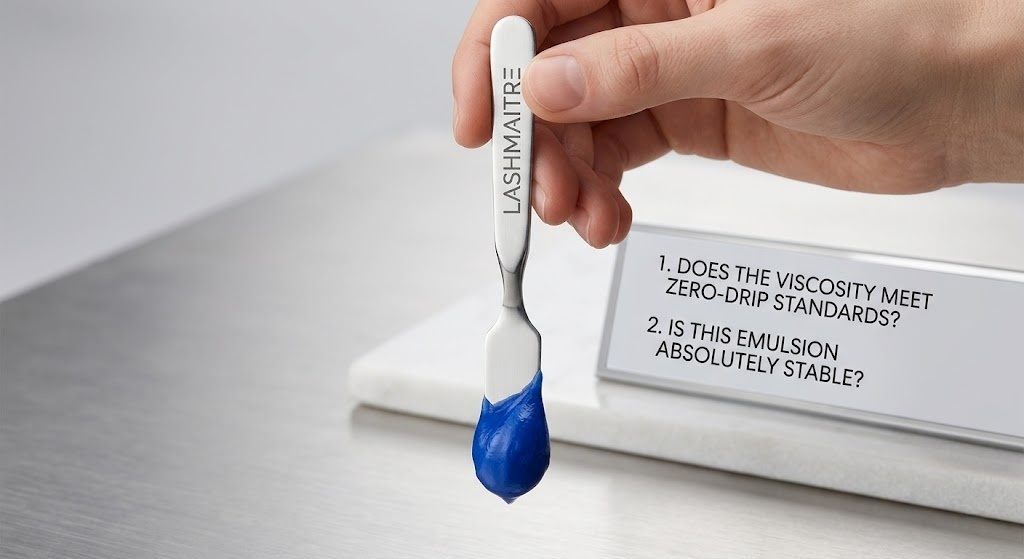
This operational failure necessitates the procurement of a true eyelash extension removal cream. A premium eyelash extension removal cream is engineered using advanced rheological modifiers (such as bentonite clays or specialized cosmetic waxes). These modifiers create a dense, paste-like emulsion. A properly formulated eyelash extension removal cream exhibits “zero-drip” stability; it maintains its thick, butter-like consistency regardless of body temperature, ensuring the solvent remains exactly where the artist places it—on the adhesive bond, never in the eye.
The Regulatory Landscape: Navigating GBL Compliance
The most critical B2B procurement decision regarding an eyelash extension removal cream revolves around its primary active solvent. For years, the most effective and widely used solvent in lash removers was Gamma-Butyrolactone (GBL). GBL is an incredibly fast-acting solvent that dissolves cyanoacrylate in minutes.
However, GBL possesses a severe legal and regulatory liability. GBL is a known chemical precursor to illegal, controlled substances. Consequently, regulatory bodies globally have heavily restricted or outright banned the importation and use of cosmetic products containing GBL. Under the European Union’s REACH regulations and strict monitoring by the United States Drug Enforcement Administration (DEA) and the FDA, importing a bulk shipment of an eyelash extension removal cream containing GBL can result in immediate customs seizure, heavy fines, and the destruction of your B2B supply chain.
Mandating GBL-Free Formulations
To protect your distribution enterprise, your OEM manufacturing contract for an eyelash extension removal cream must explicitly guarantee a 100% GBL-free formulation.
Modern, compliant B2B factories formulate their eyelash extension removal cream using safe, cosmetic-grade alternatives. The most common compliant solvents include Propylene Carbonate or carefully stabilized blends of Squalane and specialized cosmetic esters. While these GBL-free formulations may take slightly longer to break down the adhesive (e.g., 5 to 10 minutes instead of 3 minutes), they are completely legal to import globally, significantly gentler on the client’s natural lashes, and virtually eliminate the risk of respiratory and ocular irritation.
Consult our regulatory compliance team regarding GBL-free formulations and chemical imports
Table 1: Chemical Solvent Comparison for OEM Procurement
| Solvent Active Ingredient | Depolymerization Speed | Global Regulatory Status | Strategic B2B Impact for eyelash extension removal cream |
| Gamma-Butyrolactone (GBL) | Extremely Fast (1-3 min) | Highly Restricted / Banned in EU & US | Severe Liability. Risk of customs seizure and criminal compliance violations. Do not source. |
| Propylene Carbonate | Moderate (5-10 min) | Globally Approved for Cosmetics | The industry standard for safe, compliant OEM manufacturing. Highly recommended. |
| Squalane & Ester Blends | Slow (10-15 min) | Globally Approved, Hypoallergenic | Ideal for ultra-sensitive OEM lines. Slower removal, but maximizes client comfort and safety. |
Quality Control: Emulsion Stability and Thermal Testing
The true value of establishing a direct relationship with a B2B factory is the ability to enforce rigorous Quality Control (QC) protocols before your shipment of eyelash extension removal cream leaves the facility. An eyelash extension removal cream is a complex chemical emulsion—a suspension of potent solvents within a cream base. If manufactured poorly, this emulsion will break.
When a poorly manufactured eyelash extension removal cream experiences phase separation, the aggressive liquid solvent separates from the cream binder, pooling at the top of the jar. When the lash artist opens the product, they are met with a dangerous, watery solvent that completely negates the safety benefits of the cream format.
Accelerated Aging and Centrifuge Testing
To guarantee the shelf-life and stability of your eyelash extension removal cream, your designated QC inspector must audit the factory’s laboratory procedures. Premium B2B manufacturers execute the following tests on every batch:
- Centrifuge Stress Testing: Samples of the eyelash extension removal cream are placed into a high-speed laboratory centrifuge. The extreme gravitational forces simulate months of shelf-life in a matter of hours. If the emulsion separates under centrifugal stress, the entire batch is rejected and reformulated.
- Thermal Cycling: The eyelash extension removal cream is subjected to alternating cycles of extreme heat (e.g., 45°C) and freezing temperatures. This ensures that the product will survive international air freight and non-climate-controlled logistics networks without separating or degrading before reaching the end-user.
Material Science of Packaging: Preventing Solvent Degradation
Procuring a highly effective eyelash extension removal cream solves the chemical problem, but creates a packaging challenge. The aggressive solvents required to break down cyanoacrylate (even compliant, GBL-free solvents like Propylene Carbonate) will actively dissolve cheap plastics over time.
If a B2B buyer attempts to cut costs by packaging their eyelash extension removal cream in standard PET (Polyethylene Terephthalate) or low-grade polystyrene jars, the solvent will slowly eat through the plastic walls. Within a few months in a distributor’s warehouse, the jars will warp, leak, or physically melt, destroying the entire inventory and ruining the secondary retail cartons.
Selecting Chemically Resistant OEM Components
When negotiating the packaging for your eyelash extension removal cream, you must specify chemically inert materials.
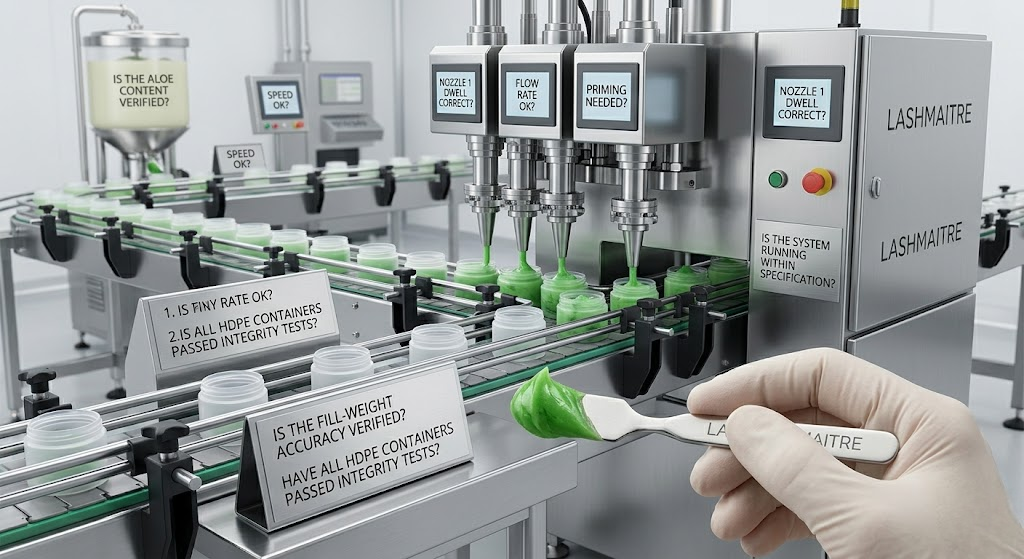
- High-Density Polyethylene (HDPE): This is the most common and cost-effective solution for bulk OEM orders. HDPE is highly resistant to chemical solvents and provides a durable, lightweight vessel for the eyelash extension removal cream.
- Polypropylene (PP): Another highly resistant plastic, often used for the lids and inner stoppers.
- Glass Jars: For ultra-luxury brand positioning, glass is the ultimate chemically inert vessel. While heavier and more expensive to ship, packaging an eyelash extension removal cream in a frosted glass jar with an aluminum lid instantly commands a premium MSRP in the salon.
Furthermore, every jar of eyelash extension removal cream must be engineered with a secondary inner sealing disc (a stopper) beneath the primary screw cap. This inner disc prevents the volatile solvent components from evaporating out of the cream base, ensuring the product retains its efficacy and zero-drip texture throughout its 12-to-18-month shelf life.
Explore our catalog of chemically resistant OEM packaging options for solvents
Table 2: Packaging Compatibility for Lash Solvents
| Packaging Material | Chemical Resistance Profile | Cost Implication | B2B Strategic Use Case for eyelash extension removal cream |
| Standard PET Plastic | Very Poor (Will warp or melt) | Lowest | Strictly Avoid. Guaranteed inventory loss over 6 months. |
| High-Density Polyethylene (HDPE) | Excellent | Moderate | The industry standard for safe, scalable wholesale distribution. |
| Polypropylene (PP) | Excellent | Moderate | Highly durable, often utilized for inner stoppers and screw caps. |
| Frosted Glass | Absolute | Highest (Due to freight weight) | Ideal for luxury OEM portfolios commanding premium salon prices. |
Customizing the OEM User Experience
Transitioning from purchasing generic wholesale chemicals to launching your own highly customized private label OEM program is the definitive step in securing market dominance. Because an eyelash extension removal cream is a consumable product that salons reorder consistently, the physical and sensory presentation of the product profoundly impacts brand loyalty.
Executing a successful private label program for an eyelash extension removal cream requires strategic decision-making regarding aesthetics, sensory additions, and hardware inclusions.
Scent Profiles and Pigmentation
The raw chemical smell of depolymerizing solvents can be unpleasant for the client. A sophisticated B2B manufacturer will offer custom scent profiling for your eyelash extension removal cream. By incorporating cosmetic-grade, hypoallergenic fragrances (e.g., strawberry, cantaloupe, matcha green tea, or unscented aloe), you transform a harsh chemical removal process into a spa-like sensory experience.
Similarly, adding cosmetic-grade colorants (pastel pinks, blues, or greens) to the eyelash extension removal cream serves an operational purpose. A colored cream provides high visual contrast against the client’s dark natural lashes. This visual contrast allows the lash artist to easily see exactly where the solvent has been applied, ensuring complete coverage over the adhesive bonds and verifying that every trace of the eyelash extension removal cream has been wiped away before the client opens their eyes.
Bundle Integration: Spatulas and Applicators
To increase the Average Order Value (AOV) of your B2B wholesale catalog, consider bundling your eyelash extension removal cream with custom-branded applicators. An eyelash extension removal cream should never be scooped out with bare hands or porous cotton swabs, which leave lint behind.
By sourcing reusable, medical-grade silicone spatulas or disposable, lint-free micro-swabs and bundling them within the outer retail box of your eyelash extension removal cream, you provide a comprehensive “removal system.” This attention to operational detail positions your brand as a holistic solutions provider for the professional artist.
View our comprehensive catalog of lint-free applicators and silicone spatulas
Import Compliance, MSDS, and Customs Documentation
Successfully navigating the international supply chain from the chemical laboratory in Asia to your domestic distribution center requires precise documentation and a highly defensive legal strategy. When managing the importation of an eyelash extension removal cream, B2B buyers must understand the strict regulatory landscape governing chemical solvents imported for cosmetic use.
The Material Safety Data Sheet (MSDS) Imperative
As a B2B buyer importing an eyelash extension removal cream, you act as the official Importer of Record. It is imperative that your manufacturing partner is highly experienced in international trade compliance. A delayed shipment sitting in a customs warehouse exposes your inventory to unnecessary logistical bottlenecks.
To ensure seamless, legal entry into your domestic market (such as the United States or the European Union), your factory must provide flawless documentation for every single bulk shipment of your eyelash extension removal cream:
- Commercial Invoice (CI): This document must accurately detail the correct Harmonized System (HS) codes for cosmetic removers and chemical solvents, reflecting the exact, true commercial value of the transaction. Attempting to undervalue goods is illegal and will result in severe financial penalties by Customs and Border Protection (CBP).
- Material Safety Data Sheets (MSDS): Absolutely mandatory and non-negotiable for any shipment of an eyelash extension removal cream. The MSDS explicitly details the chemical breakdown, flash points, and handling procedures of the solvent. Airlines, freight forwarders, and customs officials require this document to verify the liquid is safe for transport, not classified as a hazardous restricted material, and unequivocally proves the absence of illegal precursors like GBL.
- FDA MoCRA and Cosmetic Compliance: In the US, the Modernization of Cosmetics Regulation Act (MoCRA) drastically updated requirements for cosmetic importers. Your eyelash extension removal cream is regulated under FDA guidelines. Your OEM manufacturer must utilize ingredients that comply with cosmetic safety standards and ensure that all private label packaging meets strict labeling requirements, including the explicit, descending-order declaration of ingredients on the outer retail carton.
Advanced MOQ Negotiation and Portfolio Scaling
As your specialized distribution network grows, your relationship with your manufacturing partner should evolve from a purely transactional vendor to a strategic alliance. Advanced B2B buyers do not simply accept baseline Minimum Order Quantities (MOQs); they negotiate complex purchasing matrices to optimize their cash flow while expanding their portfolio of an eyelash extension removal cream.
For example, if a factory requires an MOQ of 2,000 units to initiate a custom-scented, brightly colored eyelash extension removal cream packed in bespoke HDPE jars, an experienced distributor will not order 2,000 units of a single scent. Instead, they will negotiate to split that total volume across a matrix of options.
You might allocate 50% of the volume to a high-turnover, unscented eyelash extension removal cream designed for clients with extreme sensitivities, allocate 30% to a signature strawberry-scented pink cream for high-end salons, and reserve 20% for a rapid-action formula tailored for master artists. By splitting your MOQ, you maximize your inventory turnover rate and provide a comprehensive catalog without over-committing capital.
Economic Leverage in the Salon Distribution Model
The ultimate reason a B2B distributor must secure a premium, zero-drip eyelash extension removal cream is economic leverage and liability mitigation. While selling synthetic lashes generates steady operational revenue, providing a safe, legally compliant removal solution protects the entire ecosystem.
When a lash artist uses an inferior liquid remover, the resulting chemical burn costs the salon a client, leads to negative reviews, and potentially triggers a lawsuit. By actively educating your B2B salon partners on the chemistry of GBL-free formulations and providing them with an impeccably manufactured, zero-drip eyelash extension removal cream, you solve a massive operational vulnerability. This establishes your brand not merely as a vendor of raw materials, but as an indispensable business partner deeply invested in the safety and profitability of the salons you supply.
By prioritizing GBL-free material excellence, formulating high-viscosity zero-drip emulsions, strictly adhering to chemically resistant packaging guidelines, and mastering the complex logistics of international chemical compliance, B2B buyers can establish a highly profitable, scalable enterprise. The market rewards distributors who engineer their supply chain specifically for chemical safety and professional efficiency, cementing their brand as the undisputed authority in the eyelash extension removal cream sector.
FAQ: Wholesale & OEM — eyelash extension removal cream
What is the minimum order requirement to launch a private label eyelash extension removal cream?
For a customized OEM program utilizing your brand logo on standard, chemically resistant HDPE jars (White Label Tier), initial MOQs generally start between 500 and 1,000 units. This volume allows us to execute precise silk-screen printing and formulate fresh, GBL-free solvent batches specifically for your order. If you require highly customized frosted glass packaging or entirely bespoke scent profiling, the MOQ will typically increase to 2,000+ units to amortize the laboratory setup costs. Always request a formal proforma invoice to review exact volume discount tiers.
How do you guarantee that your eyelash extension removal cream will not separate during international shipping?
Emulsion stability is non-negotiable in B2B chemical manufacturing. Our engineering process for an eyelash extension removal cream utilizes advanced rheological modifiers and high-shear mixing techniques. Every single batch undergoes rigorous accelerated aging and laboratory centrifuge testing to simulate extreme gravitational and thermal stress. This guarantees that the heavy solvents remain perfectly suspended within the cream base, ensuring absolute zero-drip viscosity upon arrival at your warehouse and throughout the product’s lifespan in the salon.
Are your removal formulations compliant with EU REACH and US FDA regulations?
Absolutely. We recognize the severe liability associated with outdated solvent chemistry. Our formulations for an eyelash extension removal cream are strictly 100% GBL-free (Gamma-Butyrolactone free). We utilize globally approved, cosmetic-grade active ingredients such as Propylene Carbonate. We provide comprehensive, internationally recognized Material Safety Data Sheets (MSDS) for every shipment, ensuring seamless customs clearance and full regulatory compliance in major global markets.
Can we order custom colors and scents for our eyelash extension removal cream to match our brand identity?
Yes, customizing the sensory experience is a core component of our B2B OEM program. We offer a wide array of cosmetic-grade, hypoallergenic colorants and fragrances. Formulating your eyelash extension removal cream in a distinct color (like blue or pink) not only aligns with your brand aesthetics but also provides excellent visual contrast against the client’s natural lashes, allowing the artist to ensure complete solvent removal before concluding the treatment.
References
- Modernization of Cosmetics Regulation Act (MoCRA) Compliance – U.S. Food and Drug Administration (FDA) – https://www.fda.gov/cosmetics
- Information on Propylene Carbonate Safety and Toxicology – National Center for Biotechnology Information (NCBI) / PubChem – https://pubchem.ncbi.nlm.nih.gov/
- Guidelines for Quality Management Systems and Cosmetic Good Manufacturing Practices (GMP) – International Organization for Standardization (ISO 22716) – https://www.iso.org/standard/36437.html
Are you ready to optimize your chemical supply chain, bypass non-compliant domestic resellers, and launch a premium OEM product line tailored to the absolute highest standards of cosmetic safety and salon profitability? Partner with a manufacturing facility that understands the rigorous demands of solvent chemistry, emulsion stability, and the complex logistics of global compliance. Contact us today to request physical samples, review our GBL-free formulation specifications, and secure a customized B2B manufacturing quote tailored to your enterprise needs for an eyelash extension removal cream at https://www.lashmaitretrade.com.
Ready to source Glue & Liquids?
LASHMAITRE supports wholesale eyelash extensions, lash extensions, private label packaging, OEM lash products, samples, MOQ planning and supplier support for salons, distributors, academies and lash brands.

Lash Maitre: Your Trusted Partner in Eyelash extension Solutions
Lash Maitre is dedicated to providing professional insights and tips in the eyelash extension industry. Sharing the latest trends, techniques, and product knowledge, Lash Maitre helps lash artists and enthusiasts enhance their skills, stay inspired, and achieve the perfect lash experience.