B2B Sourcing Guide for an eyelash extension tray holder: Acrylic vs. Glass Manufacturing
Share
Wholesale Buyer Summary
B2B Sourcing Guide for an eyelash extension tray holder: Acrylic vs. Glass Manufacturing: sourcing notes for lash buyers
- Best for: salons, lash brands, academies and distributors researching wholesale lash extension products.
- Buyer focus: product specs, samples, packaging, MOQ, private label options and repeat-order consistency.
- Next step: request current pricing through the wholesale lash extensions inquiry form.
TL;DR:
- Sourcing a professional eyelash extension tray holder requires choosing between injection-molded acrylic (lightweight, cost-effective) and tempered glass (highly chemical-resistant, premium weight).
- B2B buyers must implement rigorous QC for an eyelash extension tray holder, focusing on chamfered edges, surface energy for tape adhesion, and solvent-resistant UV printing.
- Optimizing supply chain logistics for an eyelash extension tray holder involves calculating volumetric weight for acrylic versus actual deadweight for glass pallets to minimize international freight costs.
The Strategic Procurement of Salon Hard Goods
When evaluating the comprehensive catalog of a professional beauty brand, the procurement of an eyelash extension tray holder is frequently and erroneously treated as a mere afterthought by novice buyers. Distributors often focus the entirety of their capital and quality control efforts on synthetic PBT fibers and cyanoacrylate adhesives, leaving the hard goods to generic, off-the-shelf purchasing. However, in the professional salon environment, the eyelash extension tray holder serves as the foundational command center for the lash artist. It is the primary organizational surface where delicate lash strips are mounted, adhesives are dispensed, and lash mapping is visually executed.
While other supply chain guides in our regional series focus primarily on the extrusion of PBT synthetic fibers or the chemical formulation of cyanoacrylate adhesives, this specific document pivots to the hard-goods accessory sector. Here, we deeply analyze the distinct manufacturing pathways—specifically injection-molded acrylic versus CNC-machined tempered glass—for an eyelash extension tray holder to help distributors balance unit economics with premium salon positioning. For a distributor, importing a high-quality eyelash extension tray holder that resists chemical degradation and enhances workflow ergonomics is a critical strategy for securing recurring loyalty from high-volume salon networks. This guide explores the material science, Original Equipment Manufacturer (OEM) customization processes, and strict quality control protocols necessary to source a world-class eyelash extension tray holder.
Defining the Professional eyelash extension tray holder
Before diving into procurement strategies, it is vital to define the functional requirements of an eyelash extension tray holder in a professional setting. By definition, an eyelash extension tray holder (also commonly referred to as a lash palette or lash tile) is a sterile, flat, and rigid surface used by technicians during the application process.
The primary function of the eyelash extension tray holder is to securely anchor the adhesive strips that hold individual lash extensions. Simultaneously, it often features designated zones or embedded wells (such as a jade stone or a disposable glue cup slot) to hold the liquid cyanoacrylate adhesive. A poorly manufactured eyelash extension tray holder will slide across the lash bed, warp under salon lighting, or chemically melt when cleaned with professional solvents. Therefore, the material composition of the eyelash extension tray holder dictates its viability in the B2B wholesale market.
Explore our full catalog of professional application tools and accessories
Material Science Phase 1: The Acrylic (PMMA) eyelash extension tray holder
The most ubiquitous material sourced for an eyelash extension tray holder in the global wholesale market is acrylic, scientifically known as Polymethyl Methacrylate (PMMA). Acrylic is a transparent thermoplastic that offers a compelling balance of cost-efficiency, visual clarity, and manufacturing versatility.
Injection Molding and Fabrication
When a B2B buyer commissions an acrylic eyelash extension tray holder, the factory typically utilizes an injection molding process or CNC laser cutting from large pre-cast acrylic sheets. For high-volume OEM orders, injection molding is the most cost-effective route. The PMMA polymer is heated to a molten state and injected under high pressure into a custom steel mold. This allows the factory to rapidly produce an eyelash extension tray holder with complex integrated features, such as deep recessed wells for adhesive cups or built-in, curved hand-straps for technicians who prefer to hold the palette.
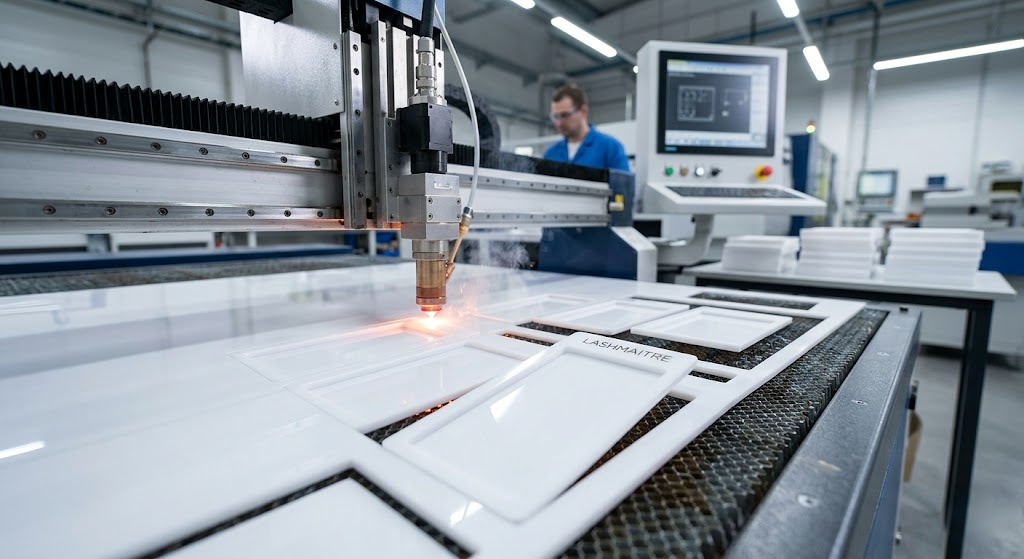
If the B2B buyer requires a lower Minimum Order Quantity (MOQ) for an eyelash extension tray holder, the factory will utilize CNC laser cutting. A high-powered laser slices the palette shapes from large acrylic sheets, followed by a flame-polishing technique to smooth the raw edges.
Advantages and Operational Vulnerabilities of Acrylic
The primary advantage of an acrylic eyelash extension tray holder is its weight. PMMA is exceptionally lightweight, which drastically reduces international air freight costs for distributors. Furthermore, if the eyelash extension tray holder is accidentally dropped in the salon, acrylic is highly impact-resistant and unlikely to shatter, ensuring a long operational lifespan.
However, an acrylic eyelash extension tray holder possesses a critical vulnerability that B2B buyers must account for: chemical resistance. Professional lash artists clean their palettes using powerful solvents, including pure acetone or concentrated gel removers designed to break down cyanoacrylate. Prolonged exposure to these harsh chemicals can cause an acrylic eyelash extension tray holder to experience “crazing” (the formation of microscopic surface cracks) or severe clouding. Therefore, distributors must educate their salon partners on proper maintenance, or opt for a higher-grade material if chemical resistance is the ultimate priority.
Material Science Phase 2: The Tempered Glass eyelash extension tray holder
For luxury distributors targeting high-end salons and master artists, sourcing a tempered glass eyelash extension tray holder represents a significant upgrade in material quality and brand positioning. Glass provides a completely different tactile experience and chemical profile compared to its thermoplastic counterpart.
Precision Cutting and Thermal Tempering
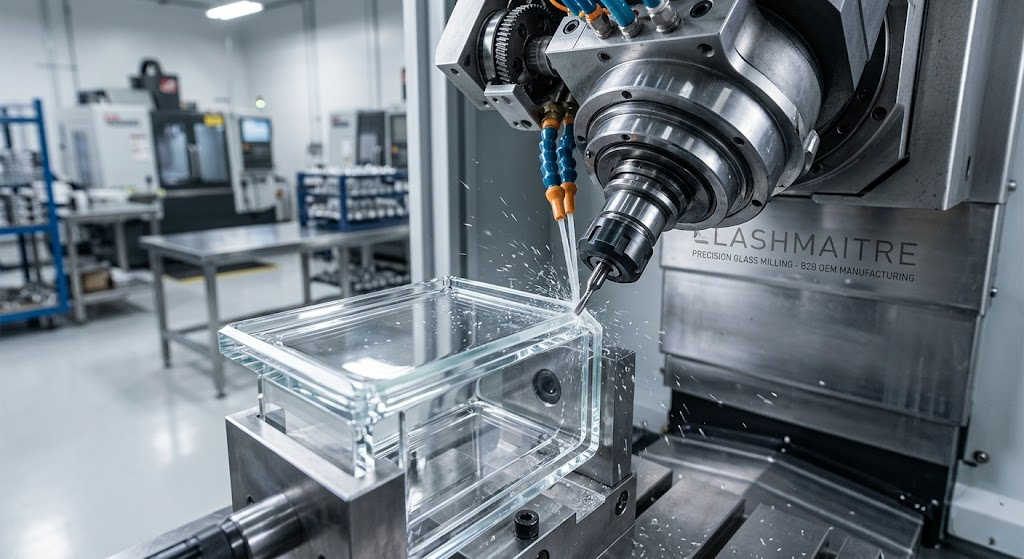
The manufacturing process for a glass eyelash extension tray holder is significantly more labor-intensive and requires specialized heavy machinery. The process begins with large sheets of high-clarity float glass. Because glass cannot be injection-molded like acrylic, each individual eyelash extension tray holder must be precision-cut using a CNC waterjet or a diamond-tipped CNC router.
Once the rectangular shape is cut, the raw edges are dangerously sharp. The factory must pass each eyelash extension tray holder through a specialized edge-grinding machine to create a smooth, chamfered (beveled) edge. This is a non-negotiable B2B quality control checkpoint; a sharp edge on an eyelash extension tray holder is a massive liability in a salon environment.
Finally, to ensure safety, the glass eyelash extension tray holder undergoes a thermal tempering process. The glass is heated to approximately 600°C and then rapidly cooled. This process puts the outer surfaces into compression and the interior into tension, making the eyelash extension tray holder up to four times stronger than standard annealed glass. If dropped, tempered glass shatters into small, blunt granular chunks rather than dangerous, jagged shards.
The Chemical Supremacy of Glass
The defining advantage of a glass eyelash extension tray holder is its absolute chemical impermeability. Unlike acrylic, a glass eyelash extension tray holder will never cloud, craze, or degrade when exposed to pure acetone, cyanoacrylate de-bonders, or hospital-grade sanitizers. The lash artist can aggressively scrape dried adhesive off the surface with a metal spatula without leaving a single scratch. Furthermore, the heavier weight of a glass eyelash extension tray holder ensures it stays firmly planted on the lash bed or the client’s pillow, preventing accidental sliding during meticulous volume fanning.
Request a sample pack comparing our acrylic and tempered glass palettes
Table 1: Material Comparison for an eyelash extension tray holder
| Procurement Variable | Acrylic (PMMA) eyelash extension tray holder | Tempered Glass eyelash extension tray holder | Strategic B2B Impact |
| Chemical Resistance | Low to Moderate (Susceptible to acetone crazing) | Supreme (Impervious to all salon solvents) | Glass offers a longer aesthetic lifespan in harsh salon environments. |
| Unit Weight | Lightweight (~50g – 80g) | Heavyweight (~150g – 250g) | Acrylic drastically reduces volumetric shipping costs for bulk imports. |
| Surface Hardness | Susceptible to micro-scratches from tweezers | Highly scratch-resistant (Requires diamond tools to scratch) | Glass maintains a pristine, luxury appearance over years of daily use. |
| Manufacturing Cost | Low (Injection molding is highly scalable) | High (Requires CNC edge grinding and thermal tempering) | Acrylic allows for higher profit margins; glass commands a premium retail price. |
| Impact Safety | High (Will bounce or chip if dropped) | Moderate (Tempered to shatter safely, but still breaks) | Acrylic is safer for fast-paced, high-turnover salon floors. |
OEM Customization and Private Label Printing
For a B2B distributor, the physical material is merely the canvas. To truly build brand equity, the eyelash extension tray holder must undergo extensive OEM customization. When an artist looks down at their eyelash extension tray holder hundreds of times a day, your logo must be prominently and durably displayed.
Navigating Printing Technologies
When branding an eyelash extension tray holder, the factory utilizes different printing technologies depending on the material and the complexity of the artwork.
- Silk Screen Printing: The most traditional and cost-effective method for bulk orders. Ink is pressed through a stenciled mesh directly onto the surface of the eyelash extension tray holder. This is excellent for bold, single-color logos. However, silk screen ink sits on top of the surface and can eventually be rubbed off if the salon uses harsh solvents.
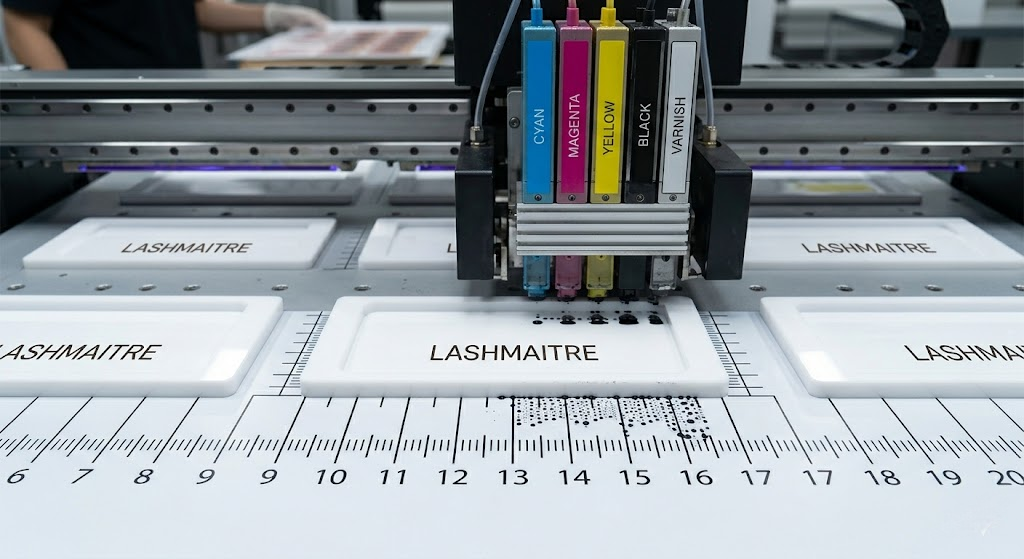
- UV Flatbed Printing: A more advanced technique where a digital printer deposits ink onto the eyelash extension tray holder, and a UV light instantly cures (hardens) it. This allows for full-color gradients and incredibly precise lash mapping lines. The UV curing process makes the print highly resistant to chemical degradation.
- Sub-Surface Laser Engraving: Exclusive to acrylic, this premium technique uses a laser to etch the logo and mapping lines into the underside of a clear eyelash extension tray holder. Because the printing is underneath the working surface, it is physically impossible for the lash artist to scrape or dissolve the logo during cleaning. This is the gold standard for luxury acrylic OEM production.
Ergonomics and Advanced Features
A standard flat rectangle is no longer sufficient in the competitive B2B market. When designing your custom eyelash extension tray holder, consider incorporating ergonomic features that solve specific workflow problems for the end-user.
Many master artists request an eyelash extension tray holder that features pre-printed mapping lines (numbered 7mm through 18mm) to organize their lash strips seamlessly. Another highly requested OEM modification is the integration of a circular recess designed to perfectly hold a disposable glue cup or a cooling jade stone. By recessing the adhesive, you lower the center of gravity on the eyelash extension tray holder, preventing accidental spills that could ruin a set of lashes.
View our catalog of ergonomic accessories and pre-mapped palettes
Negotiating MOQs and Production Timelines
As a wholesale buyer, understanding the factory’s Minimum Order Quantity (MOQ) structure is vital for managing cash flow. The MOQ for an eyelash extension tray holder is heavily influenced by the level of customization required.
If you are simply purchasing an off-the-shelf, blank eyelash extension tray holder and applying a silk-screened logo, the factory already possesses the mold. Therefore, the MOQ can be exceptionally low. Conversely, if you want to alter the physical dimensions of the eyelash extension tray holder, the factory must mill a brand new steel injection mold (for acrylic) or reprogram their CNC waterjets (for glass). This requires a significantly higher MOQ to amortize the tooling costs.
Table 2: Typical OEM Tiers for an eyelash extension tray holder
| Customization Level | Estimated MOQ Requirement | Average Production Lead Time | Cost Implications |
| Tier 1: White Label (Stock mold, custom logo print) | 100 – 300 units | 10 – 15 Days | Lowest entry cost; zero tooling fees. Ideal for testing new markets. |
| Tier 2: Surface Modification (Stock mold, custom mapping lines + logo) | 300 – 500 units | 15 – 20 Days | Slight increase in cost due to UV printing setup and alignment checks. |
| Tier 3: Structural Customization (New dimensions, recessed glue wells) | 1,000 – 3,000 units | 30 – 45 Days (includes mold creation) | High initial tooling fee ($500 – $1500+ depending on complexity) but lowest cost-per-unit. |
| Tier 4: Glass Sourcing (Custom cut tempered glass) | 500 – 1,000 units | 25 – 35 Days | Higher material and finishing costs; requires robust protective packaging solutions. |
Quality Control (QC) Protocols for Hard Goods
The true value of establishing a direct B2B relationship with a manufacturer is the ability to enforce rigorous Quality Control (QC) protocols before the shipment of your eyelash extension tray holder inventory leaves the factory floor. Hard goods require different QC checkpoints than synthetic fibers or liquid adhesives.
When your designated inspector reviews a batch of the eyelash extension tray holder, they must execute the following checks:
- Edge Chamfering Verification: The inspector must run their fingers along the perimeter of every glass eyelash extension tray holder. Any detection of a sharp, unpolished edge is grounds for immediate batch rejection. A sharp edge on an eyelash extension tray holder is a severe safety hazard.
- Surface Energy Testing: The surface of the eyelash extension tray holder must hold the sticky backing of a lash strip securely, but release it without tearing the paper when the artist is finished. If the acrylic is coated with residual mold-release agents from the factory, the lash strips will not stick. The factory must properly wash and treat every eyelash extension tray holder before packaging.
- Solvent Rub Test: To ensure the longevity of your OEM branding, the inspector must soak a lint-free wipe in pure acetone and vigorously rub the printed logo on the eyelash extension tray holder. If the ink smears or lifts within 10 seconds, the UV curing process was insufficient, and the batch must be reprinted.
- Dimensional Tolerance: Using digital calipers, the dimensions of the eyelash extension tray holder must be verified against the CAD drawings. If an eyelash extension tray holder is supposed to be 150mm wide to fit perfectly inside a distributor’s custom retail box, a variance of +2mm will cause the product to jam in the packaging, ruining the unboxing experience.
Author: Alex, LASHMAITRE — B2B eyelash extensions manufacturing & private-label programs (https://www.lashmaitretrade.com)
Optimizing Supply Chain Logistics and Freight
The final hurdle in mastering the procurement of an eyelash extension tray holder is international shipping. The material you choose fundamentally alters your logistics strategy. The logistics of moving a pallet of acrylic palettes is completely different from moving a pallet of glass.
Volumetric Weight vs. Actual Weight
In international air freight (via carriers like DHL or FedEx), the shipping cost is calculated based on the greater of two numbers: the actual deadweight of the carton, or the volumetric (dimensional) weight of the carton.
An acrylic eyelash extension tray holder is incredibly light. When you pack 100 units of an acrylic eyelash extension tray holder into a master carton, the actual weight might only be 8 kilograms. However, because the palettes are relatively large and flat, the box itself takes up a significant amount of space inside the airplane cargo hold. The airline will calculate the volumetric weight (Length x Width x Height / 5000), which might equate to 15 kilograms. You will be billed for 15 kilograms. Therefore, the B2B buyer must work with the factory to engineer the tightest, most compact retail packaging possible for their acrylic eyelash extension tray holder to minimize volumetric penalties.
The Heavy Burden of Glass Freight
Conversely, a tempered glass eyelash extension tray holder is exceptionally heavy. When packing 100 units of a glass eyelash extension tray holder, the actual deadweight will easily exceed the volumetric weight. Air freighting thousands of glass palettes becomes prohibitively expensive and destroys your wholesale profit margins.
For a glass eyelash extension tray holder, distributors must utilize ocean freight (LCL – Less than Container Load). While ocean freight reduces the cost-per-kilogram by up to 80%, it increases the transit time from 5 days to 35 days. This requires the B2B buyer to have excellent cash flow management and inventory forecasting, as capital will be tied up on a cargo ship for over a month.
Furthermore, the factory packaging for a glass eyelash extension tray holder must be radically upgraded. Each unit must be isolated using die-cut EVA foam inserts to prevent the glass from shattering due to the harmonic vibrations of a cargo ship traversing the Pacific Ocean. Standard bubble wrap is insufficient for B2B bulk transport of heavy glass goods.
Speak with our logistics department regarding ocean freight consolidation
By mastering the material science, commanding the OEM printing processes, and strategically navigating international freight algorithms, B2B buyers can confidently source a world-class eyelash extension tray holder. Whether opting for the scalable efficiency of injection-molded acrylic or the chemical supremacy of tempered glass, engineering the perfect eyelash extension tray holder cements your brand’s reputation as a provider of elite, workflow-enhancing tools for the professional beauty industry.
FAQ: Wholesale & OEM — eyelash extension tray holder
What is the minimum order requirement to print our custom logo on an acrylic eyelash extension tray holder?
For standard White Label production where we utilize our existing factory molds, the MOQ to UV-print your custom logo and mapping lines onto an acrylic eyelash extension tray holder is typically 100 to 300 units. If you require a completely custom size or shape that necessitates the milling of a new steel injection mold, the MOQ will increase to 1,000+ units to effectively amortize the tooling costs. Always request a formal proforma invoice to review exact volume discount tiers.
Will the mapping lines printed on the eyelash extension tray holder fade when cleaned with acetone?
If utilizing standard silk-screen printing, heavy exposure to pure acetone will eventually degrade the ink. However, for a professional eyelash extension tray holder, we strongly recommend and utilize advanced UV flatbed printing. The UV curing process molecularly binds the ink to the acrylic or glass surface, making the printed mapping lines and your brand logo highly resistant to standard salon solvents, including cyanoacrylate de-bonders and 70% isopropyl alcohol.
Why is ocean freight recommended for a bulk order of a glass eyelash extension tray holder?
Tempered glass is exceptionally dense. A bulk order of 1,000 units of a glass eyelash extension tray holder can weigh upwards of 200 kilograms. Utilizing express air freight (DHL/FedEx) for this amount of deadweight is financially prohibitive and will instantly destroy your wholesale profit margins. Ocean freight (LCL) reduces the transit cost by a massive margin, though it requires buyers to plan their inventory cycles 30 to 45 days in advance to accommodate the longer transit time.
Do your factories ensure the edges of the glass eyelash extension tray holder are safe for salon use?
Absolutely. Safety and ergonomics are paramount in B2B manufacturing. After the CNC cutting process, every single glass eyelash extension tray holder is passed through a specialized edge-grinding machine. This creates a smooth, chamfered (beveled) edge. We enforce a zero-defect tolerance policy for sharp edges; any eyelash extension tray holder that does not pass the manual tactile inspection is rejected before thermal tempering.
References
- Properties and Applications of Polymethyl Methacrylate (PMMA / Acrylic) – National Center for Biotechnology Information (NCBI) / PubChem – https://pubchem.ncbi.nlm.nih.gov/
- Guidelines for Quality Management Systems and Precision Manufacturing – International Organization for Standardization (ISO 9001) – https://www.iso.org/iso-9001-quality-management.html
- Occupational Safety and Health Administration (OSHA) Guidelines for Salon Chemical Handling – https://www.osha.gov/
Are you ready to optimize your hard-goods supply chain, bypass generic resellers, and launch a premium OEM accessory line tailored to the workflow demands of master artists? Partner with a manufacturing facility that understands the rigorous physics of material science and the complex logistics of global freight. Contact us today to request physical samples, review our acrylic and tempered glass specifications, and secure a customized B2B manufacturing quote for your next eyelash extension tray holder at https://www.lashmaitretrade.com.
Wholesale lash sourcing
Request samples, OEM/private label options and pricing
Share your lash extension category, specs, quantity, packaging needs and destination market. LASHMAITRE will recommend suitable SKUs, sample options, lead time and wholesale pricing.

Lash Maitre: Your Trusted Partner in Eyelash extension Solutions
Lash Maitre is dedicated to providing professional insights and tips in the eyelash extension industry. Sharing the latest trends, techniques, and product knowledge, Lash Maitre helps lash artists and enthusiasts enhance their skills, stay inspired, and achieve the perfect lash experience.