Eyelash Extension Remover Gel: 7 Safety Protocols & Buying Secrets for Salons in 2026

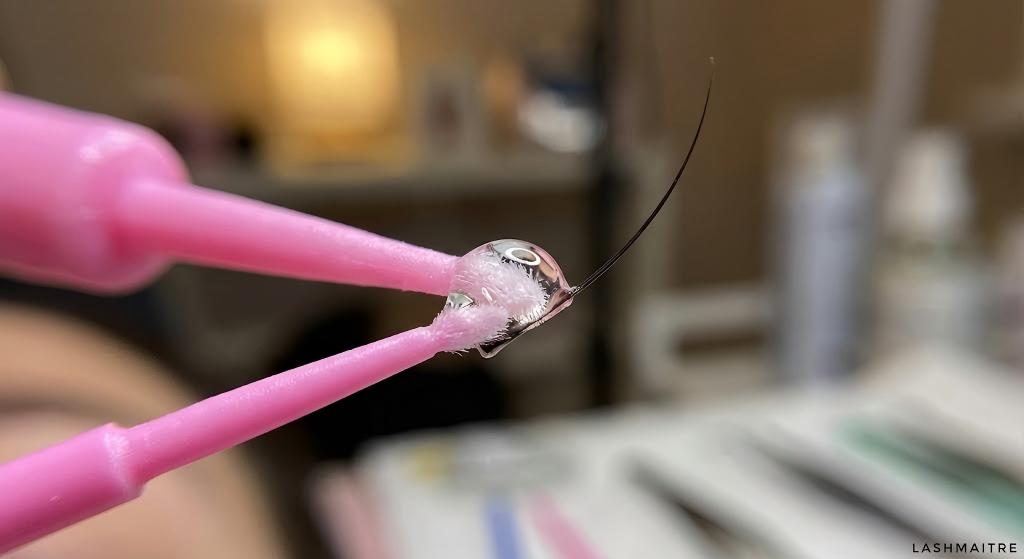
Extreme macro close-up of a pink micro-brush applying a droplet of clear, viscous eyelash extension remover gel to the adhesive bond of a lash extension. LASHMAITRE professional beauty photography.

Author: LASHMAITRE Team

Topic: Product Safety & Technical Application

Reading Time: 20 Minutes


Introduction

In the intricate world of eyelash extensions, the application process gets all the glory. However, any seasoned master artist knows that the true mark of a professional salon is how they handle the end of the lash cycle. Removal is a delicate procedure. One slip, one burning sensation, or one damaged natural lash can destroy trust built over months. This is where a high-quality eyelash extension remover gel becomes indispensable.

Unlike cream removers, which are designed for full-set removals, gel removers offer the precision and speed required for spot corrections and partial removals. Yet, their thinner viscosity poses a higher risk if not handled with strict protocols. For salon owners and distributors in 2026, understanding the chemistry, application techniques, and sourcing requirements for eyelash extension remover gel is critical to maintaining a reputation for safety and excellence.

In this comprehensive guide, we will dissect the seven safety protocols and buying secrets you need to know. We will compare gel versus cream, analyze the importance of GBL-free formulas, and show you how to turn removal services into a profitable revenue stream using LASHMAITRE’s premium supplies.


The Retention Paradox: Why Safe Removal Matters for Business

It seems counterintuitive, but the way you remove lashes dictates how well your next set will last.

The Damage Cycle

If a client attempts a DIY removal with oil or pulls their lashes out, they damage the hair follicle.

  • The Consequence: Damaged follicles produce weaker lashes. Weaker lashes cannot support heavy extensions. This leads to poor retention on future sets.
  • The Solution: By educating clients that professional removal using eyelash extension remover gel is the only safe option, you preserve their canvas (natural lashes) for years of future appointments.

Data Insight: Safety Concerns

According to Grand View Research’s 2025 Beauty Safety Report:

  • Consumer Fear: 45% of clients who stopped getting extensions cited “damage to natural lashes” as their primary reason.
  • Incident Rate: Chemical irritation (chemical burn) from improper removal accounts for 30% of all negative reviews for lash businesses.
  • Opportunity: Salons that market “Damage-Free Removal Guarantees” see a 20% higher client return rate after a break.

The Great Debate: Gel vs Cream Lash Remover

For the wholesale buyer or salon owner, stocking the right inventory is crucial. You shouldn’t just choose one; you likely need both. However, eyelash extension remover gel serves a very specific, high-skill function.

The Viscosity Factor

  • Gel Remover: Has a consistency similar to thick syrup or hair gel. It is transparent.
    • Advantage: It breaks down adhesive bonds extremely fast (1-3 minutes). Its transparency allows you to see the bond clearly.
    • Best Use: Spot Removal (fixing a “sticky” or removing one outgrown fan) and advanced full removals.
  • Cream Remover: Has a consistency like clay or thick lotion. It is opaque.
    • Advantage: It does not run. It stays exactly where you put it.
    • Best Use: Full Removal for beginners or clients with very sensitive eyes, as the risk of seeping into the eye is lower.

Comparison Table: Gel vs. Cream Remover

FeatureEyelash Extension Remover GelCream Remover
ViscosityMedium-Thin (Runny)Thick (Solid)
Action TimeFast (1-3 Minutes)Slow (5-10 Minutes)
ColorClear / TransparentOpaque / Colored
Risk of SeepingModerate (Requires Skill)Low (Safest)
Best ApplicationSpot Correction / Partial RemovalFull Set Removal
ResidueEasy to rinse offRequires thorough cleaning

Professional Verdict: Every salon station must have eyelash extension remover gel for those quick fixes during a fill. Time is money, and gel saves time.


Chemistry 101: GBL Free Lash Remover Benefits

In 2026, ingredient transparency is not a trend; it is a requirement. B2B buyers must understand what is inside the bottle.

The GBL Controversy

Gamma-Butyrolactone (GBL) is a common solvent used in old-school removers.

  • The Risk: In some jurisdictions, GBL is a regulated substance. Furthermore, it can be harsh on the skin and cornea.
  • The Professional Standard: Look for GBL free lash remover benefits. Modern formulations use safer solvents like Propylene Carbonate that effectively dissolve Cyanoacrylate without the legal or health risks associated with GBL.

Acetone-Free

Never use pure acetone. It dries out the natural lash, making it brittle and prone to breakage. High-quality eyelash extension remover gel contains moisturizing agents to counteract the drying effect of the solvent.

PubChem: Gamma-Butyrolactone Safety


Step-by-Step Protocol: How to Use Lash Remover Gel Safely

Using gel requires a steady hand. Because body heat can make the gel runnier, precision is key to avoiding chemical burns.

The “Spot Removal” Technique

This is the most common use case for how to use lash remover gel safely during a refill appointment.

  1. Isolation: Isolate the single extension that needs to be removed (e.g., it’s grown out or twisted).
  2. Application: Using a micro-swab (micro-brush), apply a tiny bead of eyelash extension remover gel only to the adhesive bond. Do not touch the skin.
  3. Wait: Hold the isolation for 60-90 seconds.
  4. The “Banana Peel”: Using your tweezers, gently peel the extension off the natural lash. It should slide off without resistance. If there is resistance, apply more gel and wait. Do not pull!
  5. Cleanse: Immediately wipe the residue with a dry micro-swab, then a damp lint-free wand to neutralize the solvent before applying new primer or glue.
Extreme macro close-up of a pink micro-brush applying a droplet of clear, viscous eyelash extension remover gel to the adhesive bond of a lash extension. LASHMAITRE professional beauty photography.
Precision application: A detailed look at the texture of professional eyelash extension remover gel as it is applied to dissolve the adhesive bond.

Profitability: Pricing Your Removal Services

Many salons make the mistake of offering removal for free or charging a nominal fee like $10. This devalues your time and expertise.

The “Lash Rehab” Strategy

Instead of a basic “Removal,” offer a “Lash Health Reset” or “Removal & Conditioning” service.

  • Protocol: Professional removal using eyelash extension remover gel + a deep Lash Bath + a keratin lash treatment (glaze).
  • Price Point: $30 – $50.
  • Psychology: You aren’t just taking things off; you are restoring the health of their eyes.

Charging for Foreign Work

If a client comes in with a “botched” set from another salon (clusters, too much glue), charge by time. Removing a bad set with eyelash extension remover gel is tedious and requires patience.

  • Policy: “Foreign Removal starts at $40. Pricing may increase based on the amount of adhesive and time required.”

Sourcing Excellence: Wholesale Lash Removal Supplies

For the wholesale buyer, shelf life and packaging are critical.

The Shelf Life Challenge

Removers involve volatile solvents. If packaged poorly, they evaporate or lose potency.

  • Air-Tight Packaging: LASHMAITRE uses pump bottles or sealed tubes for our eyelash extension remover gel. This prevents air exposure, ensuring the gel stays effective for up to 12 months (unopened).
  • Consistency: Our gel is formulated to maintain its viscosity even in warmer salon environments, reducing the risk of it running into the client’s eyes.

Why Buy Wholesale?

  • Cost Per Service: A 15ml bottle of gel remover can perform 50+ spot corrections or 10-15 full removals. At wholesale pricing, the cost per service is pennies, while the revenue is significant.
  • Safety Data Sheets (SDS): As a professional supplier, LASHMAITRE provides full SDS for our removers, ensuring your salon meets all OSHA and insurance requirements regarding chemical safety.

Shop our Professional Lash Remover Collection.


Conclusion: The Professional Edge

In the beauty industry, how you end a service is just as important as how you begin it. Eyelash extension remover gel is a powerful tool that offers speed, precision, and efficiency, but it demands respect and skill.

By choosing GBL-free formulas, mastering the spot-removal technique, and pricing your removal services to reflect your expertise, you elevate your salon from a commodity to a professional establishment.

Don’t let removal be an afterthought. Make it a signature part of your safety protocol. Partner with LASHMAITRE to ensure every drop of product you use is safe, effective, and profitable.

Ready to upgrade your removal protocols?

Stock up on the safest gel removers in the industry.

Register for a Wholesale Account & Shop Remover Gel


People Also Ask (FAQ)

Q: How long do you leave eyelash extension remover gel on?

A: For professional eyelash extension remover gel, the typical wait time is between 1 to 3 minutes. Gel removers work faster than creams due to their thinner viscosity. However, always check the specific instructions from the manufacturer. If the lashes do not slide off easily after 3 minutes, reapply a small amount and wait another minute. Never force the lashes off.

Q: Is gel remover better than cream remover?

A: “Better” depends on the situation. Gel remover is superior for spot removals (fixing a single lash) or advanced technicians who want speed, as it works faster and is transparent. Cream remover is safer for full removals, especially for beginners, because it is thick and won’t run into the client’s eyes. Professional salons should stock both.

Q: Does eyelash remover gel burn?

A: High-quality, professional eyelash extension remover gel should not burn if applied correctly. However, if the gel touches the skin or seeps into the eye, it will cause a stinging or burning sensation. This is why it is crucial to use proper isolation, ensure the client’s eyes remain tightly closed, and use a gel with the right viscosity that doesn’t run.


📅 Content Administration

  • Last Updated: January 14, 2026
  • Changelog:
    • v1.0: Initial publication. Focus on Gel vs. Cream comparison and GBL-free safety standards suitable for the 2026 market.
    • v1.1: Added “Spot Removal” technique details.
  • Next Review Date: July 14, 2026

Grand View Research: Lash Market Trends

OSHA: Salon Chemical Safety

Read our guide on Lash Extension Aftercare & Cleaning.

Lash Maitre: Your Trusted Partner in Eyelash extension Solutions

Lash Maitre is dedicated to providing professional insights and tips in the eyelash extension industry. Sharing the latest trends, techniques, and product knowledge, Lash Maitre helps lash artists and enthusiasts enhance their skills, stay inspired, and achieve the perfect lash experience.
Latest Post
  • A factory quality assurance inspector testing the crush resistance of custom matte-black eyelash extension packaging to ensure product safety during bulk international shipping.
  • High-resolution view of a custom-branded, minimalist private label mixed lash tray with foil-backed strips, representing the premium wholesale products that define a profitable eyelash extension price list.
  • A senior factory technician performing a volume fanning test on 0.05mm individual eyelash extensions to ensure the high retention standards required for consistent eyelash extension refill prices in professional salons.
  • A laboratory technician testing the zero-drip stability and viscosity of a pink strawberry-scented eyelash extension removal cream on an angled glass slide for OEM quality control.
Contact Us

related Post

  • A factory quality assurance inspector testing the crush resistance of custom matte-black eyelash extension packaging to ensure product safety during bulk international shipping.
    Read More
  • High-resolution view of a custom-branded, minimalist private label mixed lash tray with foil-backed strips, representing the premium wholesale products that define a profitable eyelash extension price list.
    Read More
  • A senior factory technician performing a volume fanning test on 0.05mm individual eyelash extensions to ensure the high retention standards required for consistent eyelash extension refill prices in professional salons.
    Read More
  • A laboratory technician testing the zero-drip stability and viscosity of a pink strawberry-scented eyelash extension removal cream on an angled glass slide for OEM quality control.
    Read More
  • Macro photograph of a gloved laboratory technician testing the precise viscosity and deep pigment density of an oil-free, liquid eyelash extension safe eyeliner in a B2B cosmetic manufacturing facility.
    Read More
  • Macro view of a factory technician performing a multi-directional stretch and lint-free surface test on white PE foam eyelash extension tape during a quality control inspection.
    Read More
  • A high-precision flatbed UV printing machine applying custom black mapping lines and a brand logo onto a white acrylic eyelash extension tray holder in an OEM manufacturing facility.
    Read More
  • A close-up macro shot of a factory QA technician using a high-powered illuminated magnifying lamp to strictly examine the fine taper ratio of volume eyelash extensions 15mm in length.
    Read More
  • "A macro photograph of a gloved technician meticulously aligning ultra-fine 0.05mm virgin PBT eyelash extension fibers on a factory production tool. This extreme precision and focus on raw material purity ensures a product with the highest safety standards, essential for discussions regarding safe application during delicate client periods, such as pregnancy."
    Read More
  • A fulfillment specialist carefully boxing rows of minimalist, eco-friendly recyclable cardboard trays filled with premium individual lashes, preparing a custom private label wholesale order for professional salons providing eyelash extensions auburn.
    Read More