Wholesale Lash Cluster Vendors: Qualify the Product Before the Price
Share
Direct answer: Qualify wholesale lash cluster vendors by asking each one to provide a traceable sample and a written specification for the same intended cluster product, then checking the band or base, fiber pattern, length allocation, contact system if any, package contents and reorder version. Compare price only after the vendor has passed the buyer’s product and documentation gates. A low quote for a different segment count, refill format or accessory bundle is not an equivalent offer.
This wholesale lash cluster vendors guide gives lash brands, distributors and salon retail buyers a cluster-specific qualification workflow. The LASHMAITRE cluster wholesale hub describes the product family. The general lash supplier matrix covers broad supplier evaluation, while the cluster quote-units guide converts segment, tray, refill and kit prices. This page answers the earlier question: what must a proposed cluster vendor demonstrate before its price belongs in the comparison? It is not a directory or endorsement of other suppliers.
Build one product brief for wholesale lash cluster vendors
Send the same brief to each candidate. Define the target customer and channel, bare cluster or prepared-contact format, intended band construction, segment width reference, curl and length sequence, visual density, color, trays per retail box, any applicator or liquid, artwork scope, estimated quantity and delivery destination. Mark fields that are still open. Do not make up an unavailable LASHMAITRE SKU to complete the form.
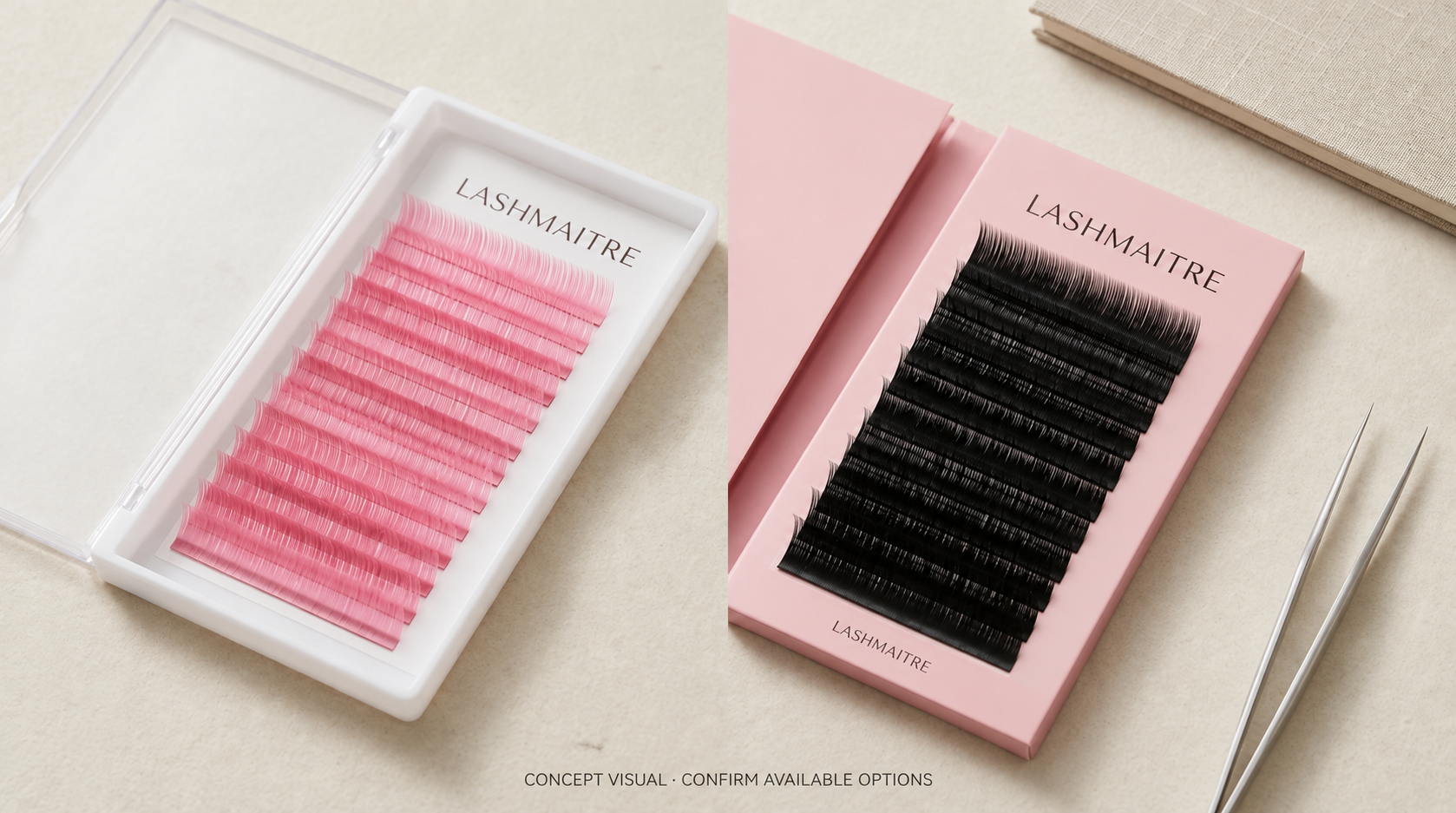
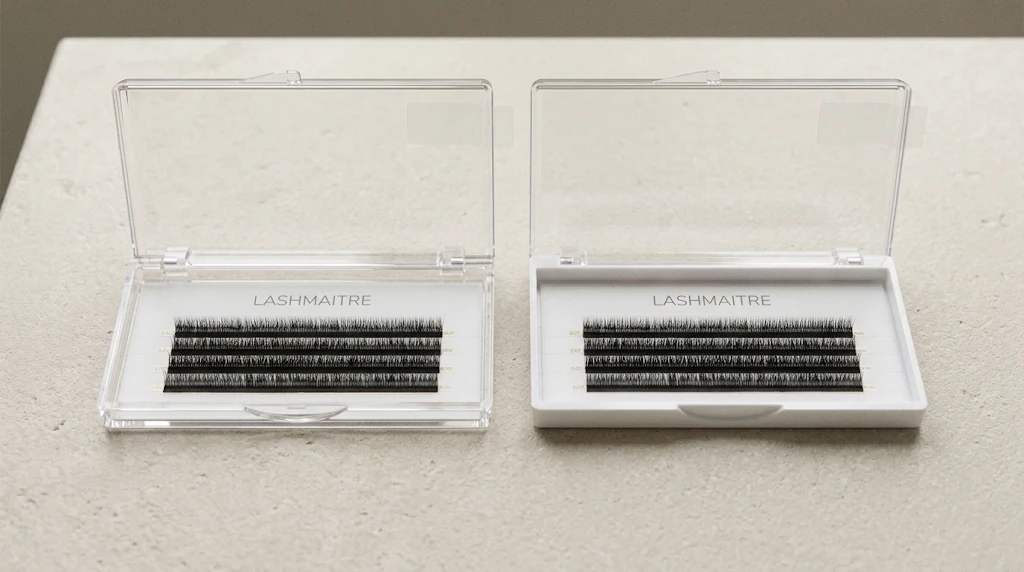
If a vendor proposes a different construction, keep it as a separate alternative rather than silently replacing the target. The choice may be commercially useful, but a black-band cluster and a clear-band cluster should not be scored as identical merely because they occupy the same product category. The same applies to pre-glued and bare clusters. A product brief gives the buyer a stable reference for asking why offers differ.
| Gate | Evidence to request | Pass / hold question |
|---|---|---|
| Identity | Supplier code, buyer SKU candidate and physical sample ID | Can the quote point to the exact tested item? |
| Construction | Band/base, segment pattern, width reference, curl, length mix and color | Does it fit the target brief? |
| Contact system | Bare, pre-glued or another described format; relevant components | Is the system unambiguous? |
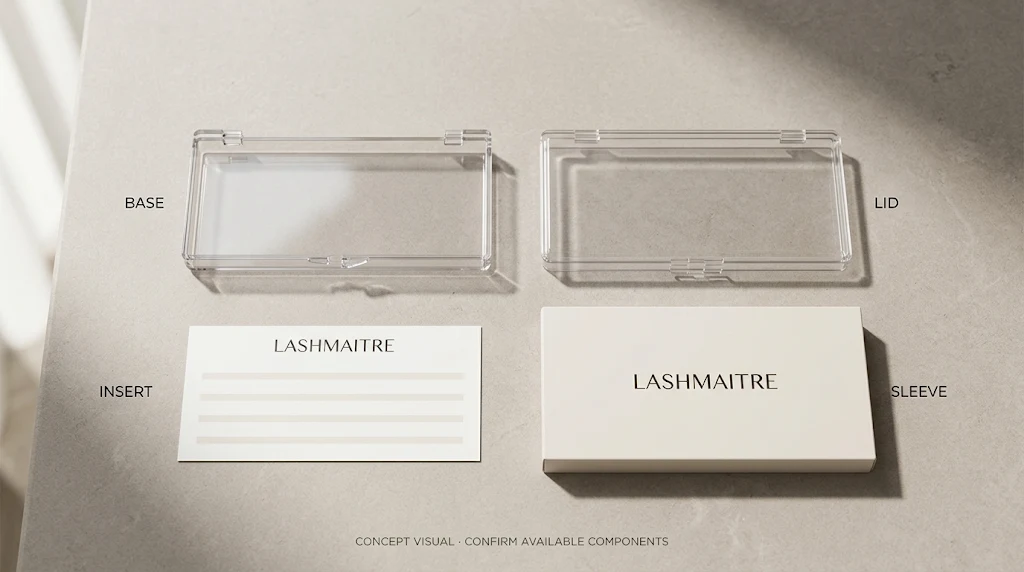
| Unit contents | Segments per tray, trays per box, tools, inserts and liquids if included | Is one sellable unit countable? |
| Branding | Tray label, box, insert and artwork proof versions | Are the proposed claims and surfaces clear? |
| Reorder control | Approved sample, specification revision and change notice method | Can the vendor repeat the approved version? |
This is a buyer worksheet. “Pass” means the buyer has enough evidence for the next stage; it is not a certification, audit outcome or claim that a supplier meets a universal standard.
1. Identify the cluster, not only the style name
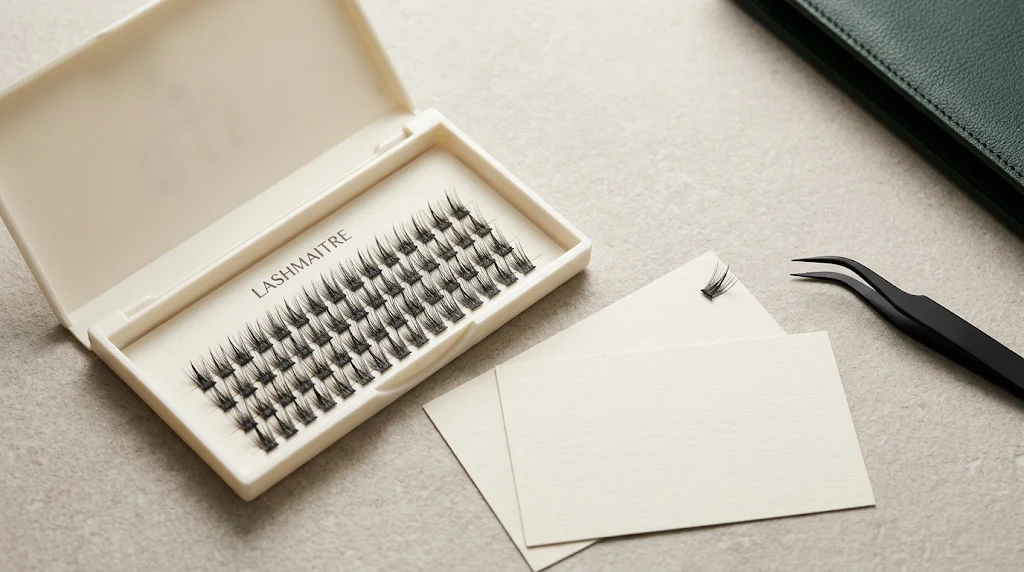
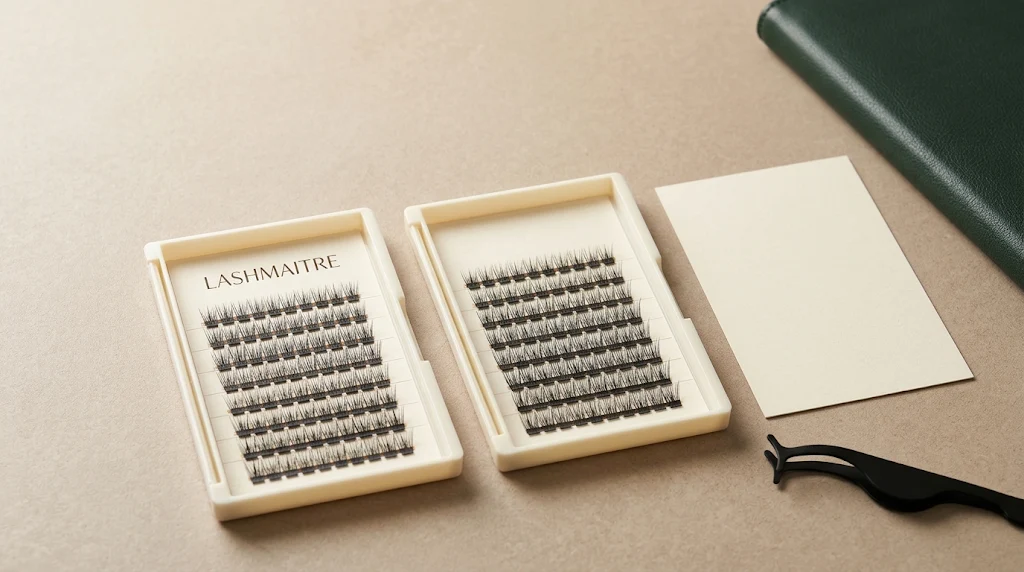
“Natural,” “wispy,” “mink” and “premium” may describe marketing directions but not a full physical specification. Request a clear photograph and coded sample showing one loose segment, its base, the complete tray and a readable label. Note how many cluster units are on the sample tray and how they are allocated across lengths. A styled eye photograph can help communicate the intended look, yet cannot verify band construction, unit count or material.
If the product uses a named fiber material or ethical claim, keep the supplier’s SKU-specific declaration separate from visual sample feedback. Do not infer material composition or sourcing history from the words “mink,” “soft” or “premium” in a catalogue title.
2. Test the intended kit or refill relationship
A cluster vendor may quote a tray-only product, a refill or a complete kit. A refill is useful only when its lash construction and contact format match the buyer’s approved parent kit. Ask the vendor for a side-by-side component list and sample of both versions when the line includes refills. The existing pre-glued cluster refill guide covers that matching task in detail.
Do not infer that a refill includes an applicator, bond, remover or instructions from a lifestyle photo. Do not assume that a bare cluster and a prepared-contact cluster can be substituted in the same kit. If the buyer’s proposed line includes liquids, identify them separately so formula, label and market review are not hidden inside a lash-tray approval.
3. Compare wholesale lash cluster vendors using the same sample questions
To compare wholesale lash cluster vendors fairly, provide each candidate with the same written target. Label samples so reviewers cannot lose track of the source, SKU or version. Inspect the outer pack, tray card and several positions in each tray. Record whether the physical cluster follows the intended width, length sequence, band appearance and segment count. Use the same viewing conditions when comparing appearance; leave application and safety decisions to qualified professionals under the intended use.
A sample finding should be specific: “row two has a different length allocation from the card” is actionable; “quality bad” is not. Keep an actual photograph, reviewer, date and sample code for each observation. Ask the vendor whether it can provide a corrected sample and revised written specification. A correction is not an approved production change until the buyer accepts the new version.
The lash extension samples process provides the broader sample-first path. This guide adds cluster-specific checkpoints rather than repeating every general QC test.
4. Check the retail unit and label promise
Retail customers buy a defined selling unit, not an undefined supplier tray. Before evaluating a wholesale lash cluster vendor, ask which items belong inside that unit and what the exterior promises. The tray card, outer box, online product listing and vendor quotation should agree on style, length range, unit count and included accessories. If one vendor quotes a complete kit while another quotes only a tray, compare them as different offers until the inclusion lists are normalized.
For private label, separate artwork approval from product approval. A logo proof does not verify the cluster construction. The vendor should be able to show which product sample, packaging proof and printed label version will be used on the first order. Unsupported “all day,” “hypoallergenic,” “damage free” or similar performance and safety claims should be removed or held for evidence and market review. A concept visual cannot prove any of those claims.
If the buyer assigns a GS1 GTIN to the finished retail unit, keep that identifier tied to the approved product and package version. GS1 explains that distinct product variations need their own GTIN. This is a retail identification check, not evidence that a cluster vendor passed a product audit.
5. Ask how the same cluster will be reordered
For wholesale lash cluster vendors, request a versioned record that names the cluster construction, sample code, style and length allocation, material declaration if relevant, band/contact format, tray count, packaging revision and first accepted order. Ask how the vendor reports changes to fiber, base, glue/contact layer, tray or box. The buyer should approve a changed sample before the revised item replaces the retained reference.
This gate matters even for a small trial order. A buyer may like the first sample, then find that the refill or next carton carries a different band or count under the same style name. A clear vendor change-control answer is more valuable than an unsupported claim of “consistent quality.” Record what can actually be checked on receipt.
6. Move only qualified offers into the commercial comparison
Once product identity, sample behavior, contents and reorder records are sufficiently clear, compare MOQ, sample charges, pack-out, freight basis, timing and price. The cluster quote-units worksheet explains how to normalize segments, trays, boxes, refills and kits. Do not turn a missing specification into an assumed low cost. Mark it unconfirmed and request a revised quote.
Use three outcome labels rather than a decorative score: qualified for commercial comparison, revision or sample needed, or not a fit for this brief. A vendor can remain a fit for another cluster product even if one candidate fails this particular target. The decision should name the reason and the evidence, not just a brand impression.
Buyer FAQ
What is the first question to ask wholesale lash cluster vendors?
Ask for the exact sample and product reference behind the proposed quote. Without that identity, the buyer cannot reliably compare construction, pack contents or a later reorder.
Can I compare two vendors by price per box?
Only after the box contents, cluster construction, segment count, packaging and delivery basis are clear. Otherwise the prices may describe different products.
Should a refill vendor be evaluated separately from the original kit vendor?
If the refill will be sold for an approved kit, test the physical and contact-system match. It may be the same or another vendor, but the relationship needs its own sample and component record.
Does an attractive product photograph prove vendor quality?
No. It can communicate style, but a coded physical sample, written specification, packaging proof and repeat-order process are needed for a purchasing decision.
What if a vendor cannot document a material or safety claim?
Hold that claim out of the buyer’s packaging and listing while requesting evidence. Do not treat a generic supplier brochure as proof for the exact SKU.
Send a qualification-ready inquiry
When comparing wholesale lash cluster vendors, use the LASHMAITRE B2B inquiry to send the target cluster style, band and contact format, length/segment map, retail unit, estimated order quantity, branding scope and destination. Ask which actual references can be sampled and quoted, and what records support the proposed reorder. Availability, price, MOQ, lead time and any product claim require confirmation for the exact configuration.

Lash Maitre: Your Trusted Partner in Eyelash extension Solutions
Lash Maitre is dedicated to providing professional insights and tips in the eyelash extension industry. Sharing the latest trends, techniques, and product knowledge, Lash Maitre helps lash artists and enthusiasts enhance their skills, stay inspired, and achieve the perfect lash experience.