Pre-Glued Cluster Lash Refills: 7 Kit-Matching Checks
Share
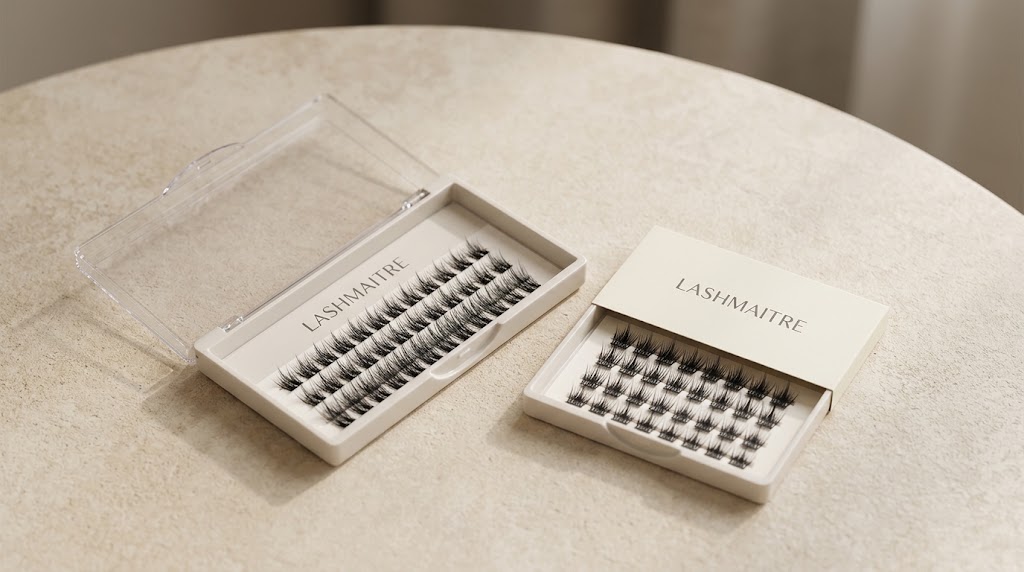
A pre glued cluster lash refill needs a documented match to an approved kit. Compare cluster style, row allocation, unit count, base construction, protected contact surface and labeling on physical samples. A similar box or product photograph cannot establish adhesive formulation, safe use, wear time or kit compatibility. Images in this guide are illustrative buyer-planning concepts, not product specifications or test data.
For a pre glued cluster lash refill, the buyer’s task is replenishment: a complete kit may contain a tool and printed directions, while the refill contains only lash units. Keep separate product codes and a kit-to-refill contents map. This article concerns the refill decision; our cluster system comparison covers the broader choice of application format.
1. Define the refill format
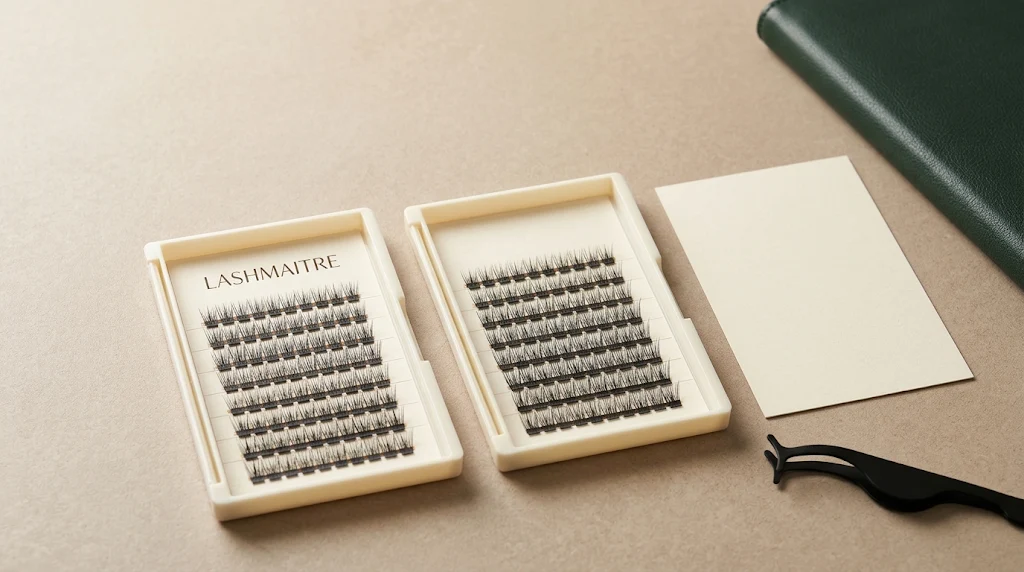
Confirm that the proposed product contains separate short cluster units, not a continuous full-eye strip. Name the original kit code and the refill code. List every component included or omitted: clusters, tool, remover, instructions and packaging. A compact box alone does not explain its selling unit.
2. Map kit contents to the refill
For each row, record the approved kit’s style, length sequence, curl description, visual density and number of cluster units. Put the proposed refill beside it. Count physical samples or reconcile against a written supplier pack specification; never infer quantities from a generated scene. If the refill covers only one of several kit looks, state that limitation in the order record.
| Field | Approved kit | Proposed refill | Decision |
|---|---|---|---|
| Product code | Record exact code | Record exact code | Same system? |
| Style and rows | Sample and row map | Sample and row map | Differences identified? |
| Unit count | Count by row | Count by row | Selling units reconciled? |
| Contact protection | Actual tray and liner | Actual tray and liner | Sample review needed? |
3. Inspect the contact area and release tray
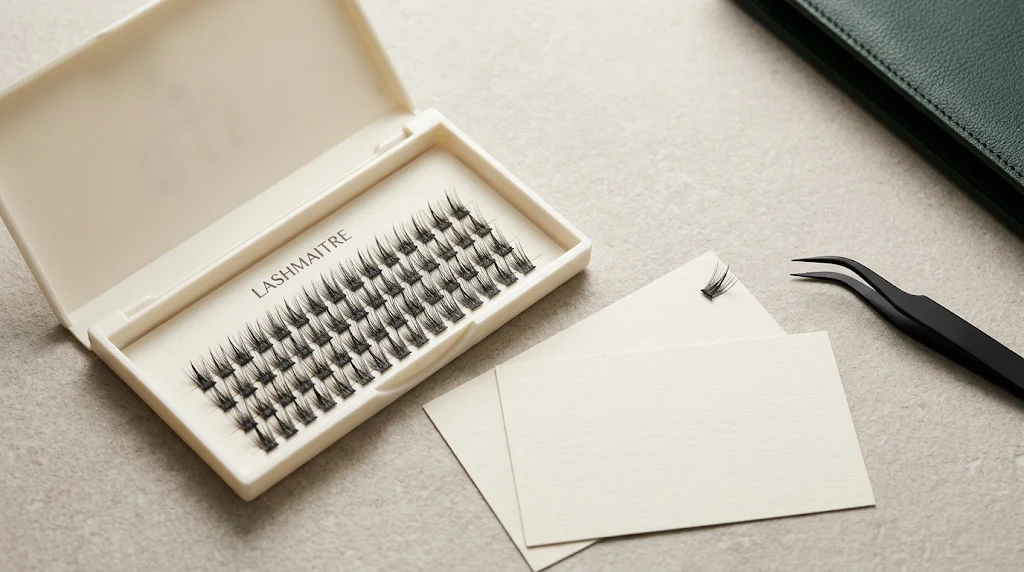
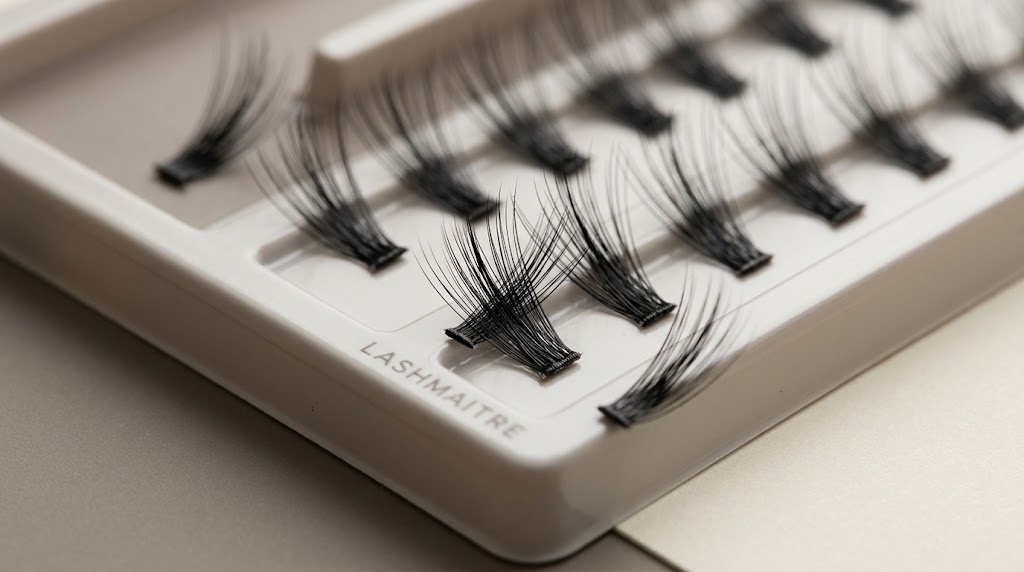
Request the pre glued cluster lash refill in its proposed final tray. Observe how units are separated and how the pre-applied contact area is protected before removal. Note damaged bases, joined units, missing protection or unexpected residue on an actual sample. Ask for the exact version’s ingredient declaration, warnings, storage instructions, lot identification and evidence for any claimed use or shelf-life period in the destination market. Appearance alone cannot prove adhesive chemistry, safety, shelf life or wear claims.
For U.S. market context, the FDA eye cosmetic safety guidance discusses false eyelashes and their adhesives. It does not certify this refill or replace product-specific formulation, labeling and use evidence.
4. Approve style and base separately
The lash fibers may match while the protected base changes; the base may look similar while lengths or row counts change. Keep style and contact system as separate approval fields. A new shade, curl or tray design needs its own reference and sample check. Our brown cluster kit guide explains shade and length allocation, but its contents cannot be transferred to an unverified refill.
5. Confirm refill-only labeling
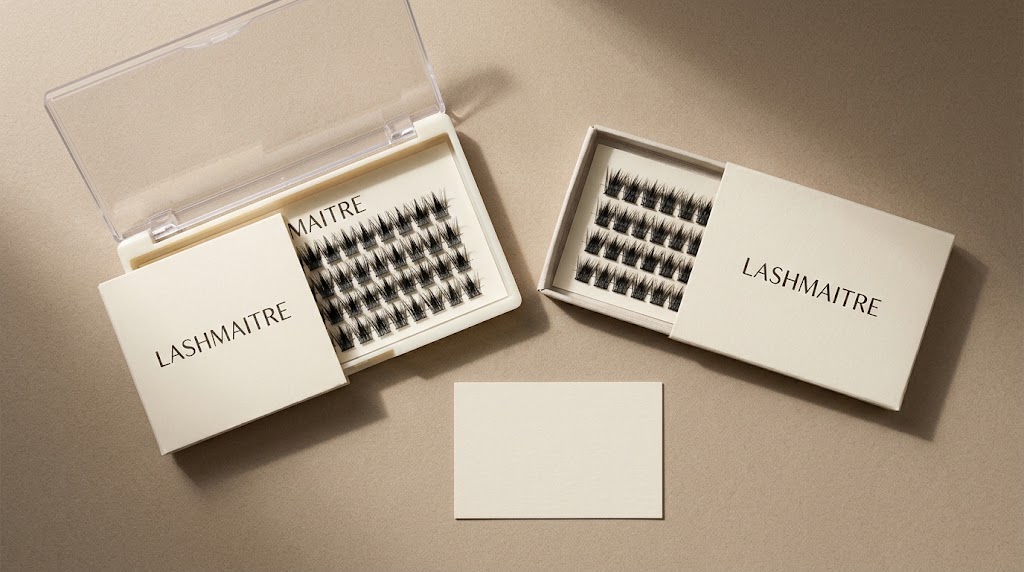
State the retail name, component list, unit count, product code and instruction revision. A refill package should not imply that it includes an applicator or remover when it contains only a lash tray. Approve artwork against the actual tray and box. A mockup can show a proposed layout but cannot verify print quality or complete market-specific label content.
6. Compare quotations on the same basis
Ask for price per defined number of refill trays, cluster units per tray and packaging configuration. A kit quote and a refill quote cover different components. Price per box alone can conceal fewer clusters or missing tools. Any minimum quantity, lead time, charge or mixing rule needs a current project-specific quote.
7. Retain the sample and manage changes
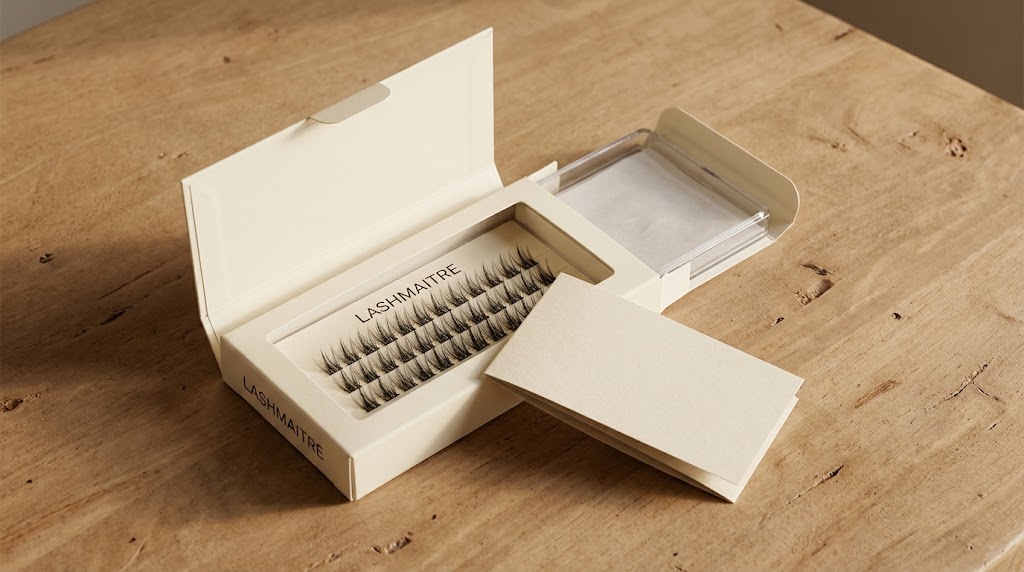
For each pre glued cluster lash refill reorder, keep the approved kit and refill samples, contents map, tray photographs, packaging proof and instruction revision together. A reorder should reference those records. Changes to cluster style, contact area, liner, row count or label should be flagged before substitute stock is approved. Use the sample request page to organize the comparison, then send the exact kit and refill references through the B2B inquiry form.
Buyer FAQs
Can a refill use the same order code as its kit?
Separate selling units need unambiguous order identities. Link the two records without confusing their component lists.
Does pre-glued mean adhesive-free?
No. Request the exact product’s contact-system description and instructions rather than inferring its chemistry from the name.
Can a photo prove kit compatibility?
No. Use the written contents map and physical samples, including the protected contact area and final pack-out.

Lash Maitre: Your Trusted Partner in Eyelash extension Solutions
Lash Maitre is dedicated to providing professional insights and tips in the eyelash extension industry. Sharing the latest trends, techniques, and product knowledge, Lash Maitre helps lash artists and enthusiasts enhance their skills, stay inspired, and achieve the perfect lash experience.