Clear vs White Lash Trays: Choose a Pack That Shows the Right Product Data
Share
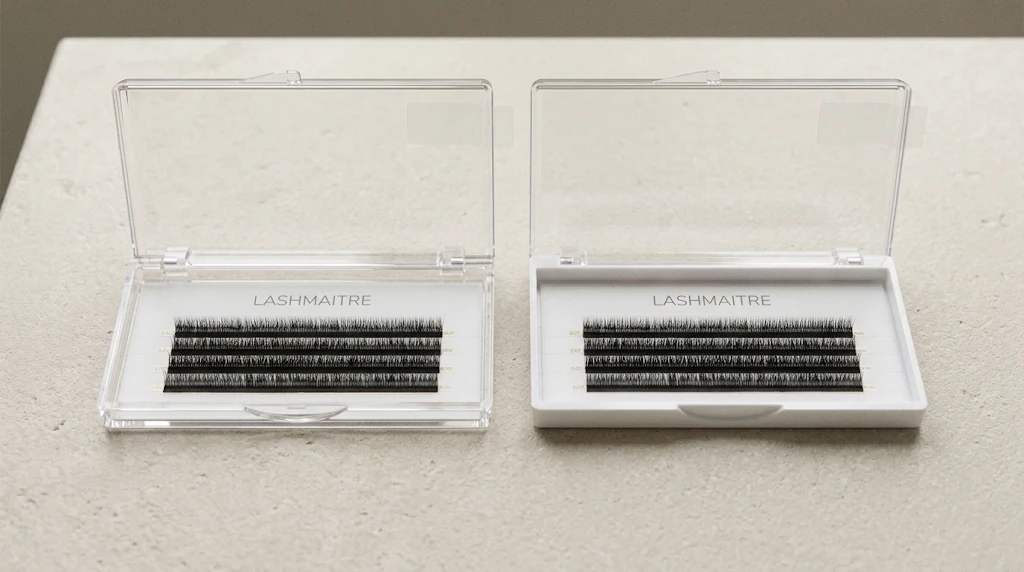
Direct answer: For clear vs white lash trays, test the same lash specification in both production-equivalent packs. Compare how well the rows, length labels and brand are visible, whether the card and lid keep the product in place, and how each version looks in the actual retail sleeve and listing photography. Tray color alone does not establish material quality, product hygiene or a price advantage.
The broader wholesale lash trays guide covers curl, row count and procurement. This article isolates one presentation decision for salon brands and distributors: whether a transparent or white tray format makes the approved SKU easier to identify and sell without creating new packing problems. Availability of either format, minimum order quantity and tooling should be confirmed for the exact request rather than assumed from a concept image.
Clear vs white lash trays: hold the SKU constant
Ask for the same lash style, curl, diameter, length arrangement and row count in both tray candidates. Keep the same logo, text size, label information, outer pack and photographic lighting. Otherwise the buyer may attribute a better-looking product image to tray color when the lash specification or card design has changed. Give each sample a code and record the exact tray, lid and card combination.
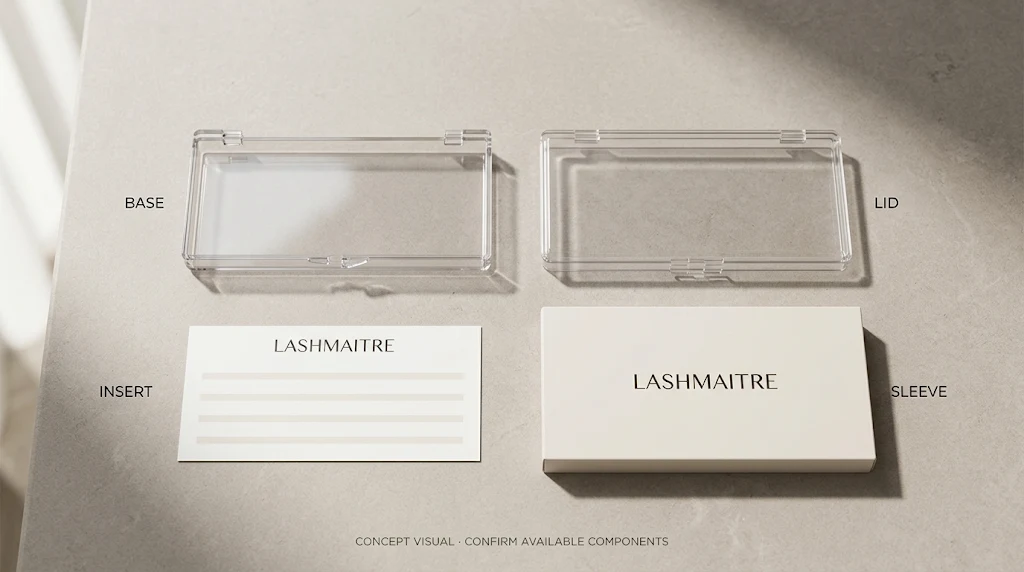
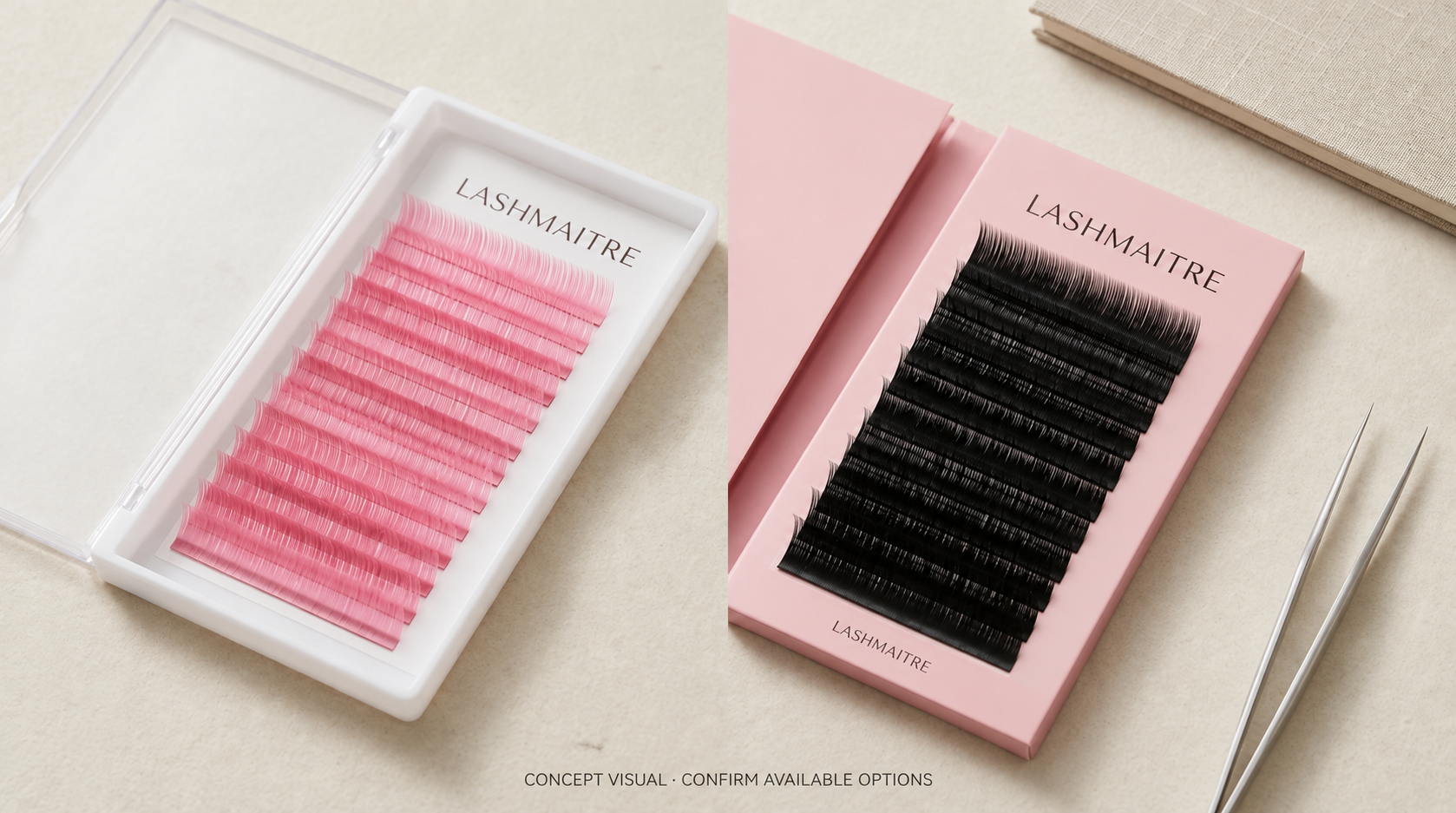
The clear vs white lash trays comparison should start with the job of the packaging. A transparent case may reveal the internal rows from more angles. A white tray may create strong contrast for black fibers and printed length labels. Neither effect is guaranteed: glare, card color, dense lash rows and lid reflection can reverse the result. Evaluate physical samples and product photographs side by side.
Clear vs white lash trays: build a matched review
Prepare two coded samples with the same lash product, row allocation, tray-card copy and outer package. Identify every intentional difference in the tray or lid, including its color and finish. If the supplier cannot supply otherwise matched samples, mark the comparison as provisional and describe the additional differences. A buyer should not choose clear vs white lash trays from two unrelated catalogue images, because lighting, lash density and card layout can dominate the color effect.
For the clear vs white lash trays review, photograph the finished packs in the same room with the same light position, camera settings, viewing angle and background. Keep one front view for listing use and one open view for row and label inspection. Save the unedited comparison images with the sample codes; any retouched marketing images should be approved separately. Then place both packs inside the intended sleeve or box and repeat the front view. This makes visible whether a tray-color difference survives the final retail presentation.
Ask reviewers to record what they can actually read or see: lash-row separation, length labels, SKU identity, logo, barcode area and any glare. Use the distances and display conditions relevant to the buyer's channel rather than claiming one universal shelf distance. If the result is mixed, separate the decisions: the buyer may prefer one version for an open display and another for photography, or may decide that one consistent pack is simpler to reorder. These are buyer choices to validate with samples, not proven performance claims about either plastic color.
| Comparison point | Clear tray question | White tray question | Evidence to retain |
|---|---|---|---|
| Product visibility | Can buyers see the rows through the intended lid or sleeve? | Do black fibers stand apart from the base? | Same-angle photographs |
| Length and SKU text | Is small text legible over the background? | Is text legible without crowded black-on-white print? | Final card proof |
| Glare and finish | Do reflections hide curl or row gaps? | Does the surface make dust or scuffs more noticeable? | Fixed-light sample set |
| Closure and fit | Does the exact lid close without fiber contact? | Does the alternative shell fit the outer pack? | Coded assembled samples |
| Pick-up workflow | Are strips and labels easy to locate during use? | Does the base support the same row placement? | Controlled pickup notes |
| Reorder control | Can this tray version be identified in the BOM? | Can it be distinguished from the clear version? | Component code and revision |
These clear vs white lash trays questions guide sample approval. The table does not imply one material is better or that LASHMAITRE has already validated either option for every lash SKU.
Check label contrast in the actual pack
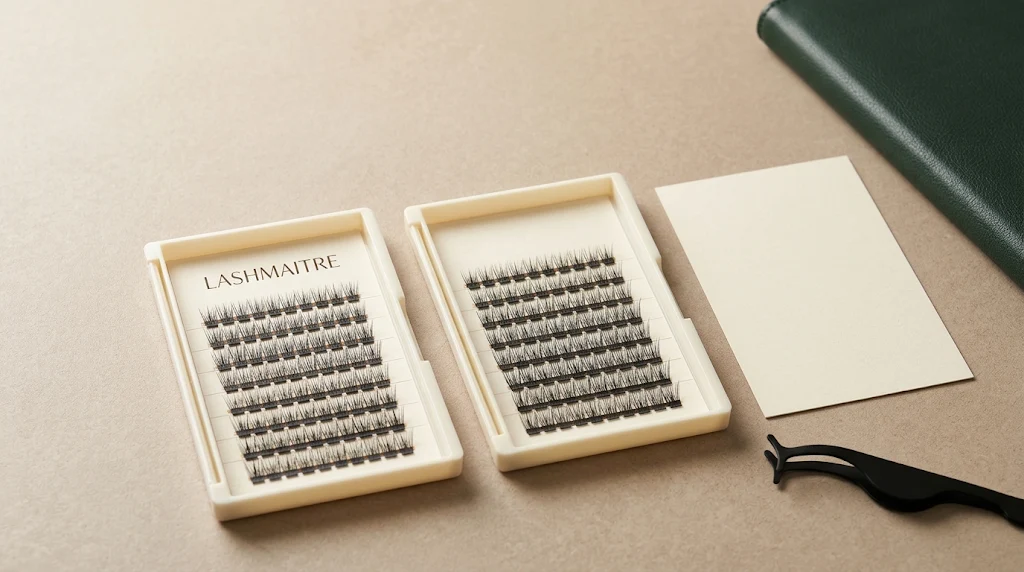
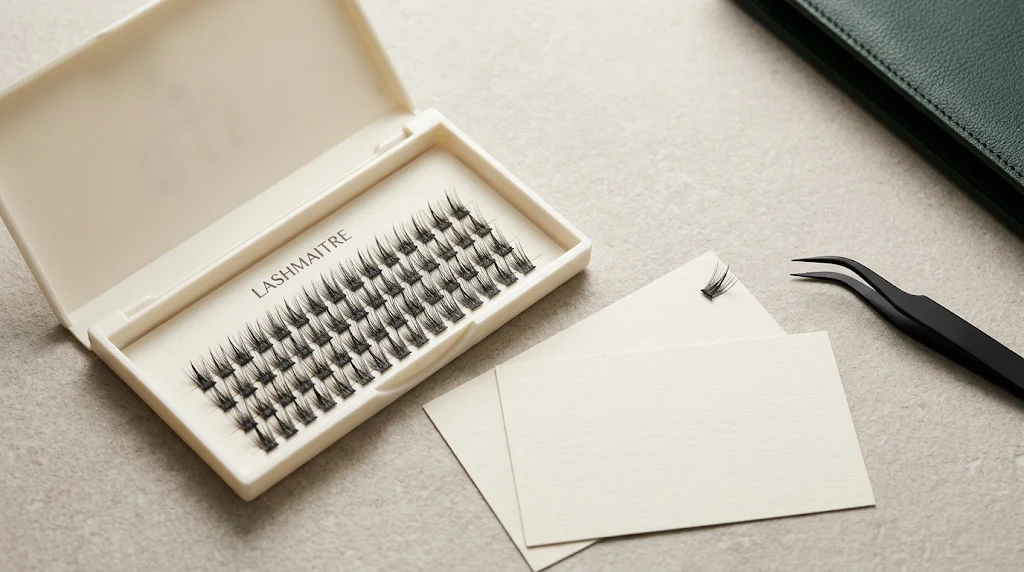
Put the approved text on each tray card: brand, curl, diameter, length structure, color and selling-unit identity as applicable. Read it from the front, at a typical shelf distance and in an ecommerce photograph. Check whether a transparent surface lets an unintended background show through the text area. Check whether white-on-white components make edges or removable cards difficult to distinguish. Revise the artwork only after identifying the actual readability issue.
The lash tray card text proof covers exact copy and typography. This comparison focuses on how the chosen presentation affects the same approved copy. A barcode or SKU needs its own identity check; a pretty product photo is not proof that printed data are correct.
Review the label before changing the tray
If text is hard to read, diagnose whether the problem comes from the tray background, lid reflection, card stock, print contrast, type size or placement. Try a card or artwork revision on the same physical tray before treating a new tray color as the only answer. A clear tray can place a busy lash background behind small type; a white tray can lose the edge of a pale card. Neither result follows from color alone, so the buyer should identify the exact line or field that failed in the sample.
Check the assembled pack against the approved product specification and selling-unit description. Read the style, curl, diameter, length map and count fields that the project actually uses; compare them with the coded lash sample and quote. If a barcode is printed, scan the finished proof using the buyer's intended workflow and confirm that the encoded identifier matches the written SKU record. A scan result validates identity for that sample, not the quality of the lashes or every later print run. Save a dated proof and record any change to card artwork or tray component as a new version.
Test the complete assembly
Close each tray with the mounted lash rows in place. Check lid clearance, hinge or latch behavior, strip movement and whether the chosen retail box hides or reveals the visual difference. If an outer sleeve covers most of the case, the color choice may have little impact on the selling presentation. If the case is shown openly, reflections and contrast may matter more. Use the actual pack configuration, not a loose tray photographed without its sleeve.
Retain before-and-after samples from the intended shipping route. ISTA's packaged-product design guidance supports testing a finished pack in a relevant distribution environment; it does not rank clear and white lash trays. Mark any visible scuff, cracked edge, lifted card or displaced row by component and sample code. A failure in one prototype should trigger a specific correction and another sample, not a general declaration that all clear or all white trays are unsuitable.
Decide the SKU and photography plan together
If both tray versions are approved, assign separate component codes and then decide whether they represent one retail SKU or different SKUs. Make sure the product listing image corresponds to the pack buyers will receive. A white tray photograph paired with a clear-tray delivery may create avoidable customer confusion even when the lashes are identical. Store the chosen image, tray revision and packaging proof in the reorder file.
Record the commercial decision without assuming a winner
For clear vs white lash trays, ask for quotes that describe the same completed selling unit: lash SKU, mounted rows, tray and lid, card, outer pack, branding method, quantity and delivery basis. A different tray can alter tooling, assembly or artwork even when the lashes do not change. Ask the supplier to name any changed component, sample cost, minimum quantity or packing step for the exact proposal. Keep unknown values open rather than treating a concept photograph as a price list.
The clear vs white lash trays approval can be one chosen tray, both versions under separate component codes, or hold pending another sample. Write the reason in buyer terms: readable length data, row visibility, closure fit, listing-image match and feasible reorder identification. If both versions are retained, decide how orders and customer-facing images distinguish them. If only one is accepted, archive the other sample and the reason so a later buyer does not revive it from an unmarked photo. A repeat order should cite the accepted tray, lid and artwork revision; changing color later triggers a physical pack and listing review before release.
For private label, ask which branding surfaces are available on the actual tray card or outer box. Do not assume the logo can be printed directly on plastic or that a custom color is included in a standard quote. The private label lash extensions page explains the wider branding program, while the wholesale inquiry form is the place to submit the exact tray-and-pack request.
Give reviewers the same comparison task
For a clear vs white lash trays review, ask each reviewer to inspect the same coded product in the same order. Begin with the closed retail pack and ask which lash style, length map and selling-unit identifier they can identify without opening it. Then open each pack, read the tray card and inspect row separation and fiber visibility. Finally, view the approved listing photograph alongside the physical pack. Record the exact field that is hard to read or the area of glare, rather than asking only which color “looks premium.” A preference statement is useful, but it does not identify the packaging problem that a supplier must correct.
The review sheet can have one row per observation: sample code, viewing condition, required information, result and proposed action. Keep a separate row for fit or handling. A clear lid may allow a useful view of the product but also show a background that makes small text harder to read. A white base may help fiber contrast while the chosen sleeve hides most of it. These are possibilities to test in the submitted construction, not general performance findings. If the reviewer cannot tell whether the difference comes from the tray, the card or the photograph, mark that observation unresolved and request a matched revision.
Set the decision rule before opening the samples. For example, the buyer may make SKU and length identification a required condition, while treating a preferred photo appearance as a secondary choice. The buyer sets those priorities for its channel; this guide does not prescribe a universal score or shelf-distance standard. Ask the supplier to provide a corrected proof when a required field fails, and recheck the corrected pack under the same conditions. That approach keeps the clear vs white lash trays decision tied to a buyer task rather than to an isolated studio image.
Request a quote that preserves the same selling unit
The quote request should state one lash specification, row arrangement and approved card copy, then ask for each available tray-and-lid version as a separate option. Include the intended outer sleeve or box and the expected order quantity. Ask whether the proposed alternatives use the same tooling, inserts and packing steps; if not, have each difference named in the quotation. A quote for a bare clear case cannot be compared directly with a quote for a printed white tray inside a finished retail sleeve. Compare the completed unit and record which component or service accounts for each price difference.
For clear vs white lash trays, ask the supplier to identify any custom color, print method or tray shape that needs separate development. Do not assume that a logo seen on a concept image is printed directly onto the plastic; it may be on the card or outer box. Likewise, do not infer minimum order quantity, material grade or lead time from the color choice. Those are quotation facts for the exact proposed construction. If one version cannot be supplied for the chosen lash SKU, mark that option unavailable rather than keeping it in a comparison table as though it could be ordered.
The buyer can send one concise brief: the lash SKU and row map, card artwork file and revision, required barcode or identity fields, outer pack, two requested tray presentations, quantity and delivery basis, and the sample checks that will decide approval. Ask for a named sample code on each physical version. This gives LASHMAITRE a specific inquiry to answer and lets the buyer relate the quotation to the samples and listing images later.
Transfer the chosen tray into a reorder record
When the clear vs white lash trays review is complete, save a photo of the accepted finished pack beside the approved product-listing image. Record the tray and lid code, card revision, lash SKU, outer pack, brand artwork, approver and date. If both colors remain available, give each a separate component code even when the lash fibers are identical. Decide whether customers will see different retail SKUs or one SKU with a controlled packaging choice. The order record should make that choice explicit; the warehouse should not have to infer it from a photograph.
On the first order, check a production-equivalent unit against the approved reference. Read the printed length map and SKU, verify the barcode identity if used, inspect lid fit with the mounted rows and confirm that the delivered color matches the approved listing presentation. Record any mismatch by component and version. A white tray delivered with clear-tray photography is a content and fulfillment mismatch even if the lash fibers are correct; the buyer should decide whether to correct the image, the pack or both before continuing distribution.
For a repeat order, request the same coded tray, lid and card combination and ask for advance notice of substitutions. If the supplier changes a component, recheck the conditions affected by that change rather than automatically treating the earlier approval as transferable. A different lid can change glare or clearance; a different card stock can change text contrast; a different outer sleeve can hide the tray entirely. The clear vs white lash trays choice stays reliable only when the physical pack, order data and customer-facing image continue to describe the same version.
Questions buyers ask
Are clear trays always better for product visibility?
No. Glare, card placement and the outer pack may obscure the rows. Compare both options using the same lash SKU and photo setup.
Does a white tray mean better lash quality?
No. Tray color is a packaging attribute. Fiber, curl, base, row consistency and label accuracy require their own sample checks.
Can I switch tray colors on a reorder without a new approval?
Treat a change of tray component as a revision. Confirm fit, label legibility, photography and the approved packaging bill of materials before release.
What should I send to request samples?
Send the lash SKU, row count, card artwork, outer box, intended listing view, quantity and the tray presentation you want compared. Ask which formats are available for that construction and which require separate development.
Next step: Ask LASHMAITRE which tray formats can be sampled and include one product and packaging brief for both proposed presentations. If both formats are available for that SKU, approve the physical pack and listing image together.
If your project needs cases, lids or cards as unfilled components, compare the parts list and fit separately in our empty lash trays wholesale guide.

Lash Maitre: Your Trusted Partner in Eyelash extension Solutions
Lash Maitre is dedicated to providing professional insights and tips in the eyelash extension industry. Sharing the latest trends, techniques, and product knowledge, Lash Maitre helps lash artists and enthusiasts enhance their skills, stay inspired, and achieve the perfect lash experience.