Lash Tool Tray: 7 Practical Checks for Better Fit
Share
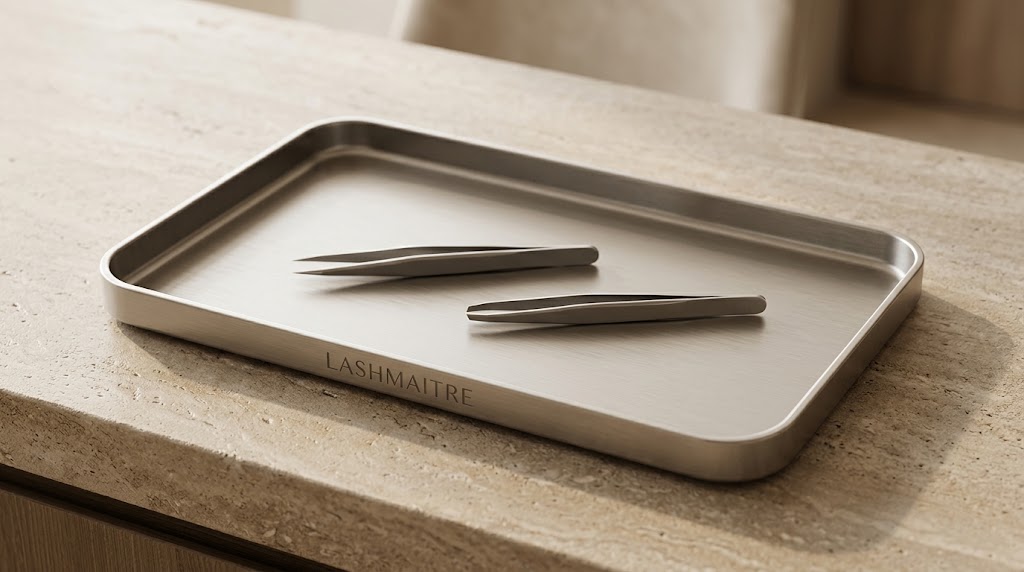
A lash tool tray should be chosen by its usable interior, tool layout, edge finish, base stability, documented care method and packing configuration. For a salon group or training academy, the useful test is whether the offered tray accommodates the actual tool set and fits the intended station. A product photograph alone cannot answer either question.
This guide covers a shallow, loose tabletop tray used for staging tools. It does not cover a wheeled workstation, an upright slotted tweezer stand or a sealed instrument-processing container. Those products require different specification fields. Start a sample comparison with one named lash tool tray model and one defined tool list.
Buyer decision: approve the interior layout and finished sample before approving color or a logo. Record dimensions, tool clearance and packaging as separate acceptance items.
1. Name the item before comparing prices
A search for a lash tray can return a container of extensions, a lash-strip palette and a tray for loose tools. Ask the supplier to show the offered object both empty and with the intended contents. State whether tweezers, scissors, brushes, a liner or a lid are included. Otherwise, buyers may compare a complete set with an empty tray price.
Define the workstation boundary too. A lash tool tray that sits on a counter is not the same product as an attachment that clamps to a lamp. The attachment needs its own mounting and load assessment. Keep this order focused on the loose tabletop model unless that additional assembly is specifically requested.
| Item | Primary buying question | Scope of this guide |
|---|---|---|
| Tabletop tool tray | Do the intended tools fit inside the usable base? | Yes: dimensions, finish and pack-out |
| Lash-strip tile | Does the strip surface suit the planned lash arrangement? | Separate palette specification |
| Upright tweezer stand | Do individual slots support the offered tools? | Separate slot-fit assessment |
| Instrument-processing container | Is the complete system suitable for the intended process? | Separate equipment and process review |
2. Measure usable space in the lash tool tray
For the lash tool tray, request both external dimensions and the flat interior area. Rounded corners, sloping sides and a rolled rim can reduce the space available for a long tweezer or scissors. Keep length, width and depth in the same unit on the drawing, sample record and purchase order. NIST’s SI unit reference provides unit definitions; it does not validate a supplier’s measurements.
Lay out the actual tools in their intended orientation, including any protective caps. Record where handles overlap, whether tips touch a wall and whether a user can retrieve one tool without displacing another. Photograph the accepted arrangement from above and from the side. If a kit changes its longest tool, repeat the fit check rather than assuming the earlier approval still applies.
3. Inspect the base, corners and rim
Place the empty lash tool tray on the intended level work surface and check for rocking. Inspect the underside as well as the visible top: raised seams, protrusions or an uneven added foot may alter how it sits. A removable mat or liner is a separate component, so record whether it is included and which version was assessed.
Inspect the rim and corners for visible defects, inconsistent folds, sharp projections or damaged finish. Agree how the supplier will classify defects before ordering. A photograph may document a defect, but the receiving record should also identify the sample, location and disposition. Do not convert a visual check into an unsupported claim about long-term durability.
4. Confirm the finished material and care instructions
For a metal lash tool tray, ask for a material declaration that identifies the offered construction. If a particular grade matters to the purchase, request evidence tied to that model. Weight, shine and a magnet demonstration are not substitutes for the agreed documentation. Identify any coating, printed marking, applied feet or liner separately.
Obtain the care instructions for the finished assembly, then have the responsible salon reviewer assess compatibility with the intended routine. Do not infer that every metal-looking tray tolerates every chemical or temperature. Keep tool staging separate from disinfection or sterilization: a clean-looking tray is not evidence that an instrument-processing procedure has been validated.
5. Approve branding without losing usable space
A lash tool tray logo can look attractive on an empty sample yet disappear beneath the tools during use. Compare an empty-tray photo and a loaded-tray photo before approving its position. Check the marking on the physical finish, including contrast, alignment and any care restrictions associated with the marking method.
Use private label planning to coordinate artwork versions and packaging references. The available marking methods, minimum quantity and cost need confirmation for the actual accessory. Do not apply a lash-tray MOQ or a different product’s packaging terms to a tool-tray order.
6. Use a short sample release record
| Check | Evidence to retain | Reason to hold approval |
|---|---|---|
| Identity | Model code, drawing revision and sample photo | Different model or undeclared component |
| Fit | Loaded layout with actual tools and usable dimensions | Tools extend beyond the agreed space |
| Finish | Rim, corner, underside and surface observations | Visible damage or unresolved edge defect |
| Care | Finished-model instructions and reviewer decision | Unknown coating or incompatible proposed routine |
| Packing | Unit protection, nesting and carton count | Scuffing, mixed versions or unclear quantity |
If lash tool tray units nest together for shipment, inspect how they separate and whether their surfaces contact each other. Ask what protects the rim and any printed area. Keep one accepted packing example alongside the approved lash tool tray reference. A well-presented single sample does not establish the condition of a nested carton.
7. Compare quotes on the same supplied unit
Define the quotation unit as an individual tray, a tray-and-liner set or a complete tool kit. List optional parts and branding as explicit lines. For example, ten cartons containing twenty individually packed trays would mean two hundred trays; this is a counting example, not a proposed LASHMAITRE pack size. Check that all suppliers use the same unit before comparing prices.
Use sample approval for the physical comparison and quality-control planning for receiving criteria. State the order quantity, destination, required documents and sample reference in the wholesale inquiry. Ask to confirm the exact lash tool tray configuration and its availability before treating the proposal as an order-ready offer.
Frequently asked questions
Is a lash tool tray the same as a lash tile?
No. In this guide, a lash tool tray is a shallow tabletop container for staging tools. A lash tile is a working surface for lash strips, while a filled lash tray contains lash extensions. Put the exact item name, photograph and intended contents on the quotation.
Which dimensions should a buyer request?
Request external length and width, usable flat-base length and width, overall depth, and any raised rim or groove dimensions. Check the actual tools with their protective parts fitted. A large outside measurement can still leave too little useful space inside curved corners.
Does stainless steel mean a tray is suitable for every cleaning method?
No. Ask for the declared material and the care instructions for the exact finished model, including any coating, logo or liner. Approve a care method with the responsible salon reviewer. The material name alone does not establish chemical compatibility or a sterilization process.
What should go in a bulk-order inquiry?
Include the tray drawing, intended tool layout, finish, material declaration requested, branding position, packaging, order quantity and destination. Attach the approved sample reference when available. Ask the supplier to confirm item availability, customization, MOQ and timing for that configuration.

Lash Maitre: Your Trusted Partner in Eyelash extension Solutions
Lash Maitre is dedicated to providing professional insights and tips in the eyelash extension industry. Sharing the latest trends, techniques, and product knowledge, Lash Maitre helps lash artists and enthusiasts enhance their skills, stay inspired, and achieve the perfect lash experience.