Disposable Lip Applicators: 7 Checks for Better Kits
Share
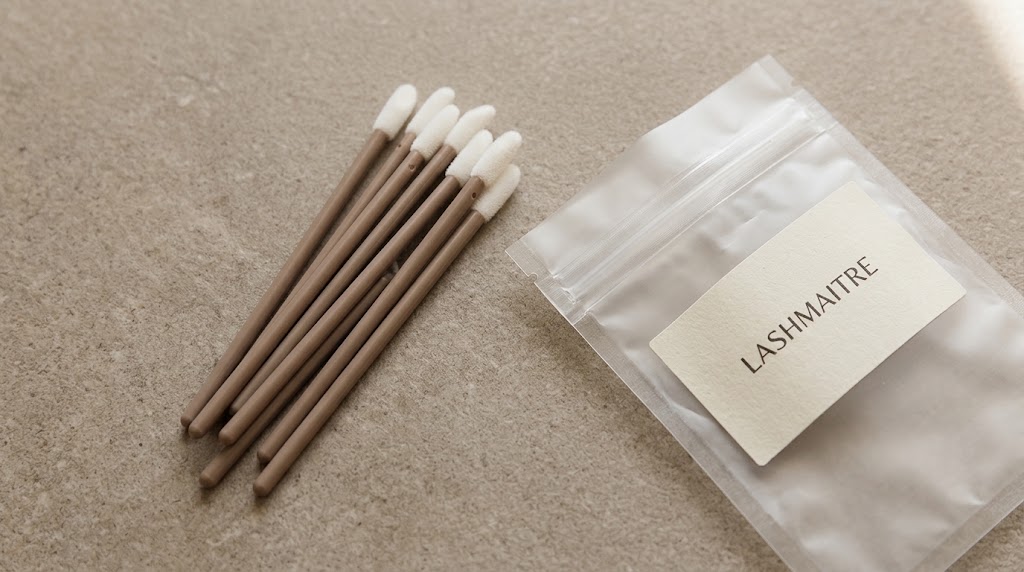
Disposable lip applicators for professional lash kits should be compared by their flocked head, handle construction, intended-use documentation and counted pack contents. The product name alone does not tell a buyer the head dimensions, attachment method or packaging format. Treat the broad flocked-head wand as a separate kit component from a small microbrush, spiral spoolie or cleansing brush.
This disposable lip applicators guide is for academies, salon-supply distributors and brands comparing consumable packs. It focuses on purchase specifications and sample inspection. It does not provide instructions for applying primer, remover or another liquid around the eyes, and it does not establish suitability for any particular formula.
Buyer decision: Approve disposable lip applicators by head profile, handle and package as one identified configuration. Compare prices per individual applicator only after confirming that the quoted packs contain equivalent items.
| Component | What to specify | What to compare on a sample |
|---|---|---|
| Flocked head | Length, width, profile and declared construction | Shape, coverage and attachment |
| Head-to-stem joint | Assembly description and inspection method | Visible gaps, damage or separation |
| Handle | Length, shape, material declaration and color | Straightness and identifiable version |
| Pack format | Bulk bag, container or individual pouch | Opening, closure and access |
| Quantity | Applicators per inner and inners per carton | Count against the invoice basis |
| Label | SKU, count and intended-use information | Legibility and match to the approved file |
| Reorder record | Sample ID and packaging revision | Consistency with the previous approval |
1. Distinguish disposable lip applicators from other wands
A flocked applicator has a shaped head covered with short fibers. In this guide, microbrush refers to the compact, localized-tip format; the catalog name alone does not define every head design. A spoolie has a spiral brush head. Compare the actual geometry and supplier code when catalogs group these items together.
Use a photograph and supplier code alongside the item name on the kit bill of materials. Do not allow a color match or a generic description such as disposable brush to justify a substitution. If a supplier proposes a different head format, review that proposal as a changed component rather than accepting it as an equivalent count.
2. Measure disposable lip applicators by head profile
For disposable lip applicators, request the head length, width, shape and measurement points. Identify whether the quoted head is rounded, angled or another profile and compare the supplied drawing with coded samples. The handle color should not serve as a substitute for dimensional identification.
Inspect the shape and visible flocking under consistent conditions. Record bare areas, visibly loose fibers, deformation or foreign material as observations for supplier review. A photograph that looks soft does not establish material composition, application suitability or a lint-free performance claim. Any such claim needs support for the actual item.
3. Review the handle and attachment as an assembly
In disposable lip applicators, the head, stem and handle are one supplied assembly, but they should remain separate fields in the specification. Ask for declared materials, overall length and any intended flexibility or joint construction. Avoid assuming that two handles of the same color use the same material or geometry.
Agree a sample inspection method with the supplier and record visible cracks, a bent stem or an inconsistent head joint. If a mechanical acceptance test is required, define the method and acceptance criteria before testing. Do not invent a pull-force value or call an informal hand check a certified durability test.
4. Compare disposable lip applicators packaging
A bulk bag, a dispensing container and individually wrapped units create different receiving and kit-assembly tasks. Specify the selected format, pack opening and closure, label position and whether the customer receives a complete unopened pack or a kit assembled from larger packs. Keep the disposable lip applicators specification unchanged when comparing packaging options.
Check whether the sample pack can be identified after it is opened and whether its count and SKU remain readable. An individual pouch is a packaging format, not evidence that an applicator is sterile. Do not add sterile, antibacterial or medical-grade wording to a private-label design without the necessary product-specific evidence and review.
5. Normalize disposable lip applicators quantities
Ask whether the price covers one applicator, one inner pack or one carton. Write both the inner count and carton configuration on the purchase order. Separate the cost of applicators from any custom container, label, artwork setup or kit assembly service so that offers remain comparable.
For planning, quoted applicator quantity equals the number of inner packs multiplied by the stated applicators per inner. Calculate a per-piece price only after checking that count and the included contents. This arithmetic does not establish how many pieces are acceptable on arrival; receiving discrepancies should be recorded separately under the agreed inspection plan.
6. Document receiving checks for disposable lip applicators
Define which findings require a hold, such as an incorrect head format, short count, damaged package, unreadable item identification or a component that differs from the approved sample. State who reviews the evidence and whether a replacement, corrected label or another resolution is required. Keep the affected batch identifiable while the decision is pending.
NIST’s explanation of acceptance sampling distinguishes a lot decision based on samples from proof about every unit. If a sampling plan is used, agree its selection method and decision rules before delivery. A few attractive samples do not establish that every future pack will match, and a generic inspection plan should not replace the product specification.
7. Build the kit and reorder record around the exact SKU
For disposable lip applicators, retain one approved sample configuration with its package, label file and supplier item code. Record head profile, handle color, pack count, intended-use instructions and any branding choices. For academy kits, identify how many individual applicators belong in each kit without confusing that number with the supplier’s inner-pack quantity.
Request notice before changes to the head, flocking, attachment, handle or packaging. A seemingly small substitution can affect the physical format that a buyer approved. Confirm current availability, sample terms, minimum quantities and lead time for the specific order; do not extend terms from lash trays or a different consumable to these applicators.
Use the sample-request checklist to document the proposed configuration. Keep receiving criteria with the quality-control review, and confirm the scope of any private-label packaging proposal for this exact accessory.
Frequently asked questions
Are disposable lip applicators the same as microbrushes?
The broad flocked-head wand covered here differs from a compact localized-tip microbrush. Catalog names vary, so compare supplier codes, photographs and measured head geometry instead of assuming every microbrush has the same design. Suitability for a particular use must follow the exact product documentation and relevant instructions.
Does a pack of applicators have a standard count?
Do not assume a standard count. Ask for individual pieces per inner pack and inner packs per carton, then confirm the price basis. Packaging appearance and the number of items shown in a marketing photograph are not reliable substitutes for a written quantity specification.
Does an individually wrapped applicator mean sterile?
Individual wrapping alone does not establish sterility. Treat it as a packaging choice unless the exact product has the documentation needed to support a more specific claim. Keep unsupported sterile or antibacterial language out of the purchase specification, label and retail description.
What information should a wholesale inquiry include?
Provide the desired head format, dimensions, handle, individual quantity, inner-pack format, target market and intended kit or resale presentation. Include a reference image and request supplier confirmation of available specifications. Ask for samples and current commercial terms before finalizing artwork or a production order.
Prepare a specific accessory inquiry
Use the LASHMAITRE wholesale inquiry page to share the exact applicator format and pack configuration you need. Ask which options can be supplied and sampled before committing to a kit layout. Keep final product claims and order terms tied to the confirmed configuration.

Lash Maitre: Your Trusted Partner in Eyelash extension Solutions
Lash Maitre is dedicated to providing professional insights and tips in the eyelash extension industry. Sharing the latest trends, techniques, and product knowledge, Lash Maitre helps lash artists and enthusiasts enhance their skills, stay inspired, and achieve the perfect lash experience.