B2B Economics: Scaling Chair Turnover and Profit Margins in lash lift vs eyelash extensions

Share
Wholesale Buyer Summary
B2B Economics: Scaling Chair Turnover and Profit Margins in lash lift vs eyelash extensions: sourcing notes for lash buyers
- Best for: salons, lash brands, academies and distributors researching wholesale lash extension products.
- Buyer focus: product specs, samples, packaging, MOQ, private label options and repeat-order consistency.
- Next step: request current pricing through the wholesale lash extensions inquiry form.
Author: Alex, LASHMAITRE — B2B eyelash extensions manufacturing & private-label programs (https://www.lashmaitretrade.com)
Unlike typical consumer beauty guides focusing on maintenance routines or aesthetic outcomes, this analysis strictly deconstructs the operational unit economics, labor timelines, and wholesale Cost of Goods Sold (COGS) required to scale a multi-location beauty franchise. We are evaluating how specific chemical shelf lives and physical inventory footprint dictate regional supply chain strategies.
The Operational Drain of Third-Party Retail Sourcing
When regional salon directors and multi-location franchise owners audit their quarterly Profit & Loss (P&L) statements, the most glaring operational leak is rarely rent or marketing; it is the massive expenditure on third-party branded consumables. A primary, agonizing pain point for any B2B buyer scaling a beauty business is the realization that they are purchasing their core professional liquids and hardware at a significant retail markup, effectively subsidizing another brand’s marketing budget. When a wholesale distributor or salon owner evaluates the market demand for lash lift vs eyelash extensions, they frequently make procurement decisions based on brand hype rather than mathematical margin analysis.
If a salon franchise is purchasing pre-packaged lift kits or individual trays of synthetic fibers from domestic middle-men, they are artificially inflating their COGS (Cost of Goods Sold). This procurement error severely limits the capital available for rapid expansion. To dominate the professional beauty sector, buyers must transition from consumer-level purchasing to direct Original Equipment Manufacturer (OEM) sourcing. This comprehensive B2B briefing dissects the exact financial architecture behind the industry’s two most profitable eye-enhancement services. By deconstructing the labor economics, the supply chain vulnerabilities, and the massive margin expansions available through private labeling, we provide the ultimate blueprint for maximizing your operational ROI.
Defining lash lift vs eyelash extensions in a B2B Ecosystem
In the highly regulated, commercially driven context of Original Equipment Manufacturing (OEM), analyzing lash lift vs eyelash extensions refers to the strategic procurement of two fundamentally different chemical and physical supply chains.
Functionally, a lash lift requires the procurement of pH-manipulating cosmetic chemicals—specifically thioglycolic acid (or cysteamine hydrochloride) to break down the natural disulfide bonds in the keratin hair fiber, followed by a neutralizing bromate solution to rebuild them in a curled position over a silicone shield. Conversely, the extension ecosystem requires the procurement of precisely manufactured Polybutylene Terephthalate (PBT) synthetic micro-fibers and the highly volatile moisture-curing cyanoacrylate adhesive required to bond them. For a B2B distributor or franchise owner, deciding how to allocate capital between these two services requires balancing the fast-expiring chemical inventory of lifts against the geometrically complex, massive SKU count required for synthetic fiber mapping.
The Economics of Time: Calculating Salon Chair Turnover
To command authority as a premium distributor and sell bulk inventory to top-tier salons, you must speak the language of their Chief Operating Officer (COO). Time is the absolute governing metric of a profitable salon. You cannot calculate the baseline ROI of lash lift vs eyelash extensions without analyzing the concept of “Chair Turnover.”
The Passive Speed of Chemical Restructuring
A chemical lift is fundamentally a passive service. A trained technician applies the restructuring lotion to the silicone shield, covers the area, and sets a timer for 8 to 12 minutes.
- Labor Efficiency: Because the chemicals do the work, the total appointment time is typically 45 to 60 minutes.
- The B2B Selling Point: When you market wholesale lash lift kits to a salon owner, your primary value proposition is chair turnover. You are selling them the ability to cycle eight to ten clients through a single chair in a standard workday, maximizing daily gross revenue with lower physical strain on the technician. Furthermore, highly trained technicians can “double-book” lift clients, letting one process while prepping another, completely transforming the salon’s hourly revenue cap.
The Active Precision of Synthetic Bonding
Conversely, applying synthetic fibers is a highly active, physically demanding service. A master artist must isolate a single natural hair, construct a micro-fan of 0.03mm synthetic fibers, dip it in cyanoacrylate, and place it with millimeter precision.
- Labor Intensity: A full volume set requires 1.5 to 2.5 hours of uninterrupted, intensive labor. A single artist can only physically handle three to four full sets per day before experiencing severe hand fatigue and focal exhaustion.
- The B2B Selling Point: While the chair turnover is slow, you are selling the salon owner on the High-Ticket Paradigm. A volume set commands double or triple the price of a chemical lift. When supplying OEM lash extension supplies, you are providing the raw materials for the salon’s most prestigious, highest-grossing individual service ticket.
“A profitable franchise does not view time as a constraint; they view it as a tradable asset. When advising a salon on their B2B lash procurement strategy, we demonstrate how high-volume, rapid-turnover chemical lifts generate the daily cash flow required to cover overhead, while the high-ticket, low-turnover synthetic bonding services generate the pure net profit.”
LASHMAITRE Financial Directive: Service Capacity and Chair Economics
Review our advanced B2B pricing tiers and custom private label options for both service ecosystems
The COGS Matrix: Escaping the Third-Party Retail Trap
A critical factor in the lash lift vs eyelash extensions debate is the Cost of Goods Sold. If a salon is paying $80 for a third-party retail lift kit that yields 15 treatments, their chemical cost is roughly $5.33 per client. If they charge $80 for the service, their gross margin on materials is acceptable, but highly unoptimized.
The Profitability of Direct OEM Sourcing
When a distributor or franchise owner partners directly with an OEM eyelash tools manufacturer to create a private label brand, the financial architecture changes drastically.
- Private Label Lift Economics: By purchasing bulk lifting lotions and neutralizers directly from the factory, the cost of an equivalent kit drops from $80 to approximately $15 – $20 (depending on MOQs). The chemical cost per client plummets to $1.33. You have just added $4.00 of pure profit to every single appointment without raising prices on the consumer.
- Private Label Fiber Economics: A standard retail tray of volume lashes might cost a salon $18. An artist might use $6 worth of fiber per client, plus $2 in premium cyanoacrylate adhesive. By utilizing private label lash manufacturing, that same custom-mapped XXL tray costs the salon owner $4 to $6. The material cost per client drops to under $3.00.
When applied across a 10-chair salon executing 100 services a week, this fractional reduction in COGS through OEM sourcing equates to tens of thousands of dollars in reclaimed operational capital annually.
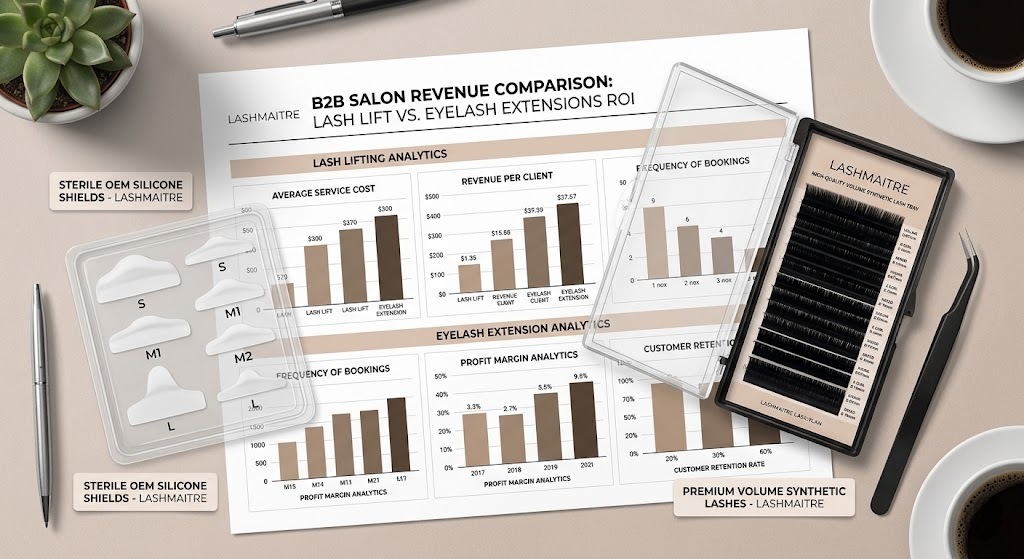
Table 1: Salon ROI and COGS Comparison Matrix
Financial modeling based on average North American salon pricing and standard OEM procurement costs vs Third-Party retail costs.
| Operational Metric | Chemical Restructuring (Lifts) | Synthetic Fiber Bonding (Volume Extensions) | Strategic B2B Impact for Franchises |
| Average Appointment Time | 45 – 60 Minutes (High Turnover) | 120 – 150 Minutes (Low Turnover) | Lifts maximize daily client volume; Extensions maximize individual ticket size. |
| Average Retail Ticket Price | $80 – $120 | $180 – $250+ | Extensions provide the premium luxury positioning for the salon. |
| COGS (Third-Party Retail) | $5.00 – $7.00 per client | $8.00 – $12.00 per client | Bleeds vital operational capital to outside brands. |
| COGS (Direct OEM / Private Label) | $1.00 – $2.00 per client | $2.50 – $4.00 per client | Massive Margin Expansion. Reclaims thousands in lost profit annually. |
Lifetime Value (LTV) and Client Retention Logistics
Looking beyond the initial appointment, the lash lift vs eyelash extensions revenue model diverges drastically when evaluating customer Lifetime Value (LTV). B2B distributors must understand how these services dictate the frequency with which clients return, as this directly dictates how often the salon will place wholesale reorders for supplies.
The Recurring Revenue Machine
Synthetic fiber bonding is the ultimate recurring revenue engine in the beauty industry. Cyanoacrylate degrades, and natural human lashes shed daily. To maintain the aesthetic, the client must return to the salon every 14 to 21 days for a “fill.”
- Inventory Velocity: This creates an incredibly predictable, high-velocity consumption of B2B supplies. The salon will burn through cyanoacrylate and synthetic trays at a rapid, measurable pace, guaranteeing the wholesale distributor a steady stream of monthly reorders.
The Long-Cycle Maintenance
Chemical restructuring operates on a much longer cycle. Because the disulfide bonds are permanently altered until the natural hair naturally sheds out of the follicle, a client only needs to return every 6 to 8 weeks.
- The B2B Upsell: While the service frequency is lower, the barrier to entry for the consumer is practically zero (no maintenance, no special washing instructions). To maximize wholesale revenue in this sector, B2B distributors must focus on supplying aftercare retail products. Your OEM factory should produce private-label keratin conditioning serums and nourishing peptide glosses that the salon can retail to the client after their appointment, capturing additional revenue between the long 8-week visits.
Supply Chain Vulnerabilities: Chemical Degradation
To safely navigate the supply chain for lash lift vs eyelash extensions, B2B buyers must understand the strict thermodynamic and chemical vulnerabilities of the products they are importing. Purchasing in bulk is only profitable if the inventory survives warehouse storage.
The Oxidation of Lifting Lotions
The active ingredient in step 1 of a lifting system (typically thioglycolic acid) is highly reactive to oxygen. If a B2B distributor purchases cheap, generic lifting lotions packaged in large, multi-use glass jars, they are importing a defective product. The moment the salon artist opens the jar, oxygen rushes in, and the chemical potency begins to degrade. Within two weeks, the lotion will be completely inactive, leading to failed services and furious refund requests.
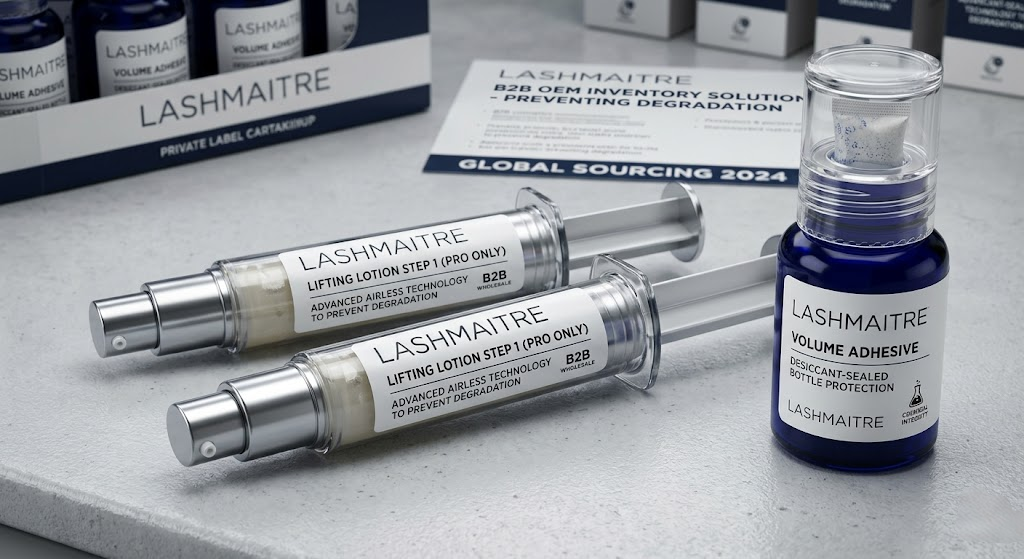
Your OEM contract must mandate that your private label lifting lotions are packaged in single-use sealed sachets or airless pump syringes. This guarantees that the chemical remains 100% stable and un-oxidized until the exact second it is dispensed onto the client’s lashes, completely eliminating chemical expiration liabilities from your salon inventory economics.
The Humidity Shock of Cyanoacrylate
Conversely, the cyanoacrylate adhesives used for synthetic bonding are completely indifferent to oxygen but highly volatile when exposed to ambient moisture (humidity).
If a distributor imports bulk adhesive during the humid summer months without proper thermal and moisture barriers, the adhesive can “shock polymerize” inside the bottle during ocean freight transit.
Your factory must utilize aerospace-grade thermal blanket wrapping and include silica desiccants inside every individual adhesive pouch. For a wholesale brand, enforcing these strict logistical packaging standards is the only way to ensure your clients receive factory-fresh, high-performing chemicals.
Table 2: B2B Procurement Risk and Inventory Matrix
Strategic inventory management guidelines for wholesale distributors.
| Supply Chain Factor | Chemical Restructuring Liquids | Cyanoacrylate Adhesives & PBT Fibers | B2B Procurement Defense Strategy |
| Primary Degradation Threat | Oxidation (Exposure to Air) | Moisture (Ambient Humidity) & Freezing | Dictates strict packaging requirements to the OEM factory. |
| Mandatory OEM Packaging | Airless Syringes or Single-Use Foil Sachets | Double-walled blackout bottles with internal silica desiccants. | Never accept bulk, open-air jars for professional cosmetic liquids. |
| Shelf Life (Unopened) | 12 – 18 Months (Stable) | 3 – 6 Months (Highly Volatile) | Requires “Just-In-Time” (JIT) manufacturing for adhesives; Lifts can be warehoused longer. |
| SKU Complexity | Very Low (Processing lotions, neutralizers, standard shields). | Extremely High (Dozens of curls, diameters, lengths, and glue speeds). | Adhesives require meticulous inventory forecasting to prevent dead stock. |
The Hybrid Model: Capturing 100% of the Demographic
Top-tier franchises no longer view lash lift vs eyelash extensions as a strict either-or scenario. They recognize that these services target two entirely different consumer demographics.
- The Low-Maintenance Consumer: Professionals, athletes, and individuals with allergies to cyanoacrylate flock to chemical lifts for a zero-maintenance, natural enhancement.
- The High-Glamour Consumer: Clients seeking transformative, dramatic volume rely exclusively on synthetic fiber extensions.
Single-Source OEM Domination
For the B2B wholesale distributor, this hybrid salon model presents a massive opportunity. Instead of forcing your salon clients to buy their lifting supplies from Brand A and their synthetic fibers from Brand B, you position your private label brand as the ultimate, single-source ecosystem.
By partnering with an advanced OEM factory capable of manufacturing both high-grade thioglycolic lifting systems and ultra-lightweight PBT mega-volume trays, you capture 100% of the salon’s supply budget. You provide them with a unified aesthetic, streamlined ordering logistics, and volume-based pricing discounts that a fragmented supply chain can never match.
Regulatory Compliance: FDA MoCRA and Liability Shielding
Mastering the procurement of lash lift vs eyelash extensions requires strict adherence to international cosmetics law. Both services involve importing highly reactive chemicals designed to permanently alter hair structure or bond plastics millimeters away from the human cornea.
Importer of Record Responsibilities
In the United States, all imported professional beauty cosmetics are strictly governed by the Modernization of Cosmetics Regulation Act (MoCRA). When you import these supplies to build your wholesale brand, you legally act as the official Importer of Record.
If your overseas factory uses unverified, cheap industrial chemicals to lower the cost of their lifting lotions, or relies on banned substances (like GBL) to make their adhesive removers work faster, you are completely liable for the resulting chemical burns.
Your OEM contract must explicitly require the factory to provide updated, highly accurate Material Safety Data Sheets (MSDS) and Certificates of Analysis (COA) for every single liquid in both service ecosystems. You must ensure that a cosmetic product listing is submitted to the FDA detailing the exact pH levels of your lifting lotions and the stabilizing agents in your cyanoacrylate. Without MoCRA-compliant paperwork backing your inventory, Customs and Border Protection (CBP) will seize your cargo at the port of entry, instantly destroying your operational capital and leaving your salon partners stranded.
By recognizing that both services represent distinct, highly lucrative revenue streams, and by fiercely abandoning third-party retail sourcing in favor of direct, private-label manufacturing, B2B buyers can establish an impenetrable supply chain. The wholesale market heavily rewards distributors who understand that optimizing salon profitability is fundamentally an exercise in lowering COGS through OEM partnerships, enforcing strict anti-degradation packaging, and maintaining absolute regulatory compliance across their entire chemical catalog.
FAQ: Wholesale & OEM — lash lift vs eyelash extensions
When deciding to invest wholesale capital in lash lift vs eyelash extensions, which service offers a faster return on inventory?
Chemical lifting supplies generally offer a faster, frictionless return on inventory capital. The SKU count is extremely low (you only need lotions, neutralizers, and shields), and the service has a fast 45-minute chair turnover rate. This allows salons to cycle through clients rapidly, consuming the inventory and placing reorders with the distributor quickly. Extension supplies require a massive, complex SKU inventory (various lengths, curls, and diameters) and have a slower chair turnover, though they yield a much higher per-ticket profit.
Why do salons lose money when buying third-party retail kits instead of OEM private label supplies?
Third-party retail kits are heavily marked up to cover the brand’s marketing and packaging costs. A salon might pay $5 to $7 per client in chemical costs using a retail brand. By partnering with an OEM factory to produce private label supplies, the distributor cuts out the middleman, dropping the per-client material cost to $1 or $2. This massive margin expansion is the primary reason large franchises shift exclusively to OEM procurement.
What is the biggest supply chain risk when importing chemical lifting lotions?
The biggest risk is oxidation. The active chemicals in lifting lotions (like thioglycolic acid) rapidly lose their potency when exposed to oxygen. If a B2B distributor procures cheap lotions in large, multi-use jars, the product will expire weeks after opening, causing service failures. Elite distributors mandate that their OEM factory packages all lifting liquids in airtight, single-use foil sachets or vacuum-sealed airless pump syringes to guarantee absolute chemical stability.
What legal documentation is required to import the chemicals for these professional salon services?
Because both services rely on active cosmetic chemicals, the B2B distributor acts as the Importer of Record. Under US FDA MoCRA regulations, you must ensure your OEM factory provides a fully updated Material Safety Data Sheet (MSDS) detailing flash points and toxicology, alongside a Certificate of Analysis (COA). Furthermore, the facility must be registered, and the products must have official FDA cosmetic listings to prevent customs seizures and protect against salon liability lawsuits.
References
- Modernization of Cosmetics Regulation Act (MoCRA) Compliance and Safety – U.S. Food and Drug Administration (FDA) – https://www.fda.gov/cosmetics
- Guidelines for Quality Management Systems and Cosmetic Good Manufacturing Practices – International Organization for Standardization (ISO 22716) – https://www.iso.org/standard/36437.html
- Occupational Safety and Health: Chemical Hazard Communication in Salons – Occupational Safety and Health Administration (OSHA) – https://www.osha.gov/hair-salons
Are you ready to mathematically slash your COGS, bypass generic retail middlemen, and launch a premium OEM private-label beauty line engineered to maximize salon chair turnover? Partner with a B2B manufacturing facility that understands the rigorous physics of cyanoacrylate bonding, the precise pH balancing of keratin restructuring, and the massive financial advantages of airless pump packaging. Contact us today to request comprehensive MSDS documentation, order private label samples, and secure a customized B2B manufacturing quote tailored to bringing your ultimate catalog of professional salon supplies to the wholesale market at https://www.lashmaitretrade.com.
Need wholesale lash products for your brand?
LASHMAITRE supplies wholesale eyelash extensions, lash extensions, private label packaging, OEM lash products, samples, and supplier support for salons, distributors, academies, and lash brands.
Wholesale lash sourcing
Request samples, OEM/private label options and pricing
Share your lash extension category, specs, quantity, packaging needs and destination market. LASHMAITRE will recommend suitable SKUs, sample options, lead time and wholesale pricing.

Lash Maitre: Your Trusted Partner in Eyelash extension Solutions
Lash Maitre is dedicated to providing professional insights and tips in the eyelash extension industry. Sharing the latest trends, techniques, and product knowledge, Lash Maitre helps lash artists and enthusiasts enhance their skills, stay inspired, and achieve the perfect lash experience.