Lash Extension Aftercare Products Wholesale Sourcing Guide
Share
Wholesale Buyer Summary
B2B Procurement Guide for a makeup remover safe for eyelash extensions: PEG-Free Formulations and MoCRA Compliance: sourcing notes for lash buyers
- Best for: salons, lash brands, academies and distributors researching wholesale lash extension products.
- Buyer focus: product specs, samples, packaging, MOQ, private label options and repeat-order consistency.
- Next step: request current pricing through the wholesale lash extensions inquiry form.
Angle chosen: Deconstructing the chemical threat of PEG emulsifiers and heavy glycols to cyanoacrylate bonds, and establishing precise B2B procurement standards for micellar-based, MoCRA-compliant liquid cosmetics to maximize salon retail Average Order Value (AOV).
Secondary phrases used in this article:
- wholesale glycol free lash cleanser
- OEM micellar water for lash extensions
- private label lash safe makeup remover
- bulk PEG-free cosmetic liquids
- B2B salon retail aftercare inventory
- MoCRA compliant cosmetic liquid manufacturer
- custom PET packaging liquid MOQ
SEO Title: OEM makeup remover safe for eyelash extensions | PEG-Free B2B
Article headline (H1): B2B Procurement Guide for a makeup remover safe for eyelash extensions: PEG-Free Formulations and MoCRA Compliance
URL slug: b2b-makeup-remover-safe-for-eyelash-extensions-oem
Meta description: Procuring a makeup remover safe for eyelash extensions? Master B2B OEM sourcing, PEG-free micellar chemistry, MoCRA compliance, and packaging MOQs here.
The Strategic Procurement of Liquid Retail Aftercare
When procurement directors, wholesale cosmetic buyers, and expanding private-label franchise owners evaluate their overarching salon inventory, the lion’s share of capital expenditure is traditionally funneled into the treatment room. B2B budgets are dominated by cyanoacrylate adhesives, synthetic PBT fibers, and isolation tweezers. However, ignoring the front-desk retail space leaves massive salon revenue unrealized and jeopardizes the performance of those very core professional products. Exceptional lash retention is a two-part equation: it relies 50% on the lash artist’s application technique and 50% on the client’s daily at-home aftercare protocol. If a client attempts to remove stubborn eye cosmetics with generic, bi-phase drugstore liquids, the cyanoacrylate bonds will rapidly degrade. This leads to premature lash shedding, furious client complaints, and ultimately, unjustified salon chargebacks to the wholesale distributor.
Scale Differentiation: Unlike our preceding procurement manuals that focus heavily on the tensile strength and thermal baking protocols of virgin PBT fibers, or the extreme micro-tension calibration required for surgical steel isolation tweezers, this technical guide pivots entirely to the realm of chemical formulation and liquid cosmetic packaging. We will explicitly dissect the hidden hazards of Polyethylene Glycol (PEG) emulsifiers, guide distributors on sourcing chemically inert micellar formulations, and navigate the stringent FDA MoCRA compliance laws governing imported liquid cosmetics.
To protect the structural integrity of the professional adhesives you supply, and to unlock a highly lucrative, recurring retail revenue stream for your salon partners, sourcing a medical-grade, purpose-built makeup remover safe for eyelash extensions is a non-negotiable supply chain imperative for any top-tier B2B distributor.
Defining a makeup remover safe for eyelash extensions in B2B Manufacturing
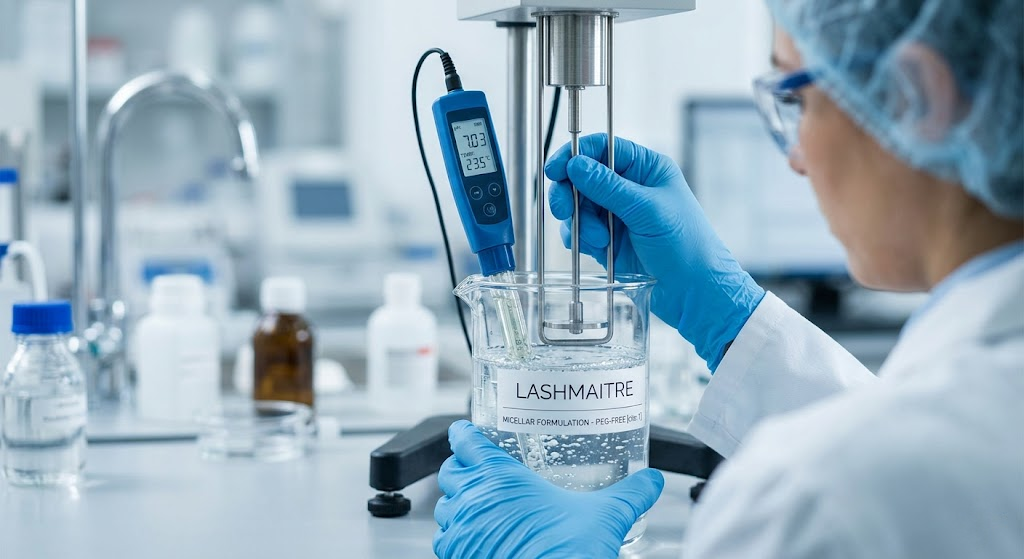
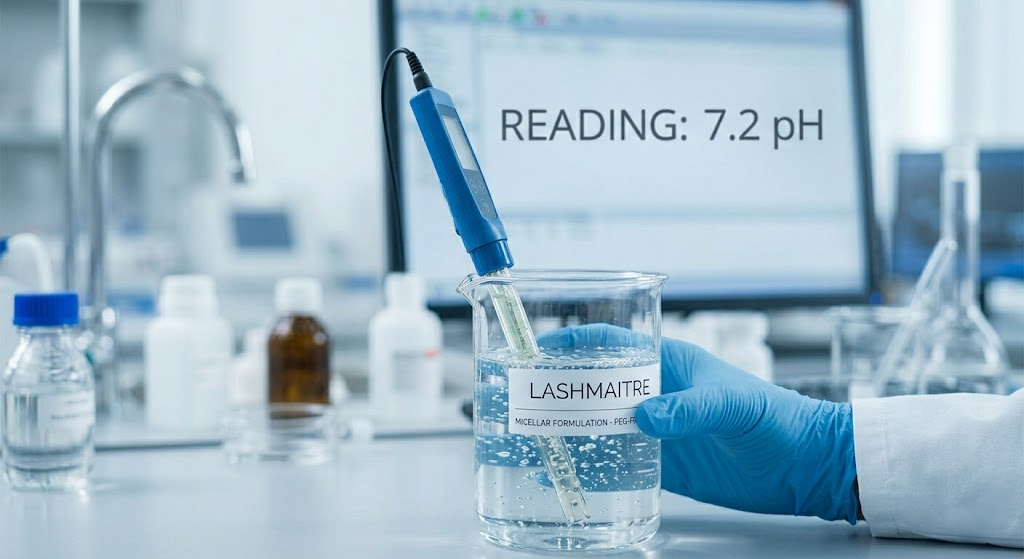
In the heavily regulated landscape of global cosmetic manufacturing, a makeup remover safe for eyelash extensions is defined as a highly specialized, water-based liquid cosmetic formulated explicitly to dissolve heavy facial and ocular cosmetics without compromising the structural integrity of cured cyanoacrylate adhesives. Chemically, this liquid must be completely devoid of natural and synthetic lipids (oils), heavy glycols, and destructive PEG emulsifiers. Instead, premium B2B manufacturing utilizes mild, micellar-based surfactant technology (such as Poloxamer 184) to encapsulate and lift cosmetic residue away from the skin and lash line without requiring mechanical scrubbing. Procuring these specialized cosmetic liquids in bulk demands rigorous microbiological challenge testing, precise ocular pH calibration (typically between 7.0 and 7.4), specialized leak-proof packaging engineering, and strict adherence to international cosmetic labeling and registration laws.
Author: Alex, LASHMAITRE — B2B eyelash extensions manufacturing & private-label programs (https://www.lashmaitretrade.com)
Chemical Engineering: The Cyanoacrylate Compatibility Protocol
To build a defensible wholesale retail catalog that commands absolute trust from high-end salon franchises, procurement officers must rigorously audit the chemical formulation of their cosmetic liquids. You are not merely sourcing a generic facial cleanser; you are procuring a highly calibrated chemical solution that must actively dissolve stubborn, waterproof cosmetic polymers without destroying an adjacent industrial-grade acrylic adhesive bond.
The “Oil-Free” Myth and the Cyanoacrylate Mesh
The professional eyelash extension industry has spent a decade educating consumers that “oil breaks down lash glue.” Professional extensions are bonded using cyanoacrylate, a reactive monomer that cures through anionic polymerization into a rigid or semi-flexible acrylic mesh. While this polymer is highly resistant to water, lipids (oils) act as a slow-moving solvent. They seep into the micro-pores of the cyanoacrylate bond, breaking down the polymer chains and causing the synthetic lash to slide cleanly off the natural hair.
Consequently, most B2B buyers simply ask their factories for an “oil-free” formula. However, this is a dangerous oversimplification. In modern cosmetic chemistry, a formula can be technically 100% oil-free but still utterly destroy a set of synthetic lashes within days if the underlying emulsifiers are incompatible with salon adhesives.
The Hidden Threat: PEG Emulsifiers and Heavy Glycols
The true enemies of cyanoacrylate retention in modern cosmetics are heavy glycols (like Propylene Glycol in high concentrations) and PEG (Polyethylene Glycol) emulsifiers.
In traditional oil-free cosmetic liquids, factories use PEGs and high-concentration glycols as solvents and solubilizers to break down waterproof mascara and foundation. Unfortunately, these chemicals act as highly aggressive plasticizers against cured cyanoacrylate. When a client applies a generic oil-free liquid, the chemical penetrates the rigid cyanoacrylate mesh. It aggressively softens the adhesive, turning it from a secure, solid anchor into a gummy, white, unstable substance. The extensions will pop off the natural lash with the slightest mechanical friction.
Micellar Water Formulation: The Professional Standard
To legitimately market and supply a makeup remover safe for eyelash extensions, your OEM manufacturing contract must mandate the absolute omission of heavy PEG emulsifiers and high-concentration short-chain glycols. The formulation must rely entirely on advanced Micellar Technology.
Micelles are microscopic clusters of mild surfactant molecules (such as Poloxamer 184 or Decyl Glucoside) suspended in purified water. These molecules feature a hydrophilic (water-loving) head and a lipophilic (oil/makeup-loving) tail. When applied to a cotton pad and pressed against the eye, the lipophilic tails bind to the makeup, sebum, and dirt, lifting them away from the skin and lash line. Because these specific micellar surfactants are chemically inert to polymerized cyanoacrylate, they execute heavy-duty cleansing without plasticizing or degrading the lash adhesive.
Review our advanced chemical formulations and PEG-free micellar profiles
Table 1: Surfactant & Chemistry Matrix for B2B Procurement
| Formulation Variable | Generic Mass-Market Removers | OEM makeup remover safe for eyelash extensions | Strategic B2B Impact on Salon Operations |
| Primary Solvents | Bi-Phase (Oil/Water), High Propylene Glycol | Purified Water (Aqua) & Mild Micellar Surfactants | Completely protects the cyanoacrylate bond from chemical plasticization and premature breakdown. |
| Emulsifier Profile | High concentrations of PEG (Polyethylene Glycol) | PEG-Free / Poloxamer 184 / Decyl Glucoside | Ensures the liquid cleanses heavy cosmetics without turning the lash adhesive gummy or white. |
| pH Calibration | Unregulated (Often highly alkaline or overly acidic) | Precision Ocular Balanced (pH 7.0 – 7.4) | Guarantees a “tear-free” formula that prevents ocular stinging and corneal irritation during use. |
| Preservative System | Parabens or Formaldehyde Donors | Phenoxyethanol / Ethylhexylglycerin | Meets modern “clean beauty” retail standards demanded by high-net-worth boutique salon clientele. |
Formulation Safety: pH Calibration and Microbiological Stability
Beyond protecting the cyanoacrylate adhesive, retail liquids must prioritize absolute dermatological and ocular safety. Because this liquid is applied directly to the highly sensitive eyelid margin, the defect tolerance for pH imbalance or bacterial contamination is zero.
Ocular pH Matching
The human tear film naturally maintains a pH hovering around 7.0 to 7.4. If a B2B distributor imports a cheap cosmetic liquid with a high alkaline pH (e.g., pH 8.5) to boost its cleansing power, or a highly acidic pH (e.g., pH 5.0), it will cause immediate, severe stinging, redness, and reflex tearing if it enters the client’s eye.
Your OEM contract must explicitly mandate strict pH buffering. The liquid must be precision-calibrated in the factory to match the ocular pH (7.0 – 7.4). A tear-free, sting-free experience is paramount for retail cosmetics; if a client experiences burning, they will return the product to the salon, resulting in a direct financial loss and a damaged B2B wholesale relationship.
Microbiological Challenge Testing (USP <51>)
Water-based cosmetics are highly susceptible to bacterial, yeast, and mold proliferation. The formulation must include a robust, broad-spectrum preservative system (such as Phenoxyethanol combined with Ethylhexylglycerin) that aligns with global “clean beauty” directives, entirely omitting controversial parabens.
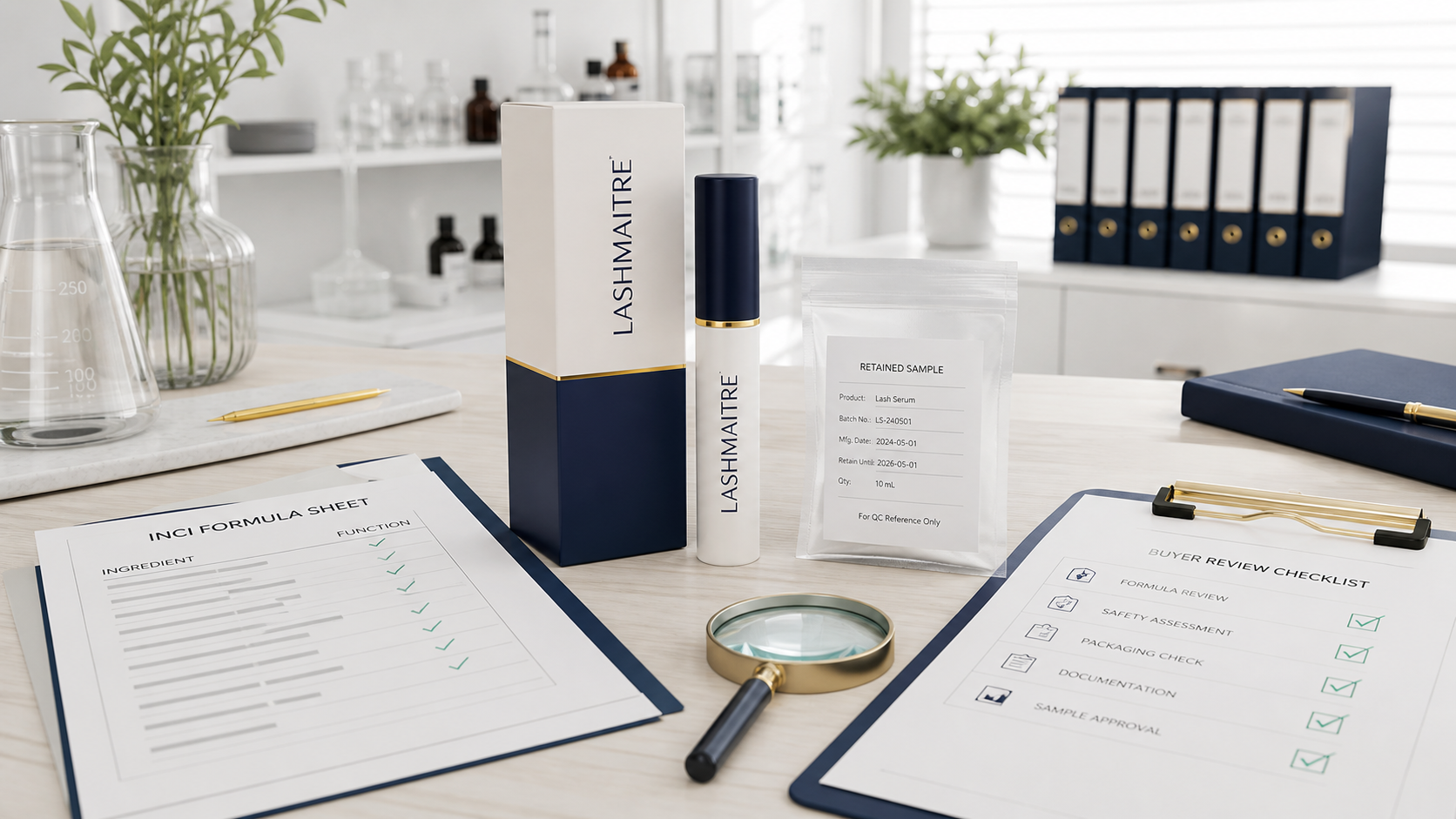
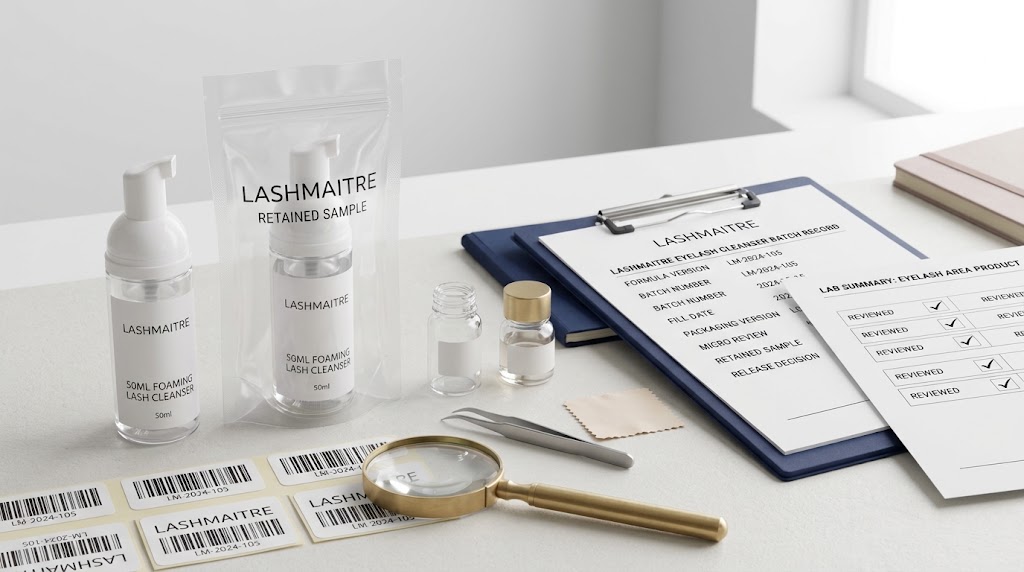
Before authorizing the shipment of your bulk order, the manufacturing factory must provide Certificates of Analysis (COA) proving that the exact batch of your makeup remover safe for eyelash extensions has successfully passed USP <51> Antimicrobial Effectiveness Testing (Preservative Challenge Testing). This rigorous, 28-day laboratory incubation test proves that if a consumer inadvertently introduces bacteria into the bottle during daily use, the preservative system will actively neutralize the pathogens, preventing the liquid from becoming a biohazard over its 12-to-24-month shelf life.
Packaging Engineering: Safeguarding Liquid Assets
In the realm of B2B liquid sourcing, the physical packaging is just as critical as the chemical formulation. Supplying premium cosmetic liquids in substandard plastic vessels is a massive logistical and operational risk.
The Structural Integrity of PET vs. HDPE
For micellar liquids, the global standard is Polyethylene Terephthalate (PET) plastic. PET is highly transparent (allowing the consumer to see the crystal-clear micellar liquid), lightweight, and chemically resistant to mild water-based surfactants. If an opaque or frosted aesthetic is desired for your private label brand, High-Density Polyethylene (HDPE) is an excellent, slightly more rigid alternative. B2B buyers must specify the gram weight of the plastic preforms; if the factory uses ultra-thin plastic to cut costs, the bottles will easily crush or dent during international transit.
Dispensing Mechanisms and Air Freight Leakage
The most severe hidden cost in importing bulk liquids is leakage during international air freight or ocean transit. The rapid atmospheric pressure changes inside an aircraft cargo hold will force liquid up through standard pump straws or poorly sealed flip-top caps, completely ruining the customized retail boxes and dissolving the shipping cartons.
To mitigate this risk, your OEM procurement strategy must mandate specific packaging engineering:
- Induction Sealing: Every single bottle must be sealed using an electromagnetic induction seal. A foil disk is placed inside the cap, and after the bottle is capped, it passes under an induction coil that heats the foil and fuses it completely to the lip of the bottle. This creates an absolute hermetic, tamper-evident seal that is 100% leak-proof under extreme pressure changes.
- Disc-Top or Flip-Top Orifice Reducers: Once the consumer removes the induction seal, the dispensing cap must feature a highly controlled orifice reducer. Because micellar liquid has a low viscosity (it is as thin as water), a wide-mouth pour bottle will result in massive product waste. A disc-top cap allows the consumer to dispense the exact amount of liquid onto a lint-free cotton pad without spilling.
Private Label OEM: Strategies for Minimum Order Quantities (MOQs)
Transitioning from distributing bulk generic liquids to establishing a highly profitable private-label retail catalog requires a strategic approach to MOQs. Minimum Order Quantities are the gatekeepers of OEM manufacturing, and navigating them efficiently dictates a distributor’s cash flow liquidity.
The Silk-Screening challenge
If a B2B buyer wishes to apply direct silk-screen printing onto a customized PET bottle, the factory will typically demand an MOQ ranging from 5,000 to 10,000 units per SKU. For a growing distributor, tying up tens of thousands of dollars in a single 10,000-unit retail liquid SKU is a severe financial risk that can challenge vital operational capital.
Agile Labeling and Micro-Batching
Astute B2B procurement managers circumvent this challenge by leveraging “Agile Labeling” strategies. Instead of direct silk-screening, the distributor negotiates a bulk purchase of 5,000 generic, high-quality blank PET bottles at the lowest possible bulk commodity price.
The private label branding is then applied using high-adhesion, waterproof, and oil-proof vinyl or BOPP (Biaxially Oriented Polypropylene) wrap labels. This decoupling strategy allows the factory to execute micro-batches (e.g., 500 or 1,000 units at a time) using the blank bottles you have reserved. You can easily pivot designs, launch multiple sub-brands, or supply custom white-label inventory to massive salon franchises without facing crippling MOQs, keeping your inventory highly liquid.
Maximizing AOV with Retail Bundles
Supplying a standalone bottle of a makeup remover safe for eyelash extensions is a missed opportunity for B2B expansion. To provide massive value to your B2B salon partners, you must supply complete “Retail Aftercare Bundles.” Salon owners struggle with retail sales; if you provide beautifully packaged, turnkey kits, the salon can effortlessly add $30 to $50 to every client’s appointment ticket, drastically increasing their Average Order Value (AOV).
Configure your MOQs to bundle the micellar liquid with specialized, lint-free cleansing wands, a soft cashmere lash shampoo brush, and a pH-balanced foaming lash cleanser, all housed in a bespoke magnetic box or a high-quality EVA zip pouch featuring your custom logo.
Explore our custom agile packaging solutions and retail bundle MOQ configurations
Table 2: OEM Retail Bundle Allocation Strategy
| Inventory Configuration | Target Salon Demographic | Retail Value Proposition | B2B Procurement Rationale for Liquid Cosmetics |
| Complete Aftercare Kit (Remover, Foam Wash, Brush, Wands) | High-end boutiques; massive franchise salons. | Highest AOV. A turnkey, luxurious retail solution for new client onboarding. | Core Focus. Drives massive wholesale revenue; salons purchase these in bulk to lock in client retention. |
| Standalone Micellar Remover (100ml Bottle) | High-traffic salons; budget-conscious retail demographics. | Lower entry price point for retail sales; an easy impulse buy at the front desk register. | Maintains high volume turnover; requires very low initial capital expenditure for the B2B distributor via agile labeling. |
| Travel Size Remover (30ml) | Mobile lash artists; destination wedding clients. | High convenience factor; TSA-compliant size for airline carry-on luggage. | Excellent promotional item; distributors can use these as high-value “samples” to win new salon accounts. |
Regulatory Compliance: Navigating FDA MoCRA and International Law
Successfully scaling a wholesale operation involving water-based liquid cosmetics requires navigating extremely strict international chemical regulations. Importing a makeup remover safe for eyelash extensions into primary markets such as the United States carries significant legal, financial, and civil responsibility. As the B2B distributor, you act as the official Importer of Record.
If a chemically contaminated, non-compliant liquid cosmetic causes severe ocular injury or bacterial conjunctivitis in a salon client, the legal risk pierces the corporate veil and falls directly upon the distributor. Therefore, you must rigorously audit your factory’s regulatory compliance portfolio.
Facility Registration under MoCRA
In the United States, the regulatory landscape for consumer beauty products underwent a massive overhaul with the passing of the Modernization of Cosmetics Regulation Act (MoCRA).
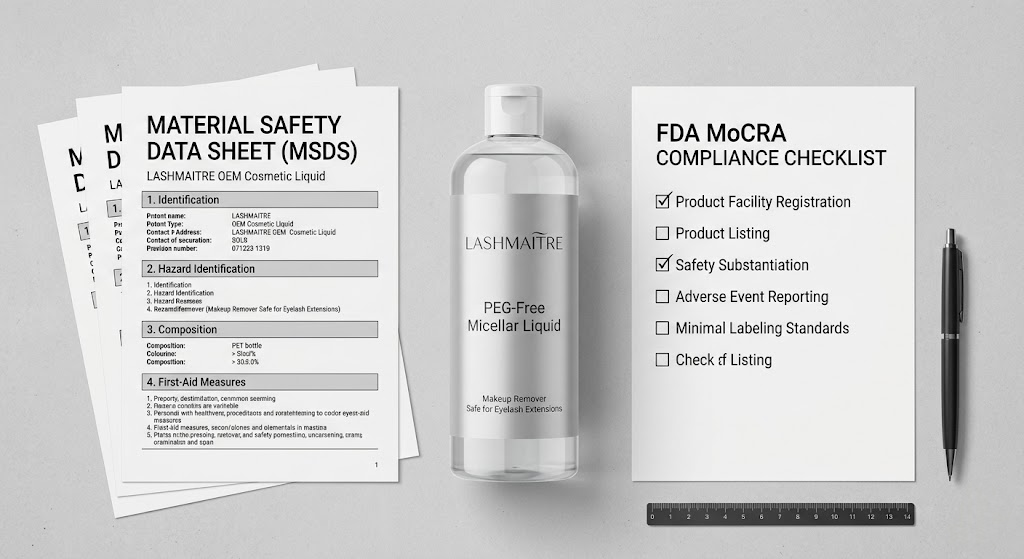
Under MoCRA, you cannot legally import liquid cosmetics from an unverified or “underground” overseas facility. The B2B factory manufacturing your inventory must be formally registered with the FDA. Furthermore, as the Responsible Person, the distributor is legally required to submit a cosmetic product listing to the FDA detailing the exact formulation, manufacturing location, and ingredients of the imported product.
INCI Nomenclature and Label Formatting
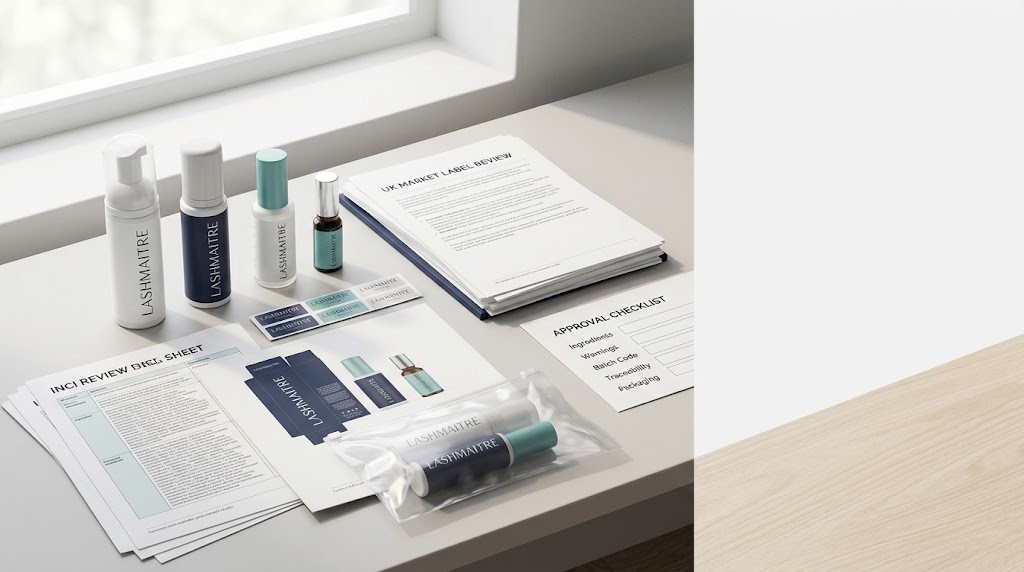
Your OEM manufacturing contract must explicitly mandate that all private label packaging meets strict FDA and international cosmetic labeling requirements. This dictates the explicit, descending-order declaration of all chemical ingredients on the outer retail carton and the primary bottle label.
The ingredients must be listed using their standardized INCI (International Nomenclature of Cosmetic Ingredients) names (e.g., writing “Aqua” instead of just “Water”). Furthermore, the label must distinctly display the precise net volume (e.g., 100ml / 3.4 fl oz), the lot number for recall traceability, clear usage instructions, safety warnings regarding ocular contact, and the domestic address of the responsible US or EU distributor. retention issue to comply with these formatting laws will result in immediate shipment seizure, quarantine, and potential destruction by Customs and Border Protection (CBP).
Material Safety Data Sheets (MSDS)
You cannot legally freight bulk cosmetic liquids across international borders without a comprehensive Material Safety Data Sheet (MSDS). The factory must provide an updated MSDS for your exact micellar formulation, detailing flash points, toxicology, and spill handling procedures to satisfy aviation and maritime authorities.
Global Logistics: Bulk Liquid Freight and Environmental Hazards
Successfully navigating the international supply chain from the compounding vats in Asia to your domestic distribution center requires a highly defensive logistical strategy when dealing with heavy liquids.
When evaluating the freight logistics for a massive wholesale order, distributors must understand the critical financial interplay between “Volumetric Weight” and “Dead Weight.”
The Burden of Dead Weight
Water is incredibly heavy. A master carton containing 100 bottles of a 100ml liquid remover represents significant dense, dead weight (over 10 kilograms per carton). Shipping heavy liquid cosmetics via international air express (DHL/FedEx) will result in punishing dead-weight penalties that can instantly destroy your wholesale profit margins.
To achieve profitable landed costs, B2B buyers must transition bulk liquid procurement away from air freight and utilize LCL (Less than Container Load) or FCL (Full Container Load) ocean freight.
The Winter Freezing risk
However, shifting to ocean and ground freight introduces a severe seasonal risk. If a bulk shipment of your inventory sits in a freezing rail yard in Chicago, Denver, or New York during January, the water-based formulation will freeze and expand.
When water freezes, it expands by approximately 9%. This physical expansion will violently crack rigid PET plastic bottles and pop the induction seals. When the cargo eventually thaws in your warehouse, the entire pallet will be soaked in leaked product, rendering the inventory completely unsellable and resulting in total capital loss.
If you must import or transport bulk liquid cosmetics during winter months across cold climates, you cannot utilize standard un-insulated freight. All bulk orders must be shipped utilizing strict cold-chain packaging protocols. The OEM factory must pack the customized bottles inside heavy-duty master cartons lined with two-inch-thick EPS (Expanded Polystyrene) thermal foam boards. This robust thermal barrier protects the internal temperature of the cargo, ensuring the liquid cosmetic remains stable and above freezing temperatures during transit through frigid logistics hubs.
Quality Assurance (QA): Enforcing Defect Tolerances
The true value of a direct B2B factory partnership is the ability to enforce rigorous Quality Assurance (QA) protocols before the shipment of your liquid inventory leaves the overseas facility. Your Service Level Agreement (SLA) must be uncompromising.
- Vacuum Leak Testing: Before packaging, random samples from the production run must be placed inside a vacuum chamber. The chamber depressurizes to simulate the environment of an aircraft cargo hold at 30,000 feet. If any induction seals underperform or flip-top caps leak liquid under vacuum pressure, the capping machinery must be recalibrated.
- Digital Viscosity and pH Audits: QA inspectors must pull samples from the compounding vat and test them using digital rotational viscometers and pH meters. The liquid must remain completely water-thin (for easy micellar distribution) and strictly adhere to the targeted 7.0 – 7.4 ocular pH range.
- Visual Clarity Checks: Micellar water must be crystal clear. Inspectors must use intense optical light boards to check the liquid for any cloudiness, particulate matter, or separation, which indicates a retention issue in the emulsification process or bacterial contamination.
By prioritizing advanced, PEG-free micellar chemistry, mandating rigorous induction-sealed packaging to prevent freight leakage, optimizing AOV through comprehensive retail aftercare bundles, and strictly adhering to FDA MoCRA regulations, B2B buyers can establish a highly profitable, scalable retail enterprise. The market heavily rewards distributors who engineer their supply chain meticulously, recognizing that a true makeup remover safe for eyelash extensions is not just a secondary retail add-on, but an indispensable chemical tool for protecting the integrity of the professional cyanoacrylate bond.
FAQ: Wholesale & OEM — makeup remover safe for eyelash extensions
Why can’t clients use generic “oil-free” makeup removers from the drugstore on their lash extensions?
While generic removers may technically be “oil-free,” they frequently contain high concentrations of Polyethylene Glycol (PEG) emulsifiers and heavy short-chain glycols (like Propylene Glycol). In cosmetic chemistry, these ingredients act as highly aggressive plasticizers against cured cyanoacrylate adhesives. When a client uses these generic removers, the glycols seep into the adhesive mesh, softening it and turning it into a gummy, unstable white substance, causing the extensions to shed prematurely. A professional cosmetic liquid designed for salon aftercare is explicitly PEG-free and glycol-free, relying instead on chemically inert micellar technology.
What is Micellar Technology, and why is it the B2B standard for lash extension cleansers?
Micellar technology utilizes microscopic clusters of ultra-mild surfactant molecules (such as Poloxamer 184) suspended in purified water. These micelles have a lipophilic (oil-loving) tail that acts like a magnet, encapsulating makeup, sebum, and dirt, lifting them away from the skin without requiring aggressive mechanical rubbing. Most importantly, these specific micellar surfactants are chemically inert to polymerized cyanoacrylate, meaning they can perform heavy-duty cleansing without dissolving or weakening the lash artist’s adhesive bond.
How does induction sealing protect a distributor’s liquid inventory during international freight?
Liquid cosmetics are highly prone to leakage due to atmospheric pressure changes in aircraft cargo holds or rough handling during ocean freight. If a bottle leaks, it ruins the retail packaging and damages surrounding inventory. We mandate electromagnetic induction sealing for our OEM liquids. A foil disk is heated and permanently fused to the lip of the bottle before the cap is applied. This creates an absolute hermetic, tamper-evident seal that is 100% leak-proof, ensuring your inventory arrives in pristine, retail-ready condition regardless of transit turbulence.
What specific FDA MoCRA compliance documents are required to import this cosmetic liquid?
Because a makeup remover safe for eyelash extensions is a cosmetic liquid applied directly to the highly sensitive ocular area, it is strictly regulated by the FDA under MoCRA. The overseas manufacturing facility must be FDA-registered. The B2B distributor must submit a cosmetic product listing. Crucially, the factory must provide Certificates of Analysis (COA) proving the batch passed USP <51> Antimicrobial Challenge Testing (ensuring the preservative system prevents bacterial growth). The packaging must feature exact INCI nomenclature labeling, and the distributor must retain a valid Material Safety Data Sheet (MSDS) for customs clearance.
References
- Modernization of Cosmetics Regulation Act (MoCRA) Compliance and Safety – U.S. Food and Drug Administration (FDA) – https://www.fda.gov/cosmetics
- Guidelines for Quality Management Systems and Precision Chemical Manufacturing – International Organization for Standardization (ISO 9001) – https://www.iso.org/iso-9001-quality-management.html
- Information on Surfactant Chemistry, Micellar Formulations, and PEG Emulsifiers – National Center for Biotechnology Information (NCBI) / PubChem – https://pubchem.ncbi.nlm.nih.gov/
Are you ready to mathematically mitigate your supply chain risk, bypass generic domestic resellers, and launch a premium OEM retail product line engineered for absolute ocular safety and cyanoacrylate protection? Partner with a B2B manufacturing facility that understands the rigorous chemistry of PEG-free micellar formulations, strict MoCRA microbiological compliance, and the complex logistics of liquid induction sealing and ocean freight. Contact us today to request comprehensive MSDS documentation, order formulation samples, and secure a customized B2B manufacturing quote tailored to bringing your ultimate makeup remover safe for eyelash extensions to the wholesale market at https://www.lashmaitretrade.com.
Wholesale lash sourcing
Request samples, OEM/private label options and pricing
Share your lash extension category, specs, quantity, packaging needs and destination market. LASHMAITRE will recommend suitable SKUs, sample options, lead time and wholesale pricing.

Lash Maitre: Your Trusted Partner in Eyelash extension Solutions
Lash Maitre is dedicated to providing professional insights and tips in the eyelash extension industry. Sharing the latest trends, techniques, and product knowledge, Lash Maitre helps lash artists and enthusiasts enhance their skills, stay inspired, and achieve the perfect lash experience.