Lash HTS Classification: 8 Evidence Checks Before Filing
Share
Lash HTS Classification Summary
Lash HTS classification should be supported by product-specific evidence rather than a copied supplier code. Importers should document the commercial description, material, construction, function, packaging, photographs, relevant rulings and retained classification records before filing.
Lash HTS classification should be supported by the actual product, materials, construction, presentation, and intended use—not selected from a supplier invoice description alone. A defensible import file connects the proposed tariff number to the current specification, approved sample, packaging, photographs, and written classification reasoning.
Direct answer: what HTS code applies to false eyelashes?
There is no safe one-code answer for every lash product. Some false eyelash articles may be considered within heading 6704, but the correct subheading depends on the product's objective characteristics and the live tariff schedule. Individual lashes, strip lashes, clusters, premade fans, kits, adhesives, tools, and mixed sets may require separate analysis.
Use the current USITC Harmonized Tariff Schedule and obtain advice from a licensed customs broker or customs counsel when the facts are uncertain.
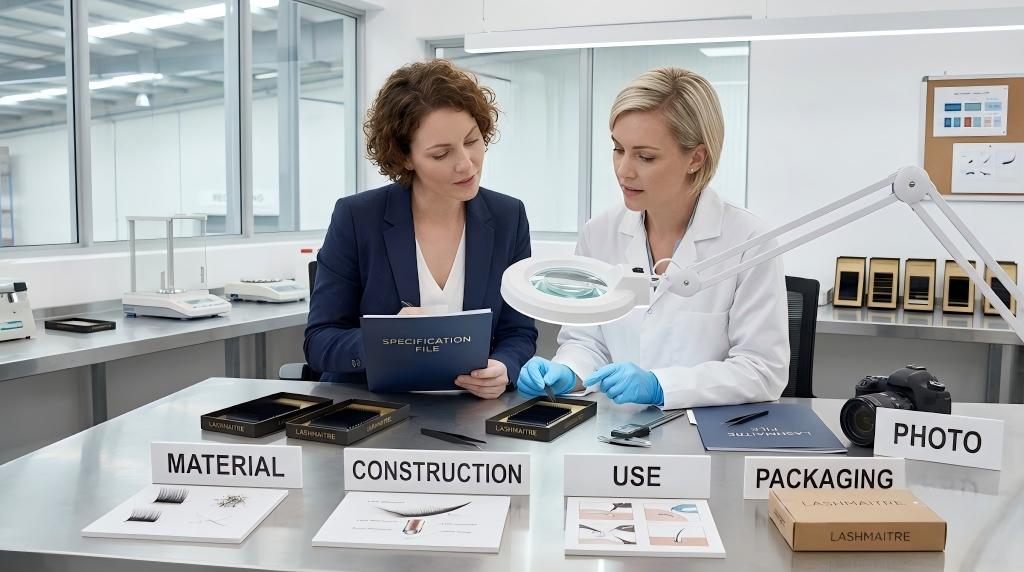
1. Freeze the exact SKU identity
Begin with one classification record per SKU or genuinely identical product family. Record the commercial name, internal SKU, supplier SKU, revision, dimensions, curl, thickness, length mix, color, and unit configuration.
Do not classify from a marketing label such as “premium lashes.” The record must identify what crosses the border.
2. Document material composition
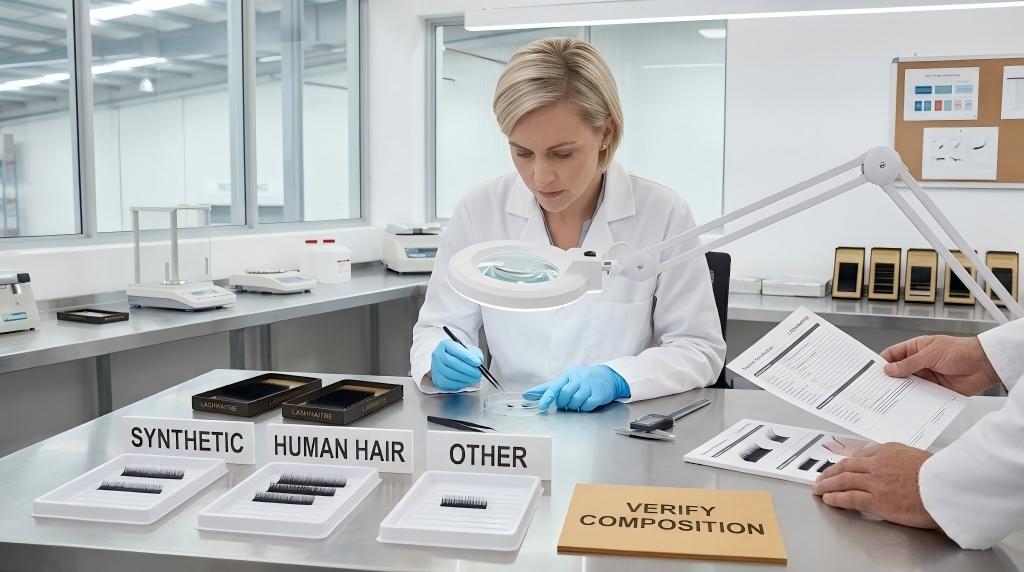
State the fiber or material composition using supplier evidence. Avoid unsupported terms such as “silk,” “mink,” or “cashmere” when they are only style names. If a product contains synthetic fiber, human hair, animal hair, paper, metal, adhesive, magnets, or other components, document the relevant composition and proportion where available.
Material declarations should match the purchase order, invoice description, packaging, and product specification.
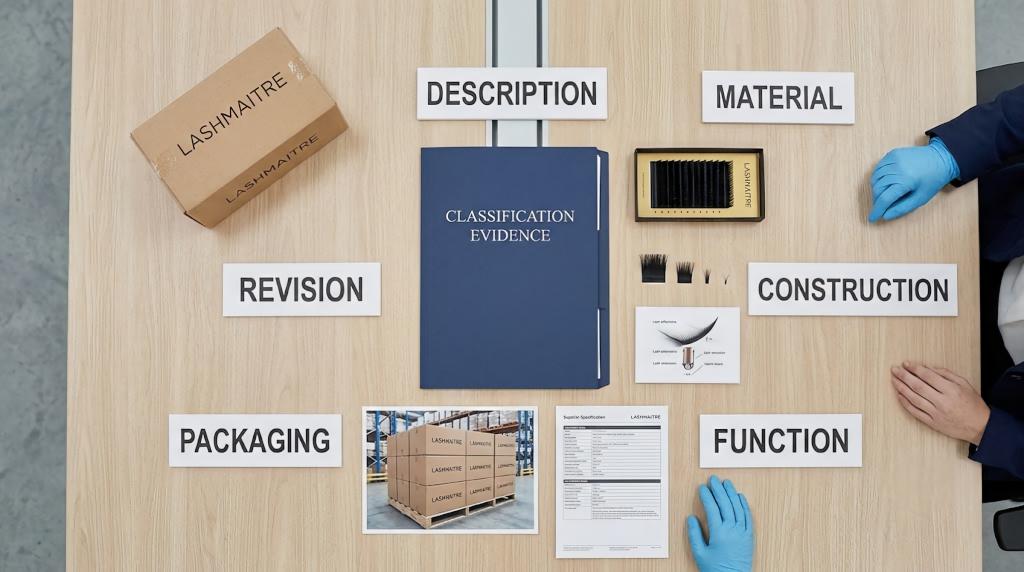
3. Describe construction and form
Photograph and describe how the product is made and presented:
- strip, cluster, individual, or premade fan;
- knotted or knot-free;
- loose, tray-mounted, or fixed to a band;
- number of fibers per fan;
- with or without adhesive;
- reusable or single-application presentation;
- standalone product or part of a retail kit.
Small construction differences can change the classification facts even when the products share a brand name.
4. Separate product function from sales language
Write the intended function in plain language. A description such as “artificial eyelash article applied to the natural lash or eyelid for cosmetic appearance” is more useful than a promotional claim.
Exclude unsupported medical, therapeutic, permanent, or performance claims. Customs classification is based on objective product characteristics and legal tariff rules, not the supplier's preferred keyword.
5. Preserve representative photographs and samples
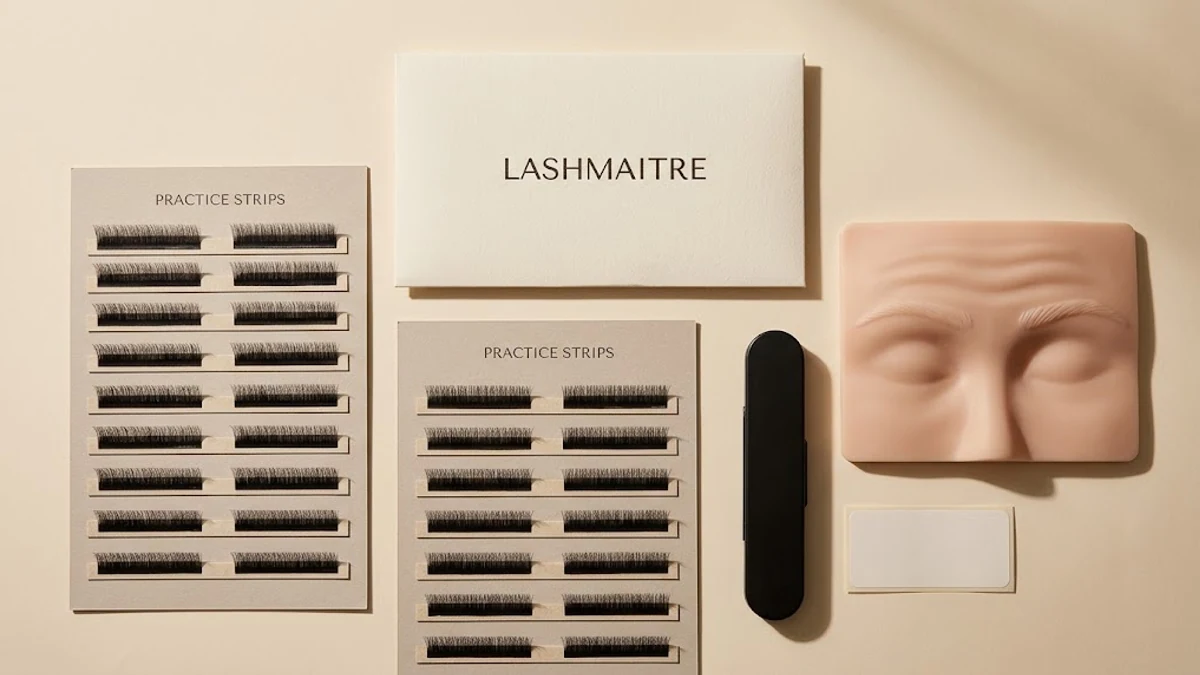
Maintain dated photographs of the closed package, open tray, individual unit, scale or measurements, labels, and included components. Retain a representative approved sample when practical and identify its lot and revision.
LASHMAITRE's lash quality control process links specification evidence to a traceable sample and inspection record.
6. Check sets, kits, and packaging separately
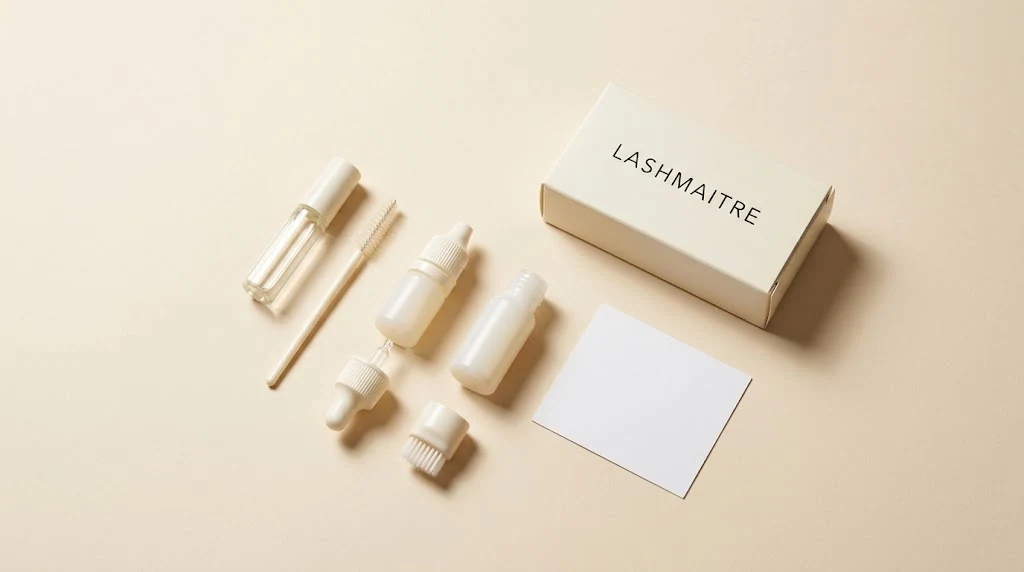
A mixed shipment may contain products with different classifications. Do not automatically assign the lash tray's classification to adhesive, tweezers, remover, brushes, retail boxes, or promotional accessories.
For each component, ask whether it is imported separately, sold together as a set, or merely packaging. Record quantities and values by line so the broker can assess the applicable legal rules.
7. Compare the proposed result with authoritative sources
Search the live HTS wording and chapter notes rather than copying a code from a prior invoice. Review relevant CBP rulings where the merchandise facts are comparable. When uncertainty remains material, consider a binding ruling request under 19 CFR Part 177.
A prior result is useful only if the new SKU's material, construction, function, and presentation remain equivalent.
8. Control revisions and broker instructions
The lash HTS classification file should include the decision owner, review date, source links, product revision, rationale, unresolved questions, and broker acknowledgement. When a product changes, trigger re-review before the next commercial entry.
Common triggers include:
- fiber or band material change;
- different product form or fan construction;
- adhesive or accessory added to the pack;
- retail kit redesign;
- origin or supplier change affecting the evidence;
- new tariff wording or ruling.
Classification evidence checklist
| Evidence | Minimum record |
|---|---|
| Identity | SKU, revision, supplier, commercial description |
| Material | Composition declaration and source |
| Construction | Form, dimensions, assembly, included components |
| Function | Neutral intended-use statement |
| Presentation | Unit, tray, retail pack, set or kit |
| Visual proof | Dated product and packaging photographs |
| Authority | Live HTS text and relevant ruling analysis |
| Control | Reviewer, date, decision, change trigger |
Related LASHMAITRE resources
If the product construction, packaging, or intended use makes the classification evidence unclear, send the SKU specifications, material details, photos, quantity, and destination through the wholesale lash extensions inquiry page before requesting the final shipping documents.
Lash HTS Classification FAQ
Can a supplier choose the U.S. HTS code?
A supplier can provide product facts and a proposed code, but the importer of record remains responsible for reasonable care in the entry. The importer and its customs professional should validate the result.
Can all lash styles use the same code?
Only when their legally relevant characteristics support the same classification. Different material, construction, components, or presentation may require a different result.
Should the HTS code appear on the commercial invoice?
Many import workflows include the proposed code in broker instructions or invoice data, but its presence does not make it correct. The evidence file should support the number used.
When should classification be reviewed again?
Review after product, material, packaging, supplier, or tariff changes, and whenever a broker, CBP notice, or audit raises a question.
Make classification evidence part of product approval
Before production, connect classification data to the same controlled product evidence used for quotation and QC. Review LASHMAITRE private-label lashes through our private label lash extensions requirements, approve measurable lash extension samples, and confirm the commercial pack before the import documents are finalized.
This article is operational guidance, not a tariff determination or legal advice. The importer should verify classification with qualified customs professionals and current government sources.

For ocean freight, carry the verified classification and party data into the Importer Security Filing for lash shipments before vessel loading, then control later updates and retain the filing evidence.
Classification and origin are separate controls, so confirm lash country of origin marking on the product and packaging against the documented manufacturing facts before import.

Lash Maitre: Your Trusted Partner in Eyelash extension Solutions
Lash Maitre is dedicated to providing professional insights and tips in the eyelash extension industry. Sharing the latest trends, techniques, and product knowledge, Lash Maitre helps lash artists and enthusiasts enhance their skills, stay inspired, and achieve the perfect lash experience.