Lash Country of Origin Marking: 8 Packaging Checks Before Import
Share
Lash Country of Origin Marking Summary
Lash country of origin marking should identify the correct manufacturing origin for the ultimate purchaser in a conspicuous, legible and sufficiently permanent way. Importers should also control U.S. address references, product-versus-container marking and any repacking after entry.
Lash country of origin marking should identify the correct origin in a place and form the ultimate purchaser can find during normal handling. Before production, verify the origin determination, exact wording, product-versus-container rule, placement, legibility, permanence, U.S.-address proximity and repacking control.
Lash Country of Origin Marking Is Not the Shipping Country
For U.S. marking, country of origin generally means the country of manufacture, production or growth, subject to applicable rules. It is not automatically the supplier's office, export port or final shipping location. Work in another country changes origin only when the governing rule says it does.
Under 19 CFR Part 134, foreign-origin articles generally must be marked conspicuously, legibly, indelibly and permanently enough for the nature of the article or container, unless an exception applies. Because product configuration and repacking matter, confirm the actual rule with a customs professional.
8 Lash Country of Origin Marking Checks Before Import
1. Determine the Correct Origin
Map where the lash fibers, tray, box and final product are made or assembled. Preserve supplier declarations and process facts that support the origin conclusion.
2. Identify the Ultimate Purchaser
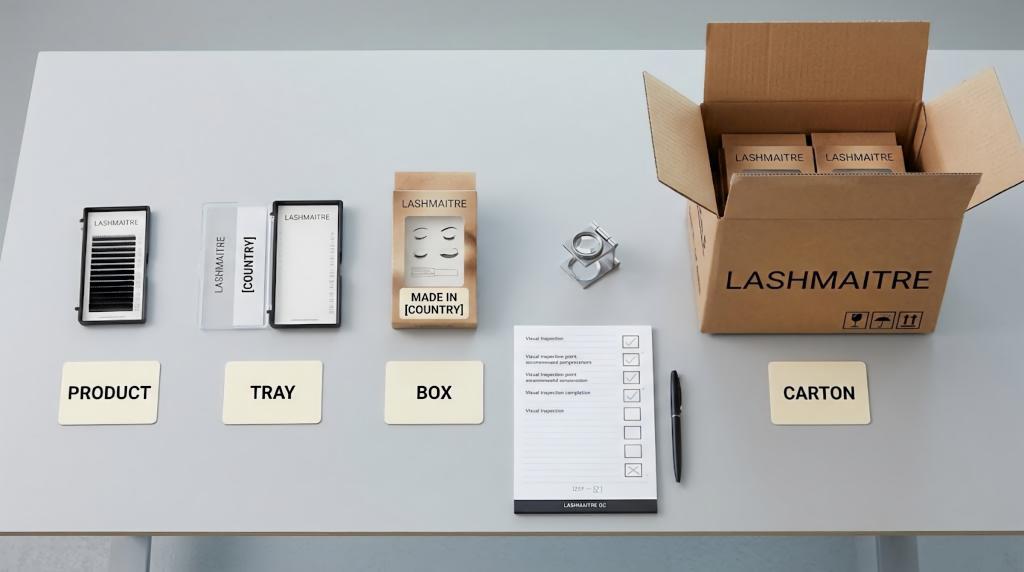
Decide who receives the article in the imported form. A retail-ready lash tray, a bulk component and an empty private-label box can have different marking analysis.
3. Choose Product or Container Marking
Determine whether the article itself, its container or both must carry the origin. Do not assume a master carton marking cures an unmarked retail unit.
4. Use Clear English Wording
Use the correct English country name with wording such as Made in [country] when appropriate. Avoid abbreviations or decorative text that could confuse the purchaser.
5. Make the Mark Conspicuous
Place the origin where it can be seen during normal handling. Do not hide it under a removable insert, behind a lash tray or inside packaging that the purchaser would not normally open before purchase.
6. Control Legibility and Permanence
Check font size, contrast, print quality, adhesive and resistance to ordinary handling. A mark that smears, peels off or becomes unreadable during packing is not a reliable control.
7. Review U.S. Names and Addresses
If packaging shows a U.S. address or other wording that could imply U.S. origin, review whether the country marking must appear nearby with clarifying language.
8. Control Repacking
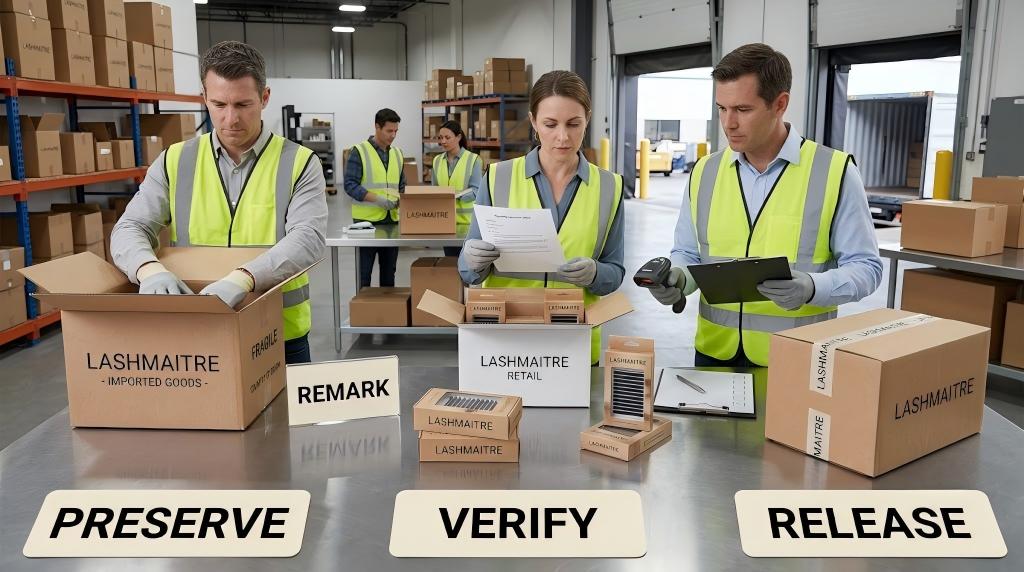
If goods will be repacked after import, preserve the origin marking or apply the required marking to the new container. Keep written instructions and certifications where applicable.
Lash Country of Origin Marking Approval Table
| Item | Review evidence | Approval question |
|---|---|---|
| origin | supplier/process record | is the country supported? |
| purchaser | channel and pack format | who sees the imported article? |
| location | artwork and physical sample | is the mark conspicuous? |
| wording | approved text | is the country clear in English? |
| inspection sample | is it legible and durable? | |
| U.S. reference | full artwork | could another address mislead? |
| repacking | work instruction | will origin remain visible? |
Common Marking Errors
- Printing the export country instead of the legally determined origin.
- Marking only the master carton when the retail unit reaches the ultimate purchaser.
- Placing the mark beneath a removable tray or opaque sleeve.
- Using faint foil, tiny text or low-contrast ink.
- Showing a U.S. distributor address without reviewing proximity requirements.
- Changing the private-label box without updating the controlled origin artwork.
- Repacking after import without preserving the required marking.
A Practical MARK Gate
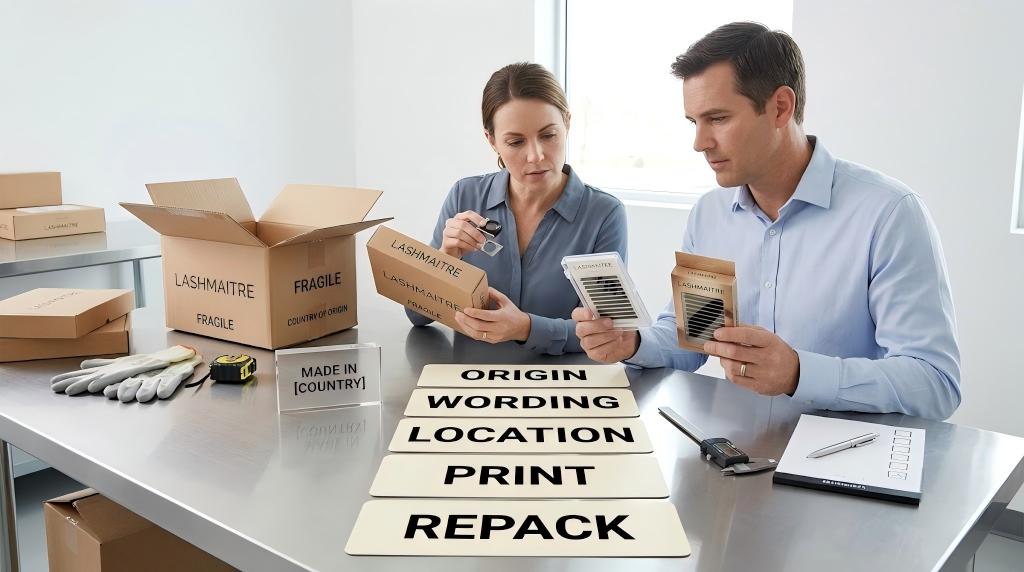
Use ORIGIN, PURCHASER, LOCATION, PRINT, and REPACK as release gates. Approve both digital artwork and a physical sample. Hold production if the origin basis or final visibility is unresolved.
Lash Country of Origin Marking FAQ
Is Designed in USA the same as country-of-origin marking?
No. Design language does not replace the required origin statement and may need careful placement to avoid misleading the purchaser.
Can the origin appear only on the shipping carton?
Sometimes container marking may apply, but the answer depends on the article, exception, ultimate purchaser and packaging path. Do not assume it without review.
Must the exact phrase be Made in?
The required wording depends on the rule and context, but the English country name must be clear. Confirm the final phrase with the broker or customs adviser.
What if the product is repacked in the United States?
The importer may need to preserve marking, mark the new container and provide written notice or certification. Plan repacking before entry.
Should origin be checked on a physical sample?
Yes. A PDF cannot prove visibility, contrast, adhesion or whether the mark is covered after assembly.
Approve Lash Country of Origin Marking Before Import
Country-of-origin marking is a product-and-packaging decision, not a last-minute shipping label. Lock the origin basis, purchaser, wording, location and repacking instructions before mass production.
For controlled packaging development, review LASHMAITRE private-label lashes. To validate tray and box details before production, request LASHMAITRE lash extension samples. Use LASHMAITRE lash quality control to verify marking visibility, placement and packaging consistency before shipment. For a documented private-label packaging review, contact LASHMAITRE.
Authority reference: eCFR, 19 CFR Part 134—Country of Origin Marking.

Lash Maitre: Your Trusted Partner in Eyelash extension Solutions
Lash Maitre is dedicated to providing professional insights and tips in the eyelash extension industry. Sharing the latest trends, techniques, and product knowledge, Lash Maitre helps lash artists and enthusiasts enhance their skills, stay inspired, and achieve the perfect lash experience.