Importer Security Filing for Lash Shipments: 8 Data Elements Before Vessel Loading
Share
Importer Security Filing for Lash Shipments Summary
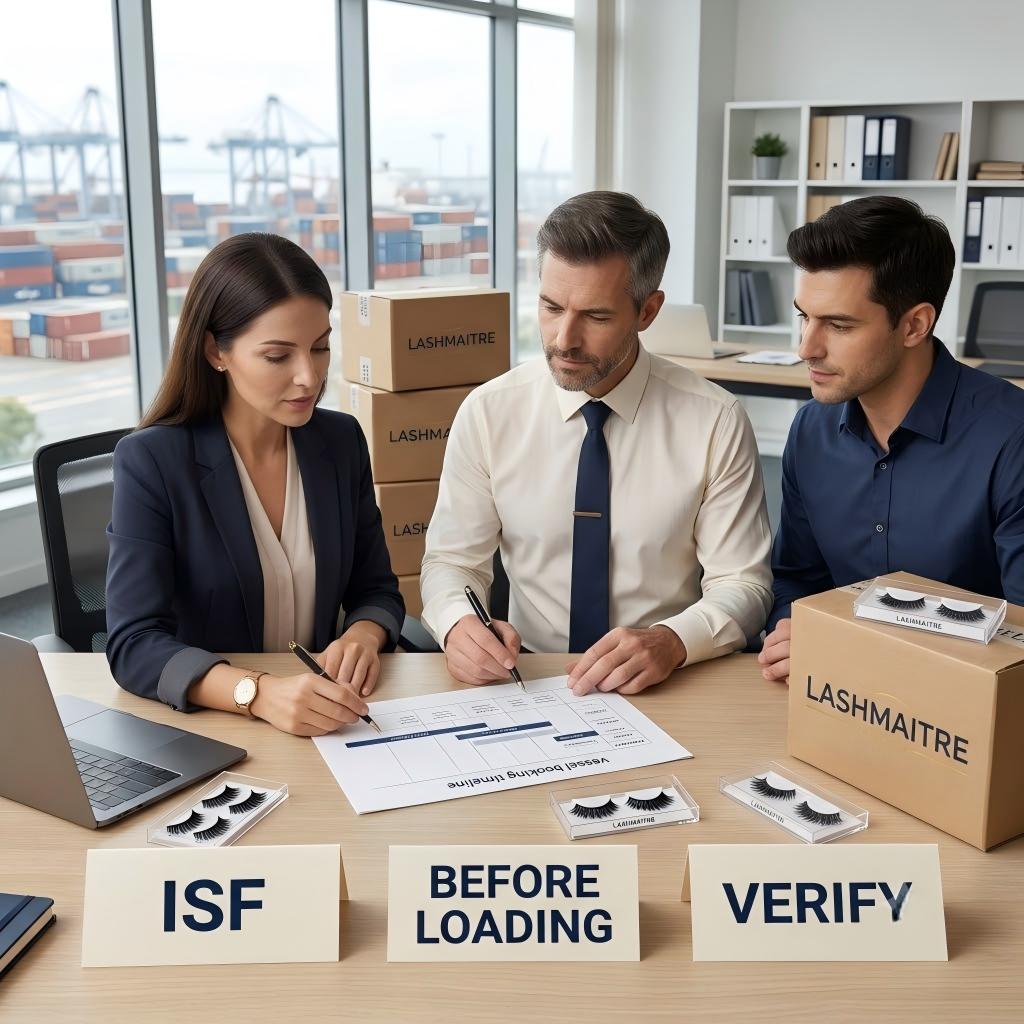
An Importer Security Filing for lash shipments should be verified before vessel loading against the seller, buyer, importer number, consignee number, manufacturer or supplier, ship-to party, country of origin, and HTS record. The importer should also assign owners for container stuffing location and consolidator data, keep the transmission response, and document every material change.
For an ocean lash shipment, the importer should verify the Importer Security Filing for lash shipments before the cargo is laden on a vessel bound for the United States. The seller, buyer, importer number, consignee number, manufacturer or supplier, ship-to party, country of origin, and HTS information should agree with the commercial and booking records. Corrections and later data should be controlled through the broker or filing agent and retained with the shipment file.
This guide is for lash brand owners, procurement teams, and logistics coordinators arranging ocean freight. It is not legal advice and does not replace CBP regulations or a licensed customs broker's filing instructions.
Importer Security Filing for Lash Shipments: Quick Answer
CBP describes Importer Security Filing (ISF), commonly called “10+2,” as an advance data requirement for non-bulk cargo arriving in the United States by vessel. CBP's current ISF timing guidance states that eight importer data elements are due no later than 24 hours before cargo is laden aboard the U.S.-bound vessel. Two additional importer elements—container stuffing location and consolidator—are supplied as early as possible, no later than 24 hours before arrival at a U.S. port.
The operating rule is simple: do not wait for vessel departure to discover that the parties, origin, or HTS data were never verified.
When ISF Applies to a Lash Shipment
ISF applies to covered cargo arriving by vessel, not to an air shipment merely because the order is an import. The CBP ISF 10+2 presentation distinguishes the importer's filing from the carrier's vessel stow plan and container status message obligations.
Before requesting a filing, identify the actual mode, routing, bill of lading structure, ISF importer, filing agent, and planned loading date. If the forwarder says “ocean” but the purchase file shows only a warehouse delivery date, ask for the booking confirmation and vessel schedule.
Eight ISF Data Elements to Verify Before Vessel Loading
| Data element | Primary evidence | Common lash-order mismatch |
|---|---|---|
| 1. Seller | Commercial invoice, purchase contract | Trading company confused with factory |
| 2. Buyer | Purchase order, invoice | Brand name used instead of legal buyer |
| 3. Importer of record number | Importer master record | Wrong entity or old number |
| 4. Consignee number | Consignee setup, broker file | Ship-to warehouse substituted without review |
| 5. Manufacturer or supplier | Production and supplier records | Exporter listed instead of manufacturer |
| 6. Ship-to party | Delivery order, warehouse instructions | Corporate office used instead of first delivery location |
| 7. Country of origin | Manufacturing evidence | Shipping country copied as origin |
| 8. HTS classification | Approved classification file | Generic supplier code copied across products |
1. Seller
Verify the party by whom the goods are sold or agreed to be sold. Use the commercial transaction and broker guidance to identify the correct entity. In a lash supply chain, the seller may be a manufacturer, export company, or trading company, but those labels should not be assumed to mean the same thing.
Match the legal name and address across the purchase order, invoice, payment record, and supplier file. If the invoice issuer changes between sampling and bulk production, investigate before filing.
2. Buyer
Confirm the legal buyer in the transaction. A consumer-facing lash brand, parent company, purchasing subsidiary, and importer may have different names. The buyer data should be supported by the purchase agreement and commercial invoice rather than chosen because it looks familiar.
Keep the buyer role separate from the ship-to party. A warehouse may receive the goods without being the buyer.
3. Importer of Record Number
Use the controlled importer number supplied through the importer's broker setup. Verify that it belongs to the intended ISF importer and is not an outdated number from another entity or prior broker file.
Connect this check to the importer authorization and bond records. The customs bond for lash imports guide can help the team maintain a consistent importer identity across entries.
4. Consignee Number
Confirm the party in the United States on whose account the merchandise is shipped and the identification number used for the filing. Do not substitute a delivery address or fulfillment center name without confirming that it is the correct consignee data for the transaction.
When a brand changes warehouses, distinguish a new physical ship-to location from a change in legal consignee identity. Record both decisions.
5. Manufacturer or Supplier
Identify the actual manufacturing or supplying party using production records, supplier declarations, invoices, and the filing agent's instructions. A freight forwarder, exporter, or marketplace intermediary should not automatically replace the factory in this field.
Private-label orders make this especially important because packaging may display the buyer's brand while the goods were produced by a different legal manufacturer. Keep OEM branding decisions separate from manufacturer identity.
6. Ship-To Party
Verify the first scheduled physical delivery party after release, using the booking, delivery order, and warehouse instructions. The corporate billing address may be unrelated to the first destination.
If routing changes before loading, send the new information to the filing agent promptly and retain the revision. Do not rely on a phone call that leaves no dated record.
7. Country of Origin
Support country of origin with manufacturing evidence and approved origin-marking records. Origin is not necessarily the port of loading, seller's address, or consolidation country. Mixed-origin products need line-level control rather than one shipment-wide assumption.
The supplier should state where the lashes and relevant components were manufactured, and the importer should reconcile that information with product markings and the entry file.
8. HTS Classification
Verify the HTS classification against the actual imported article and the controlled classification record. A lash tray, strip-lash package, accessory, and packaging component may not share one classification simply because they appear on the same purchase order.
Use photographs, materials, construction, intended function, and packaging facts. The lash HTS classification checklist provides the supporting evidence workflow.
Control the Booking-to-Loading Timeline
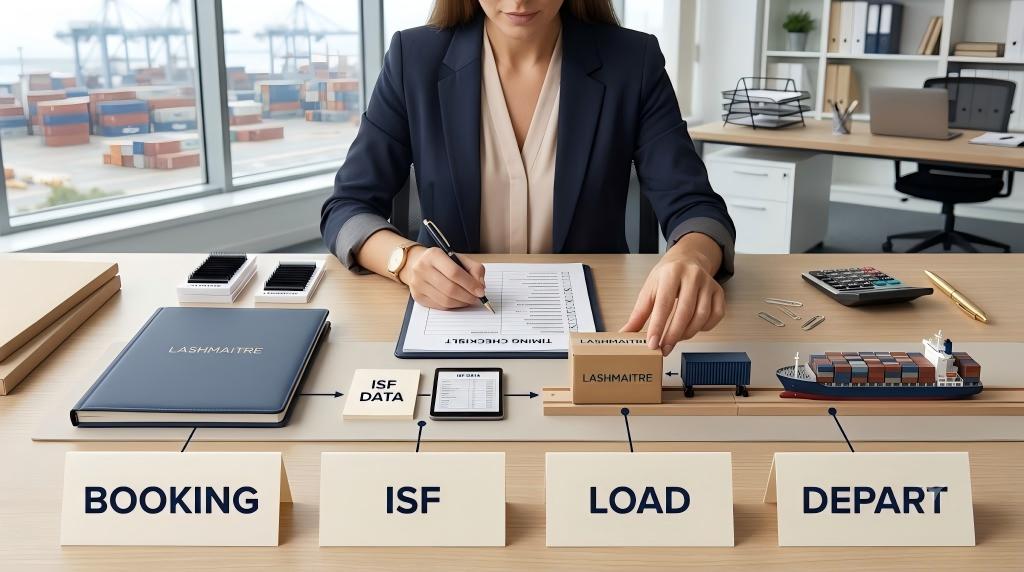
Build the ISF process around the planned loading time, not the invoice issue date.
- Booking: obtain the booking reference, vessel plan, bill structure, and filing agent contact.
- Data collection: request the eight early elements from controlled commercial and supplier records.
- Verification: compare legal entities, addresses, importer and consignee numbers, origin, and HTS support.
- Transmission: obtain confirmation from the broker or filing agent that the filing was accepted or identify any rejection.
- Loading check: confirm that unresolved exceptions have an owner before the cargo is laden.
- Departure record: retain the final data set, confirmation, changes, and booking evidence.
Do not confuse “sent to broker” with “accepted by CBP.” Your file should show what was sent, when it was transmitted, and what confirmation or error response was received.
Remember the Other Two Importer Elements
The article title focuses on the eight elements CBP identifies for the pre-lading deadline. For U.S.-bound ISF-10 cargo, container stuffing location and consolidator are also importer data elements. CBP says these two are to be provided as early as possible and no later than 24 hours before vessel arrival at a U.S. port.
Assign an owner for both elements during booking. Waiting until arrival creates avoidable uncertainty, especially when a supplier uses an off-site consolidation warehouse.
Handle ISF Changes as Controlled Revisions
Shipping data can change: a warehouse, consolidator, routing, manufacturer address, or product mix may be revised. The response should be a controlled amendment workflow, not a new spreadsheet that erases the original.

- Record the original value and the source document.
- Record the new value, who supplied it, and when.
- Ask the filing agent whether a replacement or update is required under the applicable filing process.
- Obtain and retain the resulting confirmation or error message.
- Reconcile the final ISF data with the later customs entry and commercial record.
Store these records under the same shipment reference and bill of lading. The lash import recordkeeping guide provides a retrieval-ready structure.
ISF Handoff Checklist for Importer and Broker
Before the filing handoff, confirm:
- Covered vessel shipment and planned loading time are identified.
- Seller and buyer legal names and addresses match the commercial file.
- Importer and consignee numbers have an approved source.
- Manufacturer or supplier is supported by production records.
- Ship-to party matches the first scheduled physical destination.
- Origin is supported by manufacturing evidence, not routing alone.
- HTS data matches the controlled classification file.
- Container stuffing location and consolidator have named owners.
- Broker or filing agent contact and escalation route are recorded.
- Transmission response, amendments, and final data set will be retained.
Importer Security Filing for Lash Shipments FAQ
Does ISF apply to air shipments?
The ISF requirement discussed here applies to covered cargo arriving in the United States by vessel. Air cargo follows different advance-data and entry processes. Confirm the actual transportation mode and ask the broker or carrier which filing requirements apply to the specific shipment.
Who normally transmits the ISF filing?
The ISF importer may use a licensed customs broker or another authorized filing service or software connection to transmit electronically. Operationally, the importer should still verify the source data, loading deadline, transmission response, and amendments rather than assuming the filer owns all underlying facts.
Can an ISF be updated after the first transmission?
Shipping facts can change, and CBP filing systems support controlled transaction actions. The importer should notify the filing agent promptly, preserve the original and revised data, follow the applicable update process, and retain the response. Do not wait until arrival to reconcile a known discrepancy.
Conclusion: Verify the Data Before Loading
An Importer Security Filing for lash shipments works only when advance data comes from controlled commercial, product, and logistics records. Verify the eight early elements, assign owners for stuffing and consolidator data, obtain transmission evidence, and document every material change.
Before booking a private-label shipment, align the physical SKU and packaging records through LASHMAITRE lash extension samples and the private-label lash extension process. For a wholesale specification and shipping handoff, contact LASHMAITRE.

Lash Maitre: Your Trusted Partner in Eyelash extension Solutions
Lash Maitre is dedicated to providing professional insights and tips in the eyelash extension industry. Sharing the latest trends, techniques, and product knowledge, Lash Maitre helps lash artists and enthusiasts enhance their skills, stay inspired, and achieve the perfect lash experience.