Premade Fan Tray Layout: Strip Placement and Pickup Checks for Wholesale Buyers
Share
Direct answer: Approve a premade fan tray layout by testing the actual fan and strip arrangement, not by counting rows in a photograph. Keep the fan construction constant, observe whether a qualified artist can reach and lift fans from the first, middle and last rows using the intended method, and record any base damage or neighboring-row interference. The approved sample, row map and packing version should identify the layout that the supplier is asked to repeat.
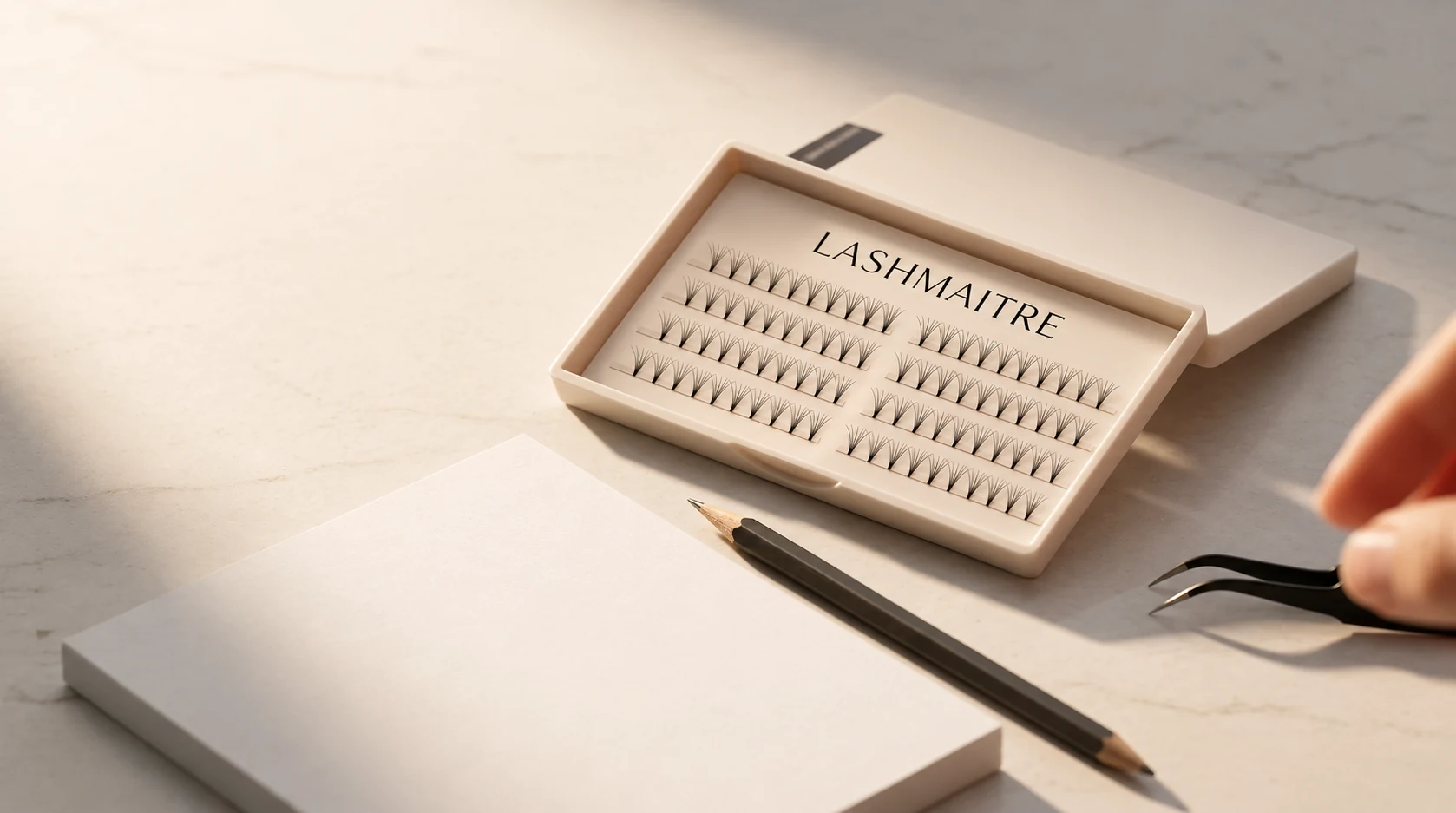
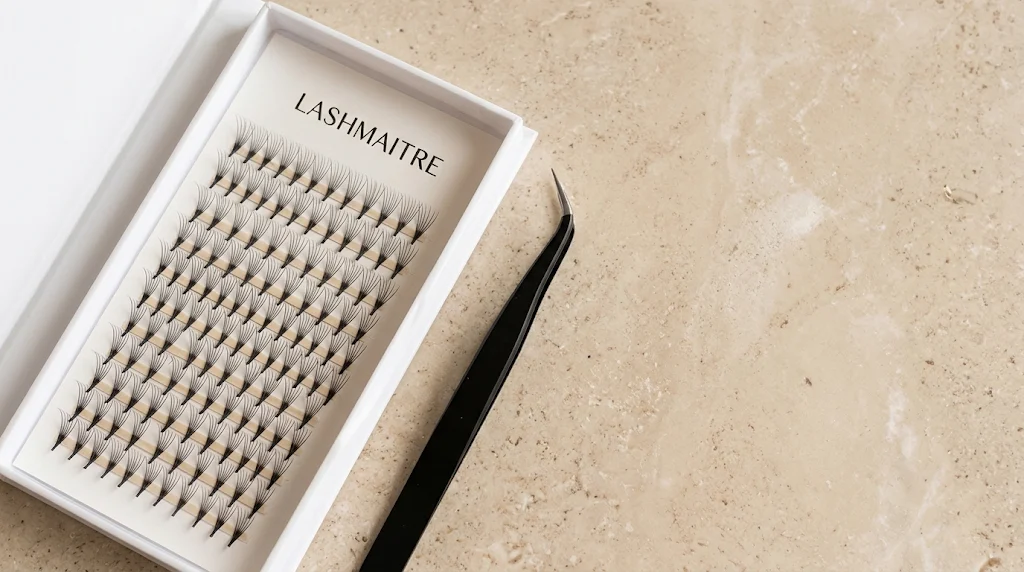
For lash brands, salons and distributors, the layout is a purchasing variable. Two trays may contain the same stated fan count and still present those fans differently. A photo can show where strips appear, but it cannot demonstrate pickup behavior or confirm that every tray in an order matches the sample. This guide addresses premade fan tray layout and strip placement. The Premade Fans Wholesale page owns the broader product choice; the loose-fan versus tray comparison owns the packing-format decision.
When the quote or receiving team also needs a clear quantity basis, use the premade fan tray count guide to reconcile complete fans, rows and the selling unit separately from this pickup-layout test.
Premade fan tray layout: define the comparison
Start with a named fan sample. Record the stated D count, fiber diameter, curl, length, fan width, stem and base construction, strip material and tray model. If one sample uses a different base or strip adhesive, the pickup result cannot be attributed only to layout. Ask the supplier to identify what changed between candidate trays.
For premade fan tray layout approval, the physical record should include row count, row order, strip position within each row, distance or clearance between adjacent rows as measured by the agreed method, access at the tray edges, and whether the printed label remains readable after strips are moved. Do not copy a universal spacing number from another brand. A useful spacing limit depends on the actual fan width, tool, strip and pickup method being approved.
| Buyer question | What to inspect on the sample | Record for approval |
|---|---|---|
| Can the tool reach the intended base? | First, center and last rows, including tray edges | Artist, tool and row tested |
| Does a neighboring strip obstruct pickup? | Whether the tool or fan contacts the adjacent row | Row location and photograph |
| Does the fan keep its shape? | Spread, stem and base before and after lift | Intact/damaged count in the tested portion |
| Is the row identifiable? | Length and fan specification on tray/card | Sample code and row map |
| Can the arrangement be repeated? | Candidate tray against the retained reference | Tray, strip and packaging version |
The table is a sample test plan, not a LASHMAITRE inspection result. Availability of a specific row spacing or tray construction must be confirmed in a current quote.
Test access across the complete tray
Ask an experienced user of the intended tweezer and pickup method to work through a defined sample portion. Set the test boundary first: which rows, how many fans from each position and what counts as an intact lift. Keep the lighting, work surface and tool condition consistent between candidate trays. A quick lift from the most accessible row is not a test of the whole layout.
Photograph the tray before handling. Mark the sampled positions without covering the product label. Test the first, middle and final rows, and include a crowded edge if the tray design has one. Record whether the tool can approach the fan base, whether the adjacent row is disturbed, and whether the fan separates intact. Count observations only for the portion actually tested. If five fans were checked, do not turn the result into a claim about all fans in the tray or a production lot.
Separate three causes that can look similar. A fan may deform because its base is weak, because the strip holds it differently, or because the layout limits access. Retest with a matched fan on a different strip position if the supplier can provide it. If construction cannot be held constant, mark the cause as unresolved rather than attributing damage to spacing alone.
Decide whether to revise the tray or the fan
For premade fan tray layout, the buyer should write a practical acceptance rule before asking for bulk pricing. For example, the rule can require that the agreed test positions are reachable and that the tested fans remain intact under the documented pickup method. The exact acceptable result and sample size belong in the buyer–supplier specification; this article supplies no universal tolerance or performance threshold.
When a problem appears, identify the smallest change that could solve it. More space between rows may help access but can change how many rows fit the tray. Moving the strip may improve base access but can change label placement or protection under the lid. A different fan stem may change pickup without changing the tray at all. Request a revised coded sample whenever the approved construction changes.
Do not approve a layout by substituting a different D count, length or base and calling it the same product. Keep the lash extension samples path attached to each candidate so the final decision refers to physical evidence rather than a supplier rendering.
Keep tray layout and quantity separate
Row count tells the buyer how the tray is organized; it does not by itself state the number of complete fans delivered. Ask for fans per row or per tray, the length allocation and the selling unit shown on the quotation. A row-spacing change may alter the number of rows, the fan count or neither. Reconcile the new sample and quote instead of assuming the old count remains valid.
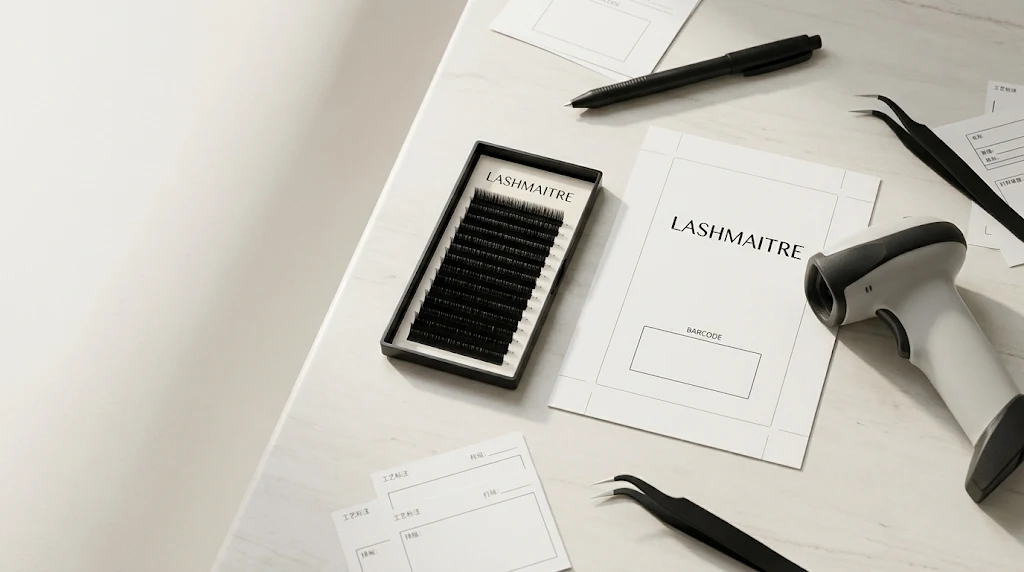
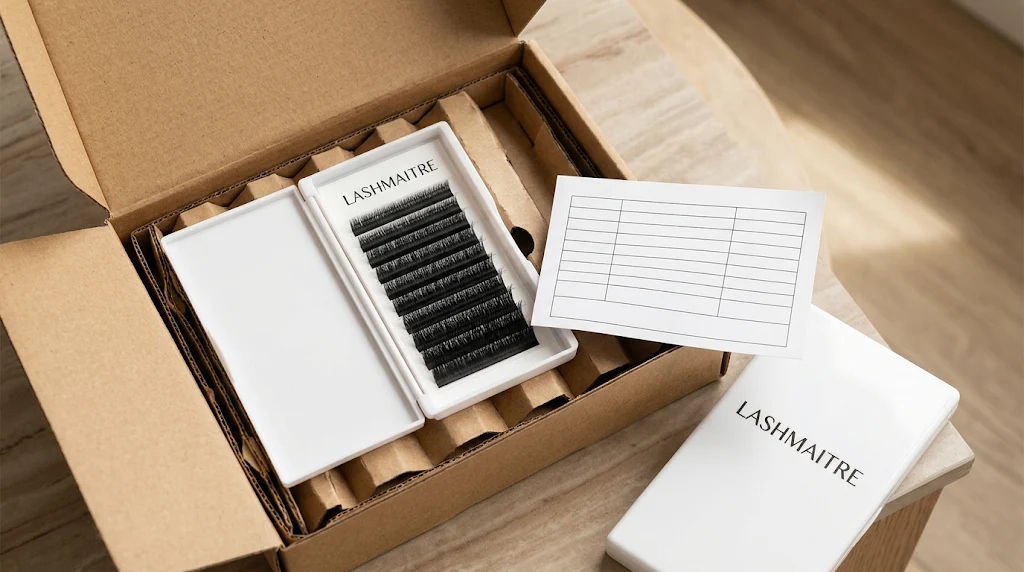
For private label packaging, confirm that a revised tray still fits the approved card, lid and outer box. The product name and row labels should match the actual fan specification. Keep the artwork version separate from the physical layout version so a print change does not silently replace an approved tray.
Freeze the layout for the next order
For a repeatable premade fan tray layout, keep one accepted physical tray with the exact sample code and dated photographs. Save the row map, fan specification, strip and tray references, test method, observed result, label proof and quotation unit together. The purchase order should identify the approved version, not merely say “same as last time.”
At receipt, compare a defined portion of the new shipment with the retained tray. Check that row placement, labels, fan count basis and pickup behavior match the agreed reference. If they differ, record the lot and affected quantity before deciding whether to accept, hold or seek a corrected sample. One good tray does not prove the entire order; the buyer and supplier should agree on the shipment inspection scope. The NIST lot acceptance sampling overview explains why a documented sampling plan and decision rule matter; it does not establish any LASHMAITRE inspection result or lash-specific tolerance.
Buyer FAQ
Is wider strip spacing always better for premade fans?
No. More room may make one pickup method easier, but it can change tray capacity and packaging. Test the actual fan, tool and layout rather than selecting the widest-looking photo.
Does an intact fan after pickup prove the tray layout is good?
It is one observation. Repeat the test across the planned rows and record the method. Fan construction and strip properties may also affect the result.
Can a supplier change the tray without changing the product code?
Ask for a change notice and a revised sample when strip position, row spacing, tray or label identity changes. Whether the commercial code changes is a buyer–supplier decision; the physical version must remain traceable.
Should I compare loose fans in this test?
That is a different packaging decision. Use the loose versus tray buyer guide if you are selecting between loose containers and strip-mounted trays. Here, compare tray layouts for an otherwise matched fan.
What should I send for a layout-specific quote?
For a premade fan tray layout quote, send the fan sample ID, intended D count, diameter, curl and lengths, preferred strip/tray arrangement, fan-count basis, packaging plan, order quantity and destination. Include your test notes or ask for matched sample layouts if the final arrangement is undecided.
Request a matched tray sample
Use the LASHMAITRE B2B inquiry to ask whether the specified premade fan and tray layout can be sampled and quoted. Current construction options, minimum quantity, price and lead time require confirmation for the exact project. An editorial illustration or another brand’s tray cannot verify a LASHMAITRE supply specification.

Lash Maitre: Your Trusted Partner in Eyelash extension Solutions
Lash Maitre is dedicated to providing professional insights and tips in the eyelash extension industry. Sharing the latest trends, techniques, and product knowledge, Lash Maitre helps lash artists and enthusiasts enhance their skills, stay inspired, and achieve the perfect lash experience.