Lash Tray Length Label Accuracy: What Wholesale Buyers Should Verify on Samples
Share
Direct answer: Lash tray length label accuracy is established for wholesale approval only when its printed row map, the received physical rows and the approved product specification agree. Start with a coded sample, compare every printed row assignment with the reference, examine selected fibers using an agreed measurement method where length is in dispute, and record any mismatch by row and lot. Hold an unresolved tray instead of changing a purchase order to match a mistaken label.
Length planning and length verification are separate tasks. The Lash Extension Lengths guide helps choose a length range; the wholesale lash tray hub helps choose a product family. This guide addresses the narrower question of whether the length information printed on a physical tray matches the product being approved or received. It does not set a universal length tolerance or certify a tray shown in a photograph.
Identify the approved row map
Before opening a new tray, obtain the specification revision and retained sample to which it is meant to conform. Record the buyer SKU, supplier product reference, product family, curl, nominal diameter, length format, row count and packaging version. For lash tray length label accuracy, a mixed-length tray needs a row-by-row map; a single-length tray still needs a clear stated length and correct repeated labeling.
Do not use an ecommerce product name as the row map. “8–15 mm mix” does not tell the receiver how many rows of each length are in the tray or where they sit. Request the actual allocation for the configuration being quoted. If the supplier has not confirmed it, mark the field pending rather than reconstructing a plausible sequence from a styled photograph.
| Reconciliation point | Approved record | Received tray | Action if different |
|---|---|---|---|
| Product and version | SKU, sample ID and specification revision | Tray and outer label | Hold identity mismatch for clarification |
| Row sequence | Length allocated to each row | Printed row marks | Photograph the entire row map |
| Physical contents | Retained sample and agreed inspection method | Selected fibers from identified rows | Record the observation and method |
| Other specifications | Curl, diameter, finish and product family | Tray and pack wording | Separate label error from product change |
| Pack traceability | Lot or batch reference and packaging version | Tray, box and carton references | Connect discrepancy to affected units |
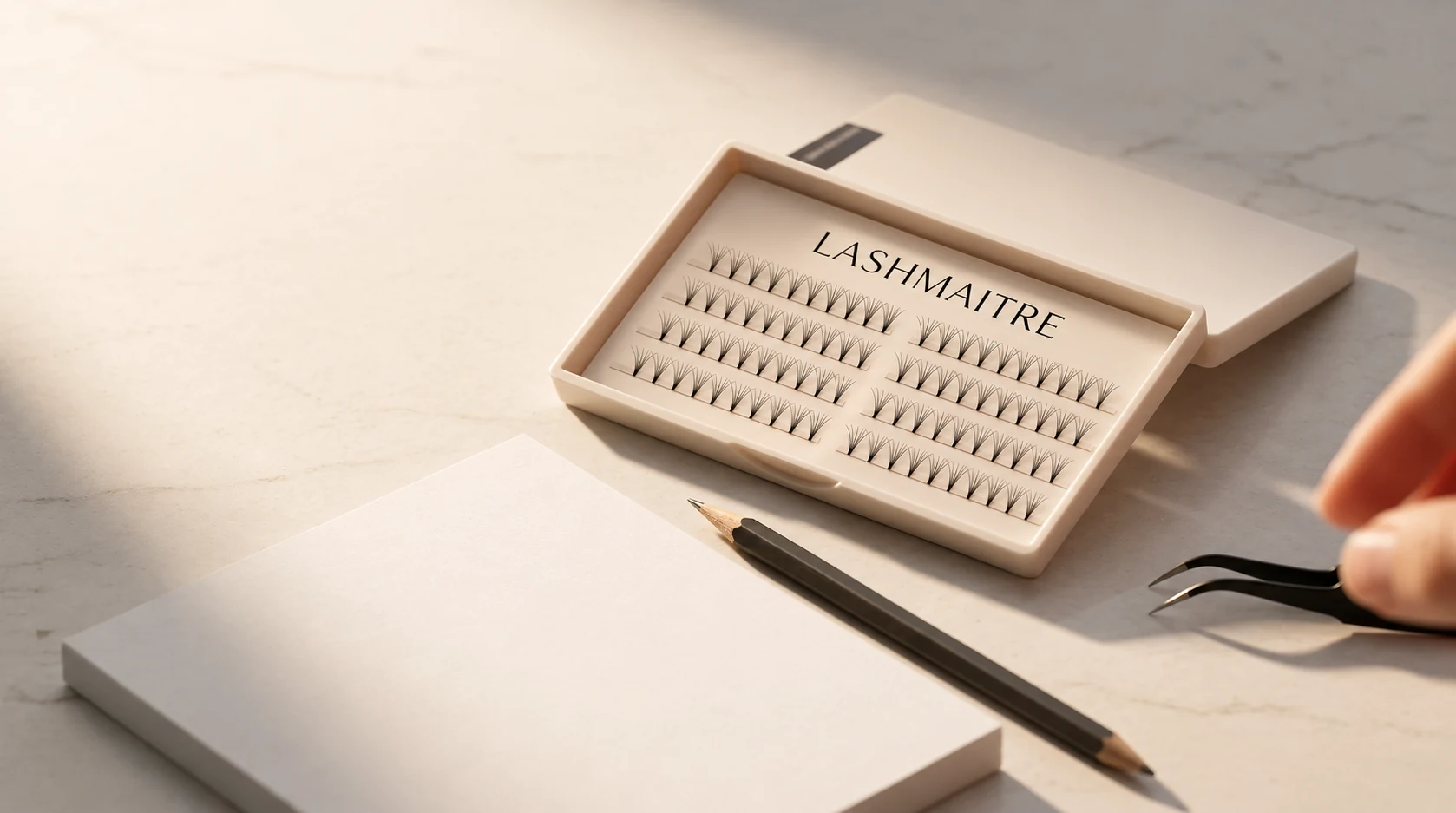
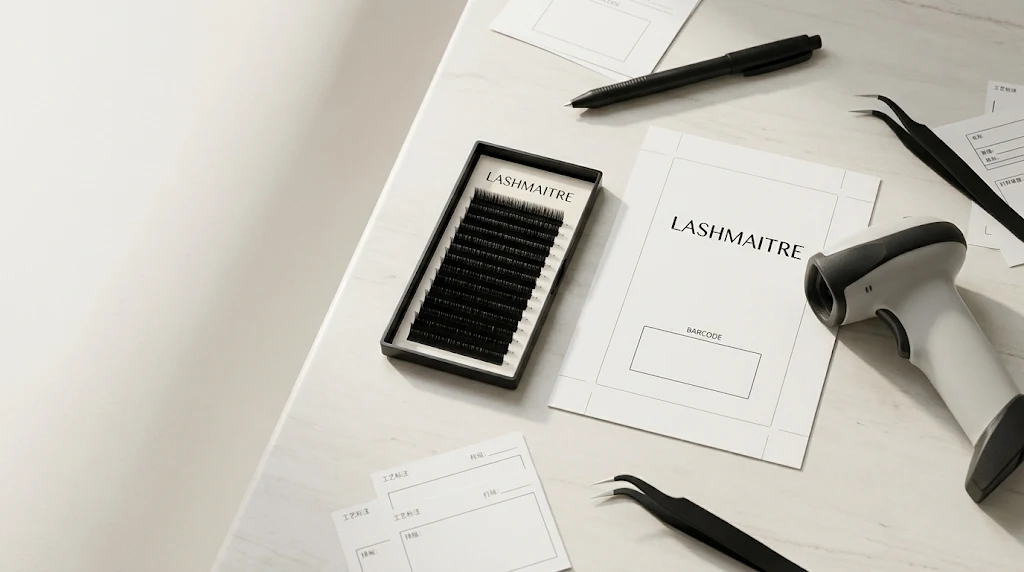
This lash tray length label accuracy worksheet is a buyer-side method. It is not a measured result for any LASHMAITRE lot.
Check lash tray length label accuracy before judging fibers
First verify the obvious identity fields. Is the correct product family printed? Are curl and diameter consistent across tray card, box, purchase order and sample reference? Is each row label legible and aligned with the intended strip? A shifted label could make a correct tray appear to have the wrong length sequence.
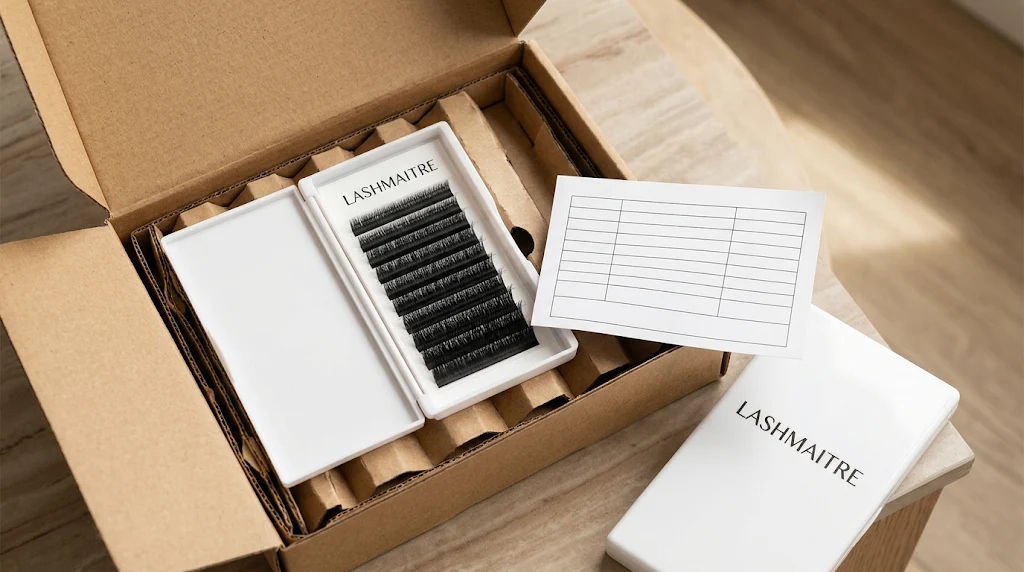
Photograph the entire tray flat under consistent light before removing any strip. Keep the SKU and lot information in the record. Then compare each printed row with the approved allocation, including repeated lengths. If the row labels are not visible after a cover is fitted, verify the intended label placement in the assembled pack rather than only on the empty insert.
Do not correct the supplier’s printed label with handwritten marks and release the tray as if it were unchanged. A label correction, product substitution or repack can affect downstream barcode, warehouse and customer records. Ask who owns the correction and which units and versions are affected.
Examine a disputed row with a defined method
Lash tray length label accuracy requires more than appearance: a row label is a nominal product claim; visual comparison alone may be inconclusive. If physical length is disputed, define where measurement starts and ends, what tool is used, how curved fibers are handled, how many fibers and trays are sampled, and how findings are recorded. Ask the supplier for its stated method and agreed acceptance range for the exact SKU. Do not invent a universal millimetre tolerance or assume a ruler held beside a curled lash is a valid complete measurement method.
When a sample is meant to represent a larger lot, agree on a documented selection and decision plan. The NIST acceptance-sampling overview explains the general lot-sampling framework; it does not prescribe a lash-fiber length tolerance or approve this product.
Select fibers from recorded row positions without losing their row identity. A tray containing both short and long lengths requires separate observations by row. Mark whether the issue is a wrong printed number, an unexpected physical row, mixed contents or an uncertain measurement. Those causes may require different corrections.
The Lash Quality Control page covers broader curl, fiber and batch checks. This article stays with label-to-row identity. A length finding does not by itself establish curl accuracy, safe application, usable yield or batch-wide quality.
Protect mixed-length and single-length reorders
Recheck lash tray length label accuracy on each reorder against its approved version; a prior lot does not establish the current row map.
Mixed trays are especially vulnerable to a shifted or copied row map because the outer pack may show only a range. Confirm each row assignment against the approved map and note any row with an unexpected number of strips. For a single-length tray, confirm the repeated row labels and product code; a uniform appearance does not prove that the printed length is correct.
When a buyer changes the length mix intentionally, create a new specification and label revision. Do not ask the supplier to keep the old label because the box artwork is already printed. Decide whether an existing barcode and SKU still correctly identify the new selling unit under the buyer’s data rules. Keep the old and new retained samples separate.
For a repeat order, check a defined sample of trays from the actual shipment against the approved sample and row map. Record carton and lot references so an error can be isolated. The sample plan, acceptance criteria and remedy should be agreed in advance. One checked tray does not prove every tray in the lot.
Turn a mismatch into a decision
Record lash tray length label accuracy with three outcomes: match, clarification needed, or hold for correction. “Match” requires the checked fields to agree with the approved version under the defined scope. “Clarification needed” applies when the row map, measurement method or supplier identity is missing. “Hold” applies when a material mismatch is documented and the affected stock should not be released as the approved item.
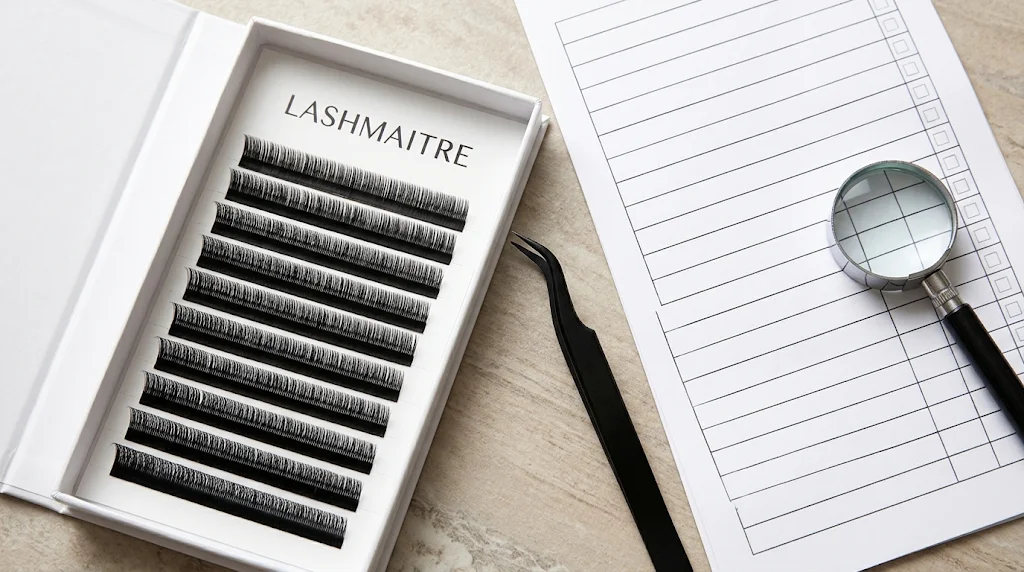
Send the supplier a concise discrepancy record: SKU, lot, carton, tray code, printed row, expected row, actual observation, photographs, inspection method and number of units reviewed. Request an explanation and proposed correction in writing. Do not imply that a concept image, a blank checklist or a single unlabelled fiber proves a production defect.
Buyer FAQ
Is a printed 8–15 mm range enough to approve a mixed tray?
No. Obtain the row-by-row allocation and compare the received tray with it. The range alone does not identify which length belongs in each row.
Can a photograph prove the physical lash length?
A photograph helps document identity and visible placement. It does not replace a defined measurement of the disputed fibers or the approved specification.
What if the lashes look right but the row label is wrong?
Hold the identity question. The label affects selection, storage, ecommerce copy and reorders even when a technician likes the physical product. Ask for a controlled correction and check all affected packaging levels.
Does this guide set a pass/fail length tolerance?
No. The buyer and supplier must agree on the SKU-specific measurement method, sampling scope and acceptance criteria. A universal number would be unsupported here.
Which record belongs in a reorder request?
Send the approved sample ID, product specification revision, exact row map, tray/box artwork version and any accepted change notice. Do not rely on the retail name alone.
Send a traceable lash tray request
Ask through LASHMAITRE wholesale inquiry for the proposed tray, confirmed length allocation, sample and quotation basis. The sample request path can connect the physical tray to the written row map before a bulk order. Availability, pack contents, quantity terms and inspection criteria must be confirmed for the exact product.

Lash Maitre: Your Trusted Partner in Eyelash extension Solutions
Lash Maitre is dedicated to providing professional insights and tips in the eyelash extension industry. Sharing the latest trends, techniques, and product knowledge, Lash Maitre helps lash artists and enthusiasts enhance their skills, stay inspired, and achieve the perfect lash experience.