Lash Practice Sponge: 7 Practical Academy Buying Checks
Share
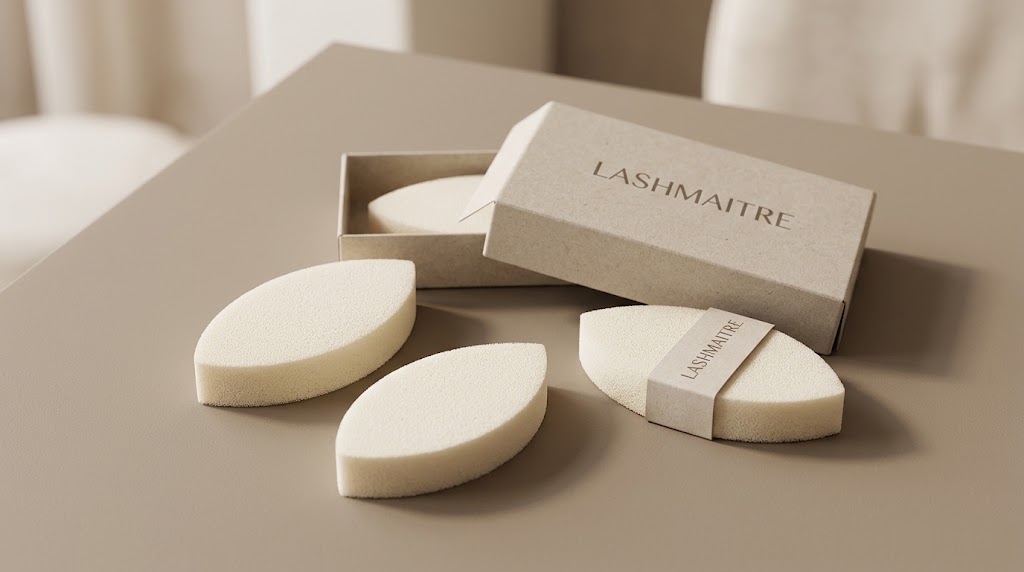
A lash practice sponge should be purchased for a defined classroom exercise, with its shape, dimensions, material information, approved use, unit count and replacement code recorded together. Confirm the proposed use with the educator and obtain the relevant supplier instructions before ordering academy packs.
This guide is for training academies, distributors and brands assembling education kits. It addresses the blank practice surface and refill planning. Practice lash strips, mannequin heads and professional-use lash trays remain separate components. It does not provide an adhesive procedure, a live-client technique or a student competency standard.
In this guide: Specification · Seven checks · Pack calculation · FAQs
Specify the lash practice sponge before the kit
Ask the educator to identify what the lash practice sponge surface must do in the planned exercise. A demonstration prop, a dry placement surface and a component used with another product are different briefs. Obtain written confirmation of the intended use and any restrictions for the exact material. A listing that calls an item a training sponge does not settle every compatibility question.
| Buyer field | Information to request | Acceptance record |
|---|---|---|
| Lesson role | Educator’s exercise and intended handling | Lesson reference and approved component code |
| Geometry | Shape, length, width and thickness | Dimensions with the measuring method |
| Material | Supplier declaration and use restrictions | Current document tied to the sample |
| Pack identity | Pieces per pack and any size assortment | Opened-pack count and variant list |
| Replacement | Same-code refill availability and changes | Reorder reference and retained sample |
1. Match the sponge to the lesson task
Describe the exercise in plain language without relying on a kit photograph. State whether the educator needs individual pieces for students, one shared demonstration piece or another arrangement. The educator should approve the learning task; purchasing should translate that decision into a repeatable component specification.
Keep the assessment of student skill separate from approval of the consumable. Completing an exercise on a sponge is not evidence that a student is ready to work on a client. Do not advertise the component as a substitute for supervised instruction or an applicable professional qualification.
2. Record lash practice sponge shape and dimensions
Measure the same reference points on every lash practice sponge sample. For a curved or eye-shaped piece, a flat length, an arc length and a photograph from above describe different things. State which measurements the supplier will use. Record thickness without deliberately crushing the sample, and note the method so comparisons are meaningful.
If the training kit contains a holder or a designated work area, check the physical fit of the actual lash practice sponge. A piece that fits loosely into a photographed tray may behave differently in the classroom setup. Keep the shape code and any orientation requirement in the kit bill of materials.
3. Inspect the surface supplied to students
Look for inconsistent cuts, torn edges, loose fragments and visibly different surfaces within the same sample pack. Compare the usable area against the intended exercise. Ask the educator to record any handling problem during the agreed review, using the same conditions for each lash practice sponge candidate. Avoid converting a visual inspection into an unsupported claim about durability or material performance.
Keep rejected and approved lash practice sponge examples clearly labeled in the purchasing record. This gives the supplier something specific to address. “Better quality” is a weak replacement instruction; a photograph of a torn edge or a measured mismatch points to the actual issue.
4. Resolve lash practice sponge material and use compatibility
Request the declared material and the written instructions or restrictions for the proposed use. If the exercise involves adhesive, remover or another chemical product, obtain product-specific compatibility guidance from the relevant suppliers before approving that combination. Do not use this buying guide to authorize combining an unidentified sponge with an unidentified chemical.
Terms such as soft, porous or cosmetic grade are not a substitute for the relevant information. Keep material revisions under change control and ask whether a replacement batch uses the same formulation or construction. If the supplier cannot resolve a necessary compatibility question, leave that use unapproved and choose a different documented component.
5. Calculate pieces rather than ambiguous packs
Separate students, exercises, pieces and packs in the order worksheet. Agree with the educator how many pieces each planned exercise uses and how pieces will be replaced. Do not assume a generic reuse limit. The calculation below is only an inventory example; it is not a recommended teaching schedule or a supplier pack offer.
| Illustrative planning item | Calculation | Result |
|---|---|---|
| Student allocation | 18 students × 2 planned pieces | 36 pieces |
| Demonstration allocation | 2 demonstrations × 1 piece | 2 pieces |
| Reserve chosen by the academy | Fixed reserve for this example | 4 pieces |
| Total requirement | 36 + 2 + 4 | 42 pieces |
| Example pack format | Round 42 ÷ 10 upward | 5 packs / 50 pieces |
| Unallocated remainder | 50 − 42 | 8 pieces |
In this example the purchasing requirement is five ten-piece packs, not forty-two packs. Confirm the real pack format, any mixed shapes and the number of usable pieces per variant. An assortment may contain the correct total quantity but too few pieces of the shape assigned to a lesson.
6. Review a coded academy sample
Give each lash practice sponge candidate a sample code and use the same classroom brief for the comparison. Retain the material information, dimensions, opened-pack count and educator observations together. Request sample review arrangements before ordering the full kit quantity. Distinguish observations from assumptions: a sample looking similar does not confirm identical material or identical use restrictions.
The practice strip purchasing guide covers the separate training lash component, including backing and lash layout. The lash practice sponge record should identify whether that component is part of the proposed exercise, while leaving its specifications under its own approved code.
7. Keep the lash practice sponge refill code separate
Record the lash practice sponge’s own item code, pack quantity, shape and material revision. Ask whether refills can be ordered without buying a complete training kit and which details would trigger a new sample review. Do not carry forward an old approval after a change in shape, material, pack assortment or intended use.
Use the agreed quality control record to define what receiving staff will compare with the retained sample. Keep the educator’s use decision and purchasing’s count verification distinguishable. Neither an incoming quantity check nor a branded package demonstrates that the learning exercise has been validated.
A teaching sample and an incoming lot answer different questions. The NIST introduction to acceptance sampling explains that a sample supports a decision to accept or reject a lot. Agree the incoming checks and lot decision separately from the educator’s exercise review; neither establishes chemical compatibility.
Buyer FAQs
Is a lash practice sponge the same as practice lashes?
No. The sponge is a practice surface, while practice lashes or strips provide a separate lash component. A training kit may contain both. Specify and count each item separately, then have the educator confirm the intended exercise and the suppliers confirm any relevant compatibility.
Can any sponge be used with lash adhesive?
Do not assume compatibility from the item’s shape or name. Obtain the material information and product-specific use guidance for the exact sponge and adhesive. Leave the combination unapproved when necessary information is missing. This guide does not provide a chemical-use procedure.
How many practice sponges should an academy order?
Start with the educator’s planned allocation per student and demonstration, add the academy’s chosen reserve, then convert the total pieces into the supplier’s actual pack format. Confirm any assortment by shape. There is no universal quantity or reuse allowance for every course.
What should trigger a new sponge sample review?
Review changes to shape, dimensions, material, surface construction, pack assortment or intended use. Keep the refill code and supplier documentation with the retained sample. A familiar package design alone does not establish that a replacement component is unchanged.
Request a controlled academy component brief
Send the lesson role, desired shape, dimensions, required pieces, pack preference and unresolved material questions through the LASHMAITRE wholesale inquiry form. Ask for confirmation of current sourcing and sample options. Approve the lash practice sponge as a documented kit component before committing to the academy quantity.

Lash Maitre: Your Trusted Partner in Eyelash extension Solutions
Lash Maitre is dedicated to providing professional insights and tips in the eyelash extension industry. Sharing the latest trends, techniques, and product knowledge, Lash Maitre helps lash artists and enthusiasts enhance their skills, stay inspired, and achieve the perfect lash experience.