Lash Spoolie Tube: 7 Reliable Packaging Fit Checks for Buyers
Share
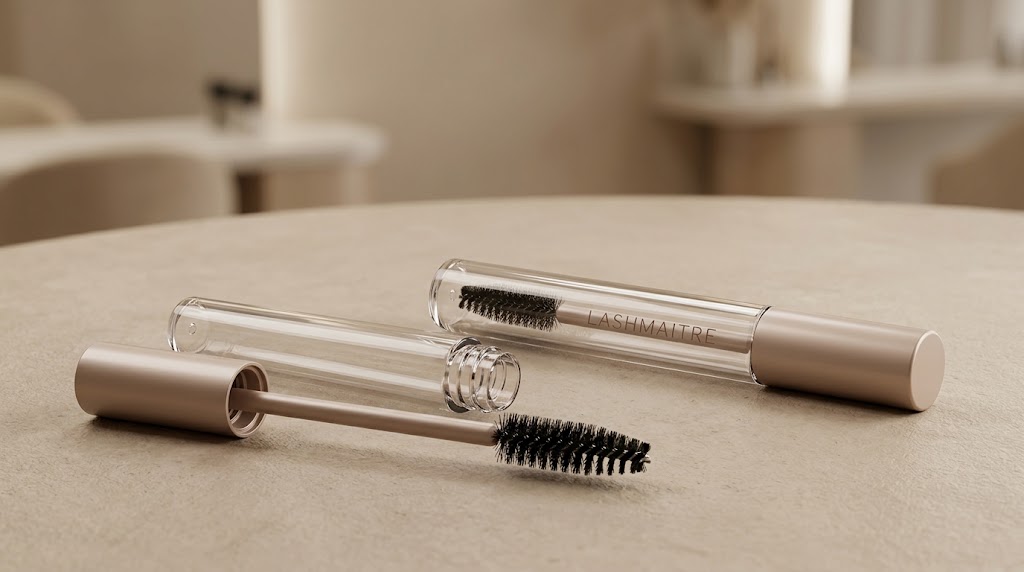
A lash spoolie tube should be approved against the exact brush that will be packed inside it. Verify internal clearance, opening size, closure engagement, component count and the packaging description; a protective case alone does not establish that a brush is reusable or sterile.
A brush supplied inside a clear case may be described as a travel spoolie, mascara wand case or lash brush tube. Those labels do not tell a buyer whether the quotation covers an empty container, a matched dry-brush assembly or packaging intended for a liquid formula. This guide concerns protective packaging for a dry brush, with the parts and quantity basis defined before the order.
Compare the lash spoolie tube specification
| Check | What to define | Evidence | Hold or decision |
|---|---|---|---|
| Order unit | Empty case or complete dry-brush set | Component list | Ambiguous set description |
| Internal fit | Opening and usable cavity dimensions | Matched brush sample | Bristles compressed or caught |
| Closure | Cap and body interface | Engagement method | Cross-threading or distortion |
| Brush pairing | Head, stem and cap versions | Assembly reference | Unapproved substitute |
| Decoration | Position and finished appearance | Approved proof | Print obstructs closure |
| Pack count | Units per bag and carton | Packing specification | Case and brush counts differ |
1. Define what the lash spoolie tube order includes
Start with a bill of components: tube body, cap, brush handle, brush head and any insert or individual pack. State whether the brush is attached to the cap, supplied loose or not included. Give the empty tube and the finished brush set different purchasing descriptions.
Separate this product from a mascara formula container or serum applicator pack. A protective dry-brush case has not automatically been evaluated for filling, sealing or compatibility with liquids. If the intended product changes, a separate packaging approval is needed rather than a revised label on the same unverified sample.
2. Measure lash spoolie tube clearance against the brush
Record the usable internal length, opening diameter, narrowest internal area and the dimensions of the brush head and handle. External tube dimensions alone cannot show whether the brush will fit. Define measurement points and tolerances on a simple drawing shared with the supplier.
Insert and remove the exact intended brush using the normal assembly route. Observe whether the bristles catch at the opening, compress against the wall or contact the closed end. Check multiple physical samples rather than approving a digital render. Record the fit condition with photographs that identify the brush and tube versions.
3. Inspect the lash spoolie tube cap and closure
Identify the lash spoolie tube closure as screw, push-fit or another defined construction. Check that the parts engage as intended without cross-threading, visible distortion or an unexplained gap. Where a force or torque requirement is needed, agree on the method and acceptance range rather than relying only on a subjective tightness description.
If the cap carries the brush stem, inspect the stem connection and alignment as part of the assembly. The brush should not be treated as a separate interchangeable part until that connection has been verified. A successful fit inspection does not establish an airtight, leakproof or child-resistant package.
4. Check the brush after packing and removal
Review the brush shape before insertion and after removal from the proposed pack. Record visible deformation, loose parts and contact marks using the agreed inspection rule. Check whether the packing method pushes the brush against a surface or leaves it unsupported during handling.
Keep general brush selection separate from tube approval. A suitable brush can still be paired with an unsuitable case. Likewise, a well-fitting container says nothing by itself about the brush material, reuse instructions or suitability for a particular cosmetic procedure. Obtain those details from the supplier of the exact finished product.
5. Approve lash spoolie tube finish and branding
Inspect each lash spoolie tube and cap for rough edges, scratches, molding marks and visible contamination against an agreed appearance sample. Ask for the declared materials and decoration method. Do not infer composition or recyclability from a transparent appearance or a familiar recycling symbol in a concept image.
Approve the LASHMAITRE artwork on a physical sample or a dimensioned proof with defined placement. Check that the label or print does not interfere with the closure or hide information the buyer needs to verify the brush. Match the final color and finish to the approved sample, not only to a screen mockup.
6. Keep packaging claims within the evidence
A lash spoolie tube does not turn a disposable brush into a reusable one. It also does not establish sterility, disinfection, antimicrobial performance or a safe reuse period. Use the brush manufacturer’s verified use and care directions for the exact assembly, and avoid adding unsupported claims to a retail label.
Ask whether the pack is supplied assembled and whether the individual unit is bagged, boxed or otherwise identified. Record the condition required at receipt and the handling instructions supplied with the product. A visual inspection can identify visible issues; it cannot prove microbiological cleanliness or validate a cleaning process.
7. Control lash spoolie tube counts and substitutions
Define the order unit precisely. One complete set might contain one tube, one cap and one matched brush; one bag of empty cases is a different item. Reconcile the quantity at unit, inner-pack and carton levels so that missing brushes are not mistaken for an agreed empty-container order.
For a lash spoolie tube wholesale request, send the brush reference, internal fit drawing, closure type, material declarations requested, artwork, assembly format, individual pack, count basis, quantity and destination. Ask the supplier to identify changes to the brush head, stem, tube mold or cap before a reorder is released.
Separate component approval from delivery inspection
A matched lash spoolie tube sample confirms the proposed combination, not every packed set in a future delivery. The NIST overview of acceptance sampling explains how random samples from a lot support a decision to accept or reject that lot. Agree the inspection lot, selection method and defect rules before shipment. For these sets, record incorrect brush pairing, missing caps and visibly damaged bristles separately, so a correct carton total does not hide incomplete units.
Keep lash spoolie tube approval traceable
Use the LASHMAITRE quality-control overview to organize the inspection record. Agree on item-specific acceptance criteria before inspection; this checklist is a purchasing aid and is not a completed test report.
| Release field | Required record | Reason to pause |
|---|---|---|
| Identity | SKU and component or material version | Sample and quotation differ |
| Fit or coverage | Agreed measurements and sample observations | Method or tolerance undefined |
| Packaging | Artwork, quantity basis and packing reference | Missing parts or unclear count |
| Change control | Supplier notice and approval owner | Unannounced substitution |
FAQ
Does a protective tube make a wand reusable?
No. A tube provides packaging. Reuse, care and service-life statements need evidence and directions for the exact brush and assembly.
How should brush-head fit be checked?
Compare the brush dimensions with the usable internal cavity, then inspect insertion and removal of the matched sample for catching, compression or visible deformation.
Are these tubes intended to hold mascara formula?
This guide covers a protective case for a dry brush. Liquid filling requires separate compatibility, closure and packaging assessment; do not assume it is suitable.
What changes require reapproval?
Review changes to tube dimensions, cap interface, brush head, stem attachment, material, decoration, care directions or the pack-count definition.
Request a lash spoolie tube sample before a bulk order
Approve the tube and its intended brush as a paired configuration. Preserve that identity in the quote, artwork, packing list and reorder record so an accessory set cannot silently become an empty-container or mismatched-brush shipment.
Use wholesale lash extension samples to discuss the sample process, and send the exact accessory specification through the B2B wholesale inquiry form. Confirm availability, item-specific MOQ, sample terms, customization, documentation, pricing and lead time for this exact product; terms for lash trays do not automatically apply to accessories.

Lash Maitre: Your Trusted Partner in Eyelash extension Solutions
Lash Maitre is dedicated to providing professional insights and tips in the eyelash extension industry. Sharing the latest trends, techniques, and product knowledge, Lash Maitre helps lash artists and enthusiasts enhance their skills, stay inspired, and achieve the perfect lash experience.