Lash Tweezers Packaging Wholesale: 8 Protective Pack Checks
Share
Lash tweezers packaging wholesale orders should be approved around the exact tool model: define tip clearance, retention points, surface protection, opening method, label and barcode data, pack sequence, physical proof, transit test and reorder version. The package must present one approved tool without allowing the precision tip, coating or printed identity to be damaged by the insert or outer pack.
This guide is for lash tool brands, distributors, academies and salons ordering custom lash tweezer boxes, tubes, pouches or cases. It owns the individual retail and transit package. Existing tweezer guides continue to own tool selection, metallurgy, grip and application performance; salon storage-case pages continue to own multi-tool storage after purchase.
Lash tweezers packaging wholesale: tool-and-pack specifications
| Buyer field | What to define | Sample check | Approval record |
|---|---|---|---|
| Tool identity | Model, length, tip shape, finish and logo version | Compare with approved tool | Tool reference |
| Tip protection | Guard, clearance and no-contact zones | Open and close repeatedly | Protection drawing |
| Retention | Support locations and permitted movement | Shake and handling check | Insert specification |
| Surface contact | Materials touching coated or polished areas | Inspect for rub, residue or transfer | Contact-material record |
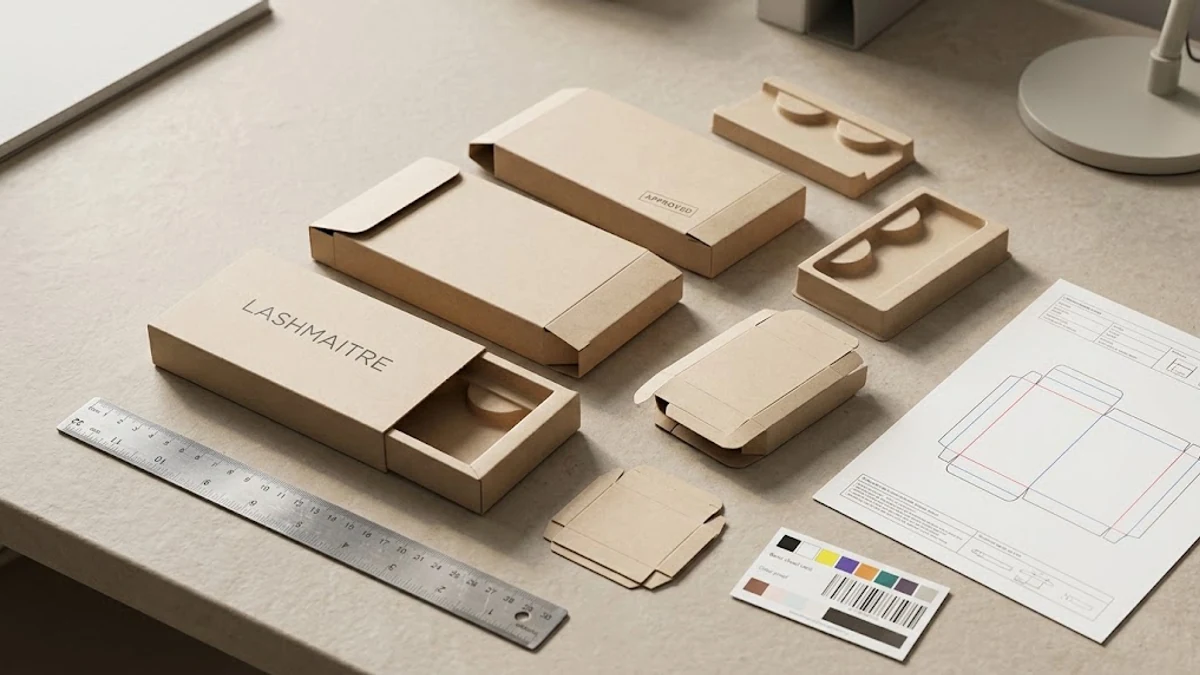
| Retail structure | Tube, carton, pouch, case or named combination | Follow the opening sequence | Pack drawing |
| Label/data | Product name, SKU, barcode and version | Read and scan final print | Data matrix |
| Transit pack | Unit orientation, inner count and master carton | Inspect after agreed handling/test | Packing instruction |
| Reorder | Tool-pack combination and change notice | Compare with retained sample | Reorder file |
For lash tweezers packaging wholesale sourcing, do not approve a generic empty box and assume every tweezer will fit. Tip geometry, handle width, finish and accessories can change the required clearances and support points.
1. Freeze the exact tool and sales unit
Name the tweezer model, dimensions, tip form, finish, logo or etching, included tip guard and any accessory. Decide whether the saleable unit contains one tool, a matched pair or a set. Record the intended channel and the face panel customers will see.
Keep lash tweezers packaging wholesale specifications and the tool specification linked but separately versioned. A tool coating, handle width or tip change can require a fit review even when the box artwork does not change.
2. Protect the precision tip with defined clearance
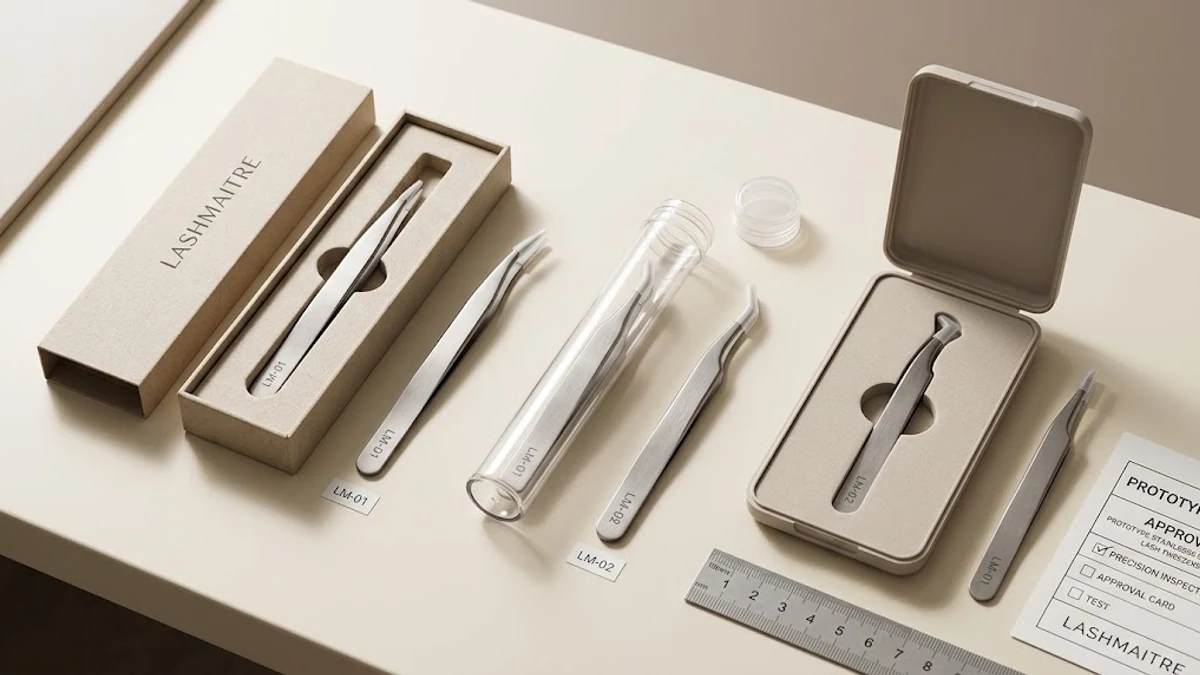
Draw the no-contact zone around the closed tip and state which component prevents the tool from moving into that zone. If a tip guard is used, define its material, fit, placement and removal method against the approved tool. Confirm that putting on or removing the guard does not force the tips sideways.
Inspect lash tweezers packaging wholesale samples through several open-close cycles using the complete package. Check whether the tool rotates, slides, strikes the cap or presses against a window, card or insert. The required clearance should come from measured samples and the chosen construction, not a universal number copied from another model.
3. Define retention without stressing the tool
State where the insert, band, clip or molded feature holds the tweezer. Support should control normal movement without bending the arms, changing tip alignment or leaving a permanent surface mark. Define permitted movement and the inspection method.
Review how a customer removes and replaces the tool. A package can survive shipment yet create damage during the first opening if the retention point is too tight or the user must pull against the tip.
4. Control every contact material and surface
List the insert, foam, film, pouch, tissue, adhesive, ink and coating that can touch the tweezer. Check the production-equivalent sample for rub marks, dye or ink transfer, residue, odor, abrasion and changes after the expected storage period. Record the approved material references so substitutes require review.
Do not make corrosion-prevention or contamination-control claims unless the exact system has supporting evidence for the intended conditions. Packaging can reduce defined contact and handling risks, but storage environment and tool care remain separate controls.
5. Align the retail label, SKU and barcode
Create a data matrix for tool model, tip shape, finish, SKU, pack count, barcode and market-specific text. Confirm which information sits on the tool, unit pack and shipping carton. Printed identity should match the enclosed tool and the buyer's product master.
GS1 US recommends checking barcode print quality, placement, contrast and size on the actual package. Reserve a smooth area with clear space around the symbol and test the printed result. Use the official GS1 US barcode placement and printing guidelines with the buyer's approved data and retailer requirements.
6. Approve the complete pack and assembly sequence
Ask for a production-equivalent pack containing the approved tweezer, guard, insert, printed components and closure. Record the assembly order so operators do not reverse the tool, omit the guard or mix label versions. Photograph the open and closed pack with the tool and version codes visible.
| Release checkpoint | Pass evidence | Hold reason | Owner |
|---|---|---|---|
| Tool identity | Correct model and finish enclosed | Mixed or untraceable tool | Product |
| Tip clearance | No tip contact in approved sequence | Strike, pressure or side load | Packaging |
| Retention | Movement stays within defined limit | Loose or over-tight hold | QC |
| Surface | No unapproved marks or transfer | Rub, residue or stain | Quality |
| Opening | User can remove tool as intended | Damage-prone sequence | Packaging |
| Label/barcode | Data matches and final code scans | Wrong model, SKU or symbol | Data owner |
| Count | Unit, inner and master counts match | Missing or mixed components | Logistics |
| Version | Tool, pack and carton use released files | Obsolete artwork or insert | Purchasing |
7. Test the packaged tool for the intended route
Define the real distribution route and failure criteria before testing. Inspect tip alignment, guard position, tool movement, insert condition, closure, print and outer-pack damage after the agreed handling or transport test. Retain the tested sample and report.
ISTA states that tests should be selected for the packaged-product and the intended outcome, with different levels ranging from screening to general simulation. Use the official ISTA test-procedure guidance with a qualified packaging partner when formal transport testing is required. A pass applies to the tested product-and-package combination, not to an empty box by itself.
8. Issue one controlled sourcing and reorder brief
Send the approved tool sample or model code, dimensional drawing, tip-guard requirement, no-contact zone, retention method, contact materials, structure, artwork, data matrix, unit and carton counts, quantity, destination and test requirement. Require written notice before any tool, insert, material or artwork substitution.
Use Wholesale Lash Extension Samples to approve the completed tool pack, connect the brand program through Private Label Lash Extensions, and send the specification through the wholesale inquiry. Current tool options, customization, sample cost, MOQ, price and lead time must be confirmed for the exact project.
The Lash Extension Quality Control Checklist can hold the final incoming and reorder checks while the tool-performance record remains separate.
Lash tweezers packaging wholesale FAQ
What should lash tweezers packaging protect?
It should control movement and contact around the approved tool, especially the precision tip and finished surfaces, while allowing the intended opening and removal sequence.
Can one packaging insert fit every tweezer model?
Only when measured samples confirm the same support points, clearance, retention and removal behavior. Different tip shapes, handle widths, lengths or guards can require a new insert.
Should the tip guard be included in the packaging specification?
Yes, when one is used. Record its material, fit, orientation, assembly step and compatibility with the exact tool so it is not treated as an uncontrolled accessory.
What should be retained for a tweezer-packaging reorder?
Keep the approved tool reference, pack drawing, clearance and retention record, contact-material codes, artwork and data matrix, signed physical sample, packing instruction, test report and change history.
Approve the tool and package as one completed unit
Reliable lash tweezers packaging connects one tool model to defined protection, retail data and a retained physical sample. That gives the customer a clean opening experience and gives purchasing evidence for repeat orders.

Lash Maitre: Your Trusted Partner in Eyelash extension Solutions
Lash Maitre is dedicated to providing professional insights and tips in the eyelash extension industry. Sharing the latest trends, techniques, and product knowledge, Lash Maitre helps lash artists and enthusiasts enhance their skills, stay inspired, and achieve the perfect lash experience.