Wet Set vs Classic Lash Extensions: 8 Buyer Checks
Share
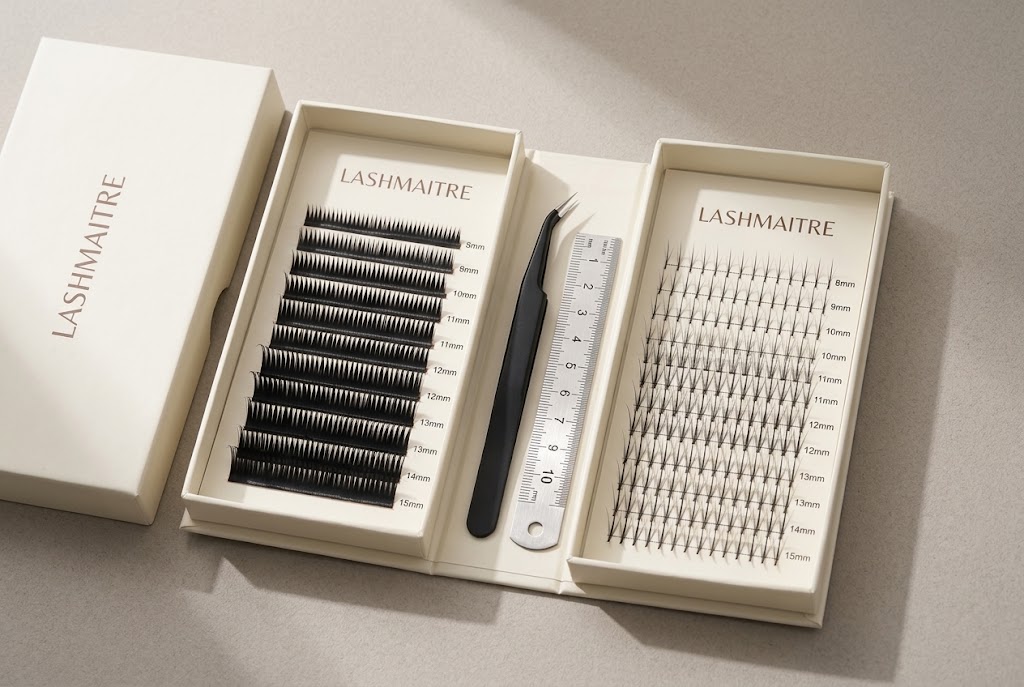
Direct answer: Wet set vs classic lash extensions is a comparison between two finished-style plans, not a universal tray specification. A wholesale buyer should translate the requested look into fiber format, diameter, curl, length mix, taper, strip behavior, tray quantity, sample code and packaging identity. “Wet set” usually describes a narrow, grouped or spike-led result, while “classic” describes individual extension placement, but neither label tells a purchasing team exactly what is inside a supplier’s box.
1. Define The Two Range Positions
Write one commercial definition for each position before asking for quotes. The wet-set position may be built from narrow closed fans, handmade spikes, premade components or another supplier-defined format. The classic position may use individual fibers in single-length or mixed-length trays. Record the supplied format rather than assuming the style name identifies it.
The existing wet set wholesale guide covers that range on its own. This comparison has a different job: it helps a buyer decide whether wet set and classic should be separate SKUs, how their specifications differ and how to approve a controlled sample pair.
| Buyer field | Wet set candidate | Classic candidate | Evidence to retain |
|---|---|---|---|
| Supplied unit | Fiber, narrow fan or spike component | Individual fiber | Quotation and tray card |
| Physical fields | Diameter, curl, lengths and construction | Diameter, curl, lengths and taper | Coded sample |
| Visual role | Defined grouped or spike rhythm | Defined single-fiber baseline | Approved reference map |
| Sale unit | Rows or counted components | Rows | Count basis |
2. Separate Style Architecture From Product Format
A wet-looking texture can be planned with different components. Some buyers want narrow premade fans; others want loose volume fibers that trained artists turn into spikes. Classic inventory is usually planned as individual fibers, yet tray length mix, strip tack and fiber finish still vary. A fair comparison states exactly which format the supplier is quoting.
If the catalog also includes volume products, use the classic versus volume guide to keep format terminology consistent. Do not price a counted premade component and a row of individual fibers as though they were equivalent units.
3. Create A Controlled Sample Pair
For wet set vs classic lash extensions, a controlled sample pair keeps shared variables stable so reviewers can isolate the intended construction differences.
Choose a shared material family, curl family, representative length range, finish and packaging level. Then document the variables that intentionally differ. For wet set, those may include narrow spread, closure, base or spike construction. For classic, they may include individual-fiber diameter, taper and single-length or mixed-length configuration.
Order coded units through the lash extension sample process. Photograph the original labels, retain unused strips and place the approved code in the buyer file. A styled photograph can show the intended direction, but it cannot replace the physical specification or retained sample.
4. Inspect Pickup, Separation And Shape
Use the same reviewer, tweezers, room conditions, tray position and number of trials. For classic fibers, record separation, strip release, neighboring-fiber movement and visible consistency. For wet-set components, add shape preservation, base integrity, narrowness and whether the component matches the written construction.
Report observations by sample code and row. Avoid broad claims such as “easier,” “better retention” or “more comfortable” without a defined method and evidence. The lash quality control path provides a structure for recording repeatable checks.
5. Plan Lengths, Curls And Map Records
A style name is not a map. Save zone lengths, curl changes, spike intervals, base-layer details and any outer-corner transition separately from the tray specification. For classic stock, identify the lengths that support the baseline service. For wet-set stock, identify which lengths or components create the visible grouped rhythm.
Use a versioned map card so the approved reference can be reproduced when team members, photographers or suppliers change. The map should point to exact SKUs; the SKU record should not depend on a picture alone.
6. Compare Cost On A Common Basis
When wet set vs classic lash extensions use different supplied units, compare cost only after converting each quote to the same documented quantity basis.
Compare like with like: rows with rows, counted components with counted components, and matching packaging scopes. Include visibly unusable units observed during the same inspection method. A lower box price may not be a lower usable-unit cost when tray quantity, format or packaging differs.
Keep development samples, standard stock and custom packaging in separate quote lines. This makes it possible to understand which cost belongs to the product and which belongs to the branding program.
| Approval record | Wet set | Classic | Release rule |
|---|---|---|---|
| Identity | SKU and sample code | SKU and sample code | No style-only order line |
| Construction | Component format and shape | Individual-fiber fields | Written specification |
| Handling | Method and observations | Method and observations | Same test conditions |
| Reorder | Lot and packaging version | Lot and packaging version | Match retained samples |
7. Give Each SKU A Distinct Commercial Job
A wet set vs classic lash extensions range needs two explicit commercial roles, each tied to its own SKU, sample code and reorder record.
A wet-set SKU may serve texture-led education or a component-based offer. A classic SKU may serve a familiar single-fiber baseline. Write the intended customer, product format, specification, price unit, stock depth and reorder trigger for each. If the two records differ only by a marketing name, the range is not ready.
The historical keyword file captured “wet set lash extensions vs classic” at an estimated volume of 20 on 2026-06-09. That is an old third-party estimate, not current traffic, inquiry demand or guaranteed sales. It supports testing a focused comparison page; current GSC and inquiry evidence should decide later expansion.
8. Lock Labels, Packaging And Reorders
Print the real specification beside the style label. Tray card, box, barcode list, quotation, purchase order and retained sample should use the same SKU and version. When any construction or quantity field changes, issue a new approval record rather than silently reusing the old name.
For a wet set vs classic lash extensions project, send both specifications, target format, length plan, packaging direction and sample codes through the wholesale lash extensions inquiry. Confirm availability, pricing, minimum quantities and lead time for the actual configuration.
Source boundary: For U.S. eye-area product context, the FDA Eye Cosmetic Safety guidance explains general hygiene, injury and labeling considerations. It does not define wet-set or classic construction, approve a supplier, or replace the buyer’s product specification and sample review.
FAQ: Wet Set vs Classic Lash Extensions
What is the main product difference?
Classic usually centers on individual fibers, while a wet-set offer may use narrow fans, spikes or another defined component. The supplier must state the actual format.
Can the same tray create both catalog positions?
Sometimes a loose-fiber tray can support more than one technique, but a wholesale catalog still needs separate style records, maps and approved claims. Do not assume equivalence.
Which fields belong in a quote request?
Include material, format, diameter, curl, lengths, rows or component count, taper, strip, finish, packaging, sample code and any fan or spike construction fields.
What should a buyer keep for reorders?
Keep the approved specification, SKU, sample code, retained strips, map version, inspection notes, lot and packaging version.

Lash Maitre: Your Trusted Partner in Eyelash extension Solutions
Lash Maitre is dedicated to providing professional insights and tips in the eyelash extension industry. Sharing the latest trends, techniques, and product knowledge, Lash Maitre helps lash artists and enthusiasts enhance their skills, stay inspired, and achieve the perfect lash experience.