Customs Bond for Lash Imports: 8 Decisions Before U.S. Entry
Share
Customs Bond for Lash Imports Summary
A customs bond for lash imports supports U.S. customs obligations but does not replace accurate classification, valuation or admissibility controls. Importers should compare single-transaction and continuous coverage using entry frequency, shipment value, duty exposure, surety requirements and regulatory risk.
A customs bond for lash imports is a financial guarantee to U.S. Customs and Border Protection (CBP), not an insurance policy for damaged cargo. Importers should choose the bond type only after confirming the importer of record, entry frequency, shipment value, duty exposure, product classification, and filing plan.
Direct answer: when does a lash importer need a customs bond?
Most commercial entries valued above $2,500, and entries involving goods subject to other federal requirements, generally require a customs bond. The bond secures duties, taxes, fees, and compliance obligations owed to CBP. It does not replace cargo insurance, product liability insurance, supplier due diligence, or a customs broker's entry work.
For a new lash brand, the practical decision is usually between a single-transaction bond for one entry and a continuous bond covering eligible entries for a 12-month period. Your licensed customs broker or customs counsel should confirm the correct option for the actual transaction.
1. Confirm the importer of record before buying the bond
The bond must align with the legal entity acting as importer of record. Match the entity name, address, tax identifier or CBP-assigned importer number, and signatory authority across the power of attorney, entry documents, supplier file, and payment records.
A bond cannot cure an unclear importer identity. If the buyer, consignee, marketplace operator, and freight forwarder appear under different names, pause the entry setup until ownership and authority are documented.
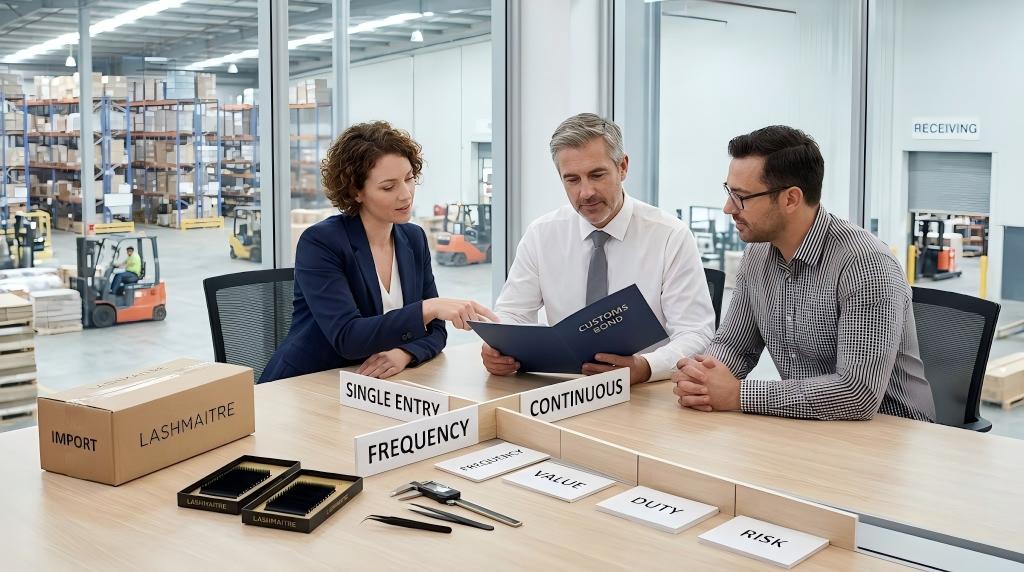
2. Choose single-entry or continuous coverage
A single-transaction bond is tied to a specific entry and may suit an importer making an occasional shipment. A continuous bond generally remains active for one year and can cover multiple eligible entries made under the same importer number.
Compare the total landed workflow rather than bond premium alone. Repeated single-entry bonds can add administration, while an annual bond may be inefficient for a one-off test shipment.
3. Estimate entry frequency honestly
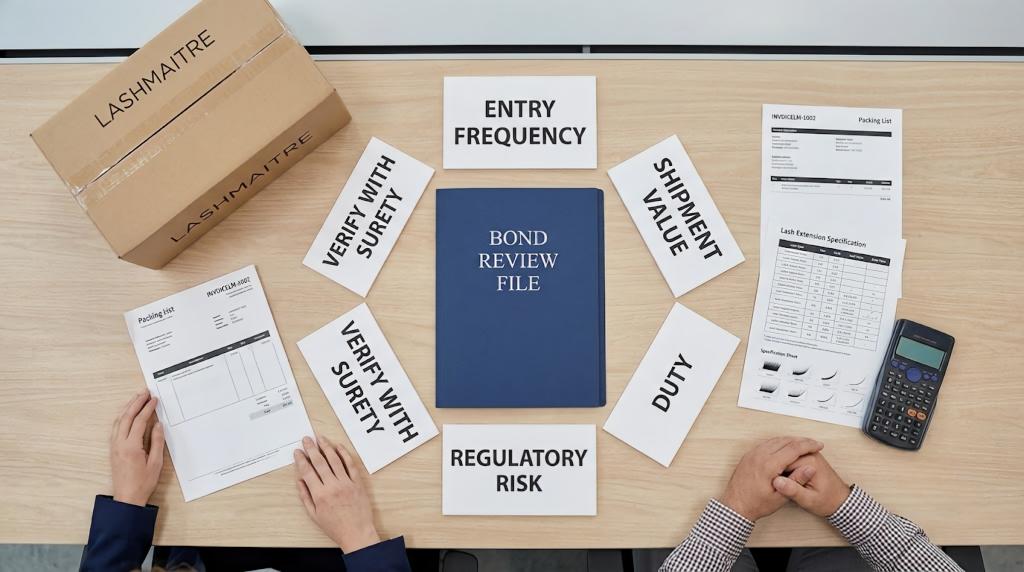
Build a 12-month entry calendar using confirmed purchase orders, realistic reorder timing, production lead time, and shipping mode. Do not treat every supplier carton as a customs entry; consolidate or split only where the commercial and logistics plan supports it.
Useful planning fields include:
- expected entry count and ports;
- air, courier, ocean, or postal channel;
- seasonal reorder peaks;
- sample versus commercial shipments;
- separate entries for packaging or accessories.
4. Calculate value, duty, taxes, and fees
CBP describes a continuous bond amount as generally based on 10% of duties, taxes, and fees paid during the previous 12 months, subject to CBP minimums and adjustment. A single-transaction bond is generally not less than the entered value plus duties, taxes, and fees, with exceptions and special rules depending on the goods and agency requirements.
These are planning principles, not a universal quote. Ask the broker or surety to calculate the bond from the actual tariff classification, customs value, entry type, and regulatory profile.
5. Verify classification before estimating exposure
False eyelash products do not automatically share one tariff treatment. Construction, material, presentation, and intended use can affect classification. Keep the current product specification, approved sample, fiber declaration, packaging photographs, and proposed HTS analysis together.
See our practical guide to lash HTS classification and confirm the live tariff result through the USITC Harmonized Tariff Schedule.
6. Check whether another agency changes the risk
Some shipments may trigger requirements beyond ordinary CBP processing. Product claims, materials, treatments, adhesives, or other included goods can change the agency review. The bond decision should therefore follow a product-level compliance review rather than a generic statement that the carton contains “lashes.”
7. Align the bond with the broker and entry plan
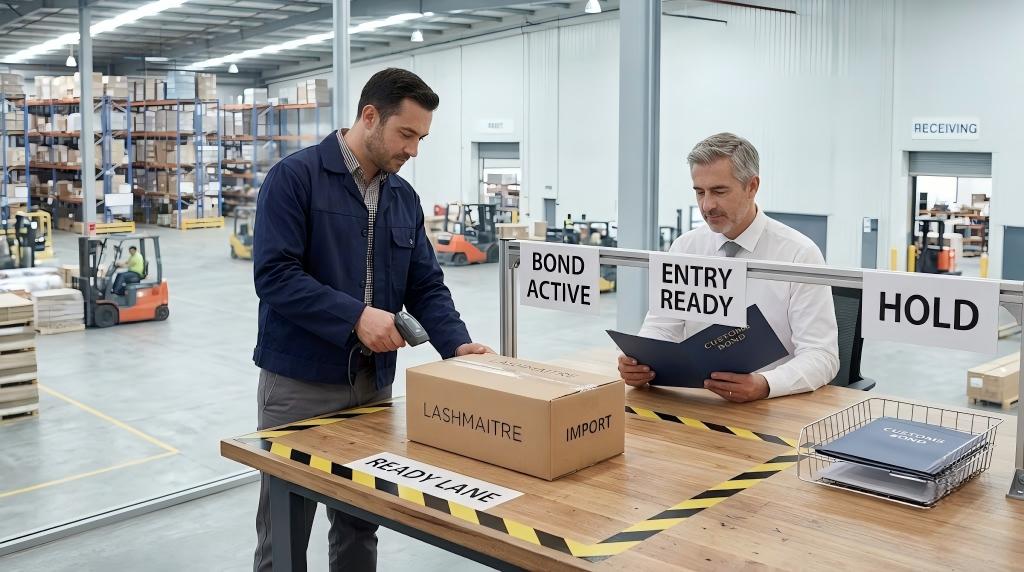
Before release, reconcile these fields across the bond, broker power of attorney, commercial invoice, packing list, and entry instructions:
- importer legal name and importer number;
- bond number and effective dates;
- port and expected arrival date;
- invoice currency and declared value;
- SKU, quantity, country of origin, and HTS line;
- broker contact and escalation owner.
CBP's customs bond guidance explains the general purpose and common bond structures. The executed bond itself is commonly documented using CBP Form 301.
8. Keep evidence after entry
Store the bond confirmation with the entry package, including the purchase order, commercial invoice, packing list, origin records, entry summary, payment evidence, broker correspondence, classification support, and any release or hold notices. Make the file searchable by importer number, entry number, shipment date, and SKU.
Our lash import recordkeeping guide explains the retention structure. Operationally, the bond file should also connect to the supplier specification and receiving inspection evidence.
Customs bond decision table
| Question | Single transaction may fit | Continuous may fit |
|---|---|---|
| Entry frequency | One or very few entries | Recurring entries |
| Planning horizon | Shipment-specific | 12-month program |
| Administration | New bond per entry | Ongoing bond management |
| Exposure review | Entry value and duty | Prior or projected annual duties, taxes, and fees |
| Best next step | Broker quote for the entry | Broker or surety review of annual activity |
Related LASHMAITRE resources
For private label orders, align the importer-of-record and customs bond plan with the approved packaging, product identity, and supplier records before shipment. Keep those files connected to the private label lash extensions workflow so the commercial and customs records describe the same branded goods.
Customs Bond for Lash Imports FAQ
Is a customs bond the same as cargo insurance?
No. A customs bond protects the government's revenue and compliance interests. Cargo insurance addresses covered physical loss or damage under its policy terms.
Does every lash sample shipment need a bond?
Not necessarily. The requirement depends on value, entry type, carrier channel, and applicable agency rules. A low-value sample should still have an accurate description, value, origin, and supporting records.
Can a freight forwarder decide the importer of record?
The commercial parties must establish the legal importer and authority. A broker or forwarder can help execute the plan but should not substitute assumptions for written authorization.
How early should the bond be arranged?
Arrange it before the entry must be filed. Leave time to correct entity data, power-of-attorney issues, or classification questions before the shipment reaches the port.
Build the entry file before the carton moves
LASHMAITRE can organize product specifications, approved samples, packaging details, and traceable production records for a buyer's import file. Use the LASHMAITRE wholesale lash ordering guide by starting with lash extension samples and the wholesale lash extensions inquiry to confirm SKU, quantity, packaging, and shipping assumptions before the final quote.
This article provides operational information, not legal advice. Confirm bond, classification, valuation, and agency requirements with a licensed customs broker or qualified customs counsel.

After the bond and entry records are available, complete a documented CBP Form 7501 entry summary review against importer, HTS, origin, value, quantity, port and duty evidence before closing the import file.
Before a broker handles bond or entry work, verify the parties, signer authority, scope, records and revocation controls in a documented lash customs broker power of attorney review.

Lash Maitre: Your Trusted Partner in Eyelash extension Solutions
Lash Maitre is dedicated to providing professional insights and tips in the eyelash extension industry. Sharing the latest trends, techniques, and product knowledge, Lash Maitre helps lash artists and enthusiasts enhance their skills, stay inspired, and achieve the perfect lash experience.