CBP Cargo Exam and Import Hold: 8 Steps for Lash Importers
Share
CBP Cargo Exam and Import Hold Summary
A CBP cargo exam and import hold response should confirm the notice and affected entry, stop unauthorized movement, assemble commercial and product evidence, coordinate cargo presentation, record seals and costs, track the result, and verify shipment-specific release before distribution. The importer should preserve every status message and movement record under the entry number.
When a lash shipment is selected for a CBP cargo exam and import hold, the importer should confirm the notice, identify the affected entry and product lots, stop unauthorized movement, assemble the entry and commercial records, coordinate cargo presentation, document handling and costs, track the result, and confirm release before distribution. The goal is controlled response and evidence—not a promise of a particular timeline or outcome.
This article is an operational guide for importers, brand procurement teams, logistics coordinators, and warehouse staff. It is not legal advice and does not replace instructions from CBP, another government agency, the carrier, a licensed customs broker, or trade counsel.
CBP Cargo Exam and Import Hold: Quick Answer
CBP may examine imported merchandise and may place different kinds of holds depending on the risk or information issue. A manifest hold, for example, can be used when CBP's Manifest Examination Team needs supporting documentation. Other examination or agency actions may follow different notices and procedures.
Do not assume every delay is a CBP hold. A lash shipment customs hold checklist should identify the exact notice, status message, responsible agency, entry number, bill of lading or air waybill, container or package reference, location, and requested action from the broker or carrier. This keeps the CBP examination process separate from the later customs hold release evidence.
What a Cargo Exam or Import Hold Means
CBP's tips for new importers explain that CBP has authority to examine imported shipments and that the importer can bear costs involved in making merchandise available for examination. The official 19 CFR Part 151 contains the examination, sampling, and testing rules, including importer expenses for preparation and closing of packages.
A hold is not the same as a final seizure, penalty, or denial. It is also not a release. The importer should follow the specific notice and avoid broad conclusions until the responsible party reports the result.
Eight Steps for a Lash Shipment Cargo Exam or Hold
| Step | Immediate output | Control objective |
|---|---|---|
| 1. Confirm notice | Saved status and named contact | Know who issued what action |
| 2. Identify scope | Entry, lot, SKU and package map | Prevent mixing affected goods |
| 3. Stop movement | Warehouse or carrier hold instruction | Preserve control and condition |
| 4. Assemble records | Complete evidence pack | Answer requests consistently |
| 5. Present cargo | Approved location and access plan | Make goods available as directed |
| 6. Log handling and cost | Movement, seal, photo and invoice log | Preserve chain of custody |
| 7. Track result | Dated action register | Separate pending, released and corrective actions |
| 8. Confirm release | Written release evidence and closeout | Prevent premature distribution |
Step 1: Confirm the Notice and Responsible Contact
Ask the broker or carrier for the actual hold or examination message, not a summary such as “customs has it.” Record the date and time, issuing party, hold or exam type if identified, entry number, transportation reference, facility, and the party authorized to provide updates.
Use one status owner inside the company. Multiple employees asking different parties the same question can create conflicting instructions and duplicate costs.
Step 2: Identify the Entry, Shipment, and Product Lots
Map the notice to the correct purchase order, entry, bill, container, carton range, SKU, and production lot. A consolidated shipment may contain goods for multiple buyers or several lash product families. Do not place unrelated inventory on hold without evidence, but do not release affected goods because the internal SKU name differs slightly from the carrier description.
Build a one-page scope sheet showing total cartons, sealed status, locations, quantities, and the relationship between product trays, retail boxes, and master cartons.
Step 3: Stop Unauthorized Movement and Preserve Condition
Tell the carrier, warehouse, and internal receiving team that the affected cargo may not move, be opened, relabeled, sampled, sold, or redistributed except under authorized instructions. Preserve seals, packaging, labels, and temperature or condition records when relevant.
The exact movement control depends on where the cargo is located and which party has custody. Follow the broker, carrier, facility, and government instructions rather than improvising a transfer.
Step 4: Assemble Entry and Commercial Records
Prepare a focused evidence pack:
- Entry and cargo-release references.
- Commercial invoice and packing list.
- Bill of lading, air waybill, arrival notice, and delivery order.
- Importer, consignee, broker, manufacturer, and seller records.
- Product descriptions, materials, construction, use, and photographs.
- HTS classification and country-of-origin support.
- Packaging labels, carton marks, and private-label approvals.
- Purchase order, payment, and valuation support.
- Prior correspondence and requested agency documents.
Use the lash HTS classification guide when the request concerns product identity or classification, and the lash import recordkeeping guide to keep the response retrievable.
Step 5: Coordinate Cargo Presentation
Confirm where and how the merchandise will be presented. CBP notes that selected cargo may be moved to a Centralized Examination Station, a privately operated facility where merchandise is made available for examination. The broker, carrier, bonded transporter, terminal, or examination facility may each have a defined role.
Do not promise the warehouse that it can open cartons for inspection on its own. Obtain the presentation instructions, authorized transfer method, contact, appointment or availability details, and required documents.
Step 6: Record Movement, Handling, and Cost
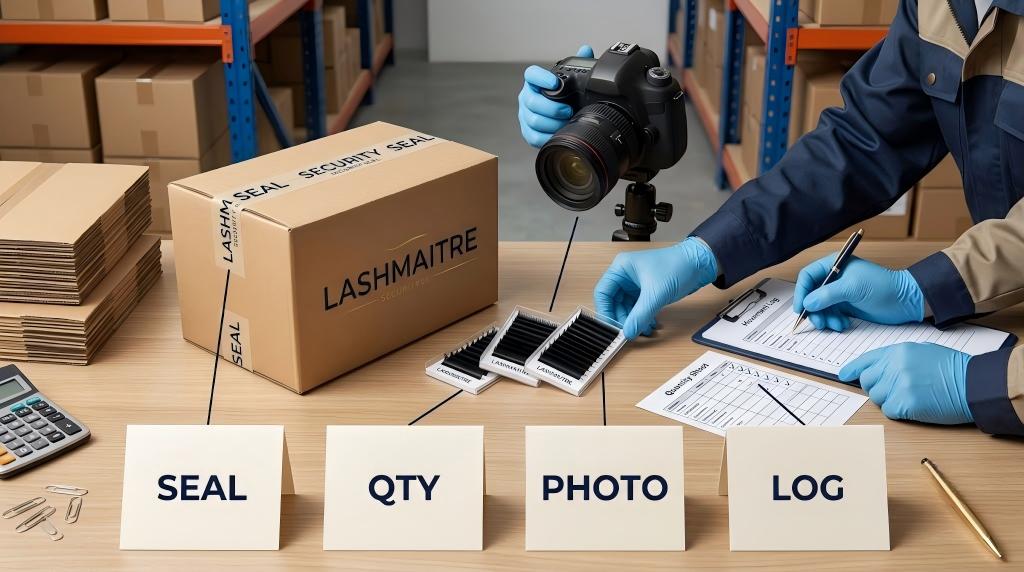
Create a dated chain-of-custody log. Record the container or package identifier, seal before and after movement, carton quantity, pickup and delivery times, facility, persons or companies involved, photographs, and every handling or storage invoice.
CBP's importer guidance warns that the importer may bear costs associated with examinations even when CBP itself does not charge an examination fee. Possible commercial costs can include movement, devanning, handling, storage, or facility services. Record actual invoices; do not publish or budget a generic fixed fee as if every exam were the same.
Step 7: Track Results and Required Actions
Maintain a status register with only controlled values: notice received, documents requested, cargo presentation pending, examination in progress, additional action requested, release reported, or case closed. Record who supplied each update and when.
If CBP or another agency requests additional evidence, answer the specific request. Keep the submitted package and transmission proof. Do not revise an invoice, label, or product description retroactively without preserving the original and obtaining appropriate advice.
Step 8: Confirm Release Before Distribution
Do not treat silence, terminal availability, a paid invoice, or a carrier estimate as release. Obtain the applicable release confirmation through the broker, carrier, or official system and match it to the affected entry and packages.
After release, tell the warehouse exactly which lots may move. If corrective action, relabeling, export, destruction, or another restriction applies, keep those goods segregated and follow the governing instructions.

Build a Reusable Cargo Exam Evidence Pack
A reusable pack reduces response time without pretending the facts are identical across shipments.
| File section | Required control |
|---|---|
| Notice and status | Original messages, dates, responsible contacts |
| Shipment identity | Entry, bill, container, cartons, SKU and lot map |
| Commercial evidence | PO, invoice, packing list, payment and valuation |
| Product evidence | Specs, materials, construction, photos, origin and HTS support |
| Movement evidence | Seals, quantities, photos, transfer and facility logs |
| Result and closeout | Release or action notice, invoices, corrective action and lessons learned |
Assign one owner and one shared location. Test retrieval after closeout: a second employee should be able to locate the notice, affected merchandise, documents submitted, costs, result, and final disposition using only the entry number.
Prevent Repeat Evidence Gaps
After closeout, separate the cause from the cost. A hold may relate to manifest data, admissibility, another agency, random or risk-based selection, or a documentation inconsistency. Do not claim the team can eliminate all exams.
Instead, reduce preventable gaps:
- Use stable legal names and addresses across supplier, booking, ISF, and entry records.
- Approve product descriptions, origin, classification, and packaging before shipment.
- Reconcile invoice and packing quantities before departure.
- Keep product photos and specifications by SKU and lot.
- Assign a broker escalation route and after-hours contact.
- Budget contingency time and commercial handling costs without promising a fixed exam duration.
- Link the shipment to its customs bond record.
CBP Cargo Exam and Import Hold FAQ
Who pays cargo examination and handling costs?
CBP states that importers can be responsible for expenses involved in preparing merchandise for examination and closing packages. Commercial charges may also arise from transfer, storage, handling, or an examination facility. Confirm responsibility under the shipment contracts and record actual invoices rather than assuming one standard fee.
Can the importer open or move goods while they are on hold?
Do not open or move affected goods without the applicable authorization and instructions. Confirm custody, location, seal status, transfer method, and presentation requirements through the broker, carrier, facility, and responsible agency. Preserve a dated chain-of-custody record for any authorized movement.
Which records should be kept after the shipment is released?
Keep the original notice, entry and transportation references, commercial and product evidence, documents submitted, transmission proof, seal and movement logs, photographs, invoices, status updates, release or disposition evidence, and corrective actions. Store them together under the entry number and production lot.
Conclusion: Control the Response, Evidence, and Release
A CBP cargo exam and import hold should trigger a disciplined eight-step response. Confirm the notice, control the goods, present accurate evidence, record every movement and cost, and wait for a shipment-specific release before distribution.
Upstream product records make that response faster. Use LASHMAITRE lash extension samples, lash quality control, and private-label lash extension planning to fix product identity, packaging, and lot evidence before shipment. For a documented wholesale specification handoff, contact LASHMAITRE.

Lash Maitre: Your Trusted Partner in Eyelash extension Solutions
Lash Maitre is dedicated to providing professional insights and tips in the eyelash extension industry. Sharing the latest trends, techniques, and product knowledge, Lash Maitre helps lash artists and enthusiasts enhance their skills, stay inspired, and achieve the perfect lash experience.