Lash Inventory Variance: 8 Critical Investigation Records
Share
Lash Inventory Variance Buyer Summary
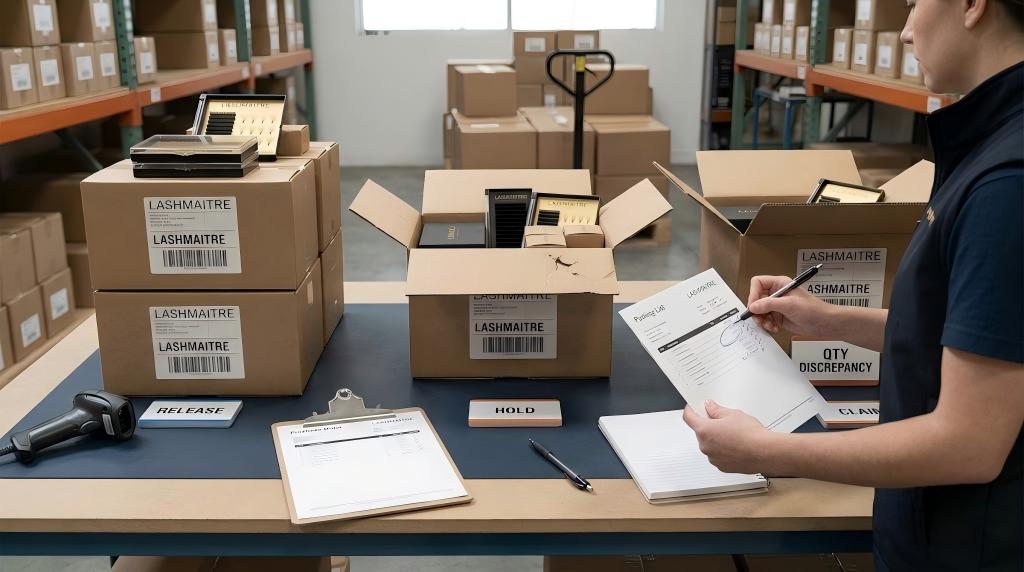
A lash inventory variance should be defined by exact SKU, location, batch or revision, stock status and count unit. Investigate the lash inventory variance by recounting and tracing receipts, shipments, samples, transfers, holds, returns and prior adjustments before correcting the inventory record.
Record each lash stock discrepancy through an eyelash inventory reconciliation before approving any quantity change.
A lash inventory variance is the difference between the physical quantity and the inventory record for an exact SKU, location or status. Before adjusting stock, verify the count and trace receipts, shipments, samples, transfers, holds, returns, unit conversions and earlier adjustments so the correction does not conceal a repeatable process problem.
Buyer Summary
- Define the variance by exact SKU, location, batch/revision, status and count unit.
- Recount before assuming the supplier, warehouse or system is responsible.
- Reconstruct movements from the last reliable balance to the current count.
- Separate quantity correction from root-cause and corrective-action decisions.
- Authorize adjustments and retain the supporting evidence.
Start With a Reproducible Variance
The basic calculation is simple:

physical quantity - recorded quantity = inventory variance
The investigation is not simple unless both quantities describe the same thing. Confirm that the physical and recorded amounts use the same SKU, location, status, batch or packaging revision and unit of measure. Ten retail boxes are not the same as ten inner cartons, and held trays are not the same as released trays.
Oracle Retail's physical-inventory guidance explains the general process of counting stock and reconciling discrepancies. It is not a lash-industry standard, but it supports the evidence-first principle behind this workflow. See Oracle Retail Physical Inventory Counting.
Eight Records to Check Before an Adjustment
| Record | What to match | Common question |
|---|---|---|
| 1. Receiving | Accepted quantity by SKU, carton and date | Was a shortage or overage entered correctly? |
| 2. Customer shipments | Picked, packed, shipped and invoiced quantity | Did stock leave without the correct transaction? |
| 3. Samples and tests | Trays used for approval, photography or QC | Were non-sale withdrawals recorded? |
| 4. Transfers | From/to location, time and quantity | Was one side missed or duplicated? |
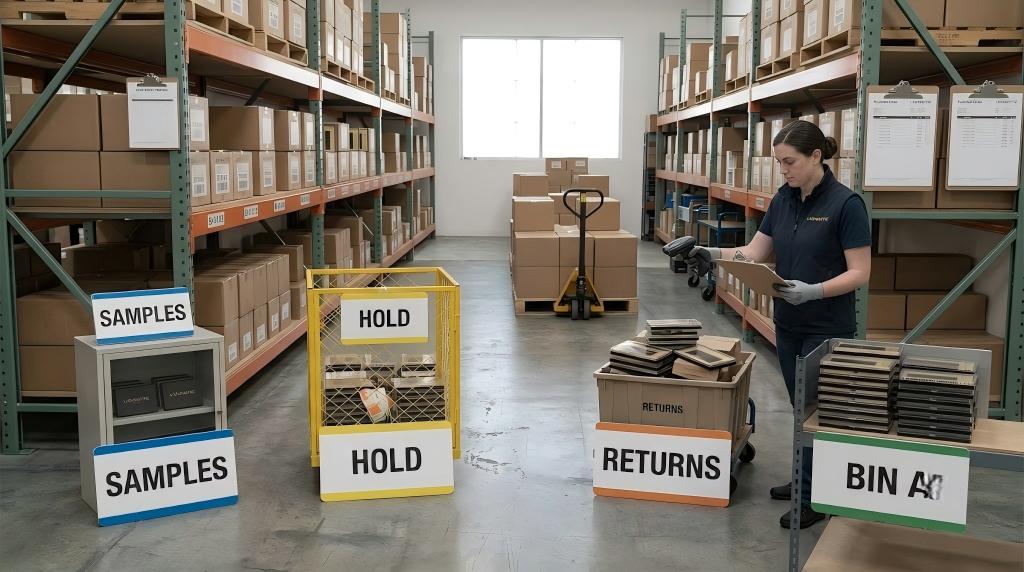
| 5. Holds and damage | Quantity and physical status location | Was held stock excluded from available but still owned? |
| 6. Returns | Customer or supplier return and disposition | Did returned stock re-enter the wrong status? |
| 7. Previous counts | First count, recount and prior reliable balance | Is the difference new or recurring? |
| 8. Adjustments | Quantity, reason, approver and evidence | Did an earlier correction create the current gap? |
Recount the Exact Identity
Pause movements in the affected location or create a documented cutoff. Have a second person recount using the defined unit. Check nearby, overflow, quarantine, sample and packing locations before declaring the units missing.
For private-label lashes, confirm packaging revision as well as product specification. A current tray inside an old box, or old artwork stored beside the current version, may create a system mismatch even when the total physical pieces appear correct.
Use a documented cycle-count procedure as the repeatable framework for count units, movement control and independent recounts.
Reconstruct the Movement Trail
Begin with the last reliable balance, then add confirmed receipts and returns and subtract confirmed shipments, samples, damage dispositions and other issues. Include transfers between locations without changing the company-wide total.
| Reconciliation line | Quantity sign | Evidence |
|---|---|---|
| Last verified balance | Opening | Signed count or closing report |
| Accepted receipts | Plus | Receiving inspection and packing list |
| Customer returns released | Plus | Return inspection and status change |
| Customer shipments | Minus | Pick, pack and shipment records |
| Samples or QC use | Minus | Authorized sample/test log |
| Damage or disposal | Minus | Hold and disposition approval |
| Location transfer | Plus/minus by location | Matched from/to transactions |
A documented receiving inspection can prevent future opening-balance errors. For a current investigation, use signed receiving evidence rather than assuming the delivered quantity matched the order.
Classify the Cause Only After Evidence
Useful cause categories include receiving error, picking/packing error, unrecorded sample, transfer timing, status-location error, unit conversion, return handling, damage disposition and counting error. Use “unresolved” when the evidence is insufficient.
Avoid assigning supplier fault simply because the variance is negative. The lash order quantity verification guide helps compare ordered, accepted, shipped and invoiced quantities before a supplier claim is raised.
For repeated quality holds or status confusion, review the LASHMAITRE lash quality control process and make the release/hold boundary visible in both the warehouse and inventory system.
Separate Adjustment, Claim and Corrective Action
An inventory adjustment corrects the record. A supplier or carrier claim seeks commercial resolution. Corrective action changes the process that allowed the variance. One finding may require all three, but they are not interchangeable.
The approval record should show:
- Exact SKU, location, batch/revision and unit.
- Recorded quantity, physical quantity and variance.
- Recount and movement evidence reviewed.
- Cause or unresolved status.
- Authorized adjustment and date.
- Claim reference if applicable.
- Corrective owner and due date for repeat risks.
Use Variance Trends in Supplier and Reorder Decisions
One isolated count difference may be a local transaction error. Repeated receiving shortages, mislabeled cartons or packaging-version mismatches may justify a structured supplier review. Track frequency, quantity and value rather than relying on anecdotes.
Also correct the usable stock balance before calculating a reorder. The lash inventory reorder point guide shows why current stock accuracy matters when demand and lead time drive replenishment.
Lash Inventory Variance FAQ
What causes lash inventory variance?
Possible causes include receiving differences, picking or packing errors, unrecorded samples, location transfers, status mistakes, returns, damage, unit conversion problems, counting mistakes and unauthorized or incorrect adjustments.
How should a lash stock discrepancy be investigated?
Freeze or control movement, confirm the exact item and unit, recount, inspect nearby and hold locations, then reconstruct transactions from the last reliable balance using source records.
Should stock be adjusted as soon as a difference is found?
Not before the variance is reproduced and the required approval rule is met. Immediate adjustment may hide a count, location or transaction error that could recur.
What evidence should support an inventory adjustment?
Keep the count and recount, SKU/location identity, system quantity, variance calculation, relevant movement records, cause or unresolved status, approver, date and any corrective-action or claim reference.
Turn Inventory Evidence Into a Better Supply Brief
Share your SKU list, verified stock, open orders, discrepancy history and packaging requirements through the wholesale lash inquiry page. LASHMAITRE can help structure a private-label supply brief around traceability and controlled quantities.

Lash Maitre: Your Trusted Partner in Eyelash extension Solutions
Lash Maitre is dedicated to providing professional insights and tips in the eyelash extension industry. Sharing the latest trends, techniques, and product knowledge, Lash Maitre helps lash artists and enthusiasts enhance their skills, stay inspired, and achieve the perfect lash experience.