
LASHMAITRE Wholesale QC Guide
Lash Tray Curl Retention Test for Wholesale Buyers
A lash tray curl retention test shows whether an approved curl stays stable through storage, transport and repeat production before a buyer scales an order.
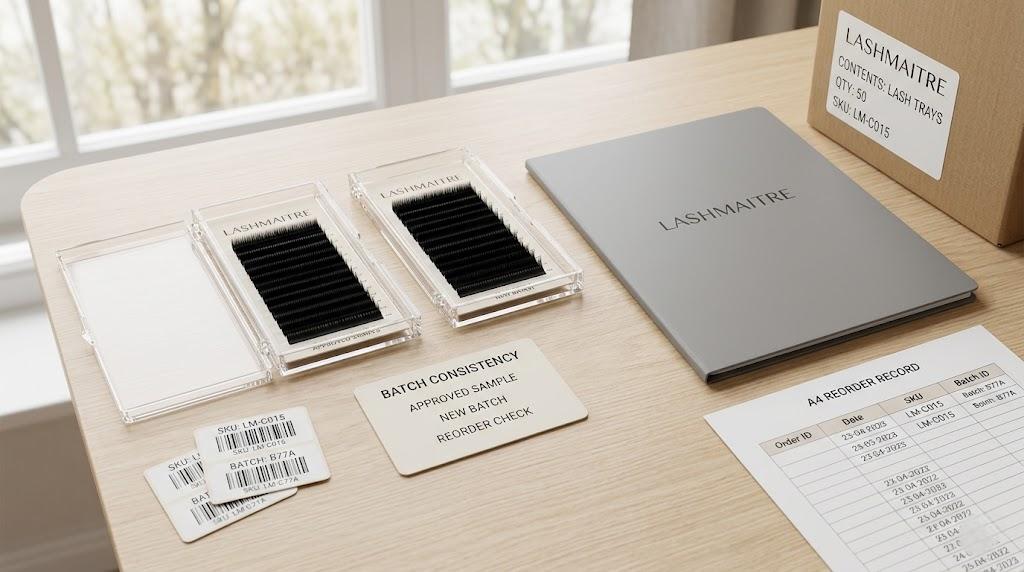
What does a lash tray curl retention test measure?
A lash tray curl retention test compares the curl profile of an approved sample with a tray exposed to defined storage or transport conditions. It does not prove that one curl is universally better. It confirms whether the supplied C, CC, D or L-family curl remains recognisable and consistent enough for the intended assortment.
Test trays with the same curl, diameter and length mix. Photograph them from the same side angle and record time, room temperature, humidity and lot code. A visual check without a reference tray can miss gradual opening, flattening or row-to-row variation.
Direct answer: approve the batch only when the tested tray remains within the buyer’s documented tolerance and still matches the approved sample.
Lash tray curl retention test in 7 steps
Keep one sealed reference tray and select a test tray from the same SKU. Record the lot and arrival condition. Photograph both trays before exposure, then store the test tray under the agreed condition. The procedure should reflect the buyer’s actual storage and shipping risk rather than uncontrolled heat.
After the test period, let the tray return to room conditions. Compare apex height, side profile, opening and row consistency. Repeat the check on several rows. If the result is close to the rejection boundary, hold the batch and request a second sample.
| Step | Buyer action | Decision evidence |
|---|---|---|
| 1. Identify | Record curl, diameter, lengths and lot | Prevents mixed-SKU results |
| 2. Reference | Keep an unopened approved tray | Creates a stable comparison |
| 3. Photograph | Use the same angle and distance | Makes profile changes visible |
| 4. Expose | Record time, temperature and humidity | Connects result to real conditions |
| 5. Compare | Check apex, opening and row variation | Shows whether curl remains recognisable |
| 6. Repeat | Check several rows or trays | Avoids a one-row decision |
| 7. Approve | Sign, date and archive the result | Supports the next reorder |
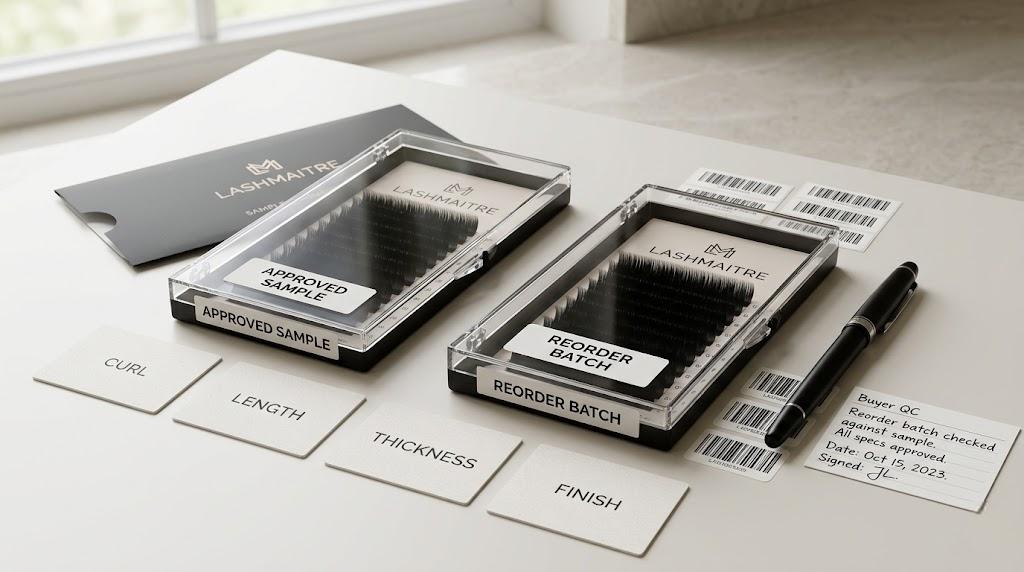
Record the result for repeat orders
The lash tray curl retention test record should include the approved photo, tested lot, exposure conditions, result, reviewer and date. If a small variation is acceptable, describe it with a reference image instead of words such as good or normal.
Link the record to MOQ 50 testing before a larger order. When a reorder arrives, the same file helps distinguish a genuine curl shift from differences in lighting, tray position or photography.
How wholesale buyers should use the result
Salon groups can protect service consistency across locations. Ecommerce brands reduce listing and review risk by checking that the photographed curl matches the delivered tray. Distributors can decide whether a new batch can enter existing stock.
The lash tray curl retention test is one approval point. Fiber feel, base quality, strip release, label accuracy and packaging require separate checks. Combining every issue into one rating makes corrective action difficult.
If a tray fails, send the supplier the reference image, failed image, SKU, lot and test condition. Request a root-cause response and a replacement sample before bulk approval.
For general documentation principles, buyers can consult the ISO quality-management overview and adapt the evidence level to purchasing risk.
FAQ
Does the test replace a salon application test?
No. It measures curl stability in the tray. Pickup, fan making and client-facing performance still require practical review.
How many trays should be tested?
Use a risk-based sample, check more than one row and retain an unopened reference. Larger orders need broader sampling.
What happens after a failure?
Hold approval, document the difference and request a corrected sample or supplier explanation before bulk production.
Should every reorder be checked?
Compare each incoming lot at a level appropriate to order size and previous supplier performance.
Test the curl before scaling the order
Send target curls, diameters, length mix, market and order size. LASHMAITRE can prepare samples and a QC discussion before bulk approval.