Lash Cluster Width: 7 Essential Checks for Narrow vs Wide
Share
Compare lash cluster width as the horizontal span of a segment base, separately from fiber length, band thickness and band color. Request narrow and wide samples with the same other design features when you want to judge width alone. Record the width mix and count in each tray before comparing wholesale quotes.
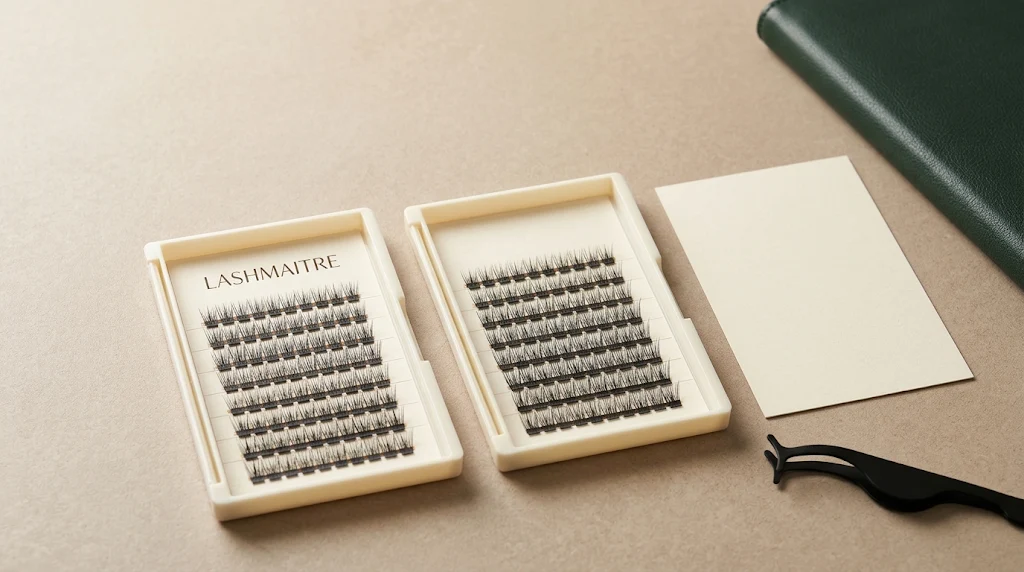
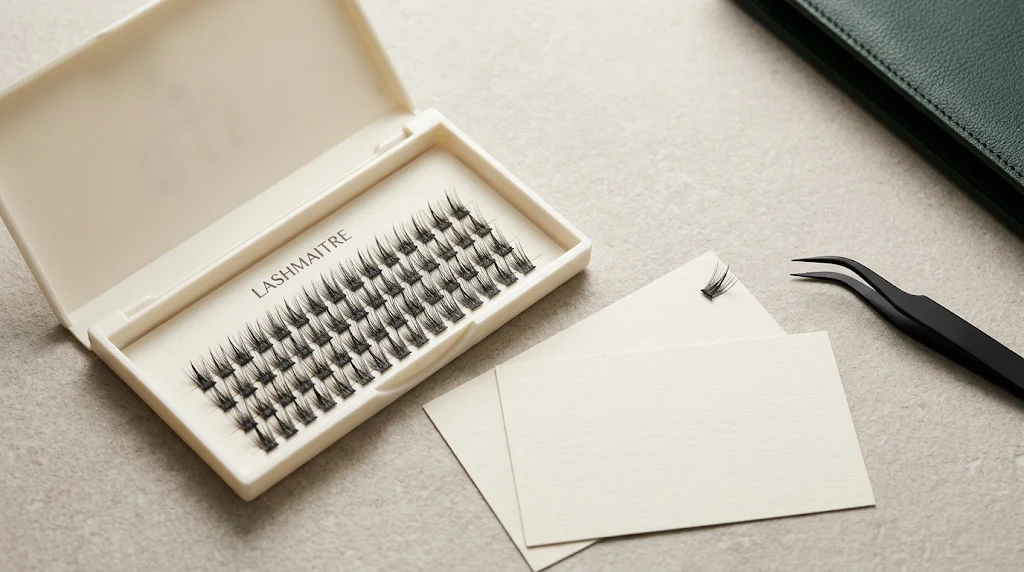
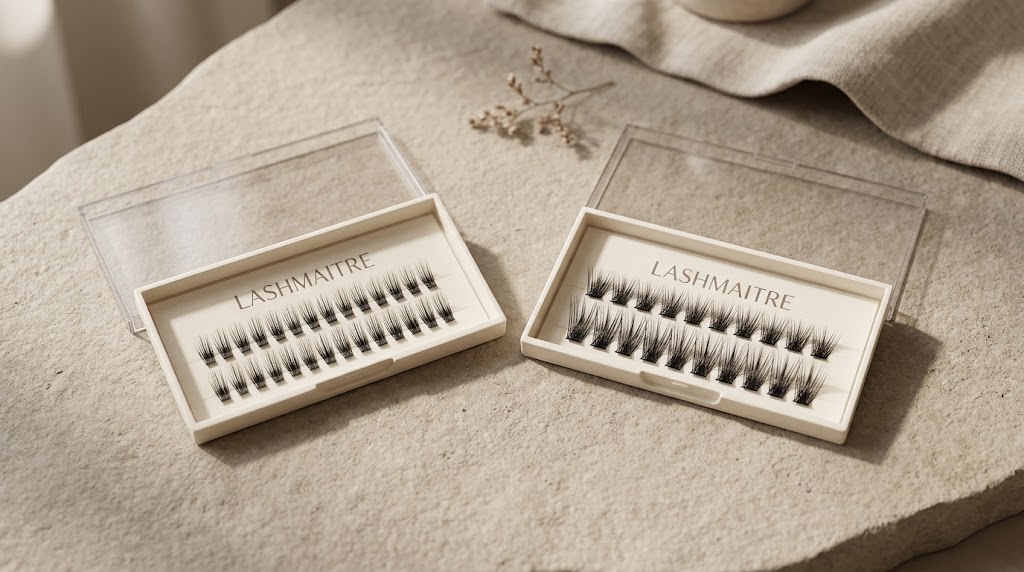
A lash brand can receive two attractive cluster trays with the same unit count and still be comparing different assortments. One may contain narrow segments, another wider segments, and either may also change the length pattern or density. This guide gives buyers a way to separate those choices and approve a repeatable tray. The photographs are illustrative assortments, not measured width-only test samples. This guide concerns the base span of banded cluster segments. Narrow and wide professional extension fans describe a separate product comparison; their fan-spread advice and sizing labels should not be transferred to cluster bases.
Sample approval checklist
| Specification field | What to record | Do not confuse it with |
|---|---|---|
| Cluster width | Base endpoints, measurement method and option code | Fiber-tip spread or the width of the retail box |
| Fiber-length plan | Length reference and placement within each segment | Horizontal base span |
| Band construction | Thickness, appearance and documented construction | A claim that narrow means thin |
| Matched comparison | Same non-width features, or a list of differences | A pair that also changes curl, length and density |
| Tray allocation | Count of each width and its row or position | Total cluster count alone |
| Packing and price unit | Segments, trays and retail boxes per quoted unit | An unspecified set or pack |
| Reorder record | Approved tray, row map and revision identifiers | A supplier photograph with no sample identity |
1. Define lash cluster width at the base
For a lash cluster width purchasing brief, define the width reference at the segment base. Agree the endpoints and the method used to measure them. For a curved base, specify whether lash cluster width follows the curve or runs straight between the endpoints. Keep that convention unchanged across samples. The spread of the fibers near their tips can look wider than the base, especially when the curl or styling changes. A specification that simply says wide leaves those two readings unresolved.
Ask the supplier to identify its narrow and wide options with separate sample codes and actual measurements. Do not infer dimensions from a photo without a scale or from the space between rows on a tray. Use the same measurement convention on the quotation, sample record and reorder specification.
2. Keep lash cluster width, length and band thickness separate
Width describes a lateral span; fiber length follows a different dimension. Band thickness is another construction detail, while clear or black describes appearance. Narrow band can be ambiguous in casual product descriptions: it may mean a short segment or a slim supporting band. Ask which dimension the supplier means. For band thickness, identify the measurement location and whether bonding material or a pre-applied adhesive layer is included. Record individual fiber diameter separately.
List lash cluster width, fiber-length arrangement, curl reference, density pattern, band thickness and band color as separate fields. This does not mean every field needs a new SKU. It means you can identify what changed when a sample looks or handles differently. Avoid claims that one width is universally more comfortable or suitable for a particular eye shape.
3. Request a matched narrow-versus-wide sample pair
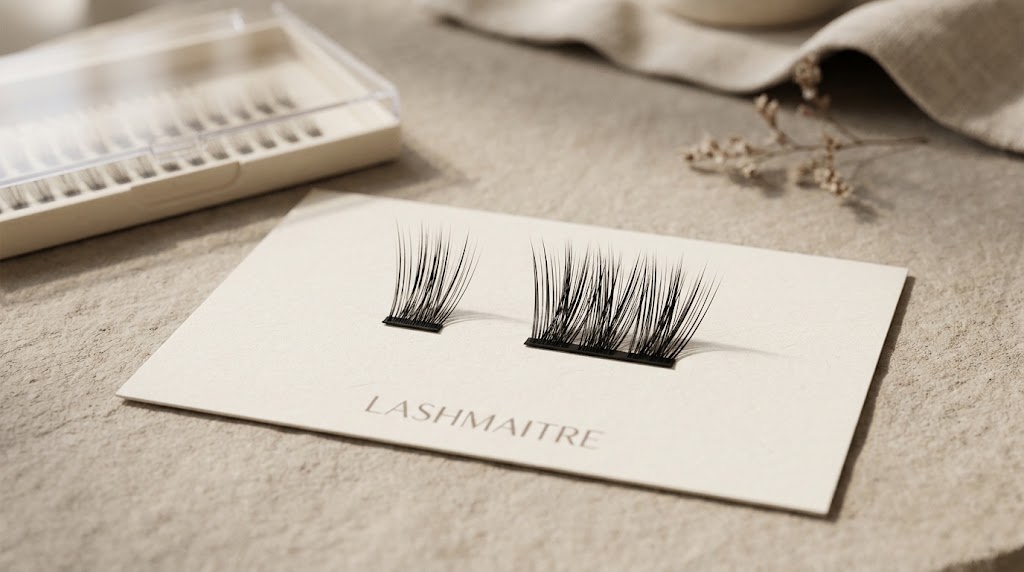
To isolate lash cluster width, request two variants with the same fiber-length pattern, curl, band construction and comparable density per unit of width. Only the horizontal base span should change in that comparison. If the supplier cannot provide a matched pair, record the additional differences instead of attributing the result solely to width.
Photograph the samples at the same scale and orientation, with the bases visible and aligned. A wider sample containing longer or denser fibers is useful as a different style option, but it is not a controlled width comparison. In the supplied concept images, the assortments also differ in fiber appearance; use the images to discuss specification fields, not to claim measured equivalence.
4. Record lash cluster width allocation and count per tray
Write down how many units of each lash cluster width option belong in the tray. A mixed tray needs a row map or another clear location reference so the packing team can distinguish a planned combination from an incorrect fill. Match each position to the intended length and style code when the assortment combines more than one design.
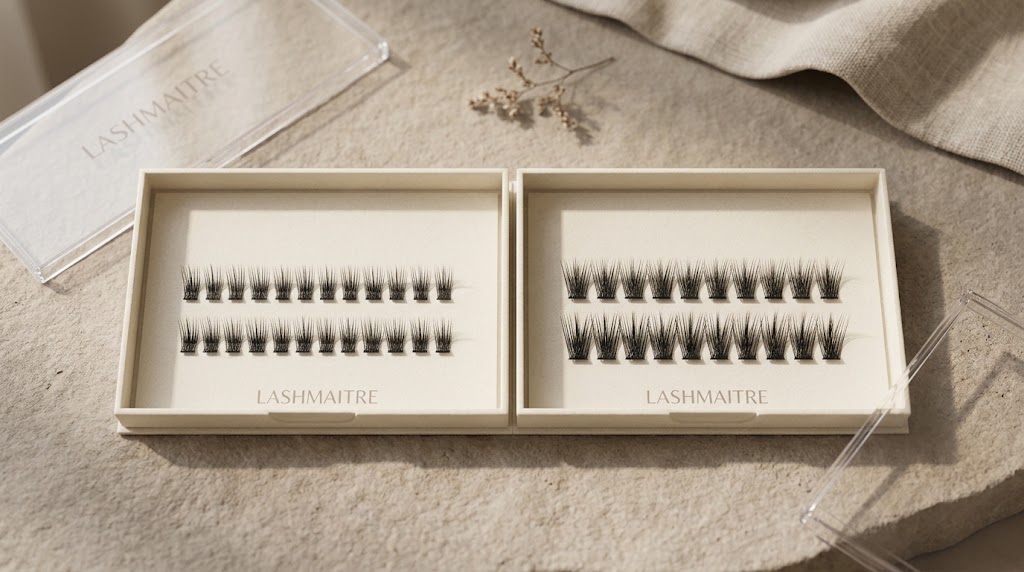
Consider a simple purchasing example: two trays each contain 24 segments. One uses a single width; the other contains 12 narrow and 12 wide segments. The counts match, but the assortments do not. These numbers illustrate a counting rule, not a recommended pack size or a specification for the pictured products.
Do not convert a sum of segment widths into guaranteed eyelid coverage, application count or wear value. Those claims depend on factors outside this packing comparison. For purchasing, the useful output is an unambiguous inventory of the segments delivered in each sale unit.
5. Review tray spacing and sample release off-client
Evaluate the proposed tray with the proposed clusters. Check whether adjacent fibers overlap, whether the base is visible and whether there is enough space for the supplier-described pickup method. Photograph any segment that is caught under a lid or crowded against a tray divider. A wider option may require a different arrangement rather than simply fewer gaps.
Have the supplier demonstrate removal from the tray on a sample away from a client. Compare its appearance before and after removal and record visible residue, distortion or loose fibers. The observation is about packing and handling; it is not proof of adhesive compatibility or wear performance. Recheck the arrangement when the tray, retaining strip or cluster construction changes.
6. Compare quotes using the same packing unit
Normalize the quotation before deciding whether narrow or wide band lash clusters offer better purchasing value. Identify whether the price is per segment, tray, retail box or set, then list the actual units and configurations inside it. A higher cluster count is not automatically a better offer if the style mix or pack contents are different.
Ask for the costs and minimum order conditions tied to each proposed option. Keep custom artwork, inserts, sample charges and any accessories explicit rather than assuming they are included. Compare freight and packing assumptions on the same basis if a landed-cost estimate is being prepared. Do not apply a MOQ from another lash product to this assortment.
7. Freeze the approved width mix for reorders
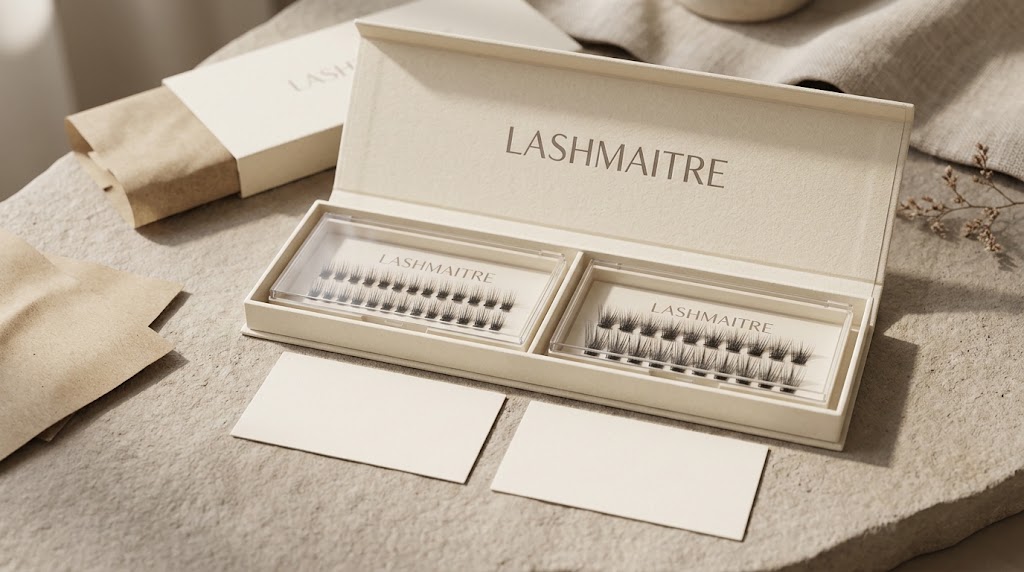
Retain an approved tray, its row map and the dated specification. Keep lash cluster width option codes linked to the supplier sample references. A replacement cluster should not inherit the same code merely because it occupies the same position in the box. Agree which changes require new approval, including base span, fiber plan and tray allocation.
Use the reference to define the intended assortment, then separately agree how a delivered lot will be inspected. NIST explains acceptance sampling as a sample-based decision about a lot. The attractive sample tray used for design approval does not establish the inspection sample size or acceptance rule for every future shipment.
Example of a comparable quotation record
A lash cluster width quotation record can use one line per option: buyer option code, supplier sample code, base-span reference, fiber-length plan, units per tray, trays per retail box and quoted price unit. Attach the same dated row map to both competing quotations. Leave unconfirmed measurements blank and mark them for supplier confirmation rather than copying a value from a concept image.
Before comparing totals, ask each supplier to acknowledge the lash cluster width record and identify any deviation. If one offer changes the band construction or omits an insert, show that difference beside its price. This keeps the purchasing decision traceable without pretending that two visually similar trays are equivalent. Store the acknowledged version with the approved physical samples so a reorder can refer to a specific configuration.
Buyer questions
Is lash cluster width the same as lash length?
No. Width refers here to the horizontal span of the segment base; fiber length is a different dimension. Record the measurement reference for each. A cluster can have a wider base without having longer fibers, and a photograph may change the appearance of both.
Does a thin band mean a narrow cluster?
Not necessarily. Thin can describe the supporting band construction, while narrow can describe its horizontal span. Ask the supplier to separate those fields. A wide segment may have a thin band, so a label alone should not decide whether the sample meets the brief.
Can two trays with the same count have different lash cluster widths?
Yes. Unit count describes how many segments are packed, not the span or design of each segment. Record the quantities by lash cluster width option and the associated length plan. Compare matched packing units before judging price, and avoid turning count into a promised number of applications.
How should lash cluster width samples be compared?
Request the same curl, fiber-length pattern, band construction and comparable density per unit of width, with base span as the changed variable. If multiple features differ, label the comparison as an assortment comparison. Keep photographs and supplier measurements with the specific sample codes.
Build a clear lash cluster width purchasing brief
Planning a narrow and wide cluster lash assortment? Send LASHMAITRE the width references, length plan, units by option, packaging brief and target quantity. A clear configuration makes the sample discussion and quotation easier to compare. Product availability, MOQ and lead time remain subject to confirmation.
For the review process, use LASHMAITRE’s sample review guide and lash quality control checklist. Discuss the packaging requirements through the private label enquiry route; availability and terms must be confirmed for this product rather than inherited from another range.
For the wider product range, see cluster eyelashes and keep the width-specific brief attached to your request.

Lash Maitre: Your Trusted Partner in Eyelash extension Solutions
Lash Maitre is dedicated to providing professional insights and tips in the eyelash extension industry. Sharing the latest trends, techniques, and product knowledge, Lash Maitre helps lash artists and enthusiasts enhance their skills, stay inspired, and achieve the perfect lash experience.