Paperboard vs Plastic Lash Inserts: 8 Best Checks
Share
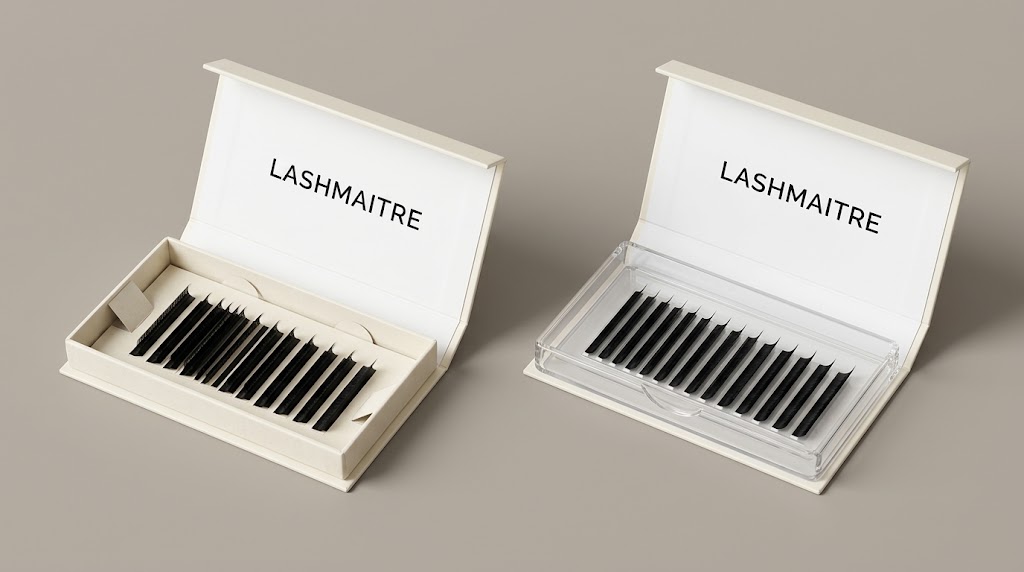
Direct answer: paperboard vs plastic lash inserts should be compared as engineered holder components, not as a generic sustainability contest. Paperboard inserts may use folds, tabs and layered cuts to position a tray; plastic inserts may use a formed cavity or molded features. Wholesale buyers should test the exact insert with the real tray, box, labels, packing process and shipping route, then approve material identity, dimensions, fit, protection, artwork interaction and end-of-life claims in writing.
1. Define What Paperboard vs Plastic Lash Inserts Must Do
List the insert’s functions before discussing material. It may locate the lash tray, prevent movement, create finger access, separate accessories, support a display angle or protect tall fibers from the lid. A component that performs one function well may fail another.
The custom lash packaging hub covers the complete box program. This comparison owns the internal holder decision. It does not decide the outer box structure, tray specification or environmental claim by itself.
| Comparison field | Paperboard insert | Plastic insert | Approval evidence |
|---|---|---|---|
| Forming method | Die-cut, folded, layered or tabbed | Formed or molded cavity | Drawing and sample code |
| Tray control | Tabs, walls and friction points | Cavity, ribs and edge geometry | Movement test |
| Pack-out | May require folding or locking | May arrive nested or formed | Timed work instruction |
| Material claim | Exact grade, coating and source claim | Exact polymer and recovery claim | Supplier documentation |
2. Compare Paperboard vs Plastic Lash Inserts For Fit
Measure the production-equivalent tray, not a drawing alone. Record length, width, depth, lid or card overhang, finger-access needs and the highest point of the lashes. Then place the same tray in each insert candidate and close the finished box.
Check side-to-side and end-to-end movement, lifting force, tray removal, corner contact and clearance above the product. Inspect whether tabs, ribs or cavity edges mark the tray or interfere with labels. Repeat the check using several units because one hand-cut development sample may not represent later production.
3. Review Pack-Out Work For Paperboard vs Plastic Lash Inserts
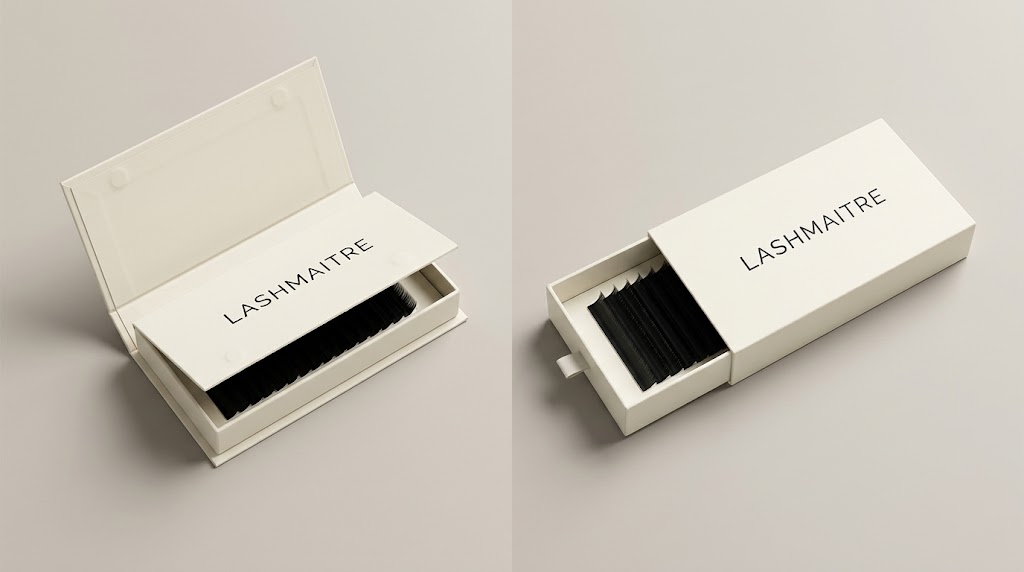
A paperboard insert may arrive flat, pre-folded or partly assembled. A plastic insert may arrive nested. Ask how components are counted, protected, separated and delivered to the packing line. Record how much workspace is required and how operators confirm the correct insert version.
Time a defined pack-out sequence with the same product and reviewers. Include unfolding, forming, placing the tray, adding cards, closing the box and correcting a misfit. The fastest development sample is not automatically the lowest-cost production choice if damage, confusion or rework increases.
4. Put Paperboard vs Plastic Lash Inserts In The Packaging BOM
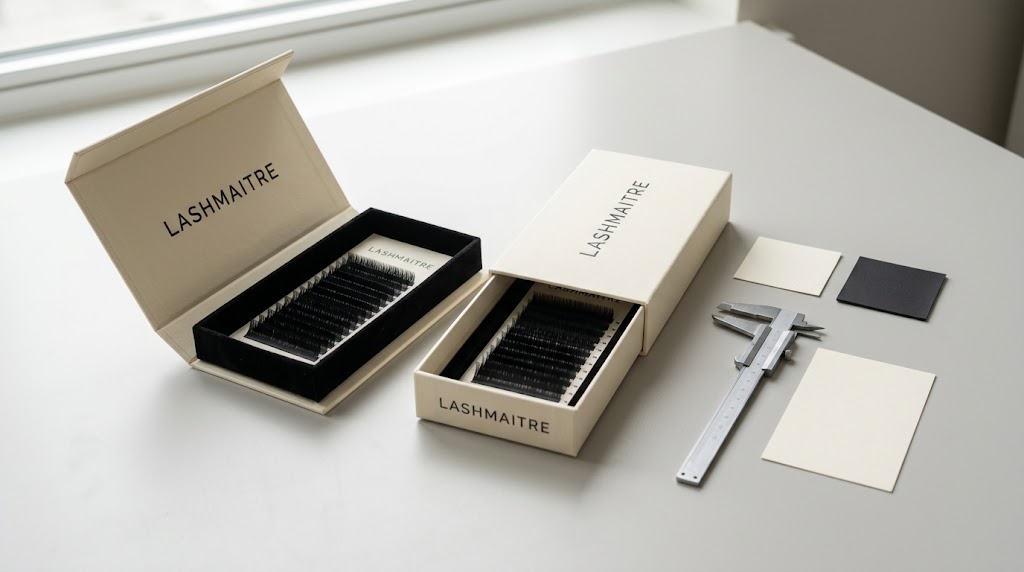
Give the insert its own component code, description, drawing revision, material statement, quantity per finished unit and approved supplier reference. Do not list it only as “inside tray.” A box can remain visually unchanged while an insert substitution changes product movement or packing work.
Connect insert quantity and component MOQ to the custom lash boxes MOQ plan. The insert, outer box, tray labels and finished lash SKU may have different production quantities, so leftover ownership and version control should be explicit.
5. Test Paperboard vs Plastic Lash Inserts As A Complete Pack
The insert works together with the tray, box and carton. A rigid cavity can still fail if the tray has too much clearance; a folded insert can still protect well when its tabs locate the tray consistently. Test the production-equivalent package on the route it is intended to use.
Use the lash packaging transit-test guide to define handling, orientations, acceptance limits and evidence. After testing, inspect the lash rows, strip position, tray, labels, insert, retail box and master carton separately.
6. Control Material And Environmental Claims
Do not infer recyclability, recycled content, biodegradability or compostability from appearance. Paperboard may include coatings, inks, adhesives or mixed components. Plastic insert claims depend on the declared material, construction, labeling and the recovery options relevant to the market.
Request the exact material statement and substantiation for any claim that will appear on packaging or sales pages. If a claim is market-specific, record the target country and approved wording. A buyer can choose a material for fit or presentation without turning that choice into an unsupported environmental promise.
| Release gate | Required record | Hold if | Recheck trigger |
|---|---|---|---|
| Identity | Code, material and revision | Material is generic or unclear | Supplier/material change |
| Fit | Coded tray-in-box sample | Movement, contact or difficult removal | Tray dimension change |
| Pack-out | Approved work steps | High rework or confusion | Line/process change |
| Claims | Substantiation and market wording | Evidence does not match claim | Claim or market change |
7. Approve Samples By Component Code
Request paperboard and plastic candidates through the lash extension sample process. Keep the same outer box and lash tray where possible. Code each insert and photograph its top, bottom, edge, tray fit and closed-box result.
Retain the approved insert with the full packaging sample. A loose insert alone cannot show how it performs after the tray, labels and information card are assembled. Record any allowed dimensional tolerance and the action required when the insert is substituted.
8. Release One Tested Packaging System
The paperboard vs plastic lash inserts decision is complete only when the selected material, geometry, box, tray and packing method form one approved system. Put the component code on the specification, quotation, purchase order, inspection record and reorder file.
Send the tray dimensions, box structure, insert function, material direction, target quantity and destination through the wholesale lash extensions inquiry. Confirm current capability, MOQ, sample cost, tooling, pricing and lead time for the exact design.
Source boundary: The U.S. Federal Trade Commission Green Guides summary explains that environmental marketing claims need clear qualification and support. It does not determine which insert is better, verify a supplier’s material or replace market-specific legal review.
FAQ: Paperboard vs Plastic Lash Inserts
Is paperboard always the lower-impact option?
No. Do not make a general claim from the material name. Review the exact construction, coating, sourcing, recovery context, pack efficiency and supporting evidence.
Does a plastic insert always hold the tray more precisely?
No. Precision depends on the formed geometry and production control. A well-designed paperboard insert can also locate a tray consistently.
What is the most important first sample check?
Place the actual tray in the insert and finished box, then check product clearance, movement, removal and closure before judging appearance.
What should trigger insert reapproval?
Reapprove after changes to material, supplier, geometry, tray dimensions, outer box, packing method, shipping route or environmental wording.

Lash Maitre: Your Trusted Partner in Eyelash extension Solutions
Lash Maitre is dedicated to providing professional insights and tips in the eyelash extension industry. Sharing the latest trends, techniques, and product knowledge, Lash Maitre helps lash artists and enthusiasts enhance their skills, stay inspired, and achieve the perfect lash experience.



