Matte vs Gloss Lash Packaging: 8 Best Checks for Buyers
Share
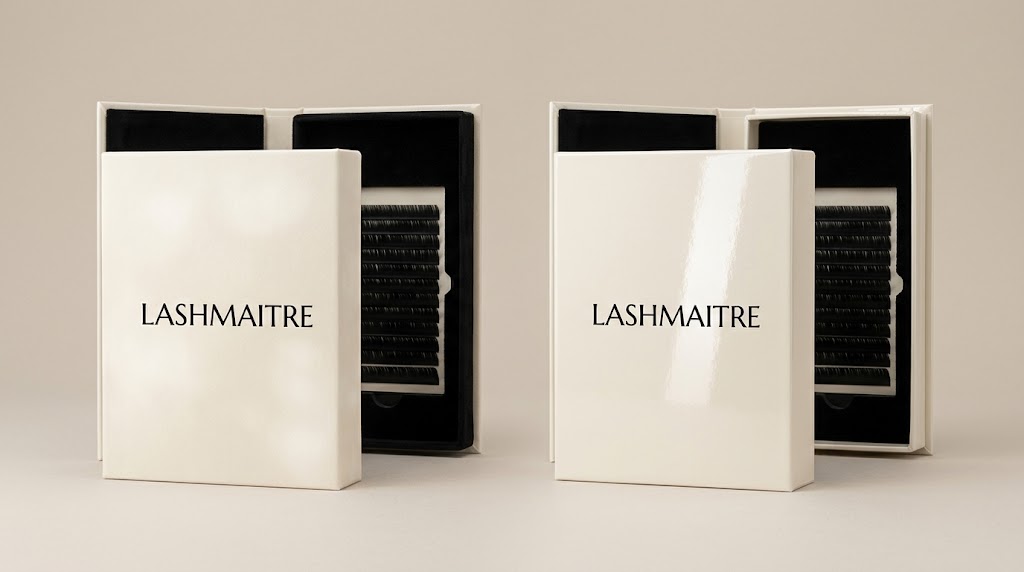
Direct answer: matte vs gloss lash packaging is an outer-surface approval decision, not a statement about lash fiber finish or product quality. Matte lamination usually reduces sharp reflections, while gloss lamination creates a more reflective surface. Wholesale buyers should compare both on the same box structure and artwork for color, text, barcode area, scuffing, fingerprints, fold behavior, photography and lot-to-lot repeatability before approving a private-label packaging finish.
1. Keep Matte vs Gloss Lash Packaging Separate From Lash Finish
Write the specification so nobody confuses a matte box with matte lash fibers. The packaging finish applies to the printed outer component. The lash product has its own material, color, sheen and sample record. A brand may place glossy fibers in a matte box or matte fibers in a gloss box; the two approvals remain independent.
The custom lash packaging hub covers box planning as a whole. This page owns the surface-finish choice after the box structure, product fit and artwork content are defined.
| Approval field | Matte candidate | Gloss candidate | Controlled check |
|---|---|---|---|
| Reflection | More diffuse appearance | More direct reflection | Same light and viewing angle |
| Color appearance | Approve on physical proof | Approve on physical proof | Same artwork and print run basis |
| Handling marks | Record rubs, oils and scuffs | Record rubs, oils and scratches | Same touch and rub method |
| Digital image | Check texture and tonal detail | Check glare and highlight control | Same camera and lighting setup |
2. Build Matched Matte vs Gloss Lash Packaging Proofs
Use the same board, structure, artwork, inks, foil elements and dimensions for both candidates wherever possible. Apply matte and gloss as the intended production finishes, not as screen simulations. Give each proof a code and record every variable that differs.
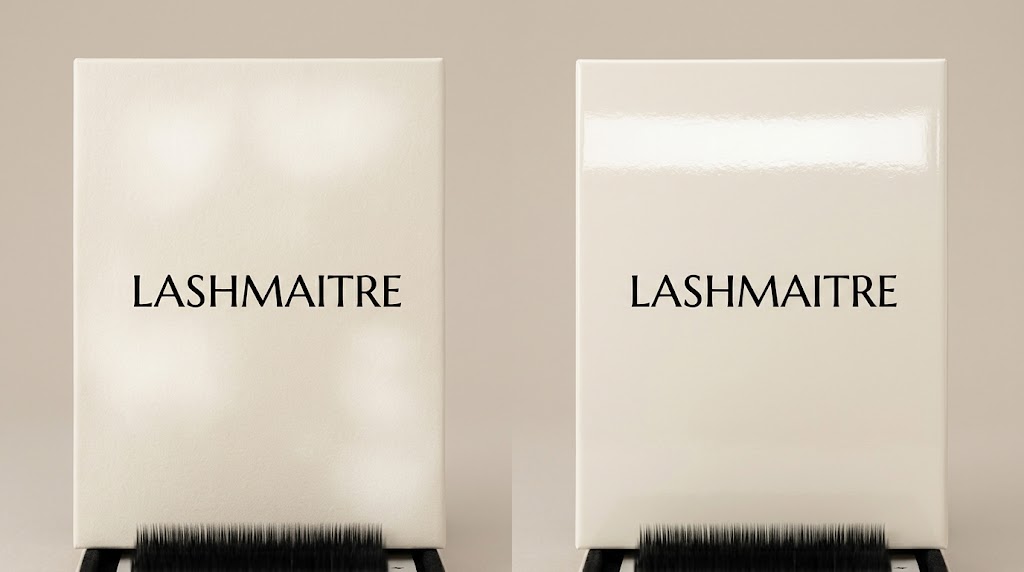
Place the proofs beside the approved color reference. Review them under daylight-equivalent lighting and the lighting used for ecommerce photography. A finish can change how a color appears through reflection and surface texture, so approve the full printed combination rather than a finish swatch alone.
3. Check Text And Barcodes On Matte vs Gloss Lash Packaging
Inspect product names, small specification fields, thin rules, reversed text and any barcode or data carrier area at normal viewing distance and under magnification. The finish must not be used to hide weak print, low contrast or poorly sized information.
Scan production-equivalent barcode samples with the devices and workflow relevant to the target channel. Record the symbol, location, size, quiet area, color combination and scan result. Barcode approval belongs to the exact printed pack, not a separate office printout.
4. Test Matte vs Gloss Lash Packaging Handling Marks
Define a simple matched handling method. Use clean dry hands and the actual warehouse or retail handling steps, then inspect fingerprints, polish changes, scuffs, scratches and edge wear. If a cloth or rub test is used, specify the material, pressure basis, number of cycles and pass rule.
Open and close the finished package repeatedly. Inspect folds, corners, glued areas, magnetic closures or drawer edges where the laminate may experience stress. A flat proof cannot show every behavior of the formed box.
5. Photograph Matte vs Gloss Lash Packaging Consistently
Photograph both samples with the same camera position, background, light placement and editing settings. Matte may show fewer sharp highlights, while gloss may need more careful reflection control. The practical question is whether the brand can produce clear, repeatable product images for its real sales channels.
Also view the samples at the distance used on a retail shelf or packing station. Confirm that product identity, SKU and required information remain easy to see. A dramatic close-up should not be the only approval evidence.
6. Compare Cost At The Same Specification
Ask the supplier to quote both finishes on the same structure, quantity and print scope. Separate material or finishing cost, setup, minimum quantity, sample proof, special effects, rejection allowance and replacement terms. If one finish requires a different board or process, show that as a specification change.
Use the custom lash boxes MOQ guide to compare print quantity with the SKU plan. A finish may be attractive on one hero product but create excess packaging stock when applied to every low-volume variant.
| Release record | What to save | Do not release when | Reapproval trigger |
|---|---|---|---|
| Visual proof | Coded signed box | Only a digital mockup exists | Printer or process change |
| Information | Text and scan record | Poor contrast or scan failure | Artwork or size change |
| Durability | Defined handling observations | Unacceptable marks or fold damage | Board or laminate change |
| Reorder | Finish name plus supplier code | Only “matte” or “gloss” is recorded | Any substitution |
7. Test The Finished Pack On Its Route
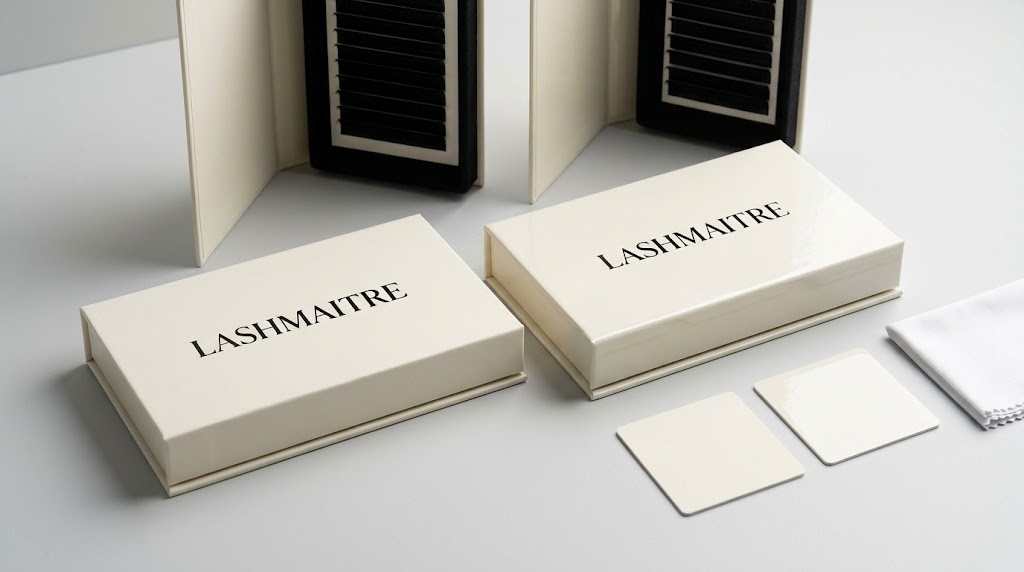
A laminate is part of the retail box, so check it after packing and transit evaluation. Use the lash packaging transit-test process to inspect rubbing, corner wear, label readability and presentation after the defined route simulation.
Do not claim that matte or gloss is universally more durable. Result depends on the complete construction and test method. Record the exact finish, board, print, box, protective packing, carton and result.
8. Freeze The Finish In The Reorder File
Request matched proofs through the lash extension sample process. After approval, keep one signed box, finish code, supplier reference, artwork revision, color reference, inspection method and photographs. The words “matte” and “gloss” are not detailed enough when several laminate grades or coatings are available.
Send the box structure, artwork status, target finish, quantity, barcode needs and destination through the wholesale lash extensions inquiry. Confirm current finish capability, MOQ, proof cost, pricing and lead time for the named packaging program.
Source boundary: The GS1 US barcode placement and printing guidance provides standards context for barcode position, size, color and print quality. It does not approve a packaging finish or guarantee that a specific printed symbol will scan; the final production-equivalent package still requires verification for its channel.
FAQ: Matte vs Gloss Lash Packaging
Does matte packaging always look more premium?
No. Perception depends on brand design, print quality, structure, product and execution. Approve the matched physical proofs with the intended audience and channel.
Does gloss packaging always photograph badly?
No. Gloss can be photographed well with controlled lighting. Test the actual box in the brand’s normal photography setup instead of assuming the result.
Can a buyer approve lamination from a digital mockup?
A mockup can confirm layout direction, but it cannot reproduce physical reflection, texture, folds, handling marks or print interaction. Use a coded physical proof.
What should be recorded for reorders?
Record the finish and supplier code, board, structure, print specification, artwork revision, signed sample, color reference, barcode result, acceptance criteria and substitution rule.

Lash Maitre: Your Trusted Partner in Eyelash extension Solutions
Lash Maitre is dedicated to providing professional insights and tips in the eyelash extension industry. Sharing the latest trends, techniques, and product knowledge, Lash Maitre helps lash artists and enthusiasts enhance their skills, stay inspired, and achieve the perfect lash experience.



