Magnetic vs Drawer Lash Boxes: 8 Best Checks for Buyers
Share
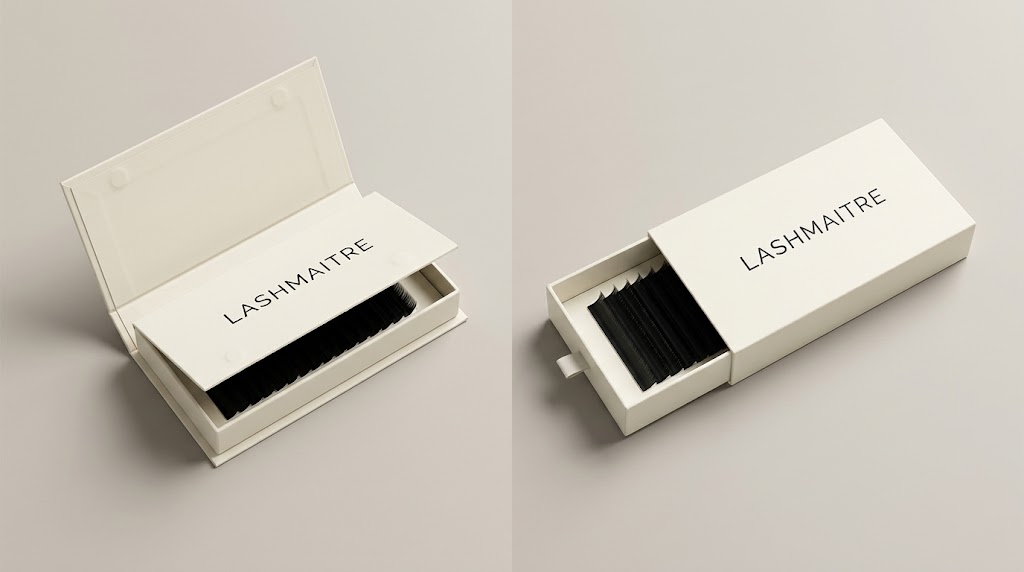
Direct answer: magnetic vs drawer lash boxes is a structure and pack-out decision, not a simple premium-versus-budget choice. A magnetic box uses a hinged closure with concealed or visible magnets, while a drawer box uses an outer sleeve and sliding inner tray. Wholesale buyers should compare the same lash tray in both structures for fit, opening force, product movement, packed dimensions, surface durability, assembly time, sample cost and reorder identity before approving bulk packaging.
1. Give Each Box A Clear Commercial Job
Start with the sales channel and product role. A magnetic box may support a flagship line, kit or presentation-led offer. A drawer box may support a compact retail range, a mail-friendly pack or a program that needs flat component storage before assembly. These are possible positions, not guarantees. The final decision should come from real samples, route testing and the buyer’s price architecture.
The custom lash packaging hub covers the complete packaging program. This page owns one narrower task: comparing two box structures with the same product, insert and approval method.
| Buyer field | Magnetic box sample | Drawer box sample | Evidence to retain |
|---|---|---|---|
| Structure | Hinged lid and closure components | Outer sleeve and sliding drawer | Dieline and component list |
| Product fit | Tray clearance in closed box | Tray clearance during sliding | Coded pack-out sample |
| Handling | Opening and closure force | Pull, stop and sleeve friction | Repeated-use record |
| Logistics | Packed size and weight | Packed or flat component size | Carton configuration |
A controlled magnetic vs drawer lash boxes comparison should keep the product, insert and test method stable.
2. Compare Magnetic vs Drawer Lash Boxes With The Same Product
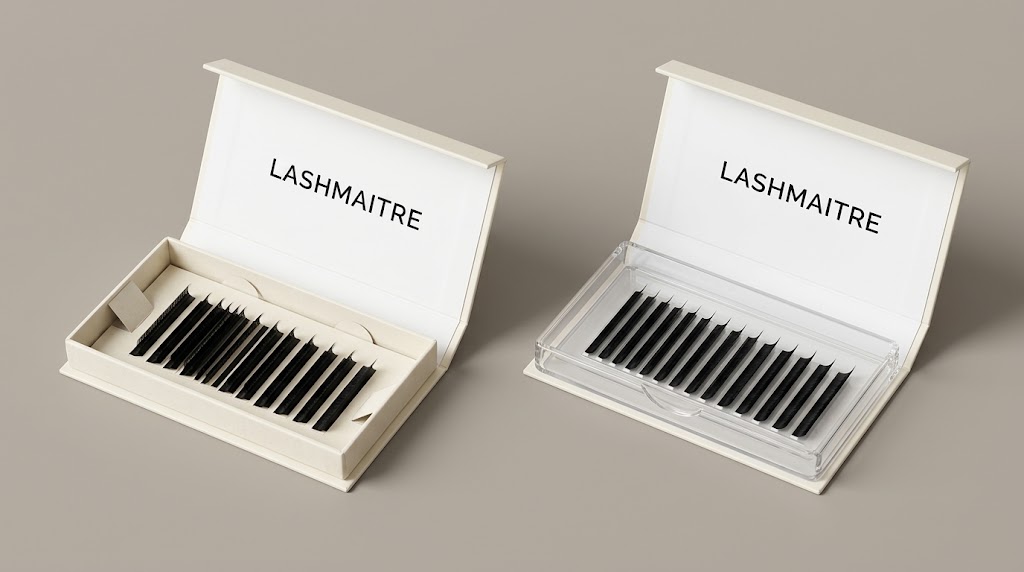
Do not compare a heavy presentation sample with a small production drawer and call the result a structural decision. Place the same lash tray, tray card, insert, label and information card in both candidates. Keep external dimensions as close as practical. Record every variable that cannot remain equal.
Measure closed length, width, depth and finished weight. Then inspect clearance above the lash tips, movement around the tray and any contact between the product and lid or sleeve. The insert must control the product without forcing the tray or crushing tall fibers.
3. Test Magnetic vs Drawer Lash Boxes For Product Access
For the magnetic sample, record whether the lid closes consistently, whether the closure alignment changes after repeated use and whether any component creates an unwanted bulge. For the drawer sample, record sleeve friction, pull consistency, stop behavior and whether the inner tray can slide out unexpectedly during handling.
Use a fixed number of open-close cycles and the same reviewers. A comment such as “feels premium” is useful only when paired with observable details: smooth travel, aligned edges, controlled closure, easy tray access and no visible damage after the defined test.
4. Compare Total Pack-Out Cost For Magnetic vs Drawer Lash Boxes
A box quotation may omit inserts, assembly, labels, protective sleeves, packing labor or master-carton changes. Build a complete cost comparison for the approved configuration. Include sample tooling, print setup, unit packaging, insert, label, assembly, inspection and outbound carton impact.
Use the custom lash boxes MOQ guide to keep setup quantity, component MOQ and finished-goods quantity separate. One attractive low unit price can create excess packaging stock if the box minimum does not match the product reorder plan.
5. Inspect Artwork On The Real Structure
Review magnetic vs drawer lash boxes on their final dielines rather than on unrelated mockups.
Place the approved logo, product name, SKU fields, barcode area and mandatory buyer text on the actual dieline. A magnetic lid introduces folds and closure edges; a drawer design divides communication between sleeve and inner tray. Confirm which panel remains visible in ecommerce photographs, retail displays and warehouse picking.
Review a physical printed proof under the same lighting used for approval. Keep the proof code, artwork revision and dieline version together. If the structure changes, do not reuse an older artwork approval without confirming every panel and cut line again.
6. Compare Freight For Magnetic vs Drawer Lash Boxes
Ask how each structure is delivered to the pack-out location: fully assembled, partly assembled or flat. Record packing steps, space needed at the workstation, finished carton quantity and carton dimensions. Freight comparisons should use the actual packed configuration rather than an empty sample measured alone.
Run the selected structure through the lash packaging transit-test process. The goal is to check the complete product system: lash tray, insert, retail box, labels and master carton on the intended route.
| Approval gate | Pass evidence | Common hold reason | Record owner |
|---|---|---|---|
| Product fit | Tray stable; fibers clear | Movement or contact | Product/QC |
| Structure | Controlled repeated opening | Misalignment or damage | Packaging |
| Artwork | Signed coded proof | Wrong panel or revision | Brand |
| Transit | Defined test and result | Open box or shifted tray | Logistics |
7. Approve A Coded Golden Sample
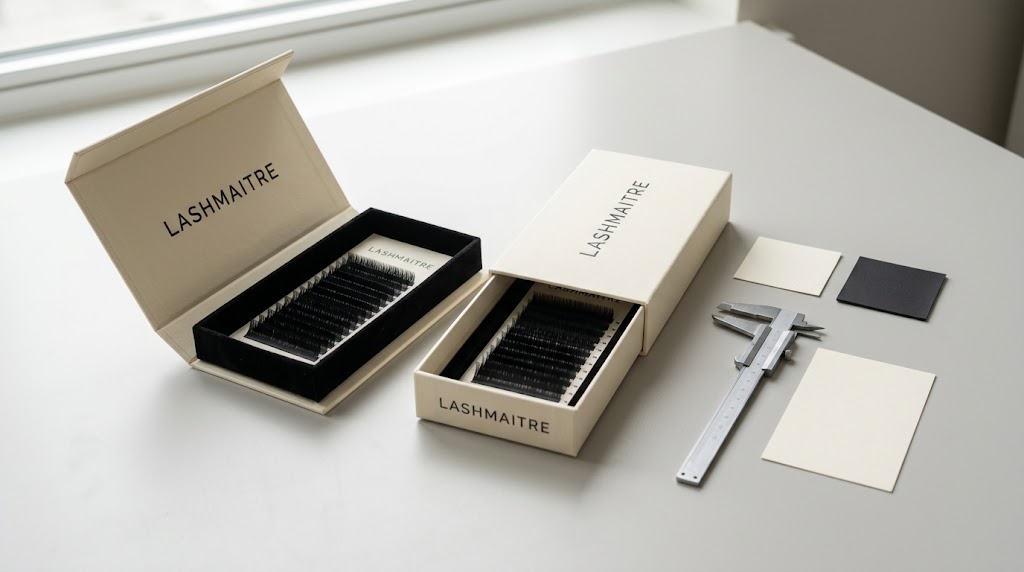
Keep separate sample codes for magnetic vs drawer lash boxes so the approved structure is unambiguous.
Order both structures through the lash extension sample process and give each a unique code. Photograph the closed box, open box, insert, tray fit, labels and carton arrangement. Retain one approved unit and record who signed the decision.
The approved sample should not be identified only as “white magnetic box” or “drawer box.” Record dimensions, board or construction specification, closure details, insert code, finish, artwork version and product SKU. These fields protect the reorder when several similar white boxes exist.
The final magnetic vs drawer lash boxes decision should connect the approved sample to one documented reorder rule.
8. Release The Box With A Reorder Rule
Choose magnetic vs drawer lash boxes only after the product, structure, print and route evidence point to the same result. State the commercial role, approved sample code, finished dimensions, component list, carton quantity, artwork version and substitution rule in the purchase file.
Send the intended lash tray, target channel, estimated quantity, box structure, insert, finish and delivery market through the wholesale lash extensions inquiry. Current availability, MOQ, pricing and lead time must be confirmed for the exact configuration.
Source boundary: The International Safe Transit Association test-procedure overview explains why packaged-product testing should match a defined distribution purpose. It does not approve a magnetic or drawer box, certify an informal factory drop check, or replace the buyer’s agreed test plan.
FAQ: Magnetic vs Drawer Lash Boxes
Is a magnetic lash box always more premium?
No. Premium perception depends on structure, fit, print, finish and execution. Approve the physical sample rather than the format name.
Is a drawer lash box always cheaper to ship?
No. Compare actual packed dimensions, weight, assembly state, carton quantity and route. A structure name alone does not establish freight cost.
What should be held constant during comparison?
Use the same lash tray, insert function, product quantity, artwork content and test method wherever possible, then record unavoidable differences.
What belongs in the final reorder specification?
Include the box structure, dimensions, material or construction description, closure, insert code, finish, artwork version, sample code, carton configuration and substitution rule.

Lash Maitre: Your Trusted Partner in Eyelash extension Solutions
Lash Maitre is dedicated to providing professional insights and tips in the eyelash extension industry. Sharing the latest trends, techniques, and product knowledge, Lash Maitre helps lash artists and enthusiasts enhance their skills, stay inspired, and achieve the perfect lash experience.



