Fox Eye vs Squirrel Eye Lash Extensions: 8 Map Checks
Share
Direct answer: Fox eye vs squirrel eye lash extensions is primarily a peak-position and outer-taper comparison, not a universal product specification. For wholesale planning, buyers should convert both maps into zones, lengths, curls, component formats, tray SKUs, sample codes and versioned records. The names can organize a style collection, but they do not tell a supplier which trays to quote.
1. Define The Map Difference In Writing
Use an approved map definition. A fox-eye position commonly continues emphasis toward the outer region, while a squirrel-eye position places the strongest peak before the outer edge and then tapers. The exact zones, peak and transition are buyer-controlled variables; do not treat those descriptions as fixed formulas.
The existing fox eye wholesale guide and squirrel style guide cover each family. This comparison helps a procurement team build two distinct, reproducible map records without duplicating inventory unnecessarily.
| Map field | Fox eye record | Squirrel eye record | Evidence |
|---|---|---|---|
| Peak zone | Defined outer emphasis | Defined pre-outer peak | Numbered map |
| Outer transition | Specified final-zone change | Specified taper after peak | Length sequence |
| Product fields | Format, diameter, curl and lengths | Format, diameter, curl and lengths | SKU list |
| Identity | Map and sample version | Map and sample version | Approval file |
2. Number The Zones And Peak Position
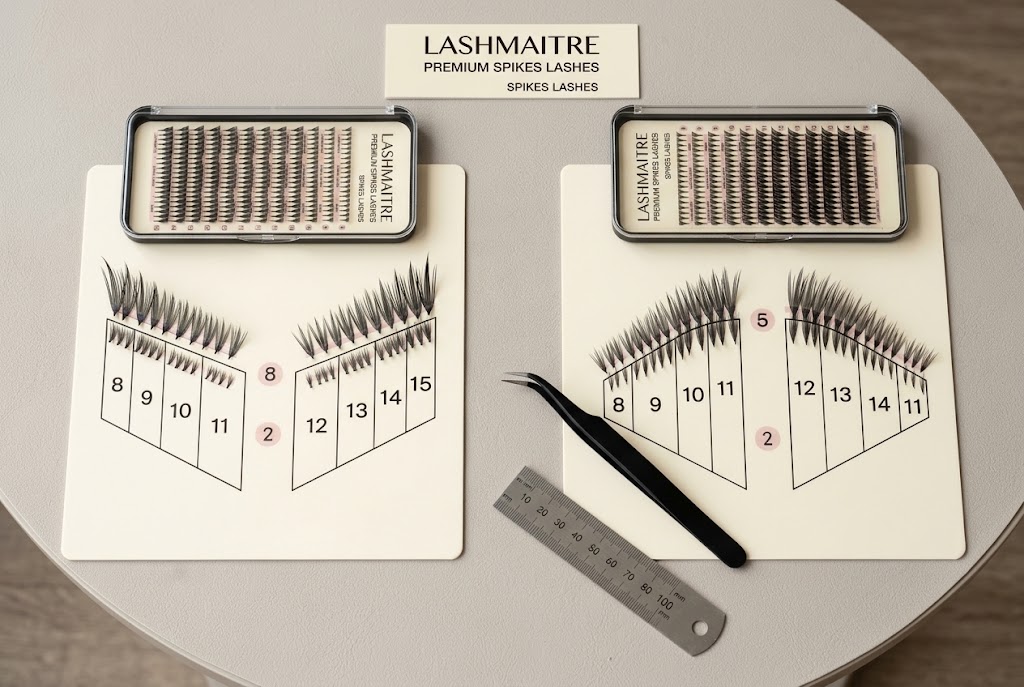
Create a simple left-to-right zone record and mark where the longest approved length or strongest emphasis occurs. Then document what happens in the final zone. The comparison becomes auditable when another buyer can point to the peak and outer transition without guessing from a style photo.
Use the lash mapping styles guide to keep zone names and records consistent. Save the map as a versioned file linked to the product list.
3. Convert Each Map Into Tray SKUs
For fox eye vs squirrel eye lash extensions, a controlled map pair keeps shared tray fields stable while reviewers isolate peak position and outer taper.
List the lengths, curls, diameters, formats and quantities needed for every zone. If one curl or length changes near the peak, identify it. If the same mixed-length tray supports both maps, keep one inventory SKU and create two map documents rather than inventing duplicate products.
If the maps require different product families, write separate component lists. For premade fans, add D-count, spread, base, stem and counted quantity. For individual fibers, keep row count, length allocation, taper and strip visible.
4. Build A Controlled Sample Pair
Keep the material family, product format, representative curl range, packaging scope and review conditions as similar as the project allows. Intentionally vary the zone sequence and peak position. This isolates the map decision from unrelated changes in fiber or fan construction.
Assign codes through the lash extension samples process. Retain strips from each required SKU, the printed map, tray labels and photographs. Name every file with the map version and sample code.
5. Review Transitions, Not Just The Peak
Check how each numbered zone moves into the next. For the fox-eye candidate, inspect the route into and through the outer emphasis. For the squirrel candidate, inspect the rise to the pre-outer peak and the taper afterward. Abruptness or smoothness should be recorded as an observation against the approved design, not as a universal quality rule.
Use the same reviewer and documentation method for both samples. The lash quality control path supports repeatable sample notes and lot-linked records.
6. Keep Suitability Claims Within Evidence
Fox eye vs squirrel eye lash extensions may need different length mixes, so each map should point to exact tray SKUs rather than a generic style name.
A map can be positioned as a design option, but a wholesale page should not promise that one map suits every person with a named eye shape, creates a guaranteed lifting effect or produces a fixed wear result. Those claims depend on professional assessment, application choices and individual conditions.
Buyer records should stay factual: zone sequence, peak position, product fields, sample observations and approved catalog wording. Provide the product and mapping information that professional customers need without turning a style comparison into a medical or universal result claim.
| Release record | Fox eye | Squirrel eye | Control |
|---|---|---|---|
| Map | Zones, peak and outer transition | Zones, peak and outer taper | Version number |
| Products | Exact SKUs and quantities | Exact SKUs and quantities | Shared SKUs merged |
| Sample | Code and review notes | Code and review notes | Same method |
| Reorder | Lot and packaging version | Lot and packaging version | Retained standards |
7. Assign A Clear Commercial Role
When fox eye vs squirrel eye lash extensions rely on different zone allocations, compare usable quantity against the approved map and stated tray basis.
Define the buyer segment, map education, required SKUs, sample result and initial stock depth for each style. Fox and squirrel can remain separate style pages while sharing much of the physical inventory. That structure gives sales teams two clear conversations without forcing unnecessary warehouse duplication.
The current exact comparison term has no reliable monthly volume or difficulty value in the retained dataset. Live search results confirm the question exists, but that does not quantify demand. Treat this page as a small, high-intent mapping spoke and evaluate it later with current GSC impressions and inquiry language.
8. Lock Reorder And Packaging Identity
Make the map version visible in the buyer file. Tray labels should identify the physical product SKU; map cards and education material should identify the style version. Purchase orders should never rely on “fox” or “squirrel” alone when multiple lengths, curls or formats are involved.
For a fox eye vs squirrel eye lash extensions project, send both maps, product lists, packaging direction and sample codes through the wholesale lash extensions inquiry. Confirm availability, pricing, minimum quantities and lead time for the exact trays and packaging.
Source boundary: For U.S. eye-area product context, the FDA Eye Cosmetic Safety guidance explains general hygiene, injury and labeling considerations. It does not endorse a fox-eye or squirrel-eye map, and this comparison does not make a universal suitability or safety claim.
FAQ: Fox Eye vs Squirrel Eye Lash Extensions
What is the main mapping difference?
Fox eye generally keeps emphasis farther outward, while squirrel eye places the peak before the outer edge and then tapers. Buyers should define the exact zones.
Do the two maps require different trays?
Not always. They may use the same lengths and curls in different zone sequences. Keep one inventory SKU when the physical product is identical.
Should a quote request use only the style name?
No. Include the map, component SKUs, format, diameter, curls, lengths, tray quantities, sample codes and packaging scope.
What should be saved for reorders?
Save the map version, product list, approved samples, retained strips, inspection notes, lot, packaging version and purchase-order identity.

Lash Maitre: Your Trusted Partner in Eyelash extension Solutions
Lash Maitre is dedicated to providing professional insights and tips in the eyelash extension industry. Sharing the latest trends, techniques, and product knowledge, Lash Maitre helps lash artists and enthusiasts enhance their skills, stay inspired, and achieve the perfect lash experience.



