Light Brown vs Dark Brown Premade Fans: 7 Buyer Checks
Share
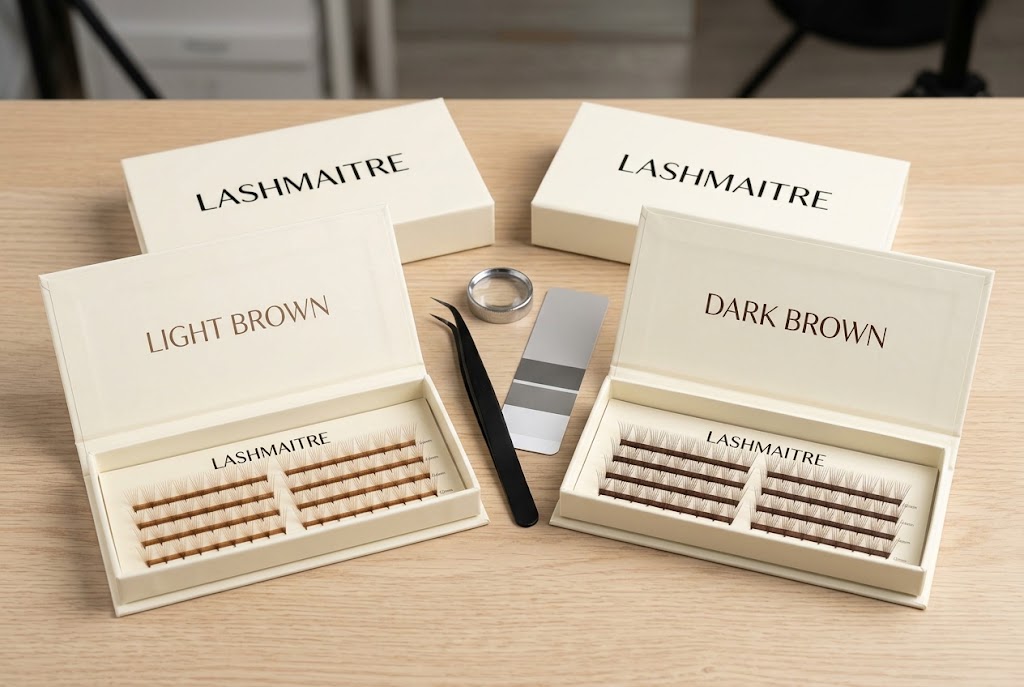
Light brown vs dark brown premade fans is a shade-control and finished-fan decision. Buyers should compare the two colors as matched fans with the same D-count, diameter, curl, length, base, stem and tray format. Color names alone are not reliable reorder standards, so each shade needs a physical reference, controlled photographs, sample code and separate SKU before bulk or private label production.
1. Treat Light Brown And Dark Brown As Sample Codes
Names such as light brown, mocha, chocolate, dark brown and black brown can overlap between suppliers. Ask for the supplier’s current color code and a physical reference. Do not approve a shade from a screen image because lighting, white balance and display settings can shift the apparent tone.
The brown lash extensions hub owns the broader brown product range. The colored premade fan guide covers general fan sampling. This page owns one narrower task: comparing light and dark brown in the same completed fan construction.
| Buying field | Light brown sample | Dark brown sample | Evidence to retain |
|---|---|---|---|
| Shade identity | Supplier code and approved card | Supplier code and approved card | Physical references |
| Fan construction | Same D-count, base and stem | Same D-count, base and stem | Macro and tray photographs |
| Lighting review | Neutral and warm light | Neutral and warm light | Gray card and camera settings |
| Reorder record | Separate SKU and lot | Separate SKU and lot | Retained tray and artwork |
2. Build A Matched Premade Fan Pair
Hold D-count, stated fiber diameter, curl, length, fan spread, base profile, stem length, finish, tray row count and packaging constant. If the light brown sample is a narrow 5D short-stem fan and the dark brown sample is a wide 10D long-stem fan, the buyer is comparing construction and shade at the same time.
Request matched samples through the lash extension samples path. Label the outer box, tray card and retained strip with the same code. Record whether the fan is tray-based or loose, because unit count and inspection method change with format.
3. Review Shade Under Controlled Lighting
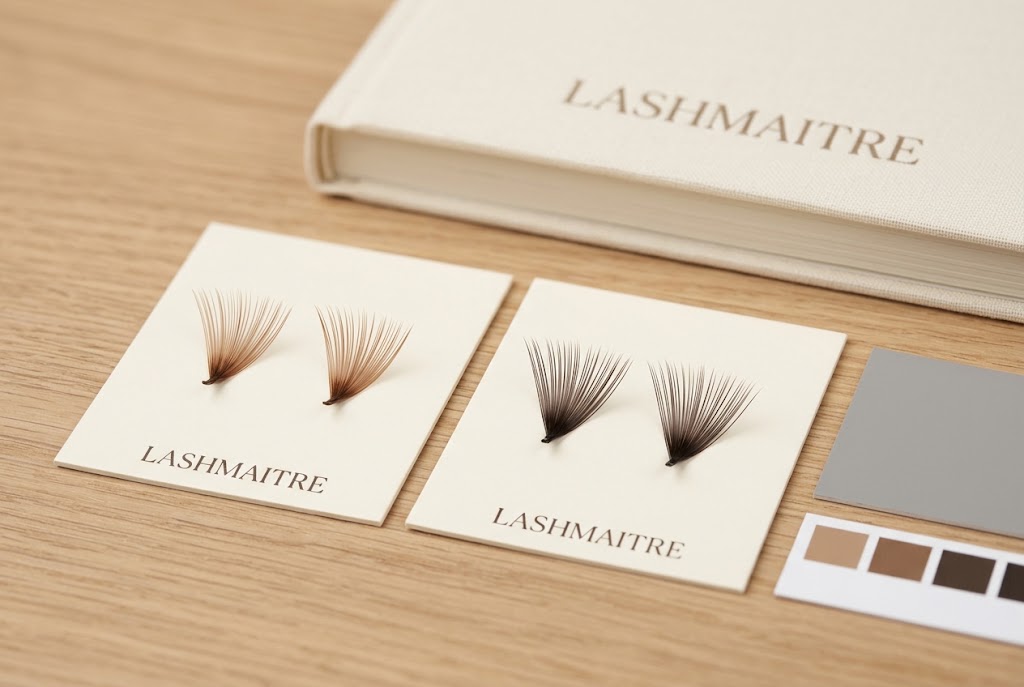
Photograph the closed box, full tray, one strip and several individual fans beside a neutral gray card. Use stable white balance and at least two controlled lighting conditions relevant to product photography or sample review. Keep camera processing identical for both shades.
The lash color match checklist provides the broader QC method. For this comparison, record undertone, apparent depth, tip-to-base consistency and differences between rows. A photograph supports the record but the retained physical sample remains the approval reference.
4. Inspect Fan Geometry Separately From Color
Count representative fans and review symmetry, spread, base width, stem length, curl alignment and visible residue. A darker shade can make the fan appear denser in a photograph, but appearance does not prove a different D-count or fiber mass. Keep the physical construction fields independent.
Use the same magnification and neutral background for both samples. Define defects before counting and select units from the first, middle and final tray areas. If geometry differs by shade, decide whether the difference is within the written tolerance or requires a new sample.
5. Test Pickup And Integrity With One Method
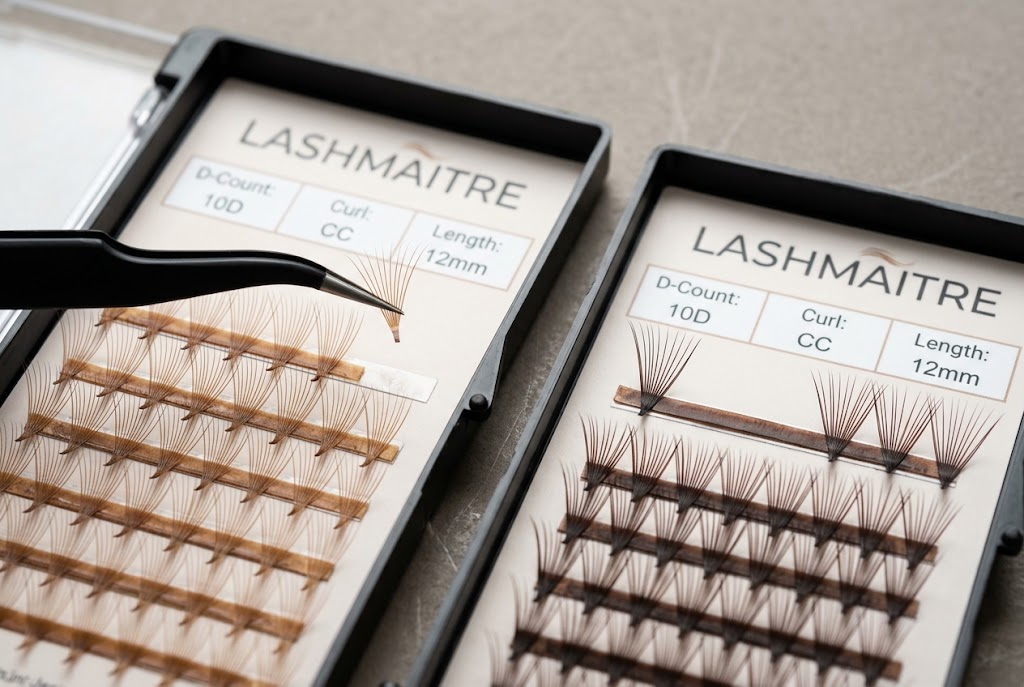
Use the same tweezer, pickup location, strip area, trial count and reviewer. Record whether the fan releases cleanly, keeps its shape and remains identifiable after ordinary sample handling. For loose fans, define the container area and counting method before comparing usable yield.
Do not attribute handling differences to pigment or shade without controlled evidence. Base construction, bonding method, strip tack, tray pressure and packaging can change the result. Record what stayed constant and what did not.
6. Plan Shade Depth Without Inflating The SKU Matrix
Light and dark brown may serve different catalog positions, but the role should follow customer data. A buyer can start with one D-count, one or two curls and a restrained length range for each shade, then expand only where samples, orders and reorders show demand.
Use separate reporting for sample requests, first orders and repeat orders. Do not infer wholesale demand from social media views or the number of competitor listings. When current volume, keyword difficulty or sales evidence is unavailable, record it as N/A.
| Release field | Required record | Common risk | Control |
|---|---|---|---|
| Shade | Color code and physical card | Name changes between orders | Approve by code and sample |
| Fan | D-count, spread, base and stem | Shade hides geometry variation | Inspect under magnification |
| Pack | Tray or loose format and count | Quoted units use different basis | State count basis on PO |
| Reorder | SKU, lot and retained sample | New batch approved by photo only | Compare physical references |
7. Keep Packaging And Reorder Identity Clear
The tray card and box should state the shade code, D-count, diameter, curl, length format, base or stem descriptor and pack-count basis. Use distinct SKUs even when the two shades share an outer-box design. Confirm barcode, artwork and carton records before release.
Move to custom lash packaging after both physical shades and fan constructions are approved. Save the final artwork beside the product record so a label update cannot silently substitute one brown shade for another.
Safety And Evidence Boundary
Shade depth does not prove suitability, comfort, retention or safety. Qualified professionals must assess the complete fan, intended use and wearer. Do not claim that one brown shade is universally softer, lighter or safer based only on appearance.
For a light brown vs dark brown premade fans project, send the shade direction, D-count, diameter, curl, lengths, base, stem, pack format, quantity and packaging direction through the wholesale lash inquiry. Current shade and construction availability must be confirmed.
FAQ: Light Brown vs Dark Brown Premade Fans
Are light brown and dark brown standard industry colors?
No. Names and undertones vary by supplier. Approve a physical shade reference and supplier color code rather than relying on the name alone.
Can the two shades use the same product image?
They should have separate controlled images when the color difference is a buying feature. Keep lighting, white balance and editing consistent and retain the physical trays.
Should both colors share one SKU?
No. Separate SKUs, sample codes and reorder records protect the approved shade and make inventory reporting clearer.
What should a buyer put on the purchase order?
Record shade code, D-count, diameter, curl, length, fan spread, base, stem, tray or loose format, count basis, sample code, quantity, lot and packaging version.

Lash Maitre: Your Trusted Partner in Eyelash extension Solutions
Lash Maitre is dedicated to providing professional insights and tips in the eyelash extension industry. Sharing the latest trends, techniques, and product knowledge, Lash Maitre helps lash artists and enthusiasts enhance their skills, stay inspired, and achieve the perfect lash experience.



