
LASHMAITRE wholesale QC
Cluster Lash Base Quality: 8 Wholesale QC Checks
cluster lash base quality turns a vague base-quality claim into a repeatable review of width, closure, residue, symmetry and pickup. Buyers should approve a measurable range across several rows and more than one tray.
Available in: English | Español
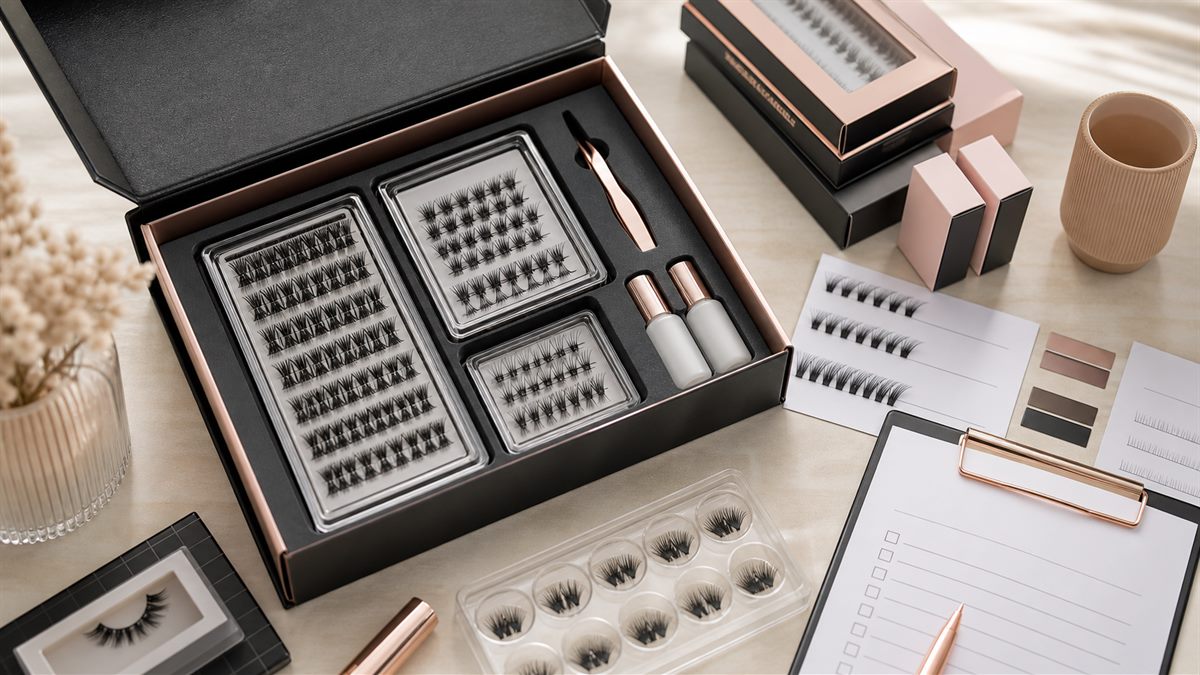
Direct answer: what is acceptable cluster lash base quality?
An acceptable base remains neat, stable and suitable for the intended attachment area. It should repeat across the tray without random thickening, crossed fibers, visible residue or uncontrolled opening. Approval belongs to a range, not one perfect sample.
Inspect the base, fiber, strip release and technician handling as separate fields. A difficult strip can make a sound base appear inconsistent.
| QC field | What to inspect | Approval evidence |
|---|---|---|
| Base width and closure | Neat shape within the agreed range | Macro reference |
| Residue and crossing | No unexpected clumps or crossed fibers | Photograph with lot |
| Pickup response | Stable removal and controlled placement | Technician score |
| Row consistency | Comparable first, middle and final rows | Retained tray |
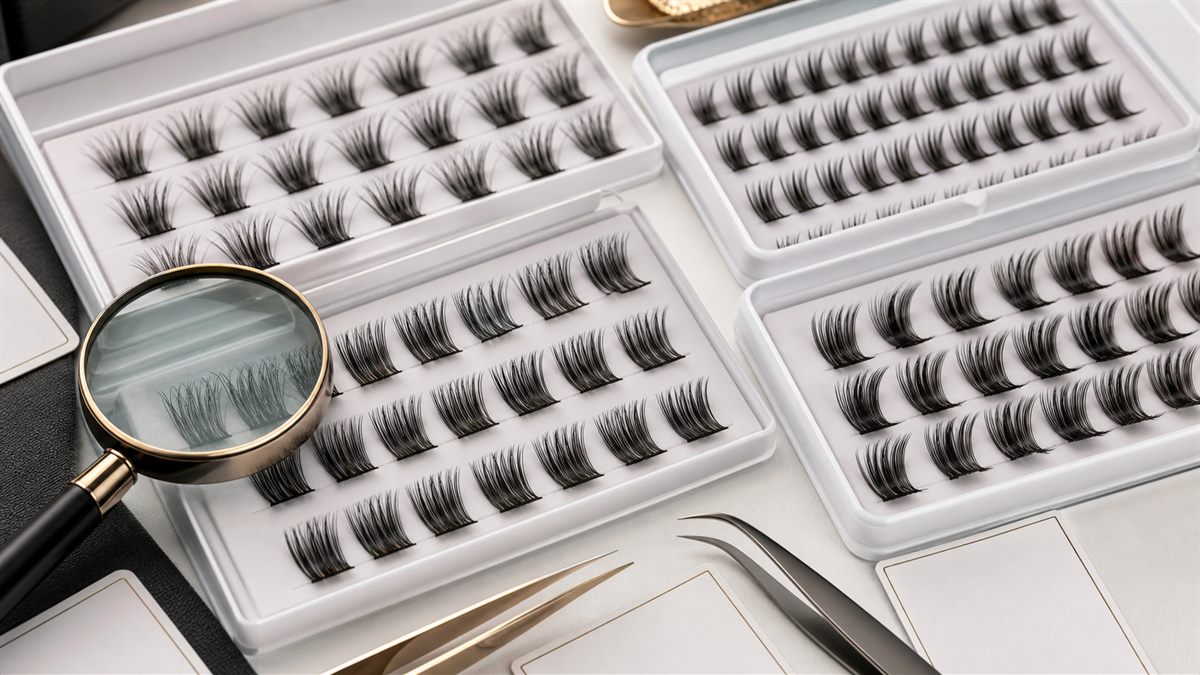
Run a repeatable Cluster Lash base inspection
Request samples in the curl, diameter, lengths, finish, strip and tray format that will be sold. A base tested on a different specification cannot approve the final SKU.
Inspect multiple positions from at least two trays. Mark where bases split, cross, thicken, twist or show residue, and record whether the finding is isolated or repeated.
Ask two technicians to test first pickup, repeated pickup, placement control and speed. Their scorecard should use the same fan or segment task and the same acceptance scale.
Set approved, correction-required and hold criteria before bulk production. Link the decision to the SKU, lot, reviewed rows, sample version and reviewer.
Separate base defects from strip, fiber and handling causes
A thick-looking base may result from crossed fibers, compression during pickup or excess residue. A base that opens unexpectedly may be influenced by strip tack or construction. Test each cause before requesting a material change.
Compare more than one curl, diameter or length only after the primary SKU is understood. If one specification fails, name it precisely instead of rejecting an entire collection.
Approve the physical product before private-label artwork. SKU, product type, curl, diameter, length and lot should stay connected across tray, card, barcode and carton.
At reorder, repeat the macro and pickup tests against the retained tray. Hold packaging production when the new lot falls outside the documented range.
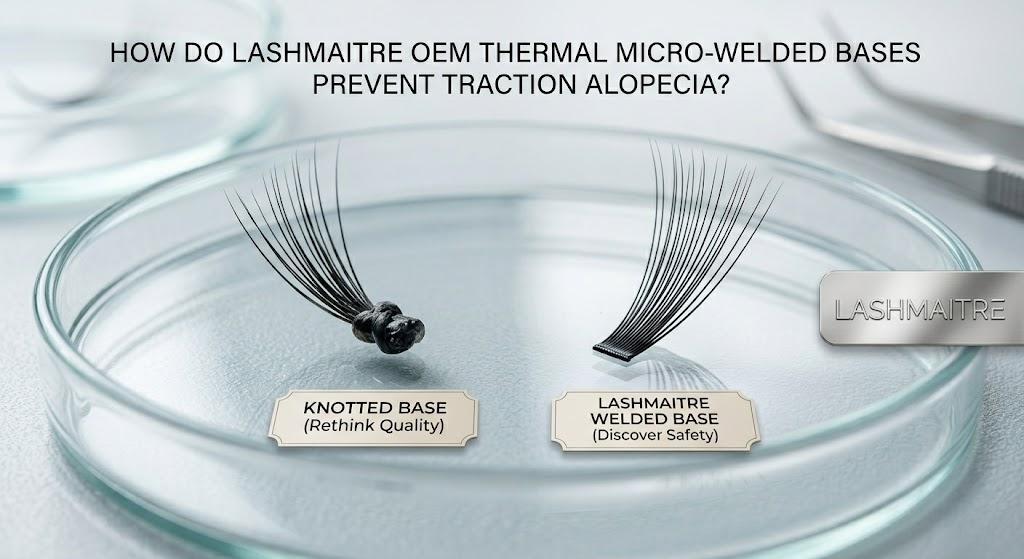
Buyer fit, evidence and decision boundaries
This cluster lash base quality guide supports distributors, salon brands and ecommerce buyers evaluating professional wholesale products. It provides a procurement framework rather than application training.
Useful evidence includes macro photographs, named tray rows, technician scorecards, lot codes, packaging proofs and one retained physical sample.
LASHMAITRE can prepare matched samples, MOQ 50 planning, QC notes and private-label packaging after the acceptable base range is defined.
Do not turn one attractive macro photograph into a bulk approval. The product should pass repeated checks across representative positions and remain traceable at reorder.
Buyers establishing internal eye-area product review procedures can consult the FDA eye cosmetic safety information.
FAQ
What makes cluster lash base quality acceptable?
A neat attachment area, stable pickup, limited variation and no repeated residue or crossing outside the agreed range.
Can one sample approve a bulk lot?
No. Inspect several positions, multiple trays and a representative lot.
Can strip release look like a base defect?
Yes. Test strip response and base construction separately.
When should a lot be held?
When repeated base shape, residue, pickup or labeling results leave the approved range.
Continue the buyer path
Request Cluster Lash base QC samples
Send curl, diameter, lengths, strip, tray format, quantity and current base concern for a documented review.
cluster lash base quality: documented decision file
For cluster lash base quality, connect the final decision to the buyer segment, approved SKU list, physical sample, named lot and planned reorder date. The file should show what was tested, who reviewed it, which tolerance was accepted and which correction would stop production. This prevents a visual preference from being treated as a specification and gives the supplier a reproducible target.
Before release, compare cluster lash base quality with the tray card, barcode, carton quantity and ecommerce product data. Record open points with an owner and deadline. At reorder, repeat the same checks against the retained sample and previous lot notes. A consistent file allows a new team member to understand the approval without relying on scattered messages.
cluster lash base quality: Approval record
Use the focus phrase as a measurable procurement field. Record the result with SKU, approved sample, lot, reviewer and date. Repeat the same check at reorder so product data, packaging and delivered goods remain aligned.