Lash Lot Numbering System: 8 Fields for Product Traceability
Share
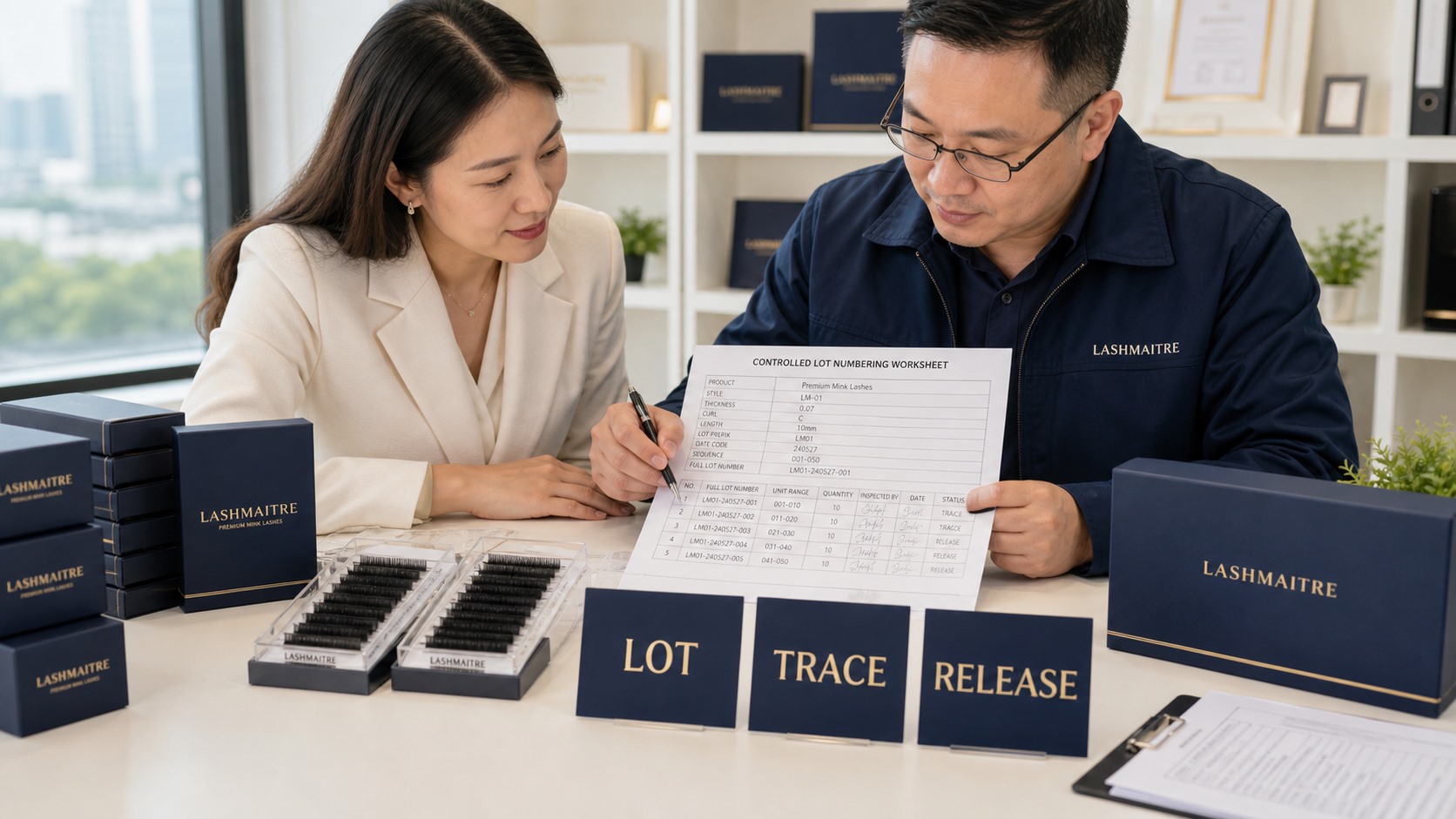
A practical lash lot numbering system gives every released production group one unique, readable code and connects that code to the product, supplier, production date, line or work cell, shift, sequence, specification revision, and release status. The code itself is only an index. Its value comes from the controlled records behind it and from the team's ability to trace a retail box back to production evidence—and forward to affected cartons and customers.
For U.S. cosmetics, lot numbering should not be presented as a universal legal requirement. The FDA's recall policy for cosmetics says lot numbering is not required by law for cosmetics, while recommending production lot or batch coding because it can make a recall easier. This article therefore treats batch coding as an operational traceability control, not legal advice or a guarantee of compliance.
Lash Lot Numbering System: Direct Answer
Build one controlled rule that generates a unique lot code for each defined production group. Keep the printed code short enough to read, but store the full meaning in a lot master record. Before release, confirm that the same code appears on the approved product level, inner packaging, carton record, quality file, retained sample, and shipment documentation where your procedure requires it.
The FDA considers false eyelashes, eyelash extensions, and their adhesives cosmetic products, as explained in its eye cosmetic safety guidance. A lash brand should therefore connect lot control to accurate product identity, labeling, quality evidence, and complaint handling rather than treating the code as decorative packaging text.
Define the Lot Before Designing the Code
In a lash lot numbering system, a lot is a group your company can reasonably investigate and control together. It might be one product made from the same approved material batch on one line during a defined time window. It should not automatically mean every item on one purchase order or every carton in one shipment.
Write the lot boundary rule first. State which changes force a new lot: product style, raw material batch, line, shift, processing condition, packaging revision, or production interruption. If the boundary is vague, a precise-looking code will still produce weak traceability.
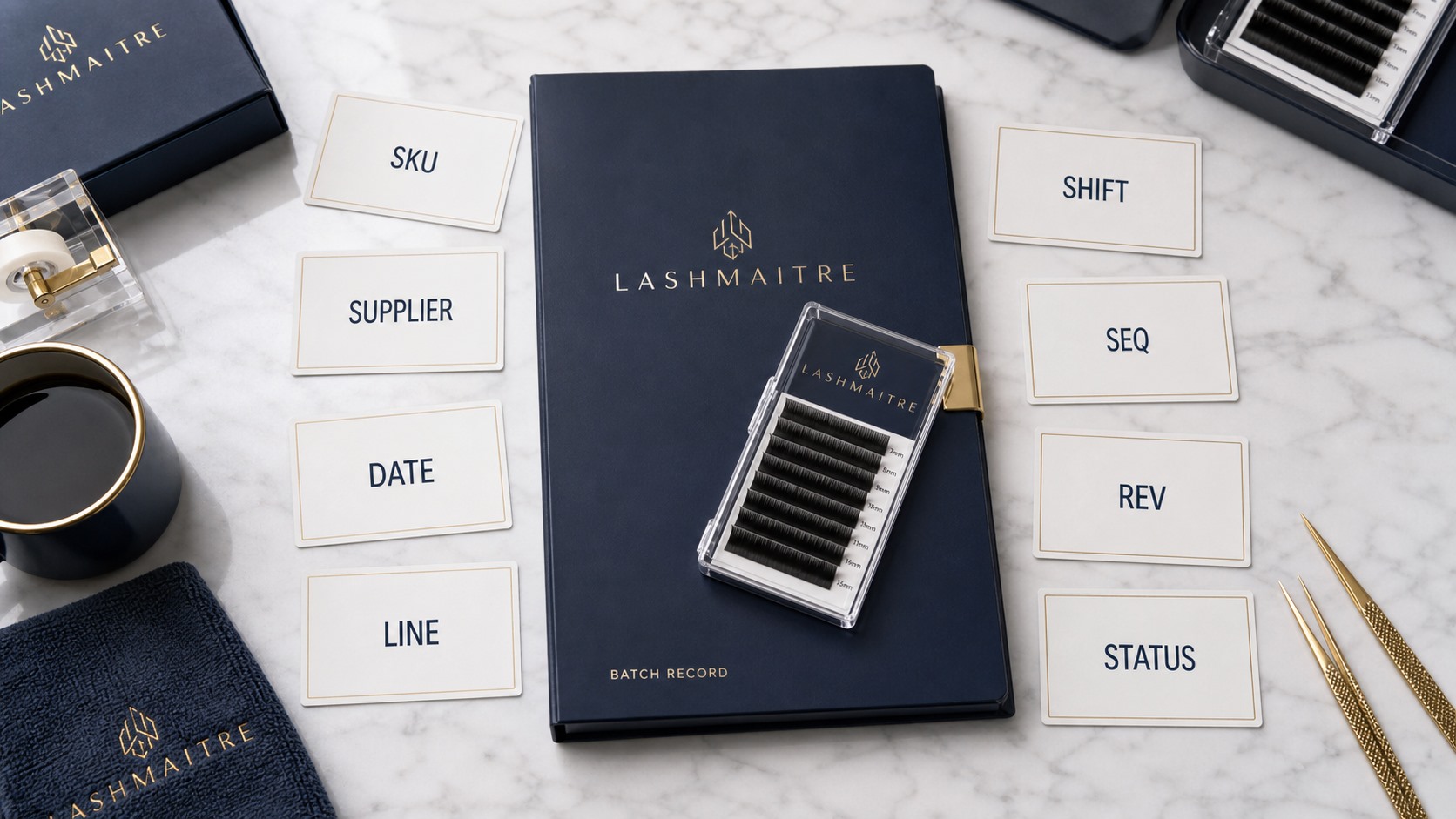
Eight Fields for a Traceable Lash Lot Record
Not every field needs to be printed in full. The lot master record should preserve enough information to reproduce the production group.
| Field | What it controls | Example master-record value |
|---|---|---|
| 1. Product or SKU | Exact lash or accessory identity | 0.07 C curl 12 mm tray |
| 2. Supplier/site | Manufacturing source | Approved site code S02 |
| 3. Production date | Time anchor | 2026-08-09 |
| 4. Line/work cell | Process location | Line L3 |
| 5. Shift/team | Responsible production window | Shift B |
| 6. Sequence | Prevents same-day duplicates | Batch 04 |
| 7. Specification revision | Approved requirements used | Spec R06 |
| 8. Release status | Quality disposition | Released by QA |
1. Product or SKU Identity
Start with the exact controlled SKU, not a broad name such as “volume lashes.” Curl, diameter, length, color, tray configuration, material, and style can change the product that a complaint concerns. Link the code to the approved specification and lash sample record.
2. Supplier and Manufacturing Site
Assign stable codes to approved manufacturing sites. Do not use a sales representative's initials or a shipping port as the source code. If work moves between sites, the change should create a new traceability record and, under the brand's rule, usually a new lot.
3. Production Date
Use an unambiguous date convention such as YYYYMMDD in the underlying record. A shorter encoded date may be printed, but staff must be able to decode it consistently. Do not let spreadsheet software silently convert the code into a date or remove leading zeros.
4. Line or Work Cell
The line field narrows the investigation to equipment, tools, operators, and in-process checks. If manual work cells are used, give each cell a stable identifier and retain the assignment history.
5. Shift or Team
Shift information connects the lot to the production window and responsible records. It should not expose employee personal data on consumer packaging. Use a neutral code and retain the detailed roster in the controlled production file.
6. Sequence Number
A sequence prevents two lots made on the same date from receiving the same identifier. Generate it centrally or use a controlled log. Never let separate departments create overlapping sequences independently.
7. Specification Revision
The lot record should identify the approved specification, artwork, and packaging revision used. This matters when the physical product is unchanged but the tray count, label, barcode, origin statement, or carton configuration changes.
8. Release Status and Evidence
The printed lot code should lead to a disposition record showing whether the batch was released, held, reworked, or rejected, by whom, and when. Link inspection results, deviations, rework authorization, retained samples, and release approval.
Example Lot Code Without Overloading the Label
An internal code might look like S02-260809-L3-B-04. In the lot master, it resolves to supplier site S02, production date 2026-08-09, line 3, shift B, and sequence 04. Product identity and specification revision can remain in the linked database if the packaging already carries a unique SKU.
This is only an example. A good convention fits the brand's products, printing space, systems, privacy controls, and factory workflow. Avoid codes that rely on one employee's memory or use characters easily confused in print, such as O and 0 or I and 1.
Connect the Code Across Product and Shipment Records
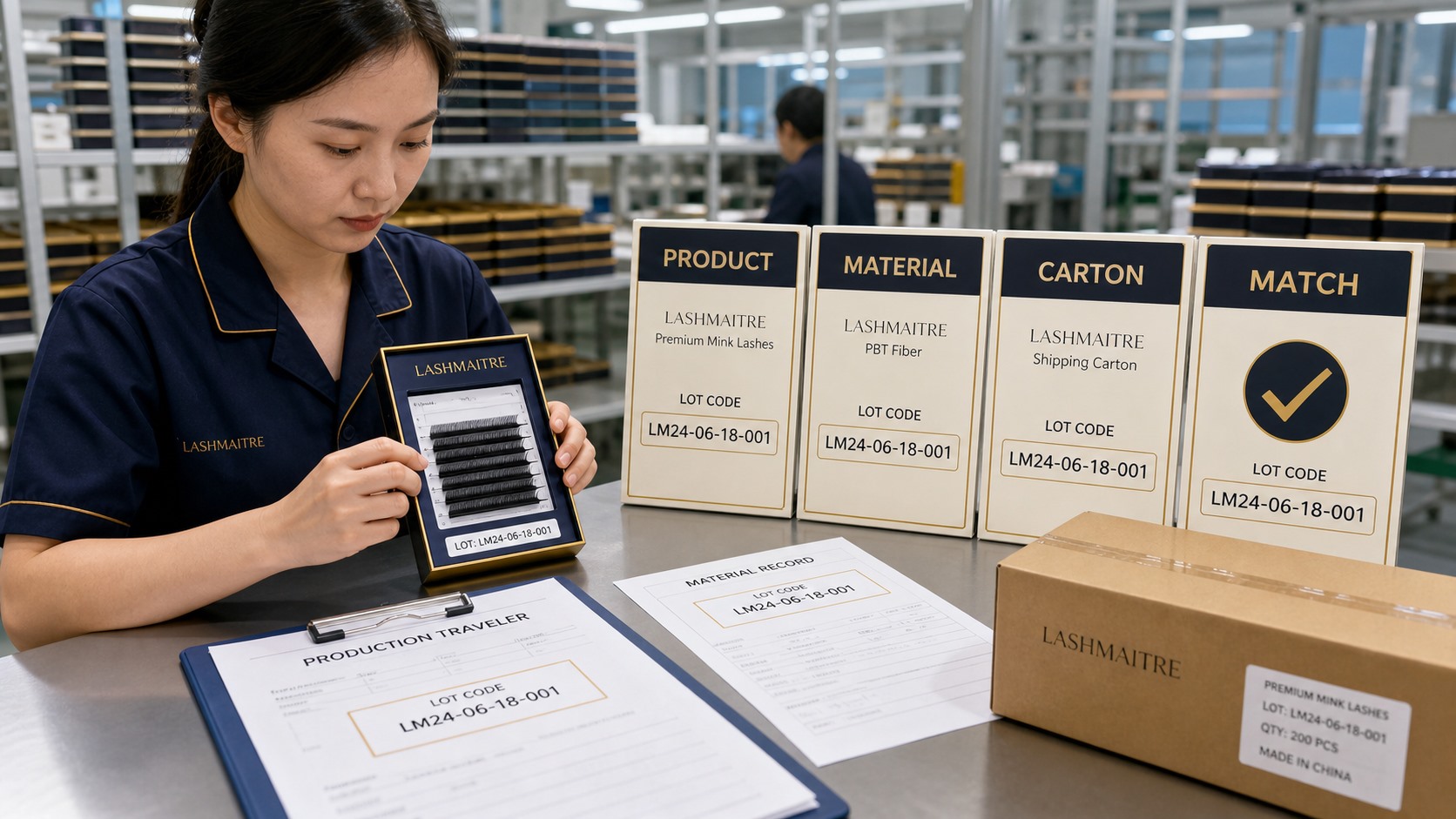
Within a lash lot numbering system, the same lot identity should be reconcilable across:
- Production traveler and material issue record.
- In-process and final inspection reports.
- Retail box, tray card, sleeve, or other approved product level.
- Inner carton and master carton map.
- Retained sample and product photography.
- Packing list or shipment lot allocation record.
- Customer order allocation, where the system supports it.
- Complaint, return, and corrective-action files.
The code does not need to appear identically on every document if systems use separate keys, but the relationship must be explicit and testable. The LASHMAITRE quality-control process can help buyers define which inspection and release evidence should be retained for a private-label order, while a supplier document control process preserves approved revisions.
Run a Traceability Drill Before Release
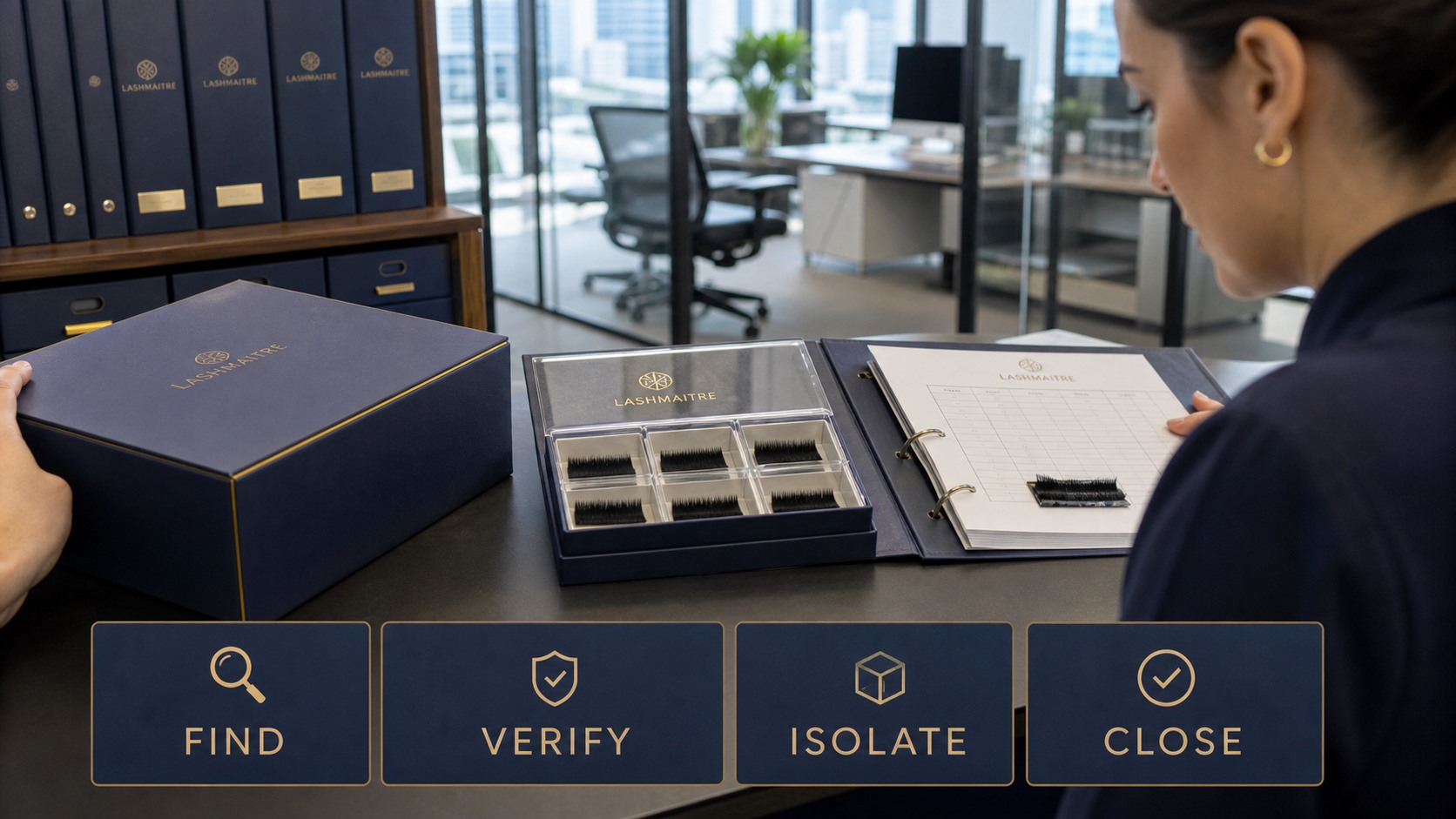
Choose one finished box and ask an independent reviewer to trace backward to the product specification, supplier, production time, materials, inspections, disposition, and retained sample. Then trace forward to every carton and order containing the lot.
Record four measures:
- Time needed to find the master record.
- Percentage of required evidence retrieved.
- Whether affected quantity and locations reconcile.
- Any ambiguous, missing, or duplicated identifiers.
If the reviewer needs verbal help from the person who created the code, the system is not yet robust. Correct the rule, the master data, or the record link before shipment.
| Drill result | Release decision |
|---|---|
| Complete backward and forward trace within the target time | Record pass and retain evidence |
| Missing link, duplicate code, or unreconciled quantity | Hold release and correct the system |
| Record exists only through verbal explanation | Treat as incomplete and retest independently |
Common Lot-Control Failures
- Reusing the same code for different SKUs.
- Treating a purchase order number as a production lot without a boundary rule.
- Printing a code that is absent from the factory inspection file.
- Changing packaging or specification revisions without preserving history.
- Mixing released and held quantities under one uncontrolled status.
- Recording the lot on the master carton but not mapping inner products to it.
- Allowing spreadsheet formatting to remove zeros or alter the code.
- Keeping no retained sample or production evidence for the coded batch.
Lash Lot Numbering FAQ
Are lot numbers legally required on cosmetic lash products in the United States?
FDA's cosmetics recall policy says lot numbering is not required by law for cosmetics, but it recommends coding production lots or batches to make identification easier during a recall. Confirm obligations for the specific product and market with qualified regulatory counsel.
Is a purchase order number enough as a lash batch code?
Usually not by itself. One purchase order can contain multiple products, production dates, materials, lines, or dispositions. It can be a linked commercial reference, but the lot rule should identify the actual controlled production group.
Should the specification revision be printed in the lot number?
Not necessarily. It must be reliably linked in the lot master record. Printing every field can create an unreadable code and increase artwork errors.
How often should a brand test traceability?
Set a documented frequency based on risk, production volume, supplier performance, product changes, and customer requirements. Also run a drill after major system or supplier changes.
Conclusion: Make the Code Lead to Evidence
A lash lot numbering system works when one unique code leads quickly to controlled product, production, inspection, release, carton, and shipment evidence. Define the lot boundary, prevent duplicate codes, preserve revisions, and test both backward and forward tracing before relying on the system.
For a documented private-label lash program, review LASHMAITRE private-label options and send an inquiry with your SKU, packaging, and traceability requirements.

Lash Maitre: Your Trusted Partner in Eyelash extension Solutions
Lash Maitre is dedicated to providing professional insights and tips in the eyelash extension industry. Sharing the latest trends, techniques, and product knowledge, Lash Maitre helps lash artists and enthusiasts enhance their skills, stay inspired, and achieve the perfect lash experience.