EU Cosmetic Ingredient Rules 2026: 10 Critical Lash Buyer Checks
Share
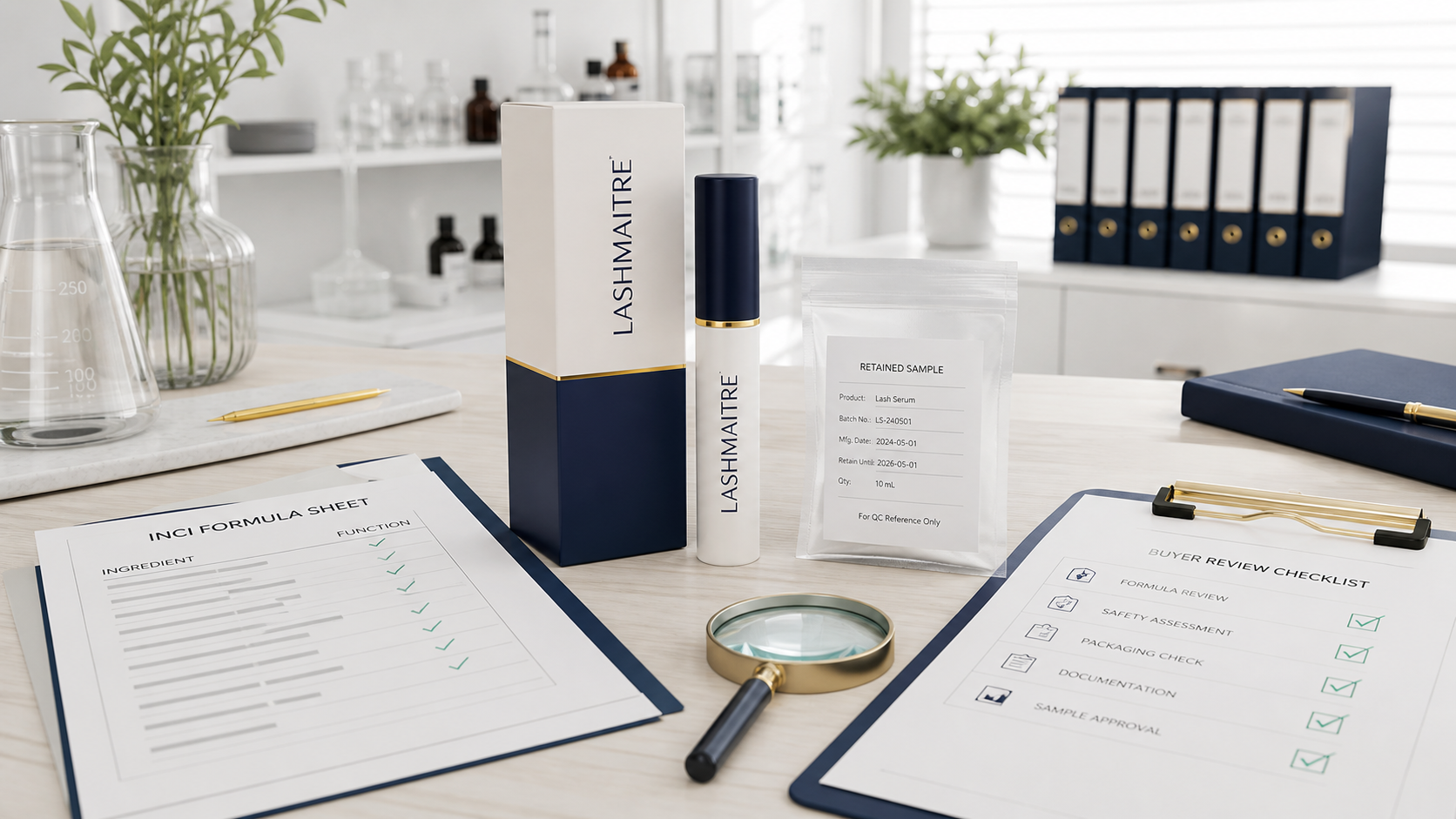
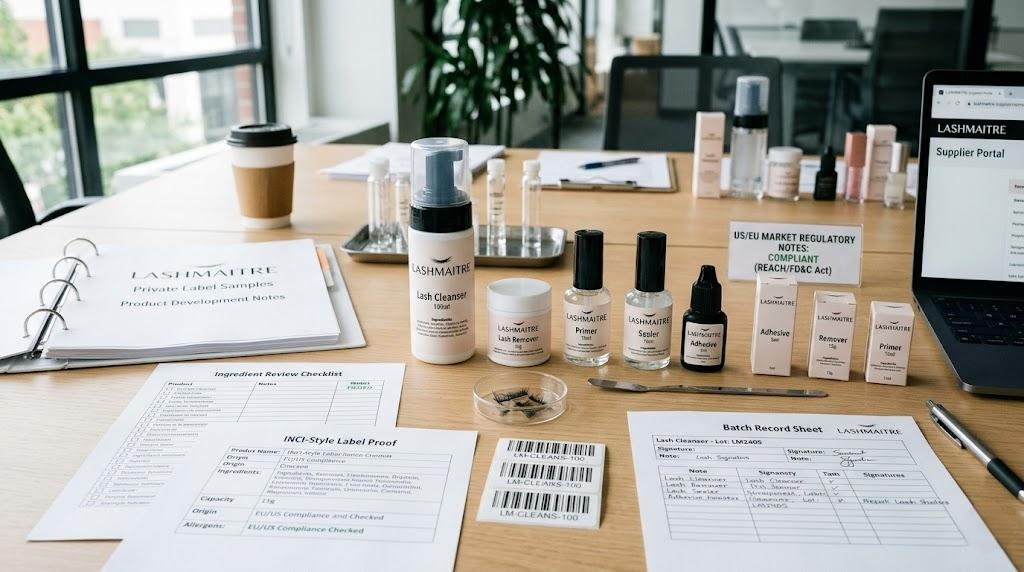
EU cosmetic ingredient rules in 2026 are a practical warning signal for lash brands, salon distributors and private label buyers: ingredient review can no longer be treated as a last-minute packaging detail. If a buyer is sourcing lash cleansers, removers, primers, sealers, bonders or aftercare products for a target market, the buying process should include formula documentation, label review and batch records before bulk production.
This does not mean every lash SKU carries the same review burden. A lash tray, a cleanser bottle, an adhesive sample and a branded aftercare kit may require different buying questions. The practical point is simple: before ordering private label lash liquids or aftercare products, buyers should confirm what is being sold, where it will be sold, what claims appear on the label and what documentation the supplier can support.
For LASHMAITRE buyers, the most useful response to EU cosmetic ingredient rules is not to delay every order. It is to separate product types, approve samples in the right order and keep cleaner documentation for reorders.
What Changed In The EU Cosmetic Ingredient Rules Update
In January 2026, the European Commission published Commission Regulation (EU) 2026/78, which amends the EU Cosmetics Regulation for certain substances classified as carcinogenic, mutagenic or toxic for reproduction. The update is tied to the EU’s ongoing process for reviewing CMR substances in cosmetic products, with May 2026 as the practical market date buyers should pay attention to.
The buyer-facing meaning is not that every lash brand needs to become a regulatory department. The meaning is that private label buyers should stop treating ingredient lists, label wording and market destination as late-stage tasks.
For lash-related cosmetic products, especially liquids and aftercare items, the product plan should be reviewed before artwork is printed and before a large order is confirmed. EU cosmetic ingredient rules make that early review more important for buyers who want private label packaging to work across more than one market.
The key buyer question is not only "Can the supplier make this?" It is also "Can this formula, label and packaging plan support the market where I want to sell?" That question is why EU cosmetic ingredient rules should be part of the first sourcing conversation, not the last label check.
Why Lash Buyers Should Care
Many lash businesses buy more than lash trays. A brand may order:
- lash cleanser foam
- eyelash extension remover
- primer
- sealer or bonder
- aftercare kits
- private label bottles
- carton packaging
- barcode and lot labels
- sample kits for salons or distributors
These products can be sold under different market conditions. Some are designed for salon retail. Some are professional-use products. Some are added to private label kits. Some may be distributed across the United States, the EU, the United Kingdom, Latin America or other markets.
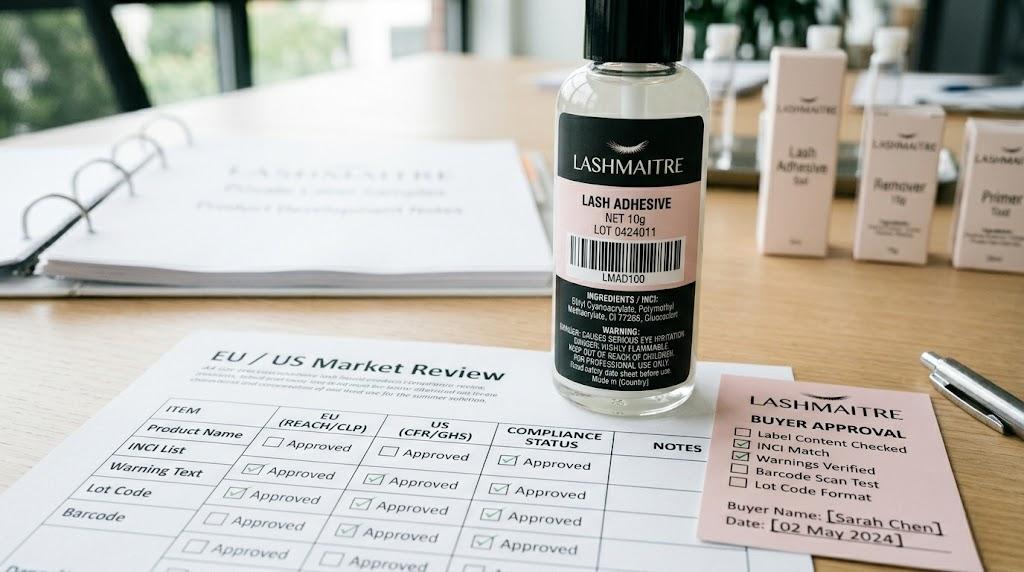
If the buyer only checks price, bottle style and label color, important details can be missed. A stronger buying process asks whether the ingredient list, label proof, product claims, lot code and supplier records match the intended market.
For a small first order, these checks protect the launch. For a reorder, they protect consistency. For a distributor or salon chain buyer, they also make it easier to explain the product internally before scaling volume.
In practical terms, EU cosmetic ingredient rules should become part of the same approval conversation as sample feel, label design, MOQ and reorder planning.
Which Lash Products Need Closer Review
Not every product needs the same checklist. Buyers should separate product types instead of treating the whole lash order as one category.
Lash trays
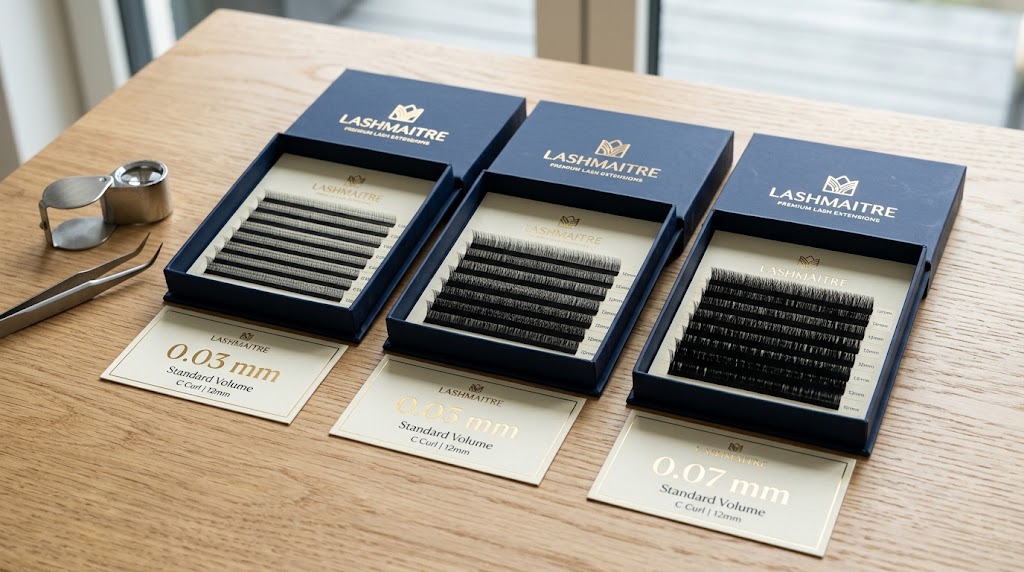
For lash trays, the main buyer checks are fiber softness, curl retention, strip release, base thickness, tray label accuracy and repeat-order consistency. A tray order should be reviewed through quality control and sample approval, not forced into the same checklist used for liquid cosmetic products.
Lash cleansers and aftercare products
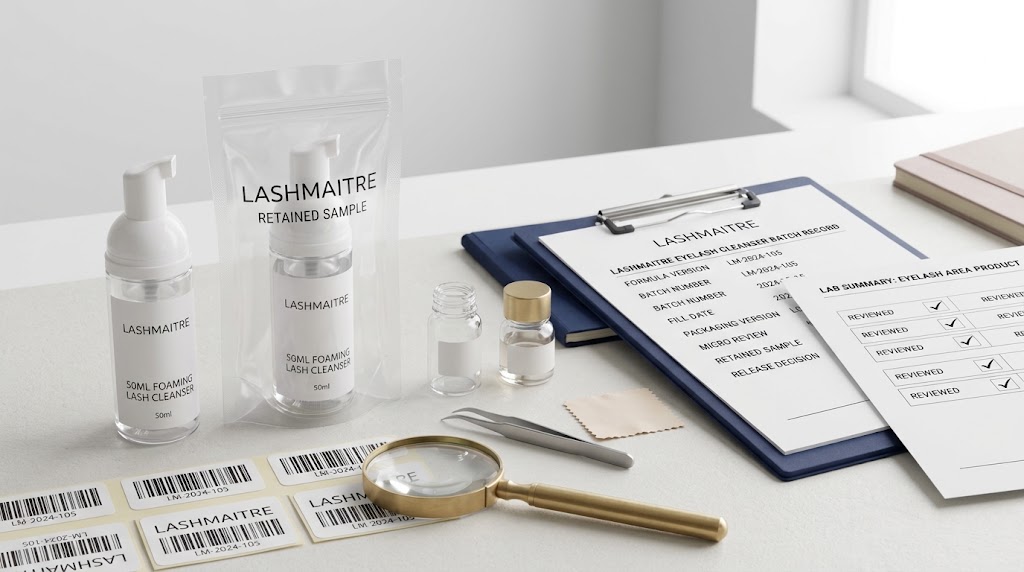
Lash cleansers and aftercare products often sit closer to cosmetic-category purchasing. Buyers should ask for ingredient information, intended-use notes, label proof, warning area, net content, batch code placement and packaging records.
If the product will carry the buyer’s brand, the buyer should also confirm who is responsible for final label review in the target market.
Eyelash extension removers
Removers need careful sample approval because buyers may compare gel, cream and liquid formats. The review should include texture, odor, packaging seal, directions, warning wording, batch code location and professional-use positioning.
Primers, sealers and bonders
These products are often sold close to professional lash service workflows. Buyers should avoid unsupported claims and ask for clear product purpose, ingredient documentation, label proof and storage notes before bulk production.
| Product type | Buyer review focus | Before bulk order |
|---|---|---|
| Lash trays | Curl, fiber softness, base thickness, strip release, tray labels and repeat-order consistency | Use sample approval and QC records, not a liquid cosmetic checklist. |
| Lash cleansers and aftercare | Ingredient information, label proof, warning area, net content, batch code and packaging records | Approve formula sample and label proof before cartons are printed. |
| Eyelash extension removers | Format, viscosity, odor, seal, directions, warning wording and professional-use positioning | Compare physical samples before confirming private label artwork. |
| Primers, sealers and bonders | Product purpose, claim language, storage notes, label wording and supplier records | Avoid unsupported claims and keep batch notes for reorder control. |
| Private label packaging | Market, language version, ingredient space, barcode, lot code and carton label version | Check artwork after product and target market are clear. |
EU And U.S. Market Split
A private label lash product should not be planned as "one label for every market" unless the buyer has reviewed the requirements for each market.
EU buyers should pay attention to ingredient restrictions, CMR-related changes, responsible person obligations, product information files, claims and language requirements. U.S. buyers should pay attention to MoCRA-related facility registration, product listing, responsible person responsibilities, ingredient records and adverse event processes where relevant.
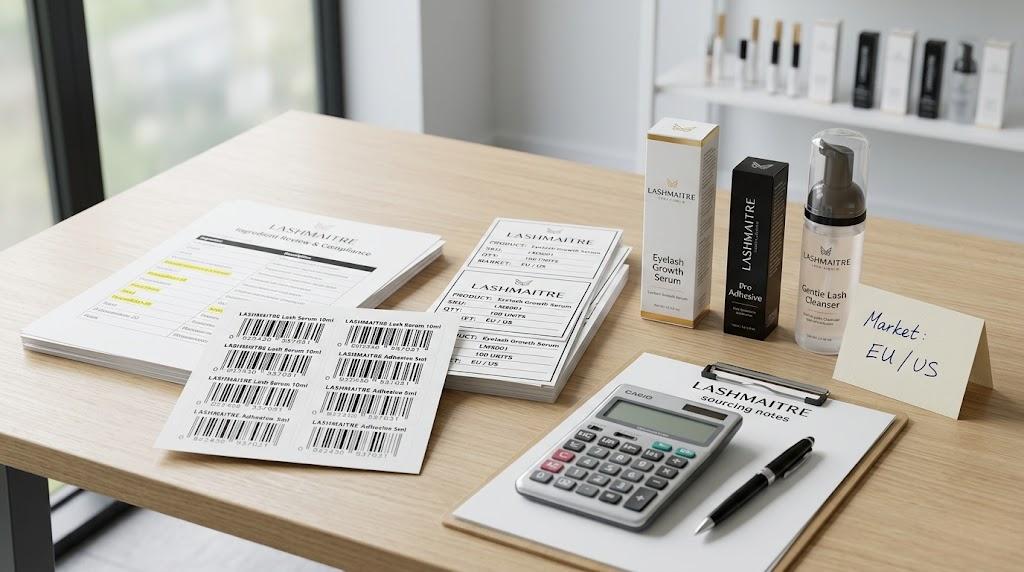
For global lash buyers, the safest workflow is to define the first target market before printing private label packaging. A label that looks clean from a design perspective may still need changes for ingredient wording, warning area, distributor information, barcode placement or claim control.
This is especially important for buyers who want to use the same cleanser, remover or aftercare formula across several sales channels. A salon retail kit, ecommerce product page and distributor carton may need different supporting information even when the physical bottle looks similar. EU cosmetic ingredient rules are one reason buyers should define market order before final packaging.
Supplier Questions Before Private Label Orders
Use these questions before confirming artwork or paying for a bulk order:
- What product type is this for the intended market?
- Is the item a lash tray, cosmetic liquid, professional-use product, accessory or aftercare product?
- Which market is the first target: EU, U.S., UK, Latin America or another region?
- Can the supplier provide ingredient or INCI-style documentation where relevant?
- Are any ingredients subject to market-specific restrictions?
- Who reviews the final private label wording before printing?
- Does the label have enough space for ingredients, warnings, net content, directions and lot code?
- Are claims such as hypoallergenic, medical, treatment, formaldehyde-free or long-lasting supported?
- Can the buyer approve formula sample, bottle, closure, carton and label proof before bulk production?
- Is there a batch record system for reorders?
These questions are not only about compliance. They also reduce commercial risk. Reprinting cartons, changing labels or replacing a formula after bulk production can cost more than a controlled sample approval round.
The best time to ask these questions is before final artwork. Once cartons, bottle labels and barcode stickers are printed, even a small wording change can become expensive.
Related LASHMAITRE Buyer Pages
Buyers can use this article together with LASHMAITRE’s existing sourcing pages:
- Review lash liquids, cleanser, remover and adhesive-related options on the Lash Glue & Liquids page: https://lashmaitretrade.com/lash-extension-glue-liquid/
- Use the lash quality control page to separate tray QC from liquid documentation review: https://lashmaitretrade.com/lash-quality-control/
- Start with lash extension samples before confirming bottle, label or carton production: https://lashmaitretrade.com/lash-extension-samples/
- Review private label packaging and brand planning before artwork approval: https://lashmaitretrade.com/private-label-lash-extensions/
- Use MOQ 50 planning when testing a new private label lash product family: https://lashmaitretrade.com/moq-50-wholesale-lash-extensions/
- Send the product type, target market and packaging plan through the wholesale inquiry page: https://lashmaitretrade.com/wholesale-lash-extensions-inquiry/
These pages help turn EU cosmetic ingredient rules into a practical sourcing workflow instead of a vague compliance note. Used correctly, EU cosmetic ingredient rules can help buyers decide which questions belong in sample approval, which belong in label review and which belong in reorder records.
A Better Approval Workflow
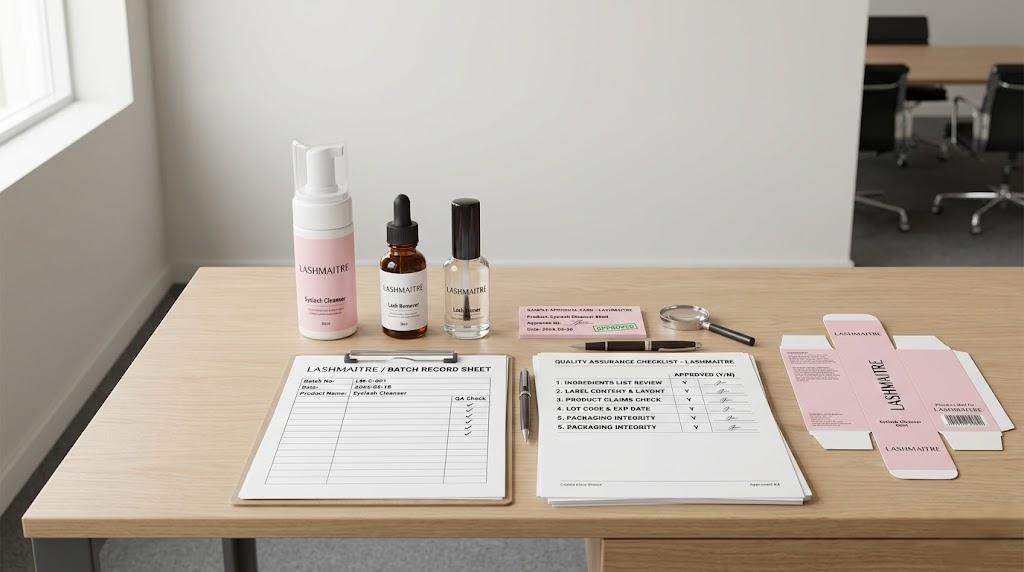
For lash liquid and aftercare sourcing, LASHMAITRE recommends a staged approval workflow.
First, confirm the buyer’s sales plan. Is the product for salon retail, ecommerce kits, distributor resale or professional backbar use?
Second, approve the physical sample. Review formula feel, bottle function, closure quality, leakage risk, label area and carton fit.
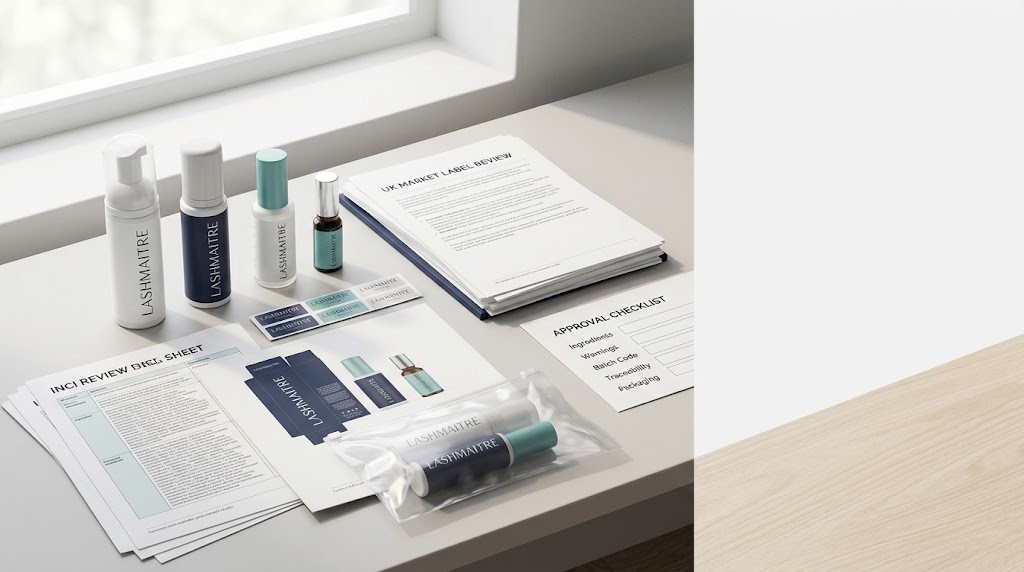
Third, review the label proof. Check ingredient space, warning area, directions, net content, barcode, lot code, market information and brand consistency.
Fourth, keep batch and reorder notes. Record the formula version, packaging version, label version, approved sample photo, production date and buyer comments.
Fifth, separate product families. Do not use the same checklist for lash trays, cleansers, removers and adhesive-related products. Each product type should have its own buyer approval notes.
This workflow also helps with repeat orders. When a buyer records the approved formula version, label version and packaging version, the next reorder can be checked against a known reference instead of rebuilt from chat history.
What Buyers Should Not Assume
Do not assume that a low MOQ means documentation can wait.
Do not assume that an existing supplier label will automatically work for a private label order.
Do not assume that one market’s ingredient or claim practice works for every market.
Do not assume that packaging artwork is only a design task. For private label lash liquids and aftercare products, label wording and product claims should be reviewed before printing.
Do not assume that all lash products have the same approval pathway. Product type, intended use, target market and claims matter.
Most avoidable mistakes happen when the buyer treats sampling, label proofing and market review as separate tasks. They should be connected before production.
LASHMAITRE Buyer Takeaway
The 2026 EU ingredient update is a signal for better sourcing discipline. For lash buyers, the practical response is not panic. It is a cleaner approval process. EU cosmetic ingredient rules should push buyers to document decisions earlier, not slow every sourcing project.
Before placing a bulk order for private label lash cleansers, removers, primers, sealers, bonders or aftercare products, buyers should confirm:
- target market
- product type
- ingredient documentation
- label proof
- claim wording
- batch and lot records
- packaging version
- sample approval notes
- reorder control
LASHMAITRE supports lash brands, salons and distributors with sample-first sourcing, MOQ planning, private label packaging discussion and quality control review. If you are preparing a private label lash liquid or aftercare order, share your target market, product type, packaging plan and expected order size before bulk production.
That early information helps the supplier guide the sample, label and packaging conversation in the right order.
FAQ
Do EU cosmetic ingredient rules affect lash trays?
Usually the bigger review point for lash trays is product quality, not liquid cosmetic ingredient compliance. Buyers should check curl, fiber softness, base thickness, strip release, tray labels and repeat-order consistency. Liquid and aftercare products need a different ingredient and label review.
Which lash products need ingredient review?
Lash cleansers, removers, primers, sealers, bonders and aftercare products are more likely to need ingredient, claim and label review than lash trays. The exact review depends on product type, intended use and target market.
Should U.S. buyers care about EU ingredient changes?
Yes, if they plan to sell into the EU, use one label across multiple markets or source formulas that may later be distributed globally. U.S. buyers should also review MoCRA-related registration, listing and responsible person responsibilities where relevant.
What should private label buyers ask suppliers for?
Ask for product type, intended market, ingredient documentation, label proof, claim review support, sample approval records, batch records, lot code placement and packaging version control.
Can LASHMAITRE help with private label lash sourcing?
Yes. LASHMAITRE supports buyers with lash extension samples, MOQ planning, private label packaging discussion, lash liquid sourcing coordination and quality control review. Buyers should share the product type, target market, packaging plan and order quantity before requesting a quote.
Is this article legal advice?
No. This article is buyer-side sourcing guidance for lash brands, salons and distributors. Buyers should work with qualified regulatory or legal support when making final market compliance decisions.
Sources and Notes
- European Commission: CMR substances in cosmetic products
- EUR-Lex: Commission Regulation (EU) 2026/78
- HPRA: Omnibus Act VIII cosmetic ingredient update
- FDA: Registration and listing of cosmetic facilities and products
- FDA: Prohibited and restricted ingredients in cosmetics
This article is buyer-side sourcing guidance for lash brands, salons and distributors. It is not legal advice. Final market compliance decisions should be reviewed with qualified regulatory support.

Lash Maitre: Your Trusted Partner in Eyelash extension Solutions
Lash Maitre is dedicated to providing professional insights and tips in the eyelash extension industry. Sharing the latest trends, techniques, and product knowledge, Lash Maitre helps lash artists and enthusiasts enhance their skills, stay inspired, and achieve the perfect lash experience.