Lash Glue Safety: 10 Wholesale Buyer Checks
Share
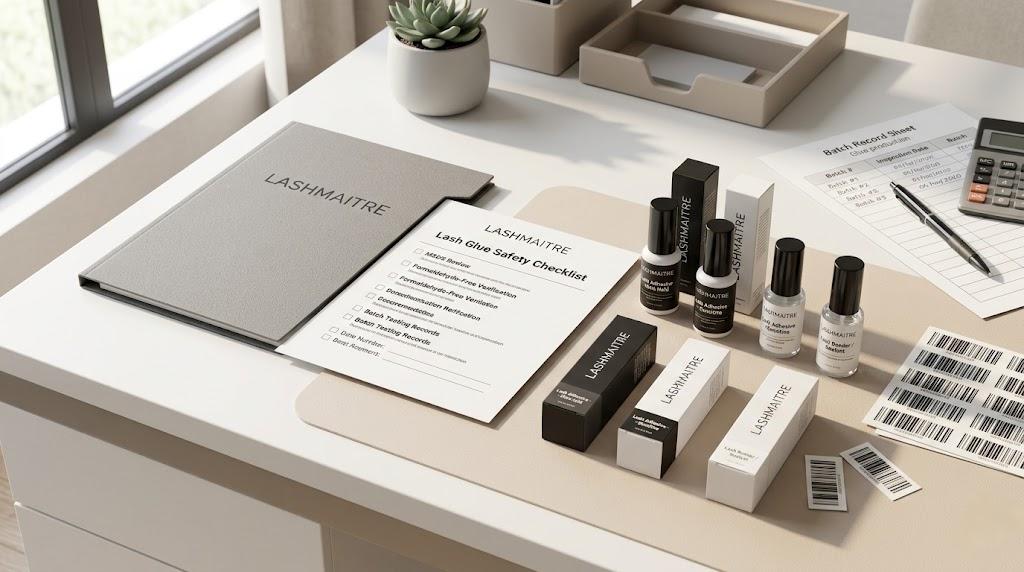
Lash glue safety has become a sourcing issue, not just a consumer complaint topic. A recent viral report about painful irritation after a low-cost lash glue purchase is a reminder for lash brands, salon chains and distributors to review adhesive documentation before private label bulk orders.
This LASHMAITRE news note does not diagnose injuries and is not legal or medical advice. It translates public safety guidance and market signals into buyer-side checks for lash adhesive, bonder, sealer, remover and lash liquid sourcing.
Why Lash Glue Safety Belongs In Wholesale Sourcing
A consumer news report described a shopper experiencing painful symptoms after using an inexpensive lash glue. The useful B2B lesson is not the single brand story; it is that private label buyers need a repeatable review process. FDA also reminds consumers to be careful with eye cosmetics on its Eye Cosmetic Safety page.
For wholesale buyers, lash glue safety should be reviewed before the first carton is printed. The check should include formula purpose, product name, label proof, lot code, storage note, supplier documentation and a clear feedback path.
What The Recent Lash Glue Story Signals For Buyers
The viral report from The Sun is a consumer story, but it points to a common sourcing problem: many adhesive products look similar in photos, while the real buyer risk sits in label wording, sample handling, storage, claims and reorder records.
Poison Control explains that eyelash glue products may contain ingredients that can irritate eyes or skin, and FDA explains how people can report cosmetic product problems through its cosmetic complaint reporting page. For B2B buyers, those public sources reinforce the need for supplier records and cautious label language.
10 Lash Glue Safety Checks Before Private Label Orders
- Define the product type. Is it lash adhesive, lash bonder, sealer, primer, remover, cleanser or another lash liquid?
- Review the intended buyer use. Separate professional salon use, retail aftercare, ecommerce kits and distributor resale.
- Approve the physical sample. Check bottle closure, brush or nozzle, odor, viscosity, drying feel and packaging fit before artwork approval.
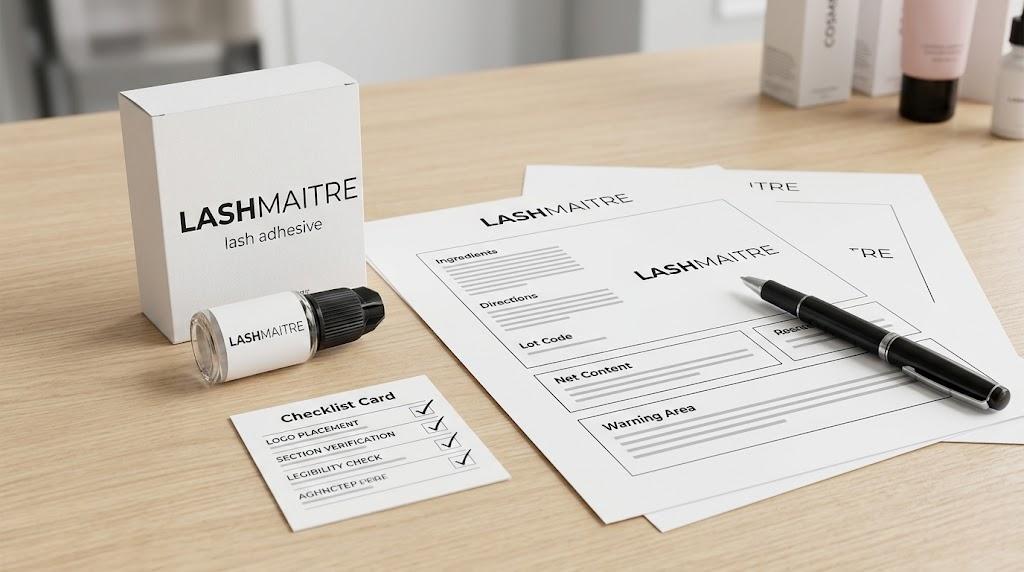
- Check label structure. Reserve visible space for directions, warning area, lot code, net content, storage note and supplier contact.
- Review claims carefully. Avoid unsupported words such as medical, treatment, guaranteed safe or allergy-free unless documentation supports the wording.
- Record the formula version. Buyers should know which formula version, bottle version and label version were approved.
- Keep a batch record. Lot code, production date, carton label and buyer feedback should connect to the approved sample.
- Plan storage communication. Adhesive and lash liquids should not be treated like lash trays; storage notes and shelf-life handling matter.
- Confirm complaint routing. Decide how buyer feedback and product problems will be recorded and escalated.
- Start with samples before bulk. Use lash samples and a controlled first order before expanding packaging SKUs.
| Buyer check | What to confirm | Why it matters |
|---|---|---|
| Product category | Adhesive, bonder, sealer, remover or aftercare product | Different products need different label, storage and use-review questions. |
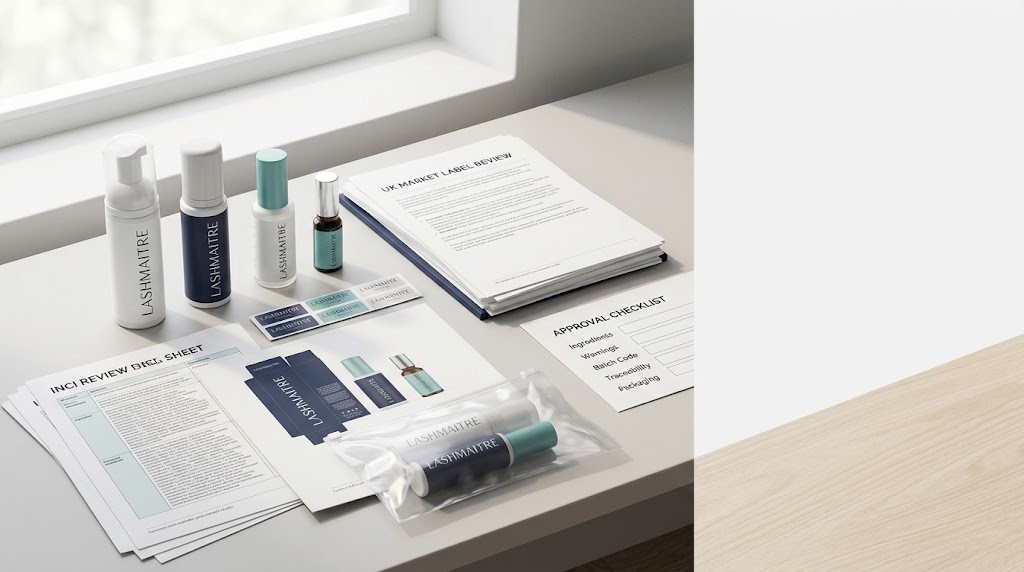
| Label proof | Directions, warning area, net content, lot code and responsible contact | Late label changes can delay private label launches. |
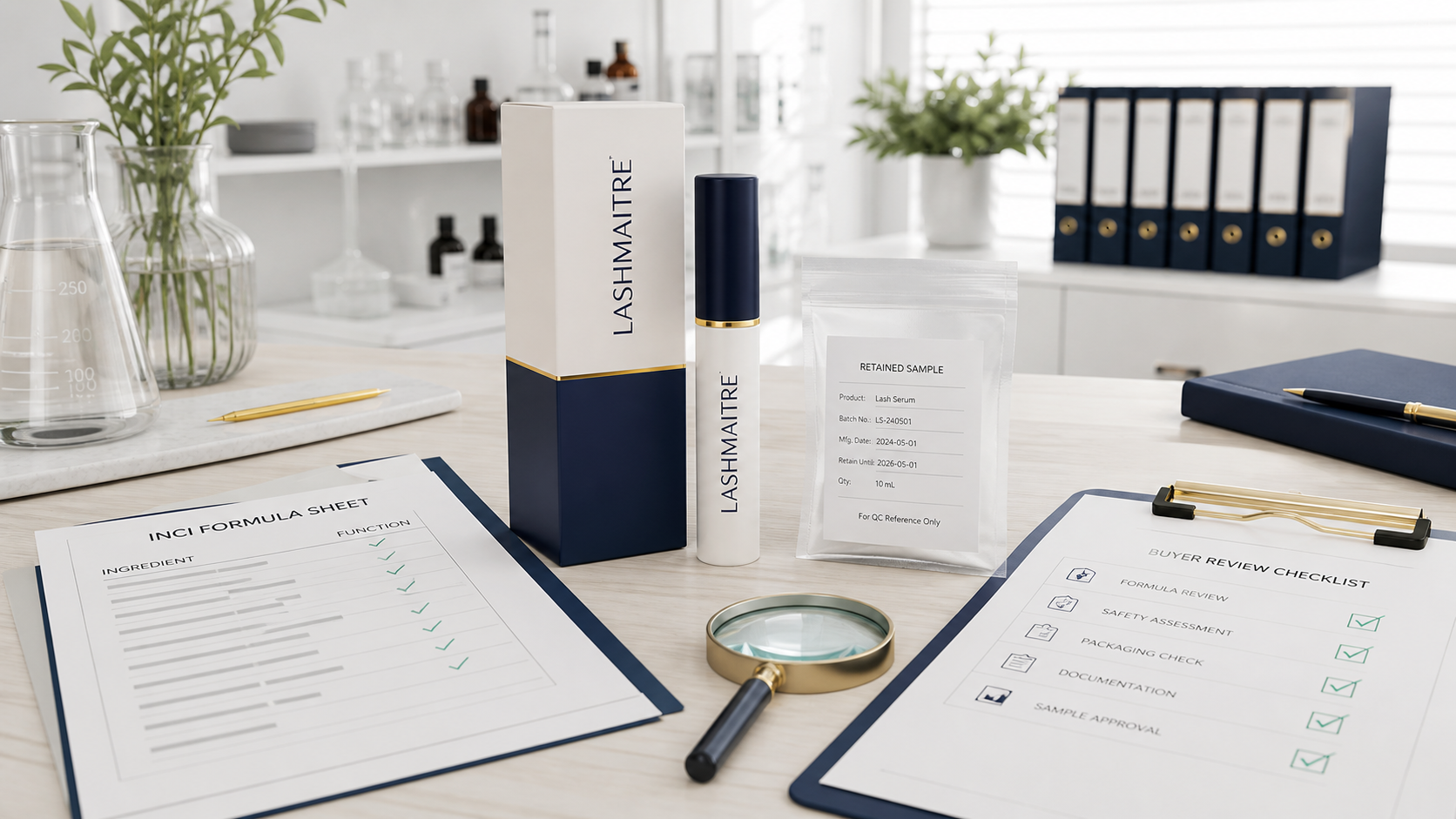
| Sample approval | Bottle seal, odor, viscosity, drying feel, packaging fit and buyer notes | Physical samples catch problems that photos cannot show. |
| Batch record | Formula version, lot code, production date, label version and storage note | Records support reorder consistency and feedback tracking. |
| Claim review | Avoid unsupported medical, treatment or guaranteed safety claims | Clearer language reduces sourcing, label and marketplace risk. |
Products That Need Extra Review
Lash adhesive and bonder
Adhesive and bonder products need the strictest review because the buyer must understand product purpose, application context, storage conditions, label wording and feedback handling.
Primer, sealer and remover
Primers, sealers and removers also need careful label review. For example, buyers comparing eyelash extension remover wholesale options should approve sample feel, packaging seal, directions and carton labels before bulk production.
Cleanser and aftercare kits
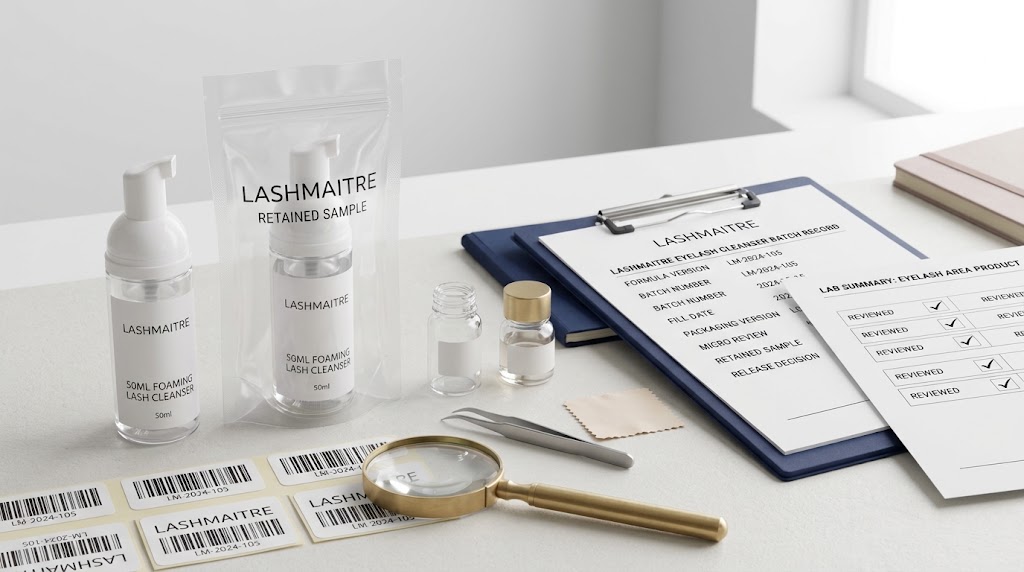
For lash cleanser wholesale and aftercare kits, buyers should review bottle format, label area, ingredient documentation, carton protection, barcode placement and private label version control.
A Safer Sample Approval Workflow
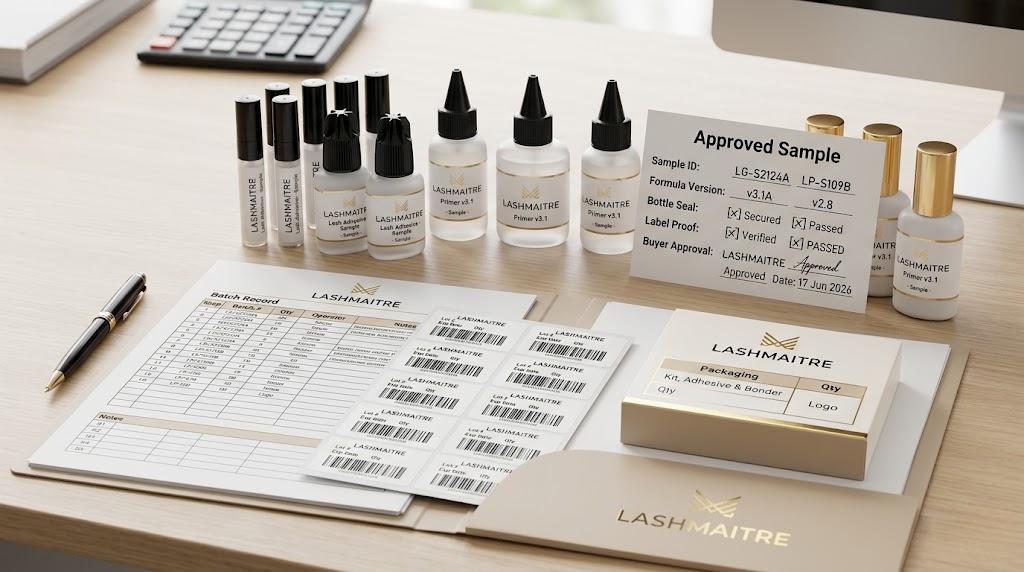
LASHMAITRE recommends a sample-first workflow for private label lash liquids. The goal is to avoid ordering from a photo, then discovering after printing that the bottle, label or carton needs changes.
- Stage 1: Product plan. Define product type, buyer market, channel and intended packaging range.
- Stage 2: Physical sample. Review formula behavior, bottle seal, cap, dropper, nozzle, label area and carton fit.
- Stage 3: Label proof. Check wording, warning area, lot code, net content, barcode, language version and supplier contact.
- Stage 4: Batch record. Save sample photo, label proof, formula version, buyer approval date and reorder notes.
- Stage 5: Controlled first order. Use MOQ planning before expanding into multiple retail kits or market languages.
Buyers can connect this workflow with existing LASHMAITRE pages for lash quality control, private label lash extensions and MOQ 50 wholesale planning.
What Buyers Should Not Do
- Do not choose lash glue only by price or bottle photo.
- Do not print private label packaging before physical sample approval.
- Do not use broad safety claims without supplier documentation.
- Do not mix adhesive, remover, cleanser and sealer review into one generic checklist.
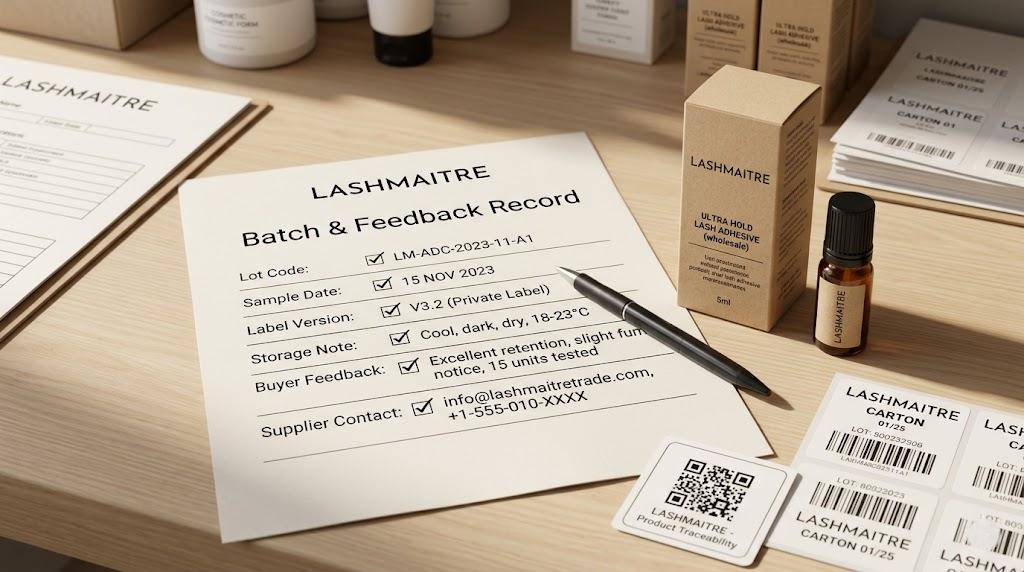
- Do not ignore storage notes, lot code placement or buyer feedback records.
LASHMAITRE Buyer Takeaway
The current lash glue safety conversation is a useful reminder for sourcing teams. A wholesale buyer does not need panic; the buyer needs a practical approval system that links product sample, label proof, batch record and supplier communication.
If you are planning private label lash adhesive, bonder, sealer, remover or cleanser, send LASHMAITRE your target product type, market, label needs, carton plan and first-order range through the wholesale inquiry page.
FAQ
Is lash glue safety only a consumer issue?
No. For wholesale and private label buyers, lash glue safety also affects sample approval, label proofing, supplier documentation, batch records and buyer feedback handling.
Should buyers approve lash adhesive from photos?
No. Buyers should approve physical samples, packaging fit, label wording, lot code placement and storage notes before private label bulk production.
Can LASHMAITRE help with lash liquid sample planning?
Yes. LASHMAITRE can help buyers compare lash liquids, review packaging needs and connect sample approval with the existing inquiry and reorder workflow.
Sources and Notes
- The Sun consumer report about a lash glue incident
- FDA Eye Cosmetic Safety
- FDA cosmetic product complaint reporting
- Poison Control on eyelash glue
The images in this article are original LASHMAITRE editorial visuals created for this news draft. They illustrate sourcing and documentation workflow only; factual claims are supported by the sources above.

Lash Maitre: Your Trusted Partner in Eyelash extension Solutions
Lash Maitre is dedicated to providing professional insights and tips in the eyelash extension industry. Sharing the latest trends, techniques, and product knowledge, Lash Maitre helps lash artists and enthusiasts enhance their skills, stay inspired, and achieve the perfect lash experience.