
LASHMAITRE tactile QC guide
How to Check Plastic Feel in Lash Extensions
A plastic feel in lash extensions is a buyer-quality signal involving stiffness, surface shine, recovery and handling. This page turns a vague complaint into a repeatable sample inspection.
Available in: English | Español
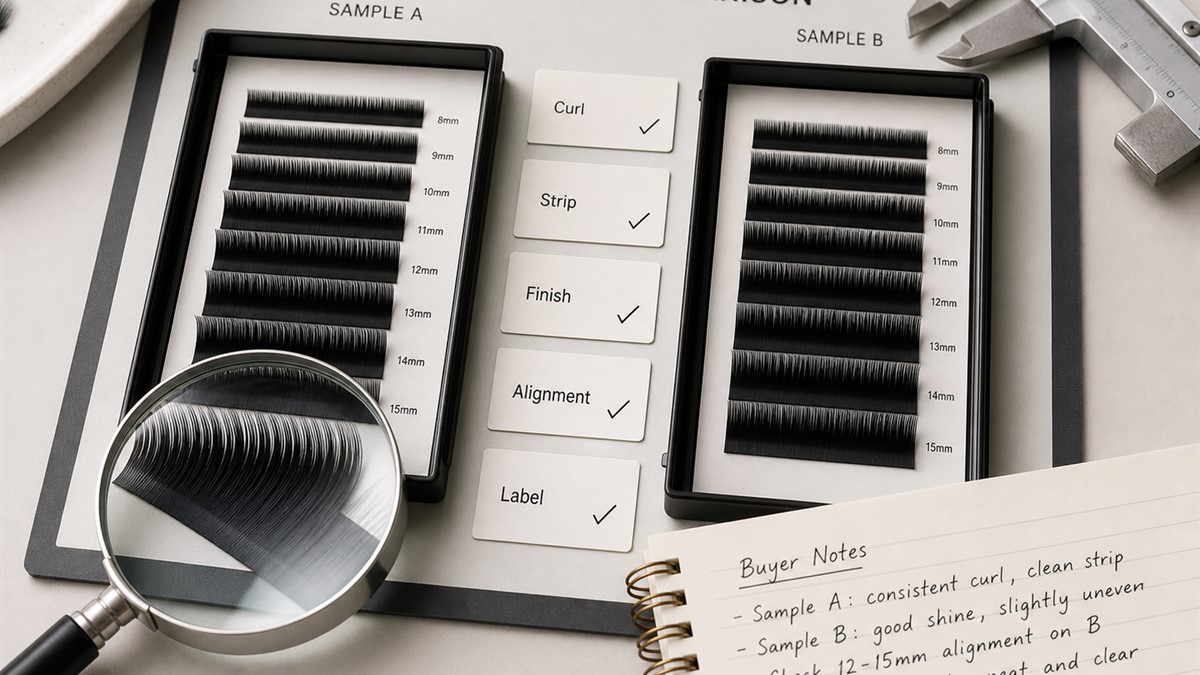
Five tactile and visual checks
The same fibers should be reviewed dry, under neutral light and after gentle bending. Compare the candidate tray with an approved reference instead of relying on memory.
“Soft” is not a complete specification. Record what the technician touches, sees and experiences during pickup.
| Check | What to observe | Buyer decision |
|---|---|---|
| Dry touch | Stiff, waxy or flexible response | Record against reference |
| Light reflection | Excessive glossy or coated appearance | Check under neutral light |
| Bend recovery | Return to shape after gentle movement | Reject permanent deformation |
| Fan handling | Opening, base control and spring-back | Test intended fan range |
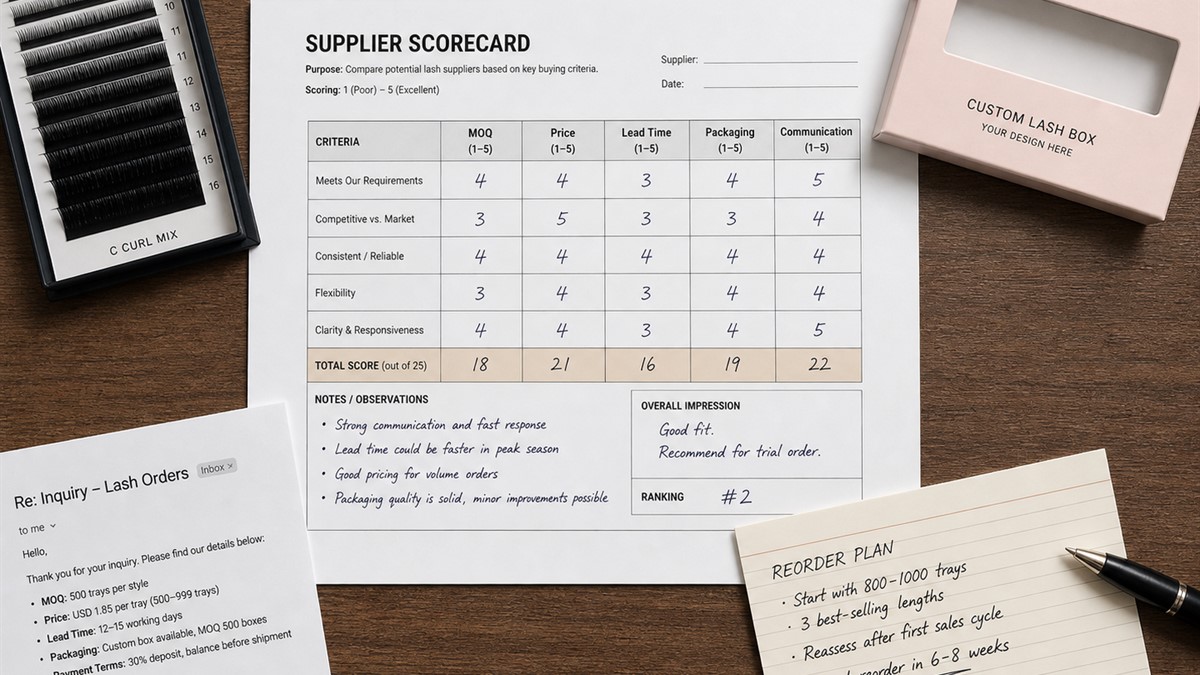
Run a controlled sample test
Condition both the candidate and reference trays in the same room before testing. Temperature, humidity and handling can change the impression of a fiber, so the comparison should be made at the same time.
Ask at least two technicians to score dry touch, shine, pickup, opening and recovery without seeing each other’s notes first. Shared observations are stronger than one preference.
Photograph the tray under neutral light and record the lot, curl, diameter and finish. If the fiber feels stiff only in one diameter or curl, the correction request must name that exact specification.
Separate fiber feel from other causes
A difficult pickup can come from the strip rather than the fiber. A shiny appearance can come from coating, lighting or packaging film. A thick base can make the finished fan feel rigid even when the fiber itself is acceptable.
Test strip release, base shape and fiber recovery separately. This avoids asking the supplier to change the wrong component and creating a new inconsistency.
For repeat orders, compare the new lot with the retained sample and the original technician scores. Escalate material changes before approving private-label production.
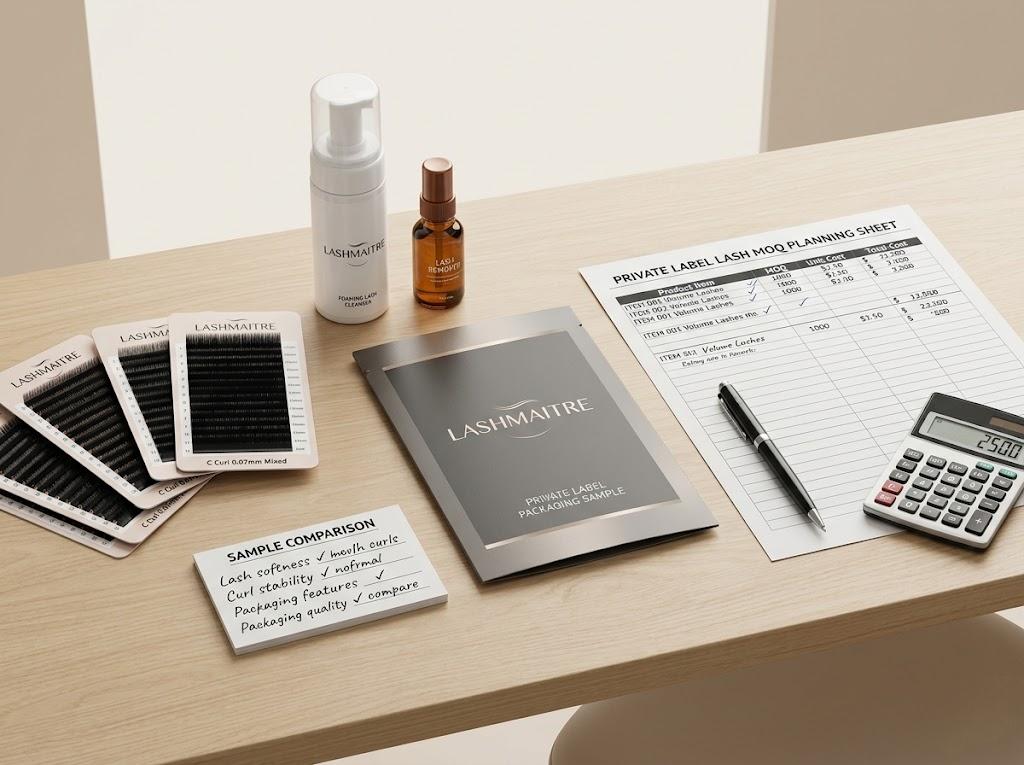
Use the result in sourcing decisions
Plastic feel lash extensions should be held when several technicians confirm stiffness, unnatural shine or poor recovery against the approved reference. A single vague comment should trigger a structured retest, not an immediate bulk rejection.
The final approval should identify acceptable fiber feel, curl response, strip performance, tray label and packaging version. These records protect both buyer and supplier during reorders.
FAQ
What causes a plastic feel?
Possible causes include stiff fiber, heavy coating, thick bases, excessive shine or poor shape recovery.
Can photos confirm fiber softness?
No. Photos help document shine and alignment, but tactile and handling tests still require physical samples.
Should every technician prefer the same softness?
Preferences differ, so use defined scoring criteria and compare against the approved reference.
When should a lot be rejected?
When repeatable tests show critical stiffness, deformation or handling problems outside the agreed specification.
Request a tactile QC sample
Send the target style, curl, diameter, fan range, finish and current quality concern. LASHMAITRE can prepare a documented comparison sample.