
LASHMAITRE wholesale quality control
Cluster Lash Plastic Feel Inspection: 8 Critical QC Checks
Cluster lash plastic feel inspection turns an imprecise complaint into observable checks for stiffness, shine, recovery, segment movement and base contact. Buyers should compare complete clusters, not only loose fiber, because construction changes the final feel.
Available in: English | Español
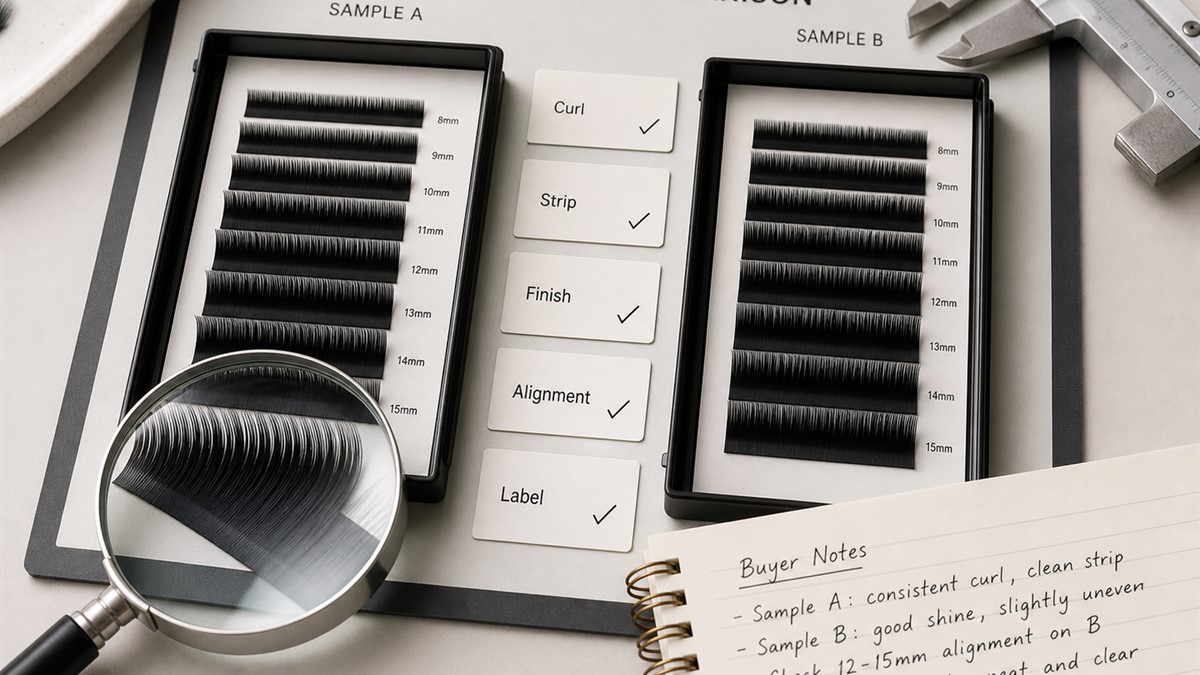
Cluster lash plastic feel inspection: direct answer
A cluster should match the approved level of flexibility and surface reflection without rigid movement, sharp-looking bases or coated shine. The result is comparative and does not identify the polymer through a laboratory material analysis.
Change one major variable at a time, compare several units and record SKU, lot, reviewer and date. A single attractive tray cannot represent the full batch.
| Inspection point | What to observe | Buyer decision |
|---|---|---|
| Dry flexibility | Segment bends without rigid snap | Compare with approved cluster |
| Surface reflection | Controlled shine under neutral light | Record excess coating appearance |
| Base contact | Base remains neat and visually smooth | Hold sharp or uneven construction |
| Across units | Similar response in multiple clusters | Link findings to lot and style |
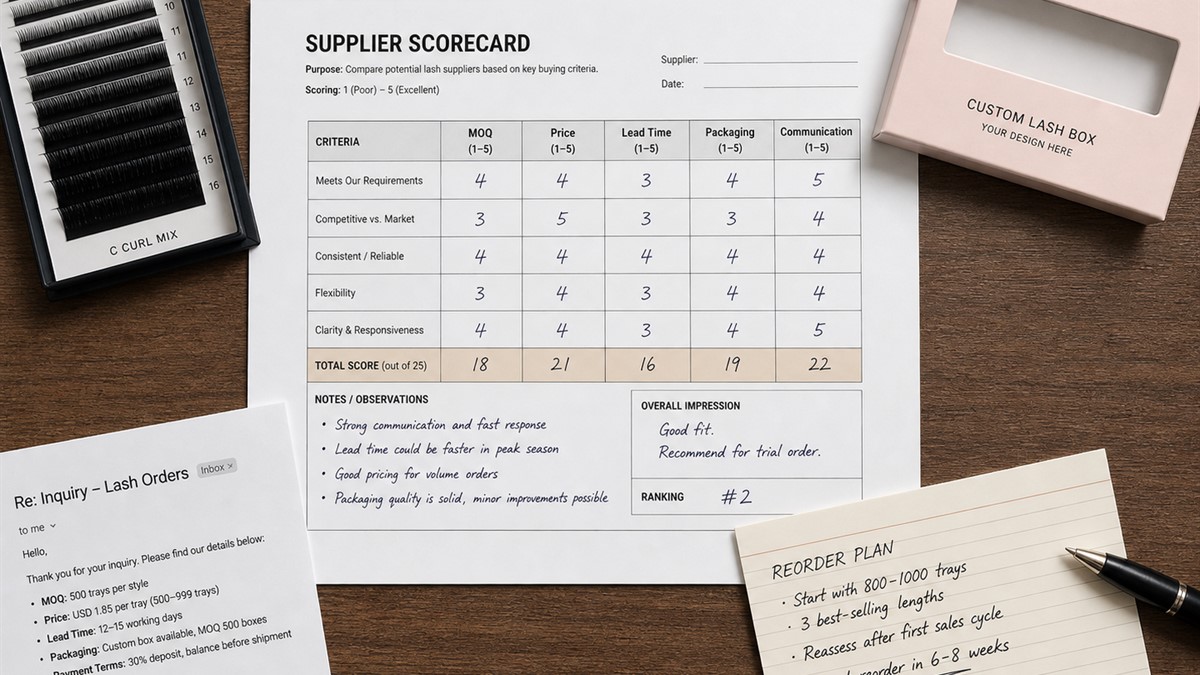
Run the cluster lash plastic feel inspection
Condition the candidate and reference products in the same room before the cluster lash plastic feel inspection. Keep curl, diameter, length, finish, strip and packaging conditions as closely matched as possible so the team can identify the real cause of a difference. The cluster lash plastic feel inspection record uses the same room conditions and comparison reference.
Ask at least two reviewers to score dry flexibility, surface reflection, recovery, segment movement and base contact independently. Keep their first notes separate, then compare results and repeat any disputed point with a second tray. Agreement across repeated checks is more valuable than one preference.
Inspect units from different rows, trays or inner cartons. Record where rigid movement, heavy shine, rough bases or variation between clusters appears, photograph the exact location and connect the observation to the SKU and lot code. This creates corrective feedback the supplier can reproduce.
Classify the sample as approved, correction required or on hold. The record must state the expected result, the accepted range and the evidence required before the product, tray card or box can move forward. A named reviewer signs the cluster lash plastic feel inspection decision and next action.
Separate fiber feel from cluster construction
Separate the product variable from strip, base, lighting and handling effects. A plastic impression can come from coating, fiber stiffness, thick bases, adhesive residue, lighting or packaging pressure. Test each possible cause before requesting a material change, because the wrong correction can create a new pickup or consistency problem. Keep the cluster lash plastic feel inspection result separate from unrelated packaging observations.
Connect the result to a limited SKU plan. Each approved curl, diameter, length mix or construction needs a clear buyer role. Variants without a distinct purpose increase barcode, packaging and slow-stock risk.
Approve the physical product before printing private-label packaging. The tray card, barcode table, product copy and carton must use the same SKU and specification version as the retained sample.
For a repeat order, compare the incoming lot with the retained tray using the same dry flexibility, surface reflection, recovery, segment movement and base contact. Record arrival date, sampled cartons, result and corrective action before releasing stock.
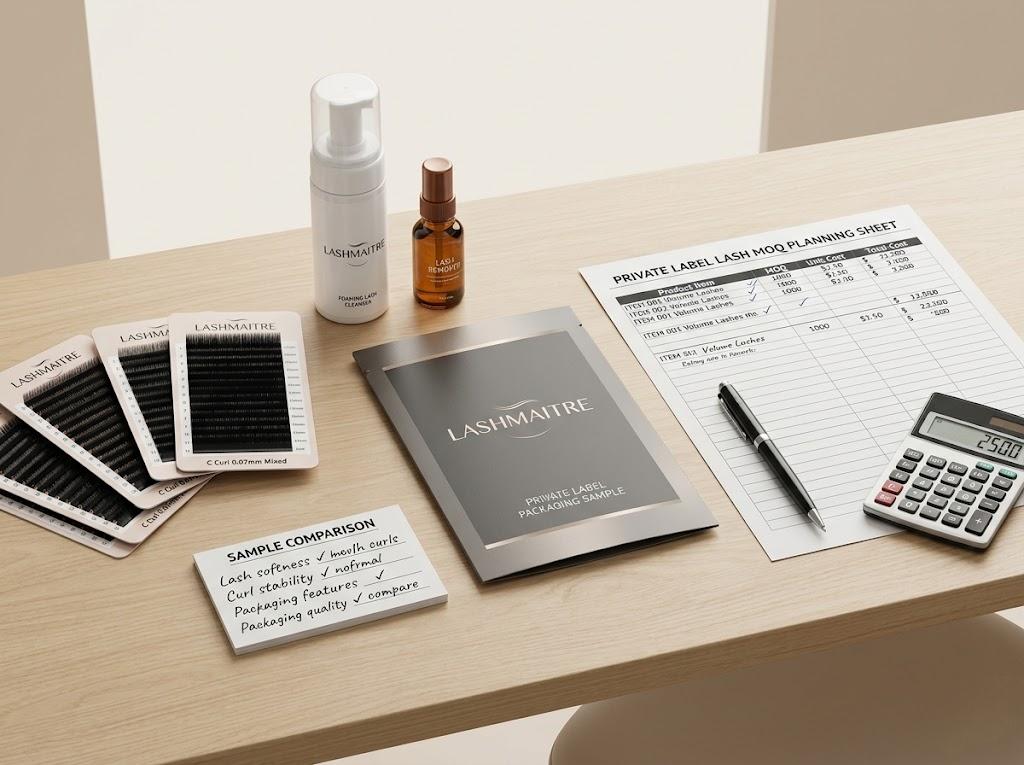
Buyer fit, evidence and limits
This page is for distributors, salon brands and ecommerce buyers evaluating cluster lash segments and at-home lash ranges. It supports wholesale sample approval and repeat-order control; it is not a laboratory certification or a substitute for professional application training.
Useful evidence includes matched trays, reviewer scorecards, macro photographs, SKU, lot code, packaging version and a dated decision. Marketing terms should be connected to an observable result rather than accepted as a complete specification.
LASHMAITRE can prepare matched samples, MOQ 50 planning, quality-control notes and private-label packaging after the target is documented.
Send the intended product, curl, diameter, lengths, construction, quantity range and current concern. The supplier response should identify the sample, correction owner and next approval date. Carry the cluster lash plastic feel inspection result into the first receiving inspection.
Buyers building internal checks for products used around the eye can also review the FDA eye cosmetic safety information. This purchasing inspection does not replace professional application rules or local compliance duties.
FAQ
Does plastic feel prove the material is unsafe?
No. It describes an observed buying concern and is not a laboratory material or safety conclusion.
Should the base be tested separately?
Yes. Fiber softness and base comfort are different variables and need separate notes.
How many clusters should be checked?
Use multiple units from different positions and compare more than one inner pack when possible.
When is correction required?
When repeated clusters show stiffness, heavy shine, rough construction or recovery outside the approved reference.
Continue the buyer path
Request cluster feel comparison samples
Send segment style, lengths, base type, finish, pack format, quantity and current tactile concern.