
LASHMAITRE wholesale QC
Cluster Lash Fiber Softness Test: 8 Buyer Checks
A cluster lash fiber softness test turns a vague soft-fiber claim into a repeatable comparison of touch, flex, taper, band feel and lot consistency. Buyers should keep a physical approved reference.
Available in: English | Español
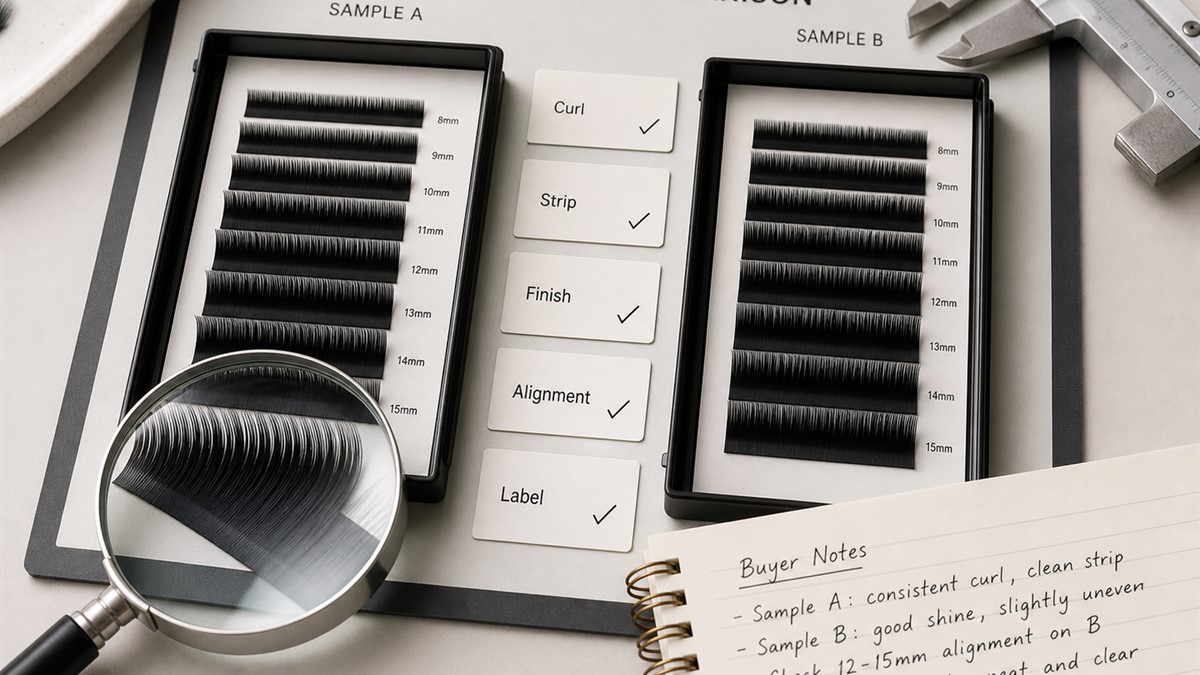
Direct answer: how should softness be tested?
Condition candidate and reference samples together, then score dry touch, gentle flex, recovery, visible taper and band feel. Use at least two reviewers and record the same tasks.
Softness is not proved by photography. Photos document taper and shine; touch and recovery require physical samples.
| Softness check | What to observe | Evidence |
|---|---|---|
| Dry touch | Smooth response without waxy stiffness | Blind score |
| Gentle flex | Bends without permanent deformation | Recovery note |
| Fiber taper | Fine visible tips without blunt appearance | Macro photo |
| Band feel | Flexible, neat and consistent with product promise | Segment comparison |
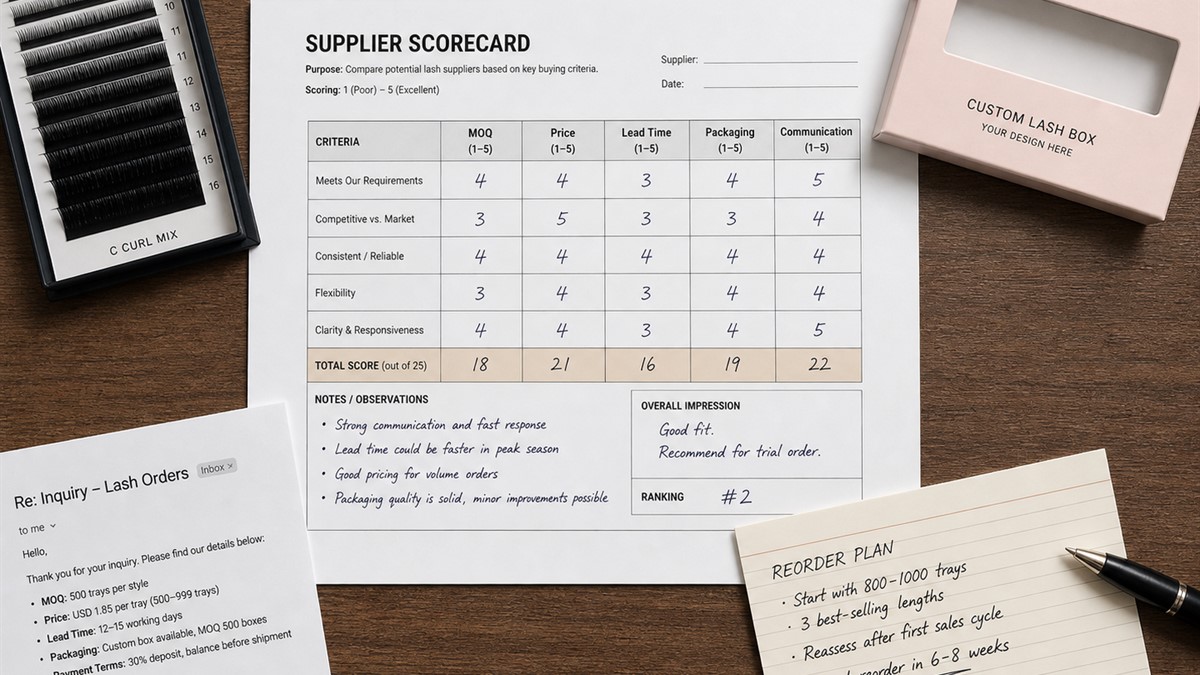
Build a controlled cluster sample review
Request candidate and reference segments in the same style, length, density, band and packaging. Keep unrelated variables fixed.
Allow both samples to rest in the same room, then test dry touch and gentle flex. Record recovery rather than repeatedly bending the product.
Inspect taper and surface reflection under neutral light. Ask two reviewers to score fiber feel and band comfort independently.
Name the accepted range, rejected conditions and retained sample before bulk production or private-label packaging.
Connect softness to product design and repeat orders
A soft fiber can still fail if the band is stiff, thick or inconsistent. Review fiber and band as separate fields.
Do not use soft as the only sales promise. Link it to taper, flexibility, controlled reflection and a named sample test.
Keep the launch assortment focused by style and length so buyer feedback can be traced to a specific SKU.
At reorder, compare touch, taper, band and label against the retained segment and lot record before carton approval.
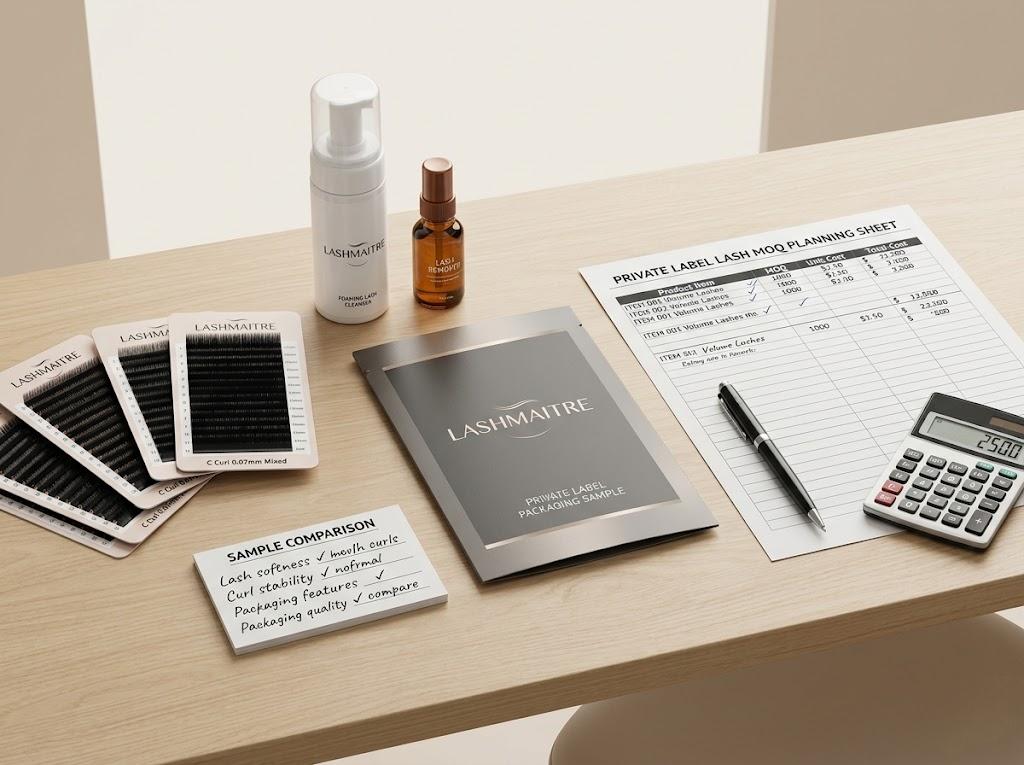
Buyer fit and evidence boundaries
This cluster lash fiber softness test supports private-label brands, ecommerce sellers and distributors sourcing cluster products.
Useful evidence includes blind touch scores, bend recovery notes, macro photographs, band measurements and retained samples.
LASHMAITRE can prepare cluster samples, MOQ planning, QC records and packaging proofs after the target style is defined.
The test supports procurement and does not replace consumer-use instructions or market requirements.
US buyers can review the FDA eye cosmetic safety information when building internal product-review procedures.
FAQ
Can a photo prove softness?
No. It can document taper and shine but not touch or recovery.
Should the band be scored separately?
Yes. Fiber and band can create different comfort and handling results.
How many reviewers are useful?
At least two reviewers using the same scoring method.
What triggers a reorder hold?
A repeatable change in touch, taper, recovery, band or labeling.
Continue the buyer path
Request cluster softness samples
Send style, length, density, band, packaging, quantity and current softness concern for a controlled comparison.
cluster lash fiber softness test: approval and repeat-order record
Procurement note: treat cluster lash fiber softness test as a measurable inspection field, not an isolated marketing claim. Record cluster lash fiber softness test with the SKU, approved sample, lot, reviewer and result. At every repeat order, check cluster lash fiber softness test again under the same lighting, tasks and acceptance range. This record separates visual preference from a real product change, supports a precise supplier correction and keeps the product listing, packaging, photography and delivered goods aligned. Buyers should keep the completed record with the retained sample so a later review uses evidence rather than memory.