
LASHMAITRE base quality comparison
Fine Base vs Thick Base Lash Extensions for Wholesale Buyers
This fine base vs thick base lash extensions guide helps wholesale buyers turn a visual difference into measurable sample criteria. Base width, bond area, fiber weight, pickup and finished-set appearance should be evaluated together before a tray is approved.
Available in: English | Español
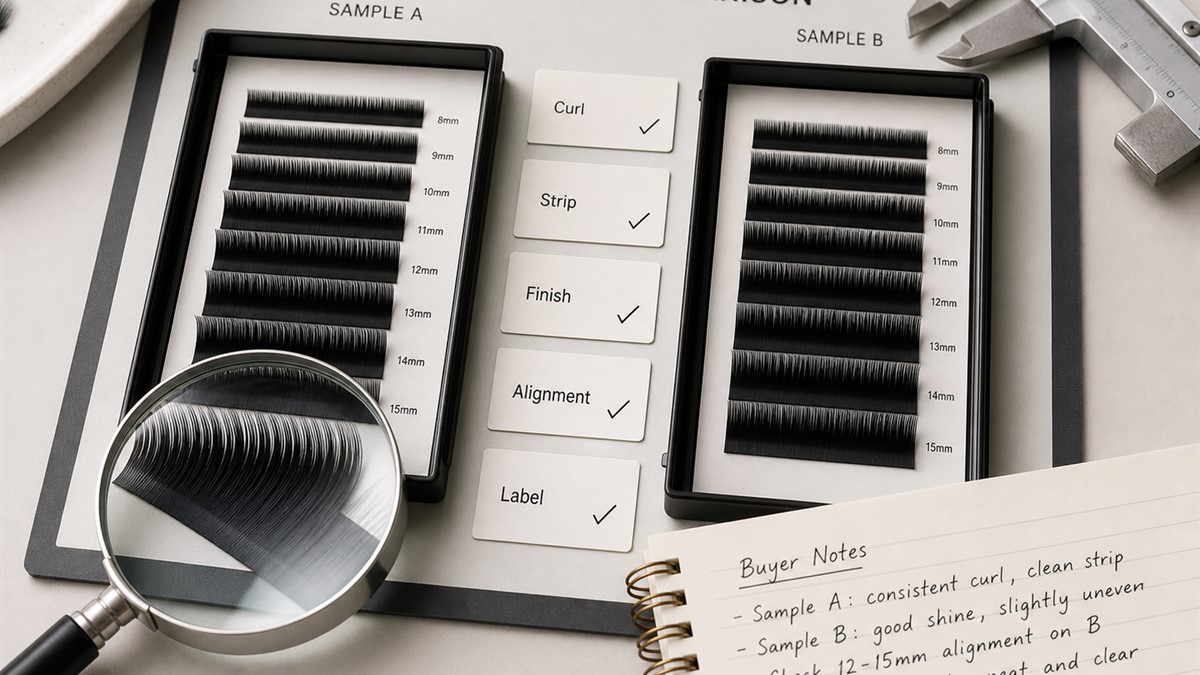
Direct answer: which base is better?
Neither base profile is automatically superior. A fine base can create a cleaner, lighter attachment area, while a thicker base may feel more substantial or easier to see during pickup. The correct choice depends on product type, technician method and the brand promise.
Approve the base as part of a complete specification. Do not compare different curls, diameters or fiber finishes and then attribute every difference to the base.
| Decision point | Fine base | Thick base |
|---|---|---|
| Finished appearance | Cleaner and less visible when well formed | More visible and potentially heavier |
| Pickup test | Check stability and separation from strip | Check rigidity and excess adhesive area |
| Buyer risk | Too narrow, weak or inconsistent | Bulky, stiff or plastic-looking result |
| Reorder record | Base width, symmetry and attachment area | Base width, symmetry and attachment area |
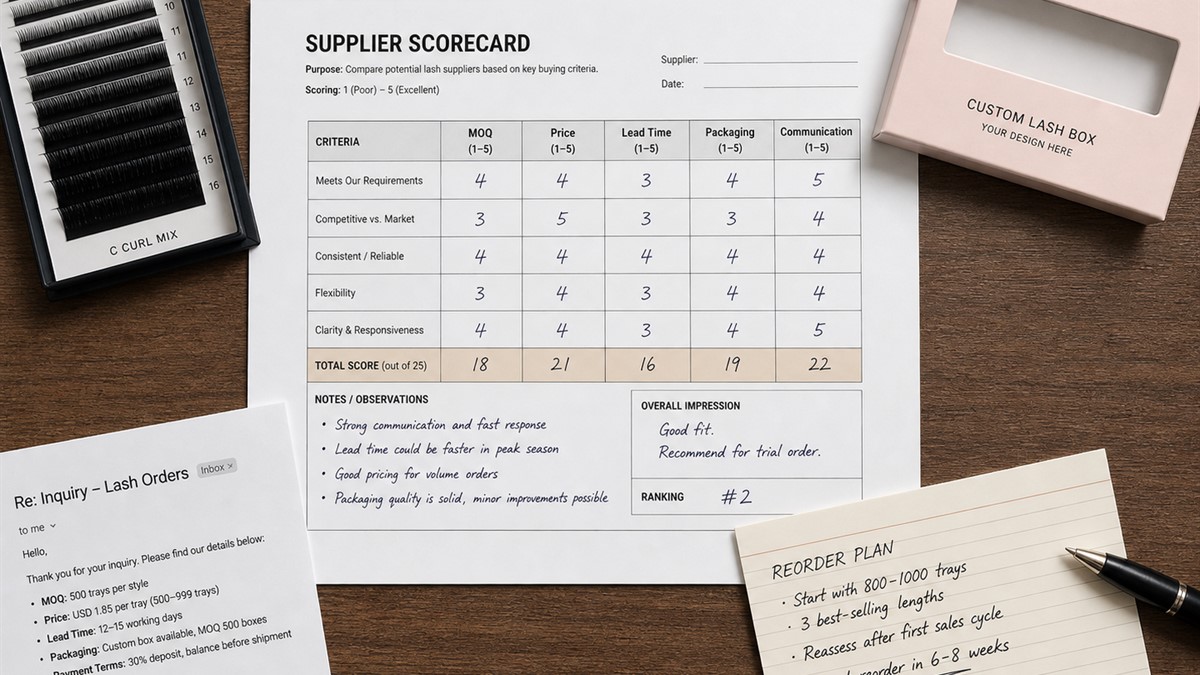
Build a controlled sample comparison
Request both candidates in the same curl, diameter, length, fiber finish, tray card and strip format. Label the samples A and B so technicians can assess them before seeing the supplier description. This reduces expectation bias and keeps the comparison focused on actual handling.
Inspect at least twenty strips or fan rows rather than one attractive section. Record base width, symmetry, direction, separation and visible adhesive residue. For premade fans, check whether the base remains closed and neat after pickup. For classic or volume fibers, check whether individual fibers separate predictably without twisting.
Ask two technicians to use the intended professional method and score pickup, placement, attachment visibility and final texture. The purchasing decision should combine both scores with photographs and written notes. A single close-up image cannot show how the base behaves during a full working session.
Keep one approved tray in a protected reference box. Add the lot code, approval date, curl, diameter, length mix and strip specification. This physical master sample gives the buyer a practical standard when the first bulk order and later repeat orders arrive.
Connect base quality to assortment and reorder control
A fine base is often selected for buyers who want a soft, refined result and a less visible attachment area. However, an extremely narrow base is not useful if it opens, bends or varies across the tray. The buyer should define an acceptable range, not simply request the thinnest possible base.
A thicker base can suit some working preferences, but it must not create a stiff, dark block at the attachment point. Check whether technicians need extra adhesive, whether neighboring fibers stick together and whether the finished fan appears heavier than the product description promises.
For SKU planning, avoid launching separate fine-base and thick-base products unless each has a clear buyer role. Overlapping products create inventory and customer-service confusion. Start with the profile that fits the main salon segment, then use feedback before adding another construction.
At reorder, compare the incoming batch with the approved tray under neutral light. Record the same inspection fields every time: base width, symmetry, pickup, curl recovery, fiber feel and strip release. If the base changes, stop packaging production until the supplier and buyer agree on the correction.
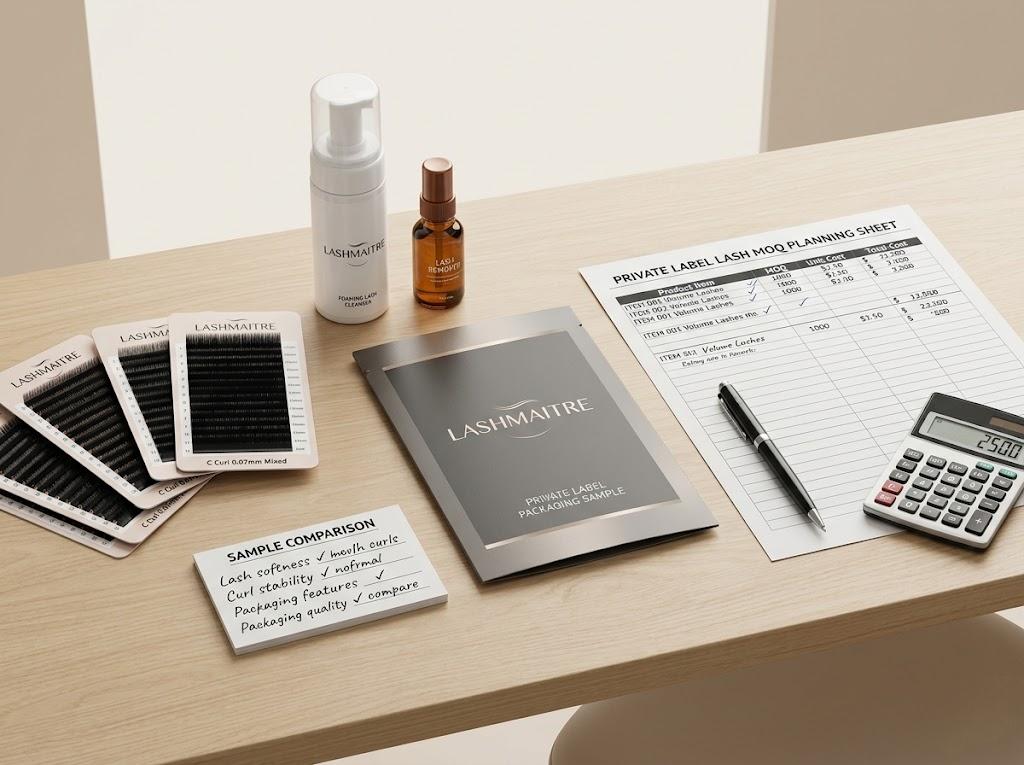
Buyer fit, evidence and commercial boundaries
This comparison is designed for lash distributors, salon brands, ecommerce sellers and private-label buyers evaluating wholesale trays. It supports supplier communication and sample approval; it does not replace professional application training or local product-safety requirements.
Useful evidence includes macro photographs, technician scorecards, lot references and an approved physical tray. Claims such as “ultra fine” or “easy pickup” should be supported by a defined test rather than treated as self-explanatory marketing language.
LASHMAITRE can prepare matched samples, MOQ 50 starter planning, quality-control notes and private-label packaging after the base profile and product specification are approved. Send the intended curl, diameter, lengths, tray format, buyer segment and expected order range so the sample set can answer a real purchasing question.
When reviewing fine base vs thick base lash extensions, product approval should remain separate from market safety review. US buyers can consult the FDA eye cosmetic safety guidance when building internal purchasing and customer-information checks.
FAQ
What should buyers compare in fine base vs thick base lash extensions?
Compare base width, symmetry, pickup, attachment visibility, curl, fiber feel, strip release and repeat-order consistency under matched conditions.
Does a thick base improve retention?
Base width alone does not guarantee retention. Professional placement, adhesive, attachment area and aftercare all matter.
How many samples should a buyer inspect?
Inspect multiple strips from more than one tray and involve at least two technicians when possible.
What should be recorded for repeat orders?
Record base profile, curl, diameter, length, finish, strip, lot code, photographs and technician approval notes.
Compare fine base vs thick base lash extensions
Send your target style, curl, diameter, lengths, tray format and packaging plan. LASHMAITRE will prepare a sample-first comparison and a clear approval record.