
Lash Aftercare Kit Wholesale for Salons and Private Label Brands
A lash aftercare kit wholesale order normally combines a lash cleanser, cleansing brush, spoolie or applicator, instruction card and retail-ready packaging. LASHMAITRE helps salons, lash brands, academies and distributors define the kit bill of materials, compare a complete sample, approve private label artwork and keep a repeatable reorder record before bulk production.
Start with a physical sample, not a product photo. The cleanser, accessories, instructions, label and package should be reviewed as one controlled kit before the buyer approves a production version.
Request Kit Samples · Send Kit Specifications for a Quote
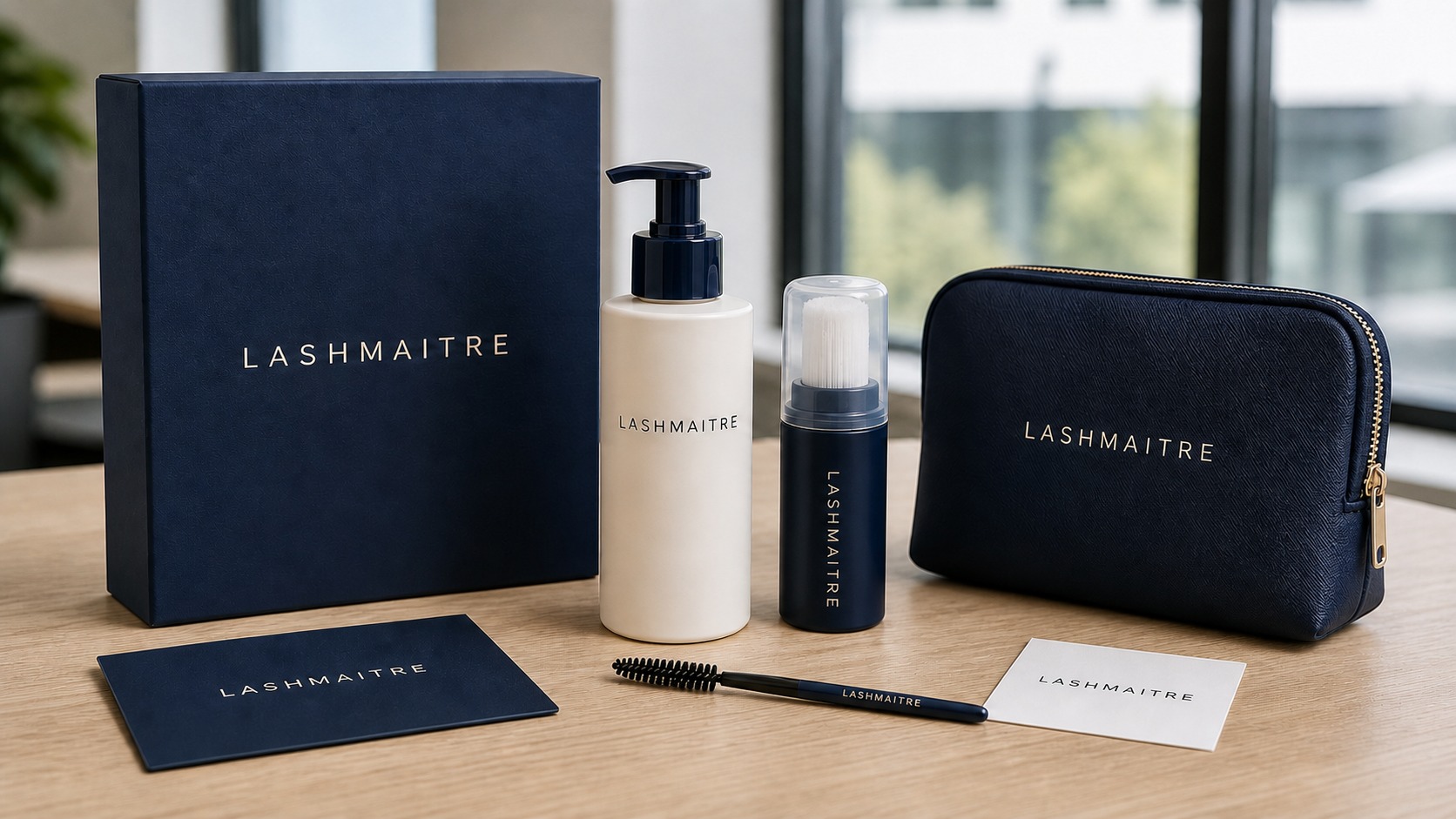
Wholesale kit planning at a glance
- Choose the kit for a defined buyer, sales channel and target market.
- Record every cleanser, accessory and printed item in one kit BOM.
- Compare an Essential, Retail-ready or Private-label configuration.
- Approve the complete physical sample with an Approve / Revise / Hold decision.
- Confirm the actual MOQ and allowed SKU splits in the quotation.
- Keep the artwork, packaging proof, lot fields and retained sample together for reorders.
On this page
- 1. Who wholesale lash aftercare kits are for
- 2. Three kit configurations to compare
- 3. What to confirm before requesting samples
- 4. The five-step sample-to-reorder process
- 5. MOQ 50 assortment planning
- 6. Private label files and packaging proof
- 7. Supplier comparison checklist
- 8. Frequently asked questions
Who are wholesale lash aftercare kits for?
Wholesale eyelash aftercare kits are useful when a business needs a repeatable retail or service-support package rather than a cleanser alone. The strongest configuration depends on the buyer and how the kit will be sold or distributed.
- Lash salons can provide a simple post-appointment kit with clear instructions.
- Lash academies can standardize the products and tools included in student or training packs.
- Lash brands can combine selected components with branded labels and retail packaging.
- Distributors can plan barcodes, case packing, language versions and reorder records.
- Purchasing teams can compare quotations against one approved BOM instead of informal product descriptions.
The kit should solve a practical buyer need. Adding more components does not automatically create a better offer; it can also increase artwork, packing and reorder complexity.
Compare three wholesale lash aftercare kit configurations
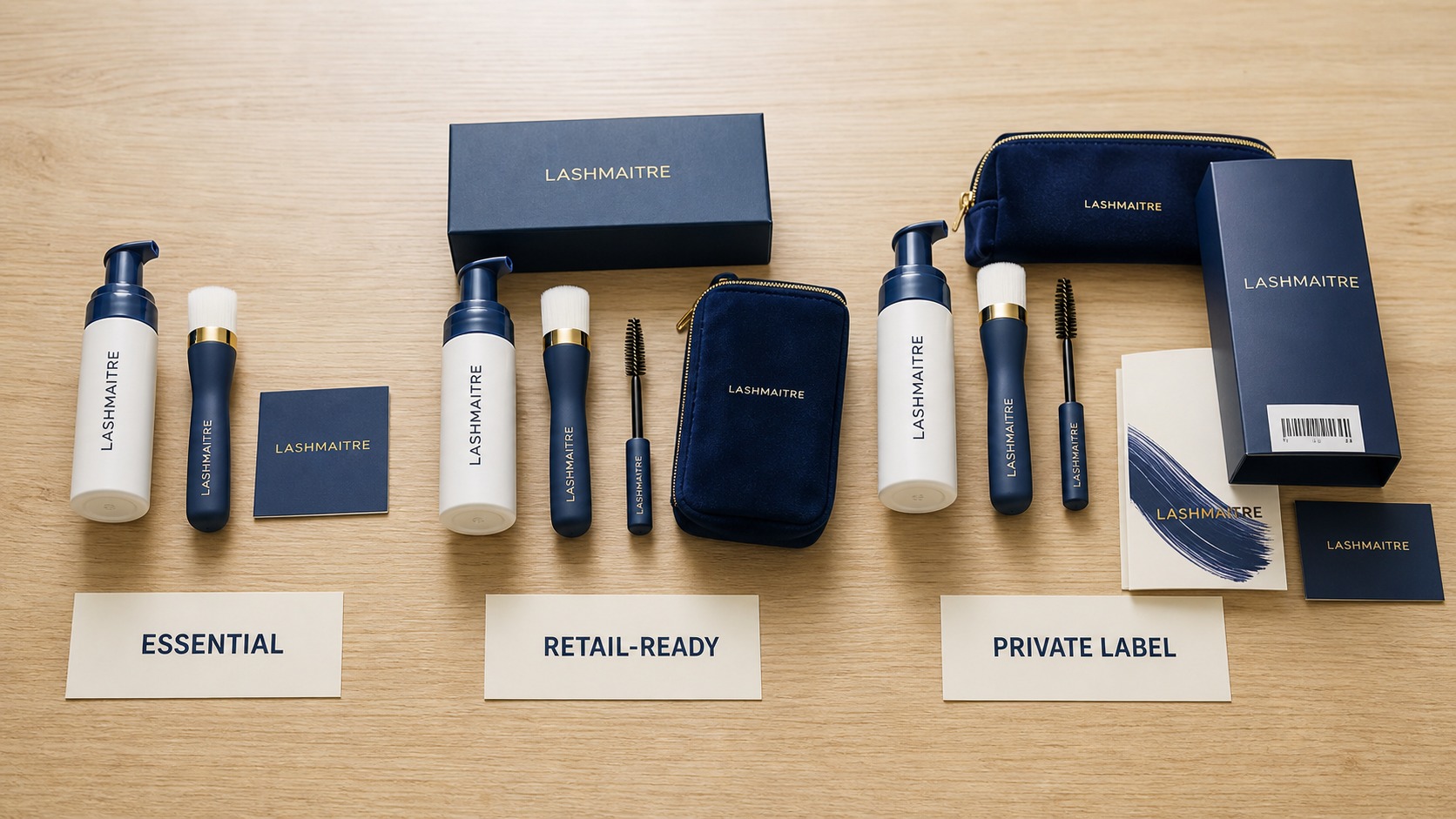
The following table is a sourcing framework. It does not guarantee that every component, design or quantity can share one MOQ. Final availability and minimum quantities must be confirmed in the quotation.
| Kit configuration | Typical physical components | Best suited for | Approval focus |
|---|---|---|---|
| Essential | Cleanser, cleansing brush and instruction card | Salons testing an aftercare retail offer | Cleanser format, brush usability, instructions and complete sample fit |
| Retail-ready | Essential kit plus spoolie or applicator and a pouch, sleeve or box | Salons, academies and distributors | Unboxing, barcode and lot space, package durability and packing order |
| Private-label | Selected components plus custom label, branded packaging, artwork proof and version record | Lash brands and repeat wholesale programs | Brand files, label copy, approved proof, retained sample and reorder control |
If cleanser is the main purchase rather than one component of a complete kit, review the lash foam cleanser wholesale page separately. It covers cleanser, bottle, sample and quotation decisions without competing for the complete kit role.
What should buyers confirm before requesting samples?
Prepare a short specification before asking a lash aftercare kit supplier for pricing. A usable request should identify the intended market, estimated quantity and whether the project is stock, customized or private label.
1. Cleanser format and bottle
Record the cleanser format, fill size, bottle type, closure, available documentation and intended market. Do not approve therapeutic, disease-prevention or other drug-like claims as ordinary cosmetic copy. The U.S. Food and Drug Administration states that cosmetic labeling claims must be truthful and not misleading, and claims to treat or prevent disease may cause a product to be regulated as a drug.
2. Brush, spoolie and applicators
Confirm brush handle size, bristle feel, cap or protective packing, spoolie alignment and whether each item fits the proposed pouch or box. Review the complete combination because an accessory that looks acceptable in isolation may not pack or present correctly in the final kit.
For the brush line item, compare the lash extension cleansing brush wholesale guide by head geometry, bristle construction, handle, protective pack and reorder controls before approving the complete kit.
3. Instructions and language
Specify the instruction language, format and available print area. The copy should explain use clearly without unsupported medical, safety or retention claims. Buyers remain responsible for checking the rules that apply in each sales market.
4. Retail package and label fields
Identify whether the kit needs a pouch, sleeve, folding box or another package. Record the product identity, ingredient and net-quantity fields where applicable, responsible business details, barcode space, lot or batch field and required warnings. The FDA’s cosmetics labeling resources provide U.S. guidance; other markets use different requirements.
5. Version and reorder references
Assign a kit SKU or internal reference. Keep the BOM, label copy, artwork proof, component list, approval date and retained sample under the same version. If one component changes, issue a revised version instead of silently replacing the earlier record.
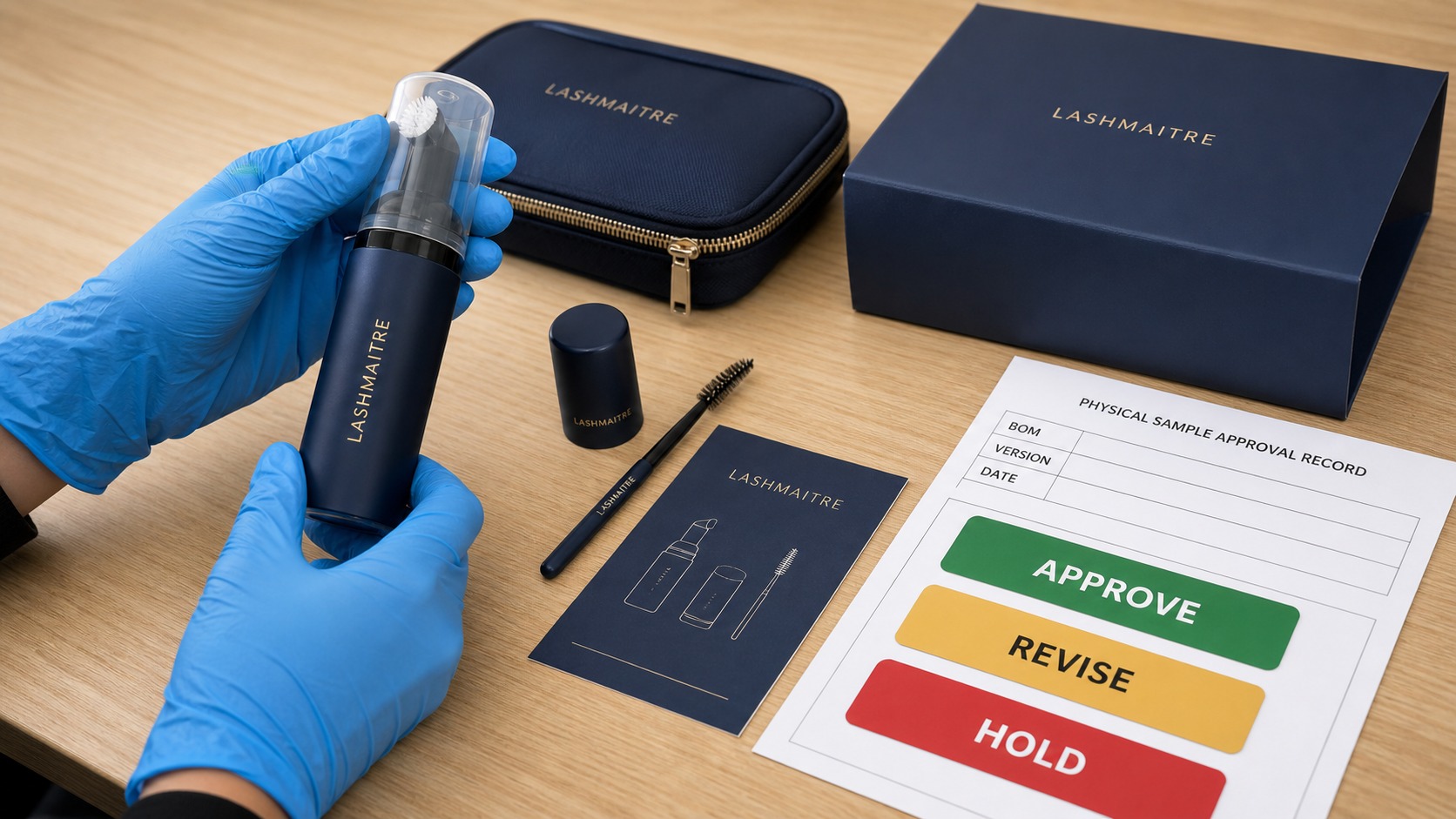
Five steps from lash aftercare kit samples to reorders
Step 1 — Define the buyer and use case
Record the sales channel, target market, target price, expected quantity and whether the kit is for resale, training or service support. This prevents unnecessary components from entering the first sample.
Step 2 — Specify the kit BOM
List every packed item: cleanser, bottle, brush, spoolie, instruction card, pouch or box, label, insert and protective packing. Add dimensions, material or finish where these affect fit or appearance.
Step 3 — Review the complete sample
Compare the physical components and printed pieces together. Use one of three decisions:
- Approve: the listed components and artwork may proceed as the controlled version.
- Revise: record each required change and request a new proof or sample.
- Hold: information, testing or buyer authorization is still missing.
The LASHMAITRE sample process helps buyers organize product, packaging and approval checks before a bulk order.
Step 4 — Verify production and packing
Compare the production specification, packaging proof and packing record with the approved version. Quality control should confirm the agreed fields and document any deviation. Review the LASHMAITRE quality-control path when planning acceptance criteria.
Step 5 — Reorder from the approved record
Use the retained sample, current BOM, artwork file and approved version as the reorder reference. Do not rely on an old email or product photo when specifications have changed.
How does MOQ 50 planning apply to aftercare kits?
MOQ 50 can be a useful planning path for lower-risk product testing, but it does not mean every cleanser size, brush color, package design or language version can be split within one minimum. Component availability, filling, printing and packing requirements can create different minimums.
Before requesting a quote, place every proposed version in a simple matrix:
| Field | Version A | Version B | Decision needed |
|---|---|---|---|
| Cleanser format and size | Same or separate fill run? | ||
| Brush or applicator | Stock or custom color? | ||
| Instruction language | One bilingual card or separate versions? | ||
| Label and artwork | Shared layout or separate SKU? | ||
| Pouch, sleeve or box | Stock package or custom print? | ||
| Planned quantity | Confirm allowed split in quotation |
Use the MOQ 50 wholesale planning page to structure the first-order discussion. The exact MOQ for an aftercare kit must still be confirmed against the final BOM and packaging method.
Private label lash aftercare kit files and packaging proof
A private label lash aftercare kit needs more than a logo. Prepare the files and approval fields that allow the supplier and buyer to identify the accepted version.
Buyer file checklist
- Brand name and vector logo file
- Approved product name and label copy
- Intended market and required language
- Cleanser and bottle specification
- Brush, spoolie or applicator selection
- Instruction-card copy
- Pouch, sleeve or box dieline where applicable
- Barcode, SKU and lot or batch field
- Color and finish references
- Approval contact and version date
For broader brand and manufacturing planning, review the private label lash extensions page. For boxes, sleeves, labels and printed proofs, use the custom lash packaging page.
U.S. buyers can consult the FDA’s Cosmetics Labeling and Cosmetics Labeling Claims resources. Buyers placing cosmetic products on the European Union market should review Regulation (EC) No 1223/2009 and obtain market-specific compliance advice. These links are starting references, not legal advice or a statement that a particular kit is approved.
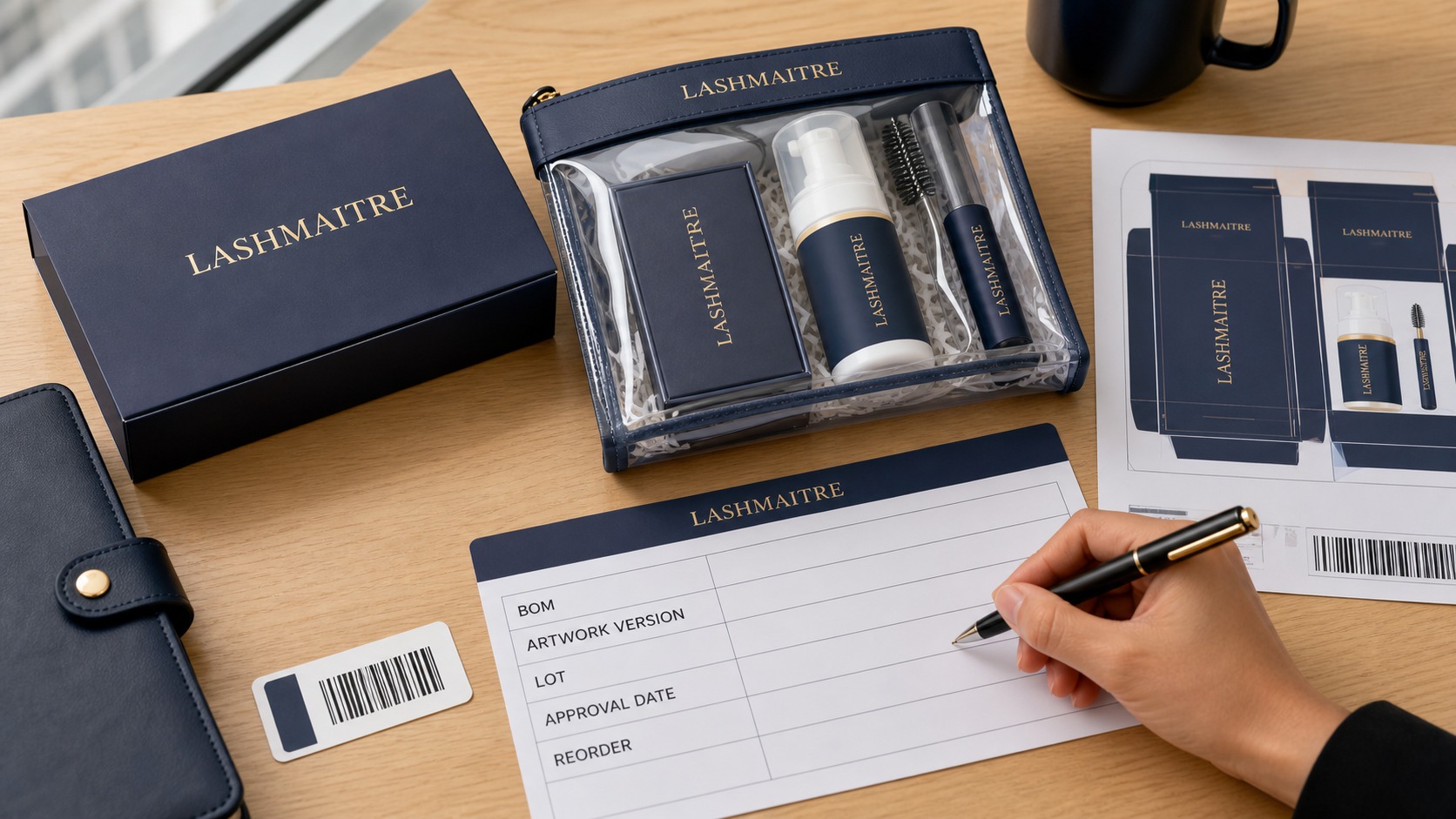
For printed inserts, use the private label lash aftercare cards checklist to control care copy, card stock, artwork proof, QR destination and reorder version. If the kit will be sold from a counter or reception area, use the lash aftercare retail display kit guide to approve footprint, facings, refill map and protective packing separately.
How to compare a lash aftercare kit wholesale supplier
Use the same fields for every quotation so price does not hide a specification difference.
| Comparison field | What the buyer should record |
|---|---|
| Complete BOM | Every product, accessory, printed item and protective component |
| Sample status | Date, reviewer and Approve / Revise / Hold decision |
| Cleanser documentation | Available product and ingredient documentation for the intended market |
| Packaging proof | Dieline, label copy, color/finish reference and approved version |
| MOQ and split rules | Minimum by component, print method, package and SKU version |
| QC and acceptance | Fields to inspect and how deviations are documented |
| Lead-time assumptions | Sample, proof, production and packing stages shown separately |
| Reorder control | BOM, artwork, retained sample, lot field and authorization record |
Avoid quotations that describe the kit only as “standard” or “custom.” A buyer should be able to identify what is included, which sample was approved and what will be used as the reorder reference.
Frequently asked questions
What is included in a wholesale lash aftercare kit?
A wholesale lash aftercare kit normally includes a lash cleanser, cleansing brush, spoolie or applicator, instruction card and retail packaging. The exact combination depends on the buyer, sales channel and target market. Record every physical and printed component in one BOM, then approve the complete sample before bulk production.
Can lash aftercare kits be private labeled?
Yes. A private label lash aftercare kit can use approved brand artwork on the cleanser label, instruction card, pouch, sleeve or retail box. The buyer should control the artwork proof, component specifications, barcode and lot fields, version number and retained sample so the same presentation can be referenced for reorders.
What should buyers test before approving a sample?
Buyers should check the cleanser format and available documentation, bottle and closure, brush or applicator quality, instruction clarity, label copy, package fit and complete unboxing experience. Record one Approve, Revise or Hold decision against the BOM and artwork version rather than approving each item through separate informal messages.
Can MOQ 50 be split across kit versions or packaging options?
It depends on the selected components, filling, printing and packing method. MOQ 50 planning does not automatically allow unlimited cleanser sizes, brush colors, languages or package designs. List every proposed SKU and ask which versions can share a minimum before artwork, samples or printed packaging are approved.
How should lash aftercare kit specifications be recorded for reorders?
Keep an approved BOM, cleanser and bottle specification, accessory list, instruction copy, artwork proof, packaging version, barcode or SKU, approval date and retained sample. If any component, label claim or package changes, issue a new version instead of replacing the earlier record. This creates a controlled comparison point for repeat orders.
How is a lash aftercare kit different from ordering cleanser alone?
A cleanser order covers one product and its immediate container. An aftercare kit combines the cleanser with accessories, instructions and retail packaging, so buyers must also confirm component fit, printed information, packing order and version control. The complete kit therefore needs BOM-level sample approval rather than cleanser-only approval.
Build the kit around an approved sample
The most reliable lash aftercare kit wholesale program starts with a focused BOM, a complete physical sample and a controlled version record. Choose only the components that support the buyer and sales channel, confirm actual MOQ and split rules in the quotation, and keep the retained sample with the final artwork and reorder file.
Request Lash Aftercare Kit Samples or send your intended market, components, packaging and quantity for a specification review and quotation.
Sources and evidence boundary
- U.S. Food and Drug Administration, Cosmetics Labeling, accessed 2026-08-24.
- U.S. Food and Drug Administration, Cosmetics Labeling Claims, accessed 2026-08-24.
- European Commission, Regulation (EC) No 1223/2009 on cosmetic products, accessed 2026-08-24.
- Market-specific compliance remains the buyer’s responsibility. The page does not claim FDA approval, universal compliance, therapeutic performance, guaranteed retention or a fixed MOQ for every configuration.