Lash Glue Cups Wholesale: 8 Buyer Checks
Share
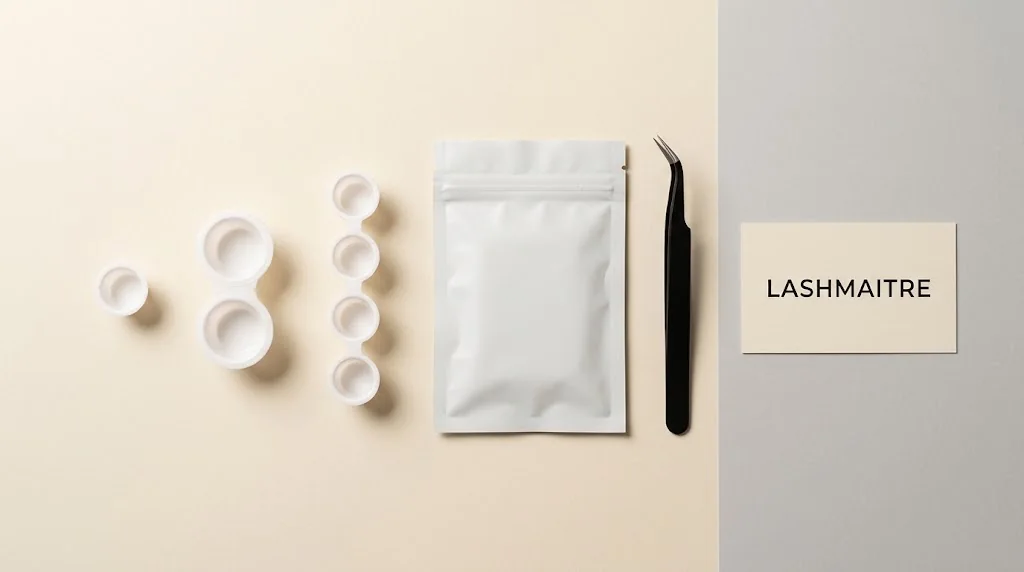
Lash glue cups wholesale orders should be approved by the exact cup shape, base, inner wall, rim, unit-count basis and packaging-not by a generic product photo. A cup can look similar online while differing in how it sits on a holder, how its wells are formed or how many usable pieces arrive in each selling unit. Start with coded physical samples and compare the same configuration across suppliers.
This guide covers procurement records for disposable adhesive cups. It does not claim that a cup keeps adhesive fresh, changes curing speed, prevents contamination or reduces product use by a fixed percentage. Any use near the eye area must follow the professional's training and the adhesive and accessory suppliers' current instructions.
Compare the complete glue-cup offer
| Buyer field | What to request | Sample inspection | Approval record |
|---|---|---|---|
| Product identity | Supplier code and current drawing | Sample matches quotation | Approved code and photo |
| Cup format | Single cup, strip, ring insert or holder-compatible part | Shape and separation points | Named format |
| Dimensions | Overall width, height, opening and base | Agreed measurement method | Dimension record |
| Inner geometry | Well count, wall profile and molded features | Consistency and visible defects | Golden sample |
| Base | Flat, adhesive-backed or holder-specific | Stability on named surface or holder | Compatibility note |
| Quantity | Pieces per bag, inner box and carton | Usable count | Count basis |
| Packaging | Bag, box, label and lot field | Damage and legibility | Pack version |
The table makes lash glue cups wholesale quotations comparable. It does not establish sterility, chemical compatibility or suitability for every adhesive.
1. Name the exact cup format
Do not place every small adhesive holder under one SKU. A loose single cup, a connected strip of cups, a cup made for a ring and a part designed for a specific palette are different purchasing objects. Ask for a product name, code, dimension drawing and photographs of the actual selling unit.
The Glue Rings for Eyelash Extensions guide owns hand-worn holders. The Lash Glue Palette Stickers guide owns flat adhesive stickers. This page focuses on cups and their physical buying record.
2. Measure the cup and opening
Record overall width, height, opening diameter or width, base dimensions and any connector between wells. Agree on where each measurement starts and ends. A listing that provides one number may be describing the outer width rather than the usable opening.
Use a consistent unit in every drawing, quotation and inspection record. NIST's SI Units – Length page is a useful unit reference, but it does not validate the dimensions of a supplied cup. The buyer must keep the measurement method with the approved sample.
3. Inspect molded geometry and visible defects
Review the inner wall, rim, base and any ridges or divisions under consistent lighting. Define visible hold reasons such as incomplete molding, sharp flash, cracks, collapsed walls, blocked wells or separated components. Do not convert a visual sample check into a chemical-performance claim.
If a supplier describes a ridge as a working feature, ask for its location and dimensions. The buyer can record whether the sample matches the drawing; the drawing alone does not prove a particular application result.
4. Test the named holder or surface
If the cup is sold for a holder, palette or tray, identify that counterpart by model and version. Check fit using the exact named part. Record whether the cup sits, inserts or separates as required under the supplier's instructions. A cup that works with one holder should not be advertised as universally compatible.
For broader workstation planning, the Tools for Eyelash Extensions guide covers the full assortment. Keep this approval limited to the cup and the named counterpart.
5. Normalize the unit count
Lash glue cups wholesale quotations may use pieces, strips, bags, boxes or cartons. Convert every offer to individual usable cups and state whether connected wells are counted as one strip or multiple cups. Count more than one selling unit when checking a sample batch and record damaged or incomplete pieces separately.
| Release checkpoint | Pass evidence | Hold reason | Record owner |
|---|---|---|---|
| Identity | Code and photo match | Unknown substitution | Purchasing |
| Shape | Agreed format and drawing | Different cup family | Product/QC |
| Dimensions | Within written sample rule | Unexplained size change | QC |
| Mold condition | Complete walls, rim and base | Cracks, flash or collapsed wells | QC |
| Compatibility | Fits named holder or surface | Universal-fit claim without test | Product |
| Count | Pieces, bags and cartons reconcile | Ambiguous count basis | Purchasing |
| Packaging | Approved label and pack condition | Damage or version conflict | Packaging |
6. Separate material identity from appearance
Ask the supplier for the declared material and any relevant product documentation for the exact SKU. Do not infer polymer type, chemical compatibility, heat resistance or recyclability from transparency, flexibility or color. If a material change is proposed, treat it as a new approval even when the shape looks unchanged.
Color can be a controlled specification, but it is not proof of formulation. Record the color reference, permitted variation and whether mixed colors are allowed in one pack.
7. Approve packaging and private-label details
Inspect the primary bag or container, quantity statement, product name, instructions, warnings, traceability field and outer-carton marks as applicable. If a private-label card, pouch or box is included, approve the artwork on the real pack instead of a flat image alone.
Use Wholesale Lash Extension Samples to organize coded comparisons. Keep one sealed selling unit and one inspected sample as the reorder reference.
8. Send a controlled quote request
State the cup format, drawing or measurements, color, named holder or surface, material declaration, pieces per pack, inner and master-carton quantities, label language, artwork, destination and target schedule. Ask the supplier to identify every component or process change that requires new approval.
Send the released brief through the wholesale lash extensions inquiry. Current availability, MOQ, price, customization, documentation and lead time must be confirmed for the exact lash glue cups wholesale project.
FAQ
What should buyers compare in lash glue cups wholesale?
Compare the exact cup format, dimensions, inner geometry, base, named holder or surface, declared material, usable count, packaging and reorder-change rules using coded physical samples.
Are lash glue cups universally compatible with holders and palettes?
No universal fit should be assumed. Identify the exact holder, palette or surface and verify the supplied cup against that named model and version.
Do glue cups keep lash adhesive fresh for longer?
Do not make that claim from the cup alone. Adhesive behavior depends on the exact formula, environment, handling and supplier instructions; the cup inspection only confirms the approved physical accessory.
What changes require a new glue-cup approval?
A change in format, dimensions, inner geometry, base, material, color, count, holder compatibility, packaging, artwork or supplier identity should trigger review before reorder release.
Approve one traceable cup configuration
A strong lash glue cups wholesale record connects the physical cup, counterpart, unit count and packaging version. Preserve the golden sample and reopen approval whenever shape, material or pack structure changes.

Lash Maitre: Your Trusted Partner in Eyelash extension Solutions
Lash Maitre is dedicated to providing professional insights and tips in the eyelash extension industry. Sharing the latest trends, techniques, and product knowledge, Lash Maitre helps lash artists and enthusiasts enhance their skills, stay inspired, and achieve the perfect lash experience.



