Foil vs Paper Lash Strip Backing: 5 Buyer Checks
Share
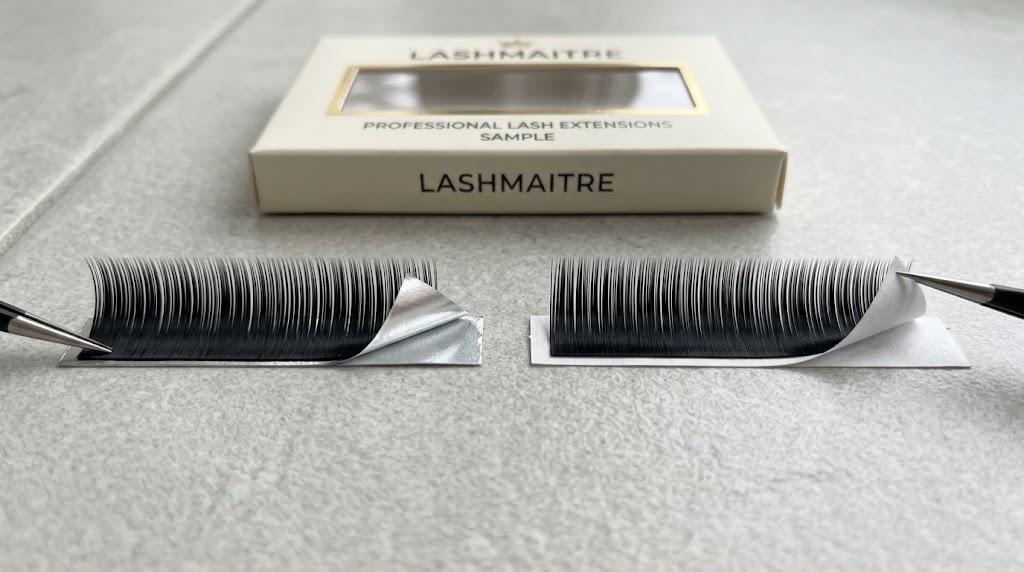
Choose foil vs paper lash strip backing by testing the supplied strip assembly on the tile your customers use. The backing supports the strip, while adhesive interfaces affect how the strip attaches and how lashes release. A foil description does not, by itself, establish low pickup tack, residue-free removal or superior lash quality.
For wholesale buyers, this is a packaging-component decision. Ask what the backing actually contains, where the adhesive sits and what changes if the supplier substitutes the backing. Then compare removal, visibility and handling using matched samples. This guide concerns tray strips used with lash tiles, not tape applied to skin.
Foil vs paper lash strip backing: separate two interfaces
A buyer may report that a strip is “too sticky” when referring to two different problems. The whole strip may be difficult to remove from a tile, or individual lashes may be difficult to release from the pickup surface. Changing the backing might affect the first issue without solving the second.
| Interface or component | Buyer’s question | Useful observation |
|---|---|---|
| Lash-to-strip pickup surface | How do fibers release during the intended pickup process? | Intact pickup, unexpected movement or visible transfer |
| Strip-to-card or strip-to-tile attachment | How does the complete strip detach? | Removal effort, tearing, lifting and residue |
| Backing itself | Does the carrier stay intact and identifiable? | Splitting, curling and label readability |
Specify the backing and both adhesive interfaces separately in your sample request. Use the LASHMAITRE lash tray strip consistency checklist to record pickup and handling observations. Ask for the actual backing construction and assess the complete supplied strip; a material name alone does not establish removal or pickup performance.
For ongoing fiber pickup and row alignment checks, use the separate lash tray strip consistency guide. Here the purchasing decision is whether to specify or change the backing construction.
Ask what “foil” and “paper” mean in the quotation
For foil vs paper lash strip backing, trade descriptions are not detailed material specifications. “Foil,” “foil paper” and “paper backing” may refer to different constructions. Ask the supplier to describe the carrier and any layers rather than assuming that a metallic-looking surface is a sheet of solid metal.
Request a sample of the complete strip assembly, including the intended adhesive, printing and tray card. A loose piece of backing material cannot demonstrate how the finished strip removes from a tile. If both backing and adhesive change between samples, record both changes; the result cannot be attributed to backing alone.
Useful quote fields include backing description, strip width, adhesive arrangement, printed information, compatible tray layout and the supplier’s handling instructions. Confirm which details are fixed and which may vary with the product or production run.
Avoid treating backing appearance as an environmental certification. A silver finish does not establish composition or recyclability, and a paper description does not establish how a combined adhesive assembly is handled by a particular waste system. Keep unsupported disposal claims out of product copy.
Compare matched samples on a known tile
To compare foil vs paper lash strip backing, prepare two labeled samples with the same lash specification, strip dimensions and adhesive specification where the supplier can provide them. If matched samples are unavailable, describe the exercise as a comparison of two complete products, not an isolated material test.
Use the same tile material and surface condition for both. Follow the tile manufacturer’s cleaning instructions and let the surface reach the same starting condition before each trial. A result on one surface should not be presented as a compatibility guarantee for every tile.
Attach each strip using the same placement method. Record the time between placement and removal because an immediate peel and an end-of-work-session peel are different observations. Use the same reviewer and removal method, photographing the strip and tile before and after removal under consistent lighting.
Record any tearing, separation of layers, remaining adhesive or unreadable print. If cleanup is required, record the method permitted for that tile and the time taken. Do not improvise a solvent test and then claim compatibility that the tile or strip supplier has not confirmed.
Repeat across several strips and more than one tray when practical. Retain the number examined and the outcomes; do not convert a small bench trial into a formal pass-rate guarantee or a laboratory certification.
Foil vs paper lash strip backing: comparison record
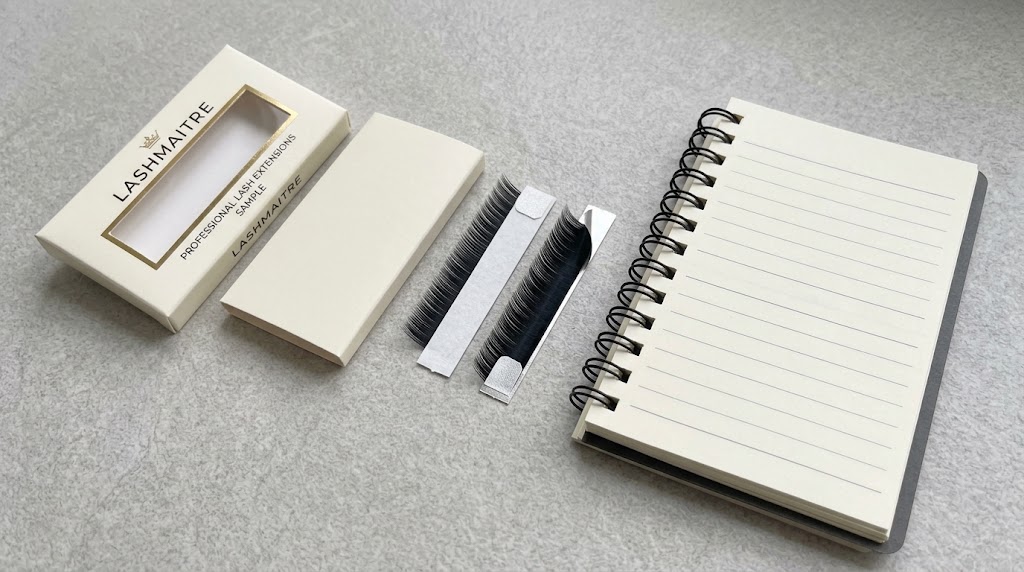
The following template keeps observations attached to the actual assembly. Set acceptance criteria with the buyer and supplier before the trial. There is no universal peel threshold established by this article.
| Record field | Sample A | Sample B |
|---|---|---|
| Supplier, SKU and sample version | Enter actual reference | Enter actual reference |
| Backing and adhesive description | Supplier-confirmed details | Supplier-confirmed details |
| Tile material and starting condition | Record | Record |
| Placement-to-removal time | Record | Record |
| Number of strips examined | Record actual count | Record actual count |
| Tearing or layer separation | Count and photographs | Count and photographs |
| Residue after removal | Observation and photographs | Observation and photographs |
| Cleanup method and time | Record if needed | Record if needed |
| Readability after handling | Record which labels remain readable | Record which labels remain readable |
| Decision and unresolved questions | Accept, revise or investigate | Accept, revise or investigate |
If a strip peels well but the lashes do not release as expected, open a separate pickup-surface investigation. If pickup is satisfactory but the backing tears, retain the damaged carrier for discussion. Keeping those observations separate prevents a supplier from answering the wrong complaint.
Turn the comparison into a purchasing specification
For foil vs paper lash strip backing, choose the assembly that meets the intended workflow and agreed criteria at an acceptable quoted cost. A foil-backed option may merit further consideration when your specific samples show easier handling, but the material name alone is not the decision. A paper-backed option may remain suitable when it meets your requirements consistently.
Save the accepted complete tray, photographs and label artwork. Record the backing and adhesive details in the approved specification and ask how future substitutions will be communicated. If the supplier proposes a new carrier or adhesive, repeat the relevant comparison before treating it as equivalent.
For a private label range, make sure length, curl and product identity remain easy to read when the strip is moved. Review printed contrast and placement on the actual sample rather than approving only a flat artwork proof. A metallic finish and a printed label need to work together under ordinary workspace lighting.
Begin with your product requirements through the wholesale lash tray range, then request matched samples. Ask which backing options are currently available for that SKU; this article does not promise that every LASHMAITRE tray can be supplied in both versions.
Send the sample references, tile type, observed issue, desired backing details, quantity and packaging needs through the wholesale inquiry form. That gives the supplier a component-level question to answer instead of an ambiguous request for “better tape.”
Foil vs paper lash strip backing: FAQ
Is foil backing the same as a low-tack lash strip?
No. Backing describes the supporting carrier; pickup tack concerns the surface holding the lashes. Ask the supplier to specify both and evaluate them separately.
Will foil backing always leave no residue?
No universal result follows from the name. Evaluate the complete assembly on the intended tile with a recorded placement time and removal method.
Can buyers compare backing using an empty material sample?
An empty sample can help explain construction, but it cannot establish finished-strip behavior. Request the intended adhesive, printed information and complete tray assembly.
Does a new backing require a new sample review?
Review the affected handling and labeling features before accepting it as equivalent. Record any adhesive changes too, so the comparison does not assign every difference to the backing material.

Lash Maitre: Your Trusted Partner in Eyelash extension Solutions
Lash Maitre is dedicated to providing professional insights and tips in the eyelash extension industry. Sharing the latest trends, techniques, and product knowledge, Lash Maitre helps lash artists and enthusiasts enhance their skills, stay inspired, and achieve the perfect lash experience.



