Silk Eyelash Extensions: Wholesale Guide for Soft Finish Lash Lines
Share
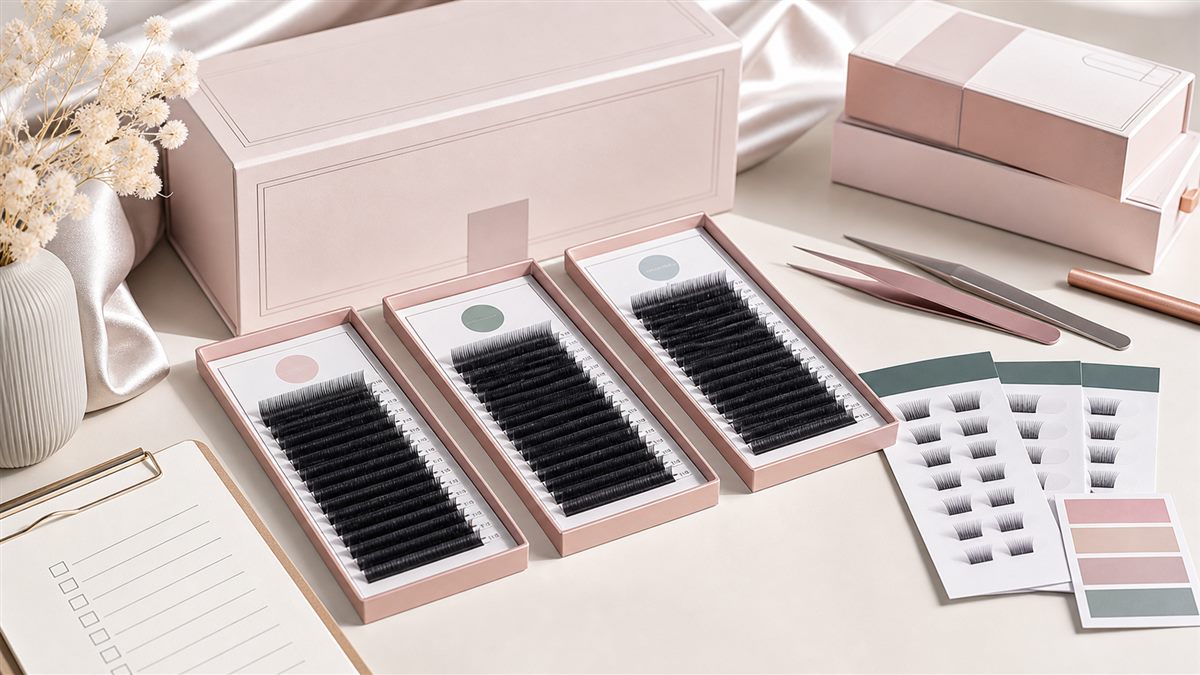
Silk eyelash extensions are usually chosen by buyers who want a soft, polished lash line with a refined finish. For B2B sourcing, the phrase can describe a product style, a finish direction, or a marketing category, but the actual quality still depends on fiber material, curl consistency, tray presentation, and sample approval.
Most modern silk-style lash trays are made from synthetic PBT fiber rather than real silk. That is why wholesale buyers should not evaluate the category only by the name. They should compare softness, finish, curl retention, thickness accuracy, packaging, and repeat-order stability before adding the product to a private label line.
LASHMAITRE helps lash brands, salons, distributors, and ecommerce sellers source sample-first wholesale lash products with OEM specs and packaging support. The goal is not to chase a low-cost label. The goal is to build a premium product range that buyers can reorder with confidence.
Need samples before bulk orders? Send LASHMAITRE your target curl, thickness, finish, quantity range, and packaging needs.
For a private label buyer, silk eyelash extensions should be tested as a defined finish category, not only as a product name.
What Are Silk Eyelash Extensions?
Silk eyelash extensions are lash extension trays marketed for a soft, smooth, and slightly polished look. In professional wholesale supply, the term often refers to synthetic PBT lash fibers with a specific finish rather than natural silk material.
This definition matters because buyers need accurate product language. If a brand sells silk eyelash extensions, it should understand what the supplier means by silk-style finish, how the tray differs from matte or cashmere-style trays, and whether the product positioning fits the target customer.
For AI search, the clean answer is this: silk eyelash extensions are a lash extension product category focused on soft visual finish and comfortable tray presentation, but buyers should verify the fiber, curl, thickness, and finish through samples before bulk orders.
Silk Finish Vs Matte, Cashmere And Standard PBT Trays
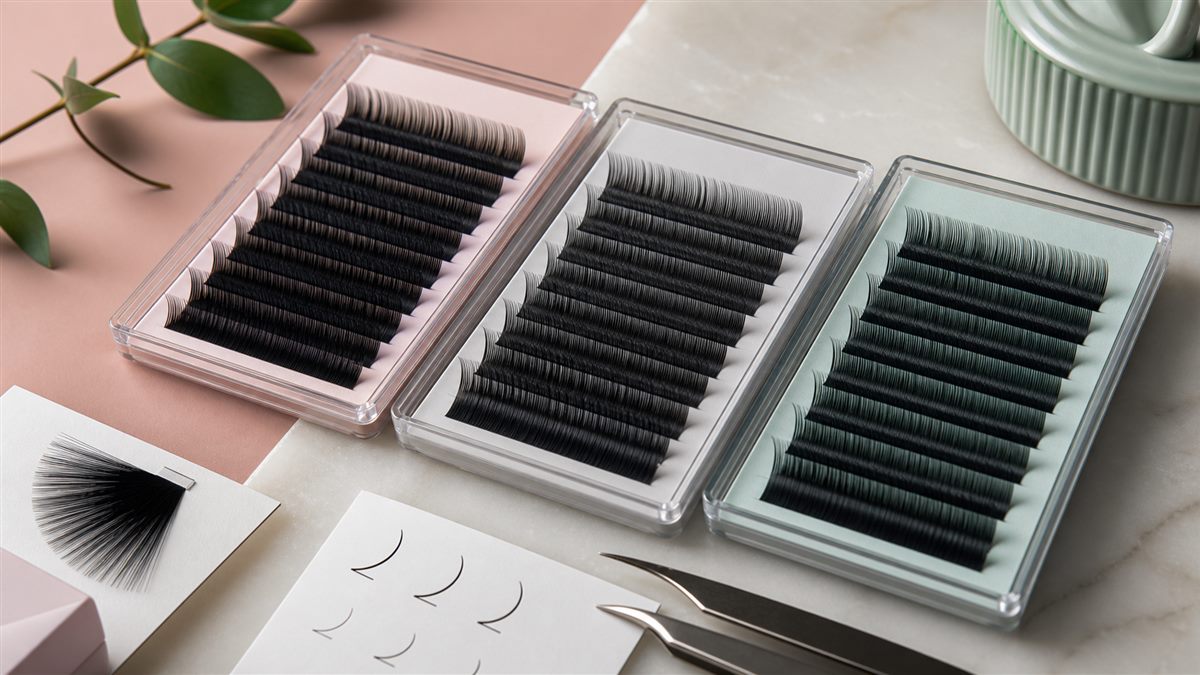
Different product names can overlap. A supplier may use silk, cashmere, faux mink, matte, satin, or premium to describe the feel and finish of PBT lash trays. Buyers need a comparison method instead of relying on one label.
| Product Position | Typical Buyer Expectation | What To Check |
|---|---|---|
| Silk-style trays | Soft, smooth, refined finish | Shine level, softness, curl stability, tray neatness |
| Matte PBT trays | Darker, less reflective, modern look | Fiber texture, blackness, row consistency |
| Cashmere-style trays | Soft matte premium feel | Lightweight feel, finish, packaging match |
| Standard PBT trays | Broad professional use | Curl, length, thickness, strip release |
If the buyer already sells cashmere lashes wholesale or premium lash extensions, this silk-style product can be positioned as another finish option. The key is to avoid confusing customers with overlapping names.
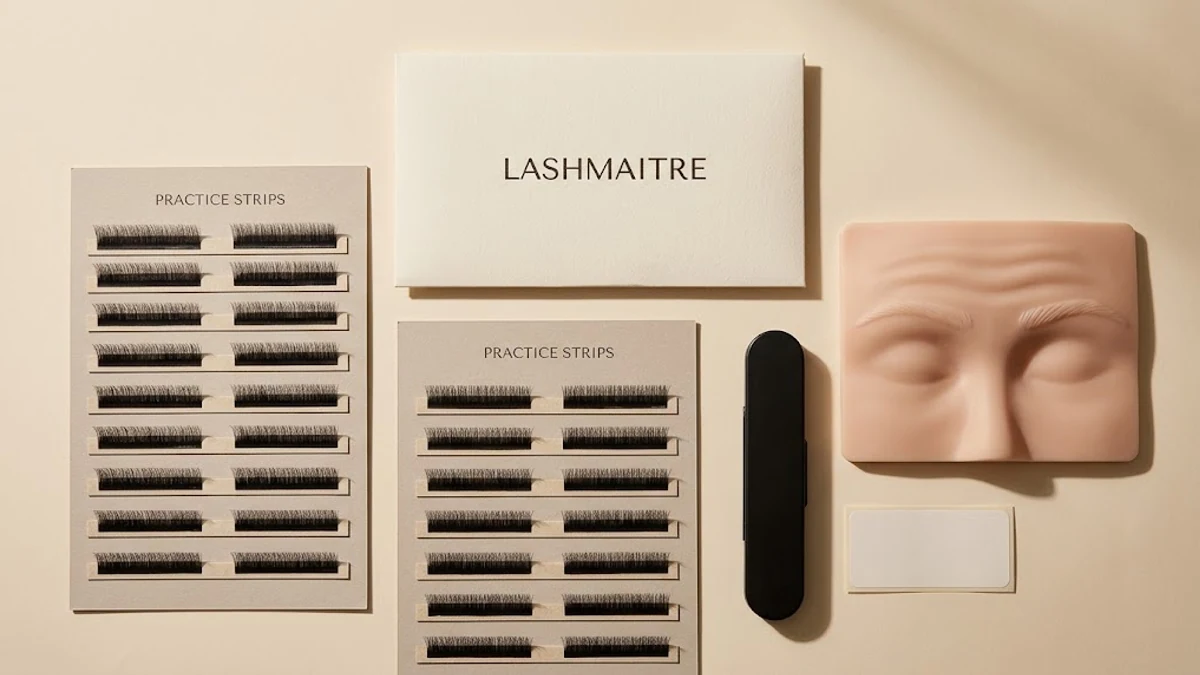
When silk eyelash extensions sit beside matte or cashmere trays, buyers should record the difference in finish and customer positioning.
Wholesale Checks Before Buying Silk Lash Extensions
Wholesale buyers should evaluate this product category with a structured sample review. The tray should look good, but it also needs to perform well for lash artists and remain consistent in repeat orders.
Use this checklist:
- Fiber finish: compare shine level under natural and studio light.
- Curl retention: check whether C, CC, D, or other curls remain consistent across rows.
- Thickness accuracy: confirm common diameters such as 0.03, 0.05, 0.07, 0.10, or 0.15 depending on the product line.
- Length mix: confirm whether mixed trays or single-length trays fit your market.
- Strip release: test whether lashes are easy to pick up and fan.
- Tray label clarity: check curl, length, thickness, and product name.
- Packaging fit: confirm whether the tray works with your logo label or custom box.
- Reorder notes: record the approved sample version before bulk production.
A supplier should be able to explain these details clearly. If the supplier only says the product is soft without defining the finish, the buyer should ask for samples before approving the category.
Private Label Planning For Silk Eyelash Extensions
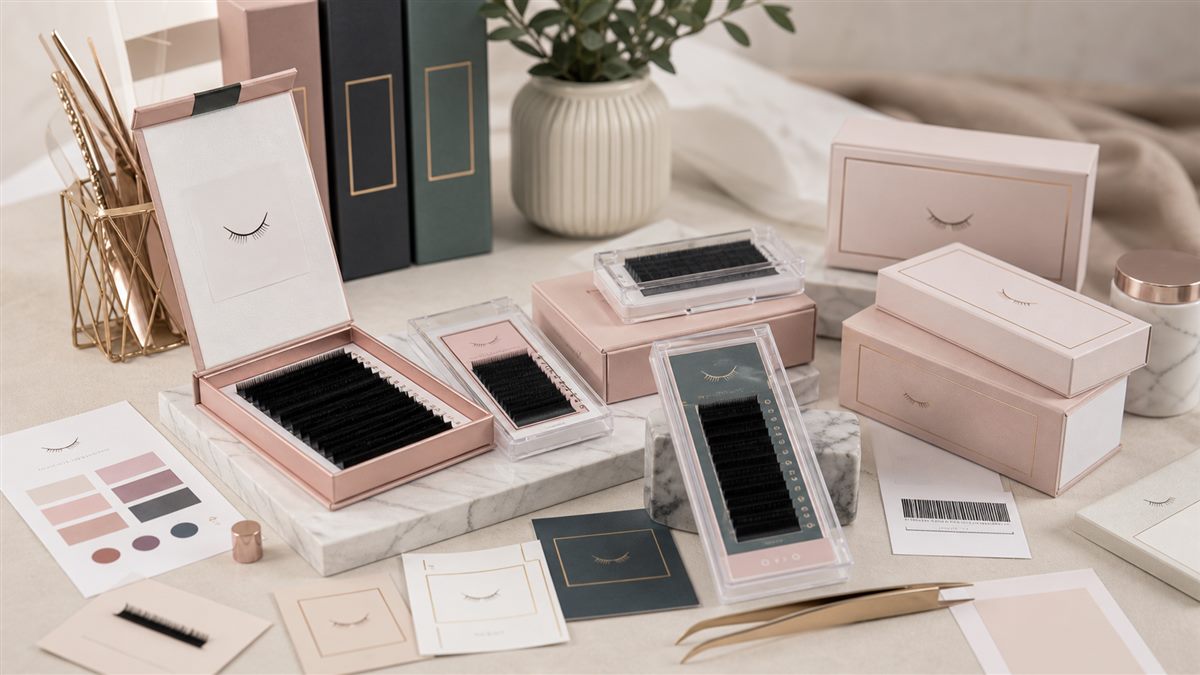
Private label buyers should connect product finish with brand positioning. Silk-style trays can work for salons that want a polished look, for lash brands that sell premium trays, or for ecommerce sellers building a soft-finish line.
Before artwork approval, confirm:
- Product name on the tray card.
- Curl and thickness range.
- Whether the finish is described as silk, satin, soft, or premium.
- Logo label placement.
- Box or insert card language.
- Barcode or SKU area for ecommerce.
- Sample version and production version.
For packaging planning, use the LASHMAITRE custom lash packaging page and review GS1 barcode standards if the product will enter retail or marketplace sales.
The same product can feel low-end or premium depending on how the specs and packaging are connected. A strong OEM supplier helps the buyer keep the tray, label, box, and reorder file aligned.
Sample Approval Before Bulk Silk Lash Orders
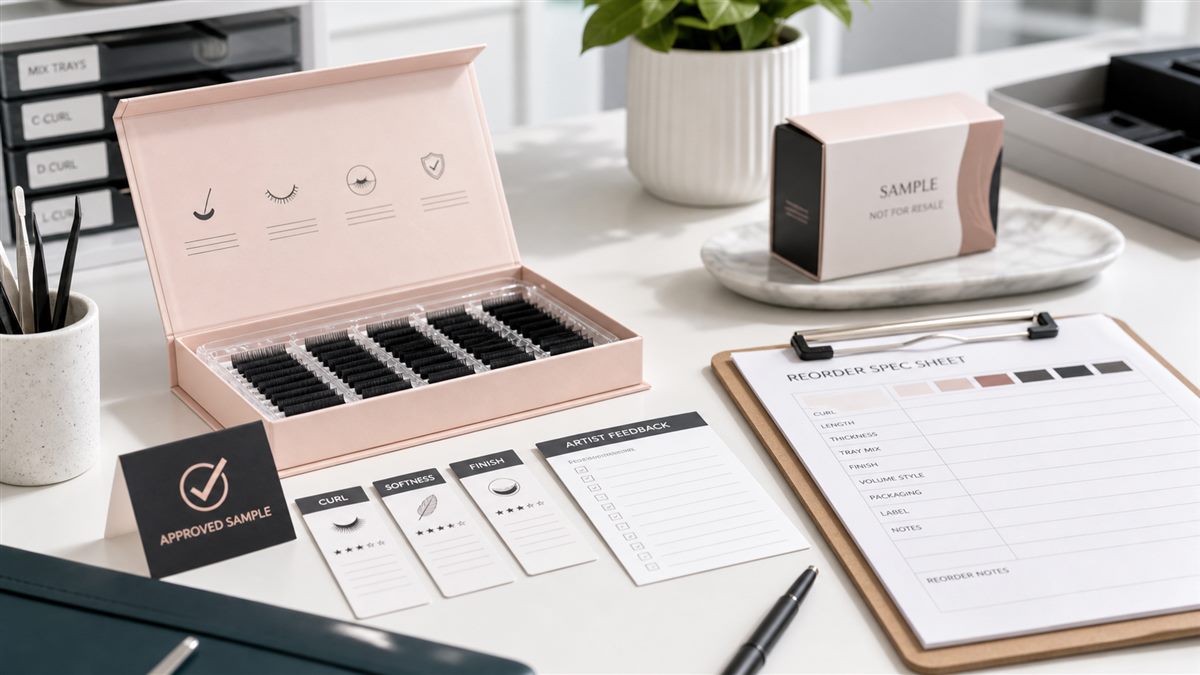
Sample approval is the safest way to test a silk-style tray line. Buyers should not place a larger order based only on product photos. Photos may show shine and packaging, but samples reveal strip release, softness, curl behavior, and artist feedback.
A practical sample review includes:
- One tray in the likely hero curl.
- One mixed-length tray for salon testing.
- One packaging or label reference if private label is planned.
- Notes from a lash artist or product buyer.
- A decision record: approve, revise, or reject.
Connect this step with the LASHMAITRE lash extension samples page and the guide on lash extension samples before bulk orders. Sample approval turns silk-style product language into a real SKU decision.
For silk eyelash extensions, tray cards and box language should match the soft-finish promise without making unsupported material claims.
How To Position Silk Lash Extensions In A Product Line
This product category should not be added only because the keyword looks attractive. Buyers need a product role.
Possible roles include:
- A soft finish classic tray for salon customers.
- A premium option beside standard PBT trays.
- A private label hero product with refined packaging.
- A bridge between glossy faux-mink positioning and matte cashmere positioning.
- A sample option for markets that prefer polished but not overly shiny lashes.
If the buyer already has wholesale lash trays, silk-style trays can become a finish variant. If the buyer is building a new premium line, compare silk-style products with cashmere eyelash extensions before choosing product names.
A sample card for silk eyelash extensions should record curl, thickness, finish, tray label, and packaging direction.
Common Buying Mistakes
Avoid these mistakes when sourcing silk eyelash extensions:
| Mistake | Better Approach |
|---|---|
| Treating silk as a material guarantee | Ask what fiber and finish the supplier actually uses. |
| Buying too many curls first | Start with a focused sample set and hero SKU. |
| Ignoring packaging language | Match the product name with box, label, and customer promise. |
| Comparing samples under only one light | Check finish in natural, salon, and photo lighting. |
| Forgetting reorder records | Save the approved sample and specs before bulk orders. |
A strong product line is built from controlled decisions. Silk-style trays can support a premium catalog, but only if the product, packaging, and reorder plan are clear.
FAQ: Silk Eyelash Extensions Wholesale
Are silk eyelash extensions made from real silk?
Most professional silk-style lash trays are made from synthetic PBT fiber. Buyers should ask the supplier how the finish is defined and verify quality through samples.
Are silk lash extensions better than cashmere lashes?
They are different positioning terms. Silk-style trays usually suggest a smooth polished finish, while cashmere-style trays often suggest a soft matte premium feel. Buyers should compare samples before choosing.
Can silk lash trays be private labeled?
Yes. Buyers can plan logo labels, tray cards, boxes, inserts, and SKU names after sample approval. Packaging should match the product finish and target market.
What should I ask before a wholesale order?
Ask about fiber, finish, curl range, thickness options, sample availability, MOQ, packaging support, lead time, and reorder records.
How can I request silk lash samples?
Send your target market, preferred curl, thickness, length mix, packaging needs, and estimated quantity through the LASHMAITRE inquiry page.
Approved silk eyelash extensions should have saved specs, packaging notes, and reorder references before the first larger wholesale order.
Request Silk Lash Samples
If you are building a soft-finish premium line, start with samples before bulk orders. LASHMAITRE can help compare silk-style products with matte, cashmere, and standard PBT trays, then connect the approved product with private label packaging and repeat-order planning.
See LASHMAITRE’s single-fiber QC workflow before sample packing for a visual sample inspection example before wholesale approval.
Request A Silk, Matte Or Cashmere Finish Sample Set
Compare soft finish, PBT fiber feel, matte texture, cashmere positioning, and private label packaging before bulk orders. LASHMAITRE can help you review finish direction before MOQ 50 starter orders or larger wholesale lash production.

Lash Maitre: Your Trusted Partner in Eyelash extension Solutions
Lash Maitre is dedicated to providing professional insights and tips in the eyelash extension industry. Sharing the latest trends, techniques, and product knowledge, Lash Maitre helps lash artists and enthusiasts enhance their skills, stay inspired, and achieve the perfect lash experience.