Metallurgical Engineering: Calibrating the Perfect Sweet Spot for Volume Eyelash Extension Tweezers
Share
Wholesale Buyer Summary
Metallurgical Engineering: Calibrating the Perfect Sweet Spot for Volume Eyelash Extension Tweezers: sourcing notes for lash buyers
- Best for: salons, lash brands, academies and distributors researching wholesale lash extension products.
- Buyer focus: product specs, samples, packaging, MOQ, private label options and repeat-order consistency.
- Next step: request current pricing through the wholesale lash extensions inquiry form.
Author: Alex, LASHMAITRE — B2B eyelash extensions manufacturing & private-label programs (https://www.lashmaitretrade.com)
The Financial Drain of the “Tweezers Graveyard”
When regional salon directors, training academy founders, and B2B wholesale distributors audit their annual supply expenditures, one specific hardware category consistently represents a massive, hidden financial bleed: defective metal instruments. In elite salons, it is incredibly common to find a “tweezers graveyard”—a drawer filled with dozens of unusable, discarded tools. The immediate, agonizing pain point for a B2B buyer is the realization that when they purchase 1,000 units of uncalibrated tools from a generic overseas trading company, up to 40% will be rejected by the end-user (the lash artist) due to microscopic gaps, poor grip, and excessive tension.
Scale and Demographic Differentiation: Unlike our previous procurement briefings that focused on the chemical degradation of cyanoacrylate adhesives in high-humidity coastal climates, or the double-heating thermal fixation of PBT plastics for extreme desert heat, this analysis strictly addresses metallurgical engineering and localized mechanics. We are focusing specifically on the high-volume urban salon demographic (such as those operating in New York, London, or Tokyo) where lash artists routinely execute six to eight mega-volume sets per day. In this intense operational environment, ergonomic tension and microscopic tip closure are not luxury features; they are the sole determining factors between a highly profitable, efficient tool and a severe occupational injury liability.
To thrive as a premium supplier in the professional beauty market, B2B buyers must fundamentally restructure how they source hardware. You cannot buy precision tools based purely on the lowest unit cost. This comprehensive technical briefing completely dissects the metallurgy of surgical steel, outlines the mandatory manual calibration protocols required to eliminate micro-gaps, and details the rigorous Quality Control (QC) systems your Original Equipment Manufacturer (OEM) must execute to deliver a flawless catalog of volume eyelash extension tweezers.
Defining volume eyelash extension tweezers in B2B Manufacturing
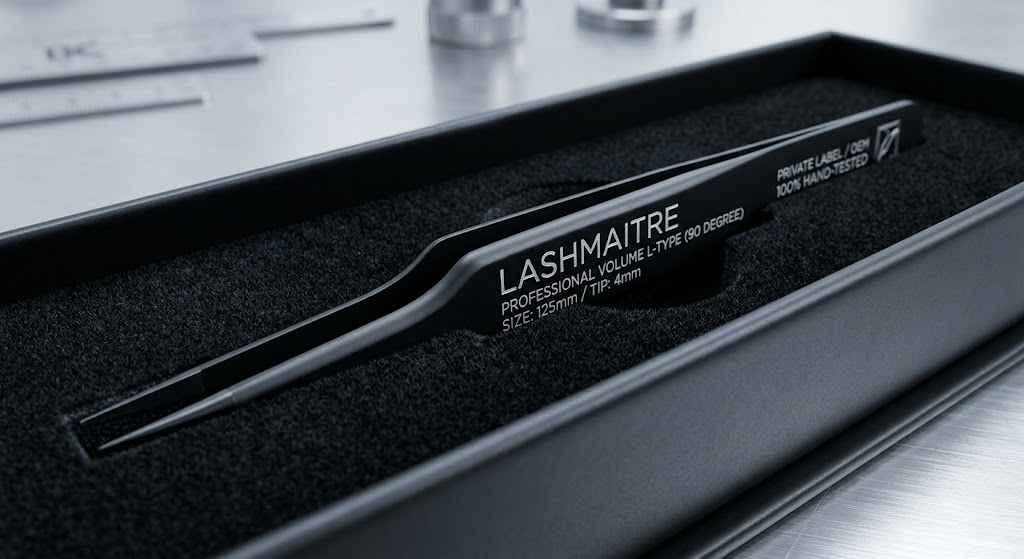
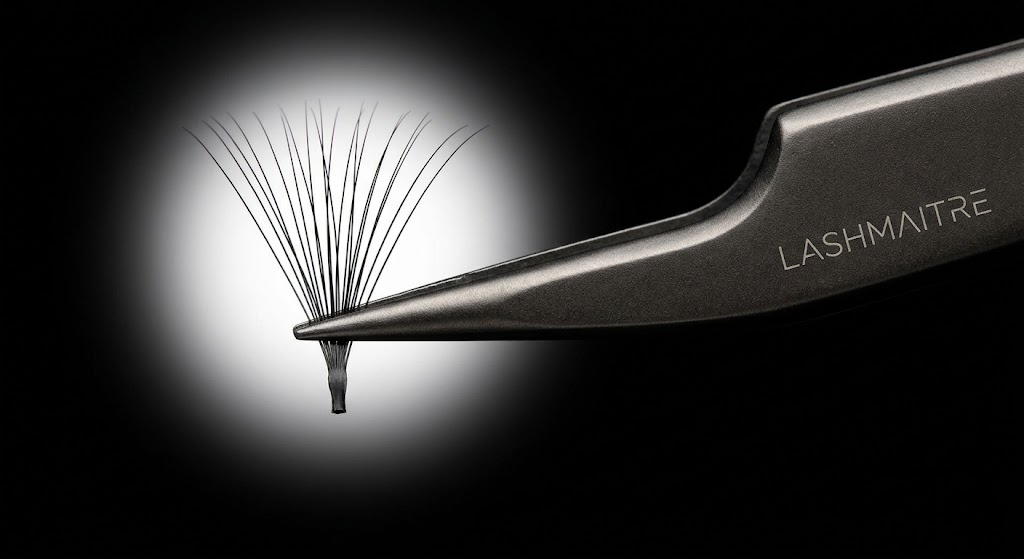
In the rigorous, mathematically driven context of professional Original Equipment Manufacturing (OEM), procuring volume eyelash extension tweezers does not mean stamping basic steel into a pointed shape. Functionally, it is defined as the strategic procurement of surgical-grade, high-carbon stainless steel instruments that have undergone meticulous manual calibration to create a seamless “sweet spot”—a localized pressure zone extending 3mm to 5mm down the inner blade. This precision zone must be capable of gripping up to twenty 0.03mm synthetic fibers simultaneously without allowing a single lash to slip, twist, or cross over. Furthermore, the instrument must maintain a highly calibrated, low-tension fulcrum to prevent repetitive strain injuries (RSI) and carpal tunnel syndrome in artists performing thousands of micro-movements per day.
Metallurgy: The Foundation of Surgical-Grade Hardware
To command elite wholesale pricing and establish unshakeable trust with professional salon franchises, procurement officers must deeply understand the metallurgical properties of the tools they distribute. A tweezer is only as reliable as the alloy from which it is forged.
The Rockwell Hardness Scale (HRC)
The performance of a lash instrument is entirely dictated by its hardness, measured on the Rockwell Hardness Scale (HRC). If a B2B distributor purchases cheap tools forged from low-grade mild steel, the metal will possess a low HRC rating (under 35).
- The Bending Defect: When a lash artist applies pressure to a low-HRC tool, the delicate tips will literally bend or warp over time. Even a microscopic bend of 0.01mm completely destroys the gripping capability of the tool.
- The Brittleness Defect: Conversely, if the steel is hardened too much (HRC 55+), it becomes glass-like and brittle. If an artist accidentally drops the tool onto a hard salon floor from a height of three feet, the tips will snap off completely.
Sourcing J2 420 Stainless Steel
For optimal performance in the mega-volume market, your Service Level Agreement (SLA) with your OEM factory must mandate the use of Japanese J2 420 Surgical Stainless Steel (or its metallurgical equivalent).
This specific alloy contains the perfect mathematical ratio of carbon (for hardness and edge retention) and chromium (for extreme corrosion resistance). Tools forged from J2 420 steel can be expertly heat-treated to an ideal HRC range of 40 to 45. This “Goldilocks zone” provides the ultimate balance: the tips are hard enough to maintain a perfectly flush closure under repetitive pressure, yet the metal retains enough microscopic elasticity to survive an accidental drop without snapping.
Sterilization and Corrosion Resistance
Furthermore, professional salons are strictly governed by local health and sanitation boards. Tools must be submerged in harsh chemical disinfectants (like Barbicide) or placed inside high-temperature autoclaves between every client.
If your wholesale catalog utilizes cheap, non-surgical alloys, the chemicals will aggressively oxidize the metal, causing rust to bloom at the fulcrum and along the inner blades within weeks. J2 420 stainless steel features high chromium content, creating a passive oxide layer that completely resists chemical degradation and thermal warping inside an autoclave, guaranteeing a long operational lifespan for your B2B clients.
Review our metallurgical data sheets and high-carbon stainless steel OEM capabilities
Table 1: Metallurgical Specifications for B2B Procurement
A technical comparison of common alloys used in the manufacturing of professional lash hardware.
| Metal Alloy Specification | Rockwell Hardness (HRC) | Corrosion & Autoclave Resistance | B2B Procurement Verdict |
| Standard Carbon Steel (Mild) | 30 – 35 (Too Soft) | Poor. Highly susceptible to rust in chemical baths. | Reject. Tips will warp under pressure; generates massive salon return rates. |
| 440C High-Carbon Steel | 55 – 60 (Too Hard) | Good. | Caution. Holds an edge well, but extreme brittleness means tips will snap instantly upon dropping. |
| Japanese J2 420 Surgical Steel | 40 – 45 (Optimal) | Excellent. 100% resistant to Barbicide and extreme autoclave heat. | Absolute Industry Standard. Provides perfect structural integrity, sweet-spot retention, and drop resilience for premium volume eyelash extension tweezers. |
Engineering the “Sweet Spot” and Eliminating Micro-Gaps
The most critical engineering failure in the global supply chain for lash tools is the “micro-gap.” A mega-volume lash artist frequently works with synthetic fibers that are 0.03mm in diameter—thinner than a human hair.
The Physics of the Squeeze
When an artist pinches a 15D (15-lash) fan of 0.03mm fibers and squeezes the tweezers closed, the inner blades must meet with absolute, flush perfection.
If the factory utilizes purely automated CNC (Computer Numerical Control) machining without manual post-processing, the machines will inevitably leave microscopic inconsistencies on the inner blades. If there is a gap of even 0.02mm near the tip, the incredibly fine 0.03mm fibers will slip through the gap. The fan will fall apart before the artist can dip it into the adhesive, completely destroying their application speed and causing immense frustration.
The “Light Test” Calibration
Premium OEM factories do not rely solely on machines to finalize the inner blades. They rely on master human technicians.
During the manufacturing of high-end volume eyelash extension tweezers, the tools undergo a rigorous manual calibration process. The technician files the inner blades by hand, constantly holding the closed tweezers up against a high-intensity LED backlight.
- Zero Light Leakage: If the technician can see even a sliver of light passing through the closure zone (the sweet spot), the tool is rejected and re-filed. The sweet spot must be perfectly flush for a minimum of 3mm to 5mm extending down from the tip.
- Uniform Pressure: The sweet spot cannot just touch; it must apply uniform pressure across the entire gripping zone. If the tip touches first, but the back of the sweet spot is slightly open, the fibers at the back of the fan will slip. Hand-filing ensures that when the artist applies normal pressure, the entire 5mm zone clamps down simultaneously with mathematical precision.
Ergonomics: The Cost of Hand Fatigue and High Tension
While the tip geometry determines if the tool can pick up a lash, the tension of the fulcrum determines how long the artist can use it. In the B2B sector, understanding ergonomics is directly tied to the financial success of your salon clients.
Repetitive Strain Injury (RSI)
A busy volume lash artist performs thousands of microscopic “squeeze and release” motions every single day.
If a B2B distributor supplies volume eyelash extension tweezers with a high-tension fulcrum (meaning the metal is very stiff and requires significant physical thumb strength to close), the artist’s hand will begin to cramp within the first two hours of their shift. Over months of use, this high-tension repetitive stress leads to severe tendonitis, carpal tunnel syndrome, and permanent nerve damage. When artists are in pain, their application speed drops, the salon’s daily revenue plummets, and the salon owner will ultimately blame your brand’s tools.
Calibrating Low-Tension Actuation
Your OEM procurement contract must specify strict tension tolerances. The metal at the rear of the tweezer (the fulcrum bend) must be precisely tempered to provide a “soft-spring” or low-tension actuation.
“A premium surgical-grade tool should require no more than a gentle, effortless squeeze to achieve total closure at the sweet spot. The tool must do the work, not the artist’s tendons. When B2B buyers mandate soft-tension calibration, they are directly investing in the physical longevity of their salon partners’ workforce.”
LASHMAITRE Ergonomic Engineering Directive: Fulcrum Actuation Limits
Explore our custom handle designs, diamond-grip textures, and ergonomic OEM calibrations
Advanced OEM Innovations: Fiber-Tip and Plasma Coating
The global market is rapidly evolving beyond bare stainless steel. To position your wholesale brand at the apex of the luxury market in 2026, you must integrate advanced surface modifications into your catalog of volume eyelash extension tweezers.
Nano-Grip Fiber-Tip Technology
The most explosive trend in hardware procurement is the “Fiber-Tip” (also known as Hex-Grip or Diamond-Cut).
Standard smooth steel relies entirely on the artist finding the exact sweet spot. Fiber-tip technology utilizes advanced laser etching to carve microscopic, cross-hatched hexagonal patterns deep into the inner blades of the tweezers.
- The Bite: This nano-texture creates massive mechanical friction. When the artist picks up a 20D fan of 0.03mm lashes, the microscopic grooves “bite” into the synthetic PBT plastic fibers.
- The B2B Advantage: Fiber-tip tools virtually eliminate the learning curve for beginner volume artists because the tool grips perfectly even if the artist’s finger pressure is slightly off. Distributing fiber-tip tools drastically reduces your B2B return rates because the tool practically guarantees a perfect fan every time.
DLC (Diamond-Like Carbon) and Plasma Deposition
Aesthetic branding is crucial for high-end distribution. Salons no longer want generic silver tools; they want matte black, rose gold, or iridescent blue.
However, cheap factories achieve these colors through standard liquid painting or powder coating. This is a fatal flaw. When painted tools are placed in an autoclave or Barbicide, the paint chips, flakes off, and contaminates the sterile environment. Furthermore, paint adds thickness to the tips, completely destroying the hand-filed sweet spot.
Premium B2B procurement mandates Plasma Vapor Deposition (PVD) or Diamond-Like Carbon (DLC) coating. These advanced metallurgical processes utilize ionized plasma in a vacuum chamber to permanently bond color to the steel at a molecular level. The coating is mere microns thick—meaning it does not alter the calibration of the sweet spot—and it is 100% immune to chipping, scratching, chemical solvents, and autoclave heat.
Table 2: Quality Assurance (QA) Defect Tolerances
Rigorous QC protocols your OEM factory must execute prior to export.
| QA Testing Protocol | B2B Acceptable Manufacturing Tolerance | Consequence of Factory Failure | Action Required |
| The LED Light Leak Test | Absolute zero light visible through the designated 5mm sweet spot under compression. | Micro-gaps allow 0.03mm fibers to slip; tools are entirely unusable for mega-volume. | Reject & Re-file manually. |
| Live Pickup Test (0.03mm) | Must successfully fan and lift ten 0.03mm fibers simultaneously without a single base crossing. | Inconsistent grip pressure forces artists to constantly drop fans, destroying service times. | Reject & Recalibrate. |
| Fulcrum Tension Audit | Closure must be achieved with a standardized, low-force compression metric. | High tension causes severe artist hand fatigue, cramping, and long-term carpal tunnel. | Reject & Re-temper the metal. |
| Autoclave Coating Simulation | PVD/Plasma coating must withstand 134°C (273°F) pressurized steam without discoloration. | Cheap paint flakes off into client’s eyes or contaminates sterile salon baths. | Immediate batch rejection. |
B2B Logistics: Packaging, Protection, and Private Labeling
Once the metallurgical engineering is perfected and the manual calibration is complete, the final phase of B2B procurement involves protecting the delicate tips during global freight and establishing your brand authority.
Tip Protection During Transit
The most mathematically perfect sweet spot in the world is useless if the tool is damaged in transit. If a distributor imports thousands of volume eyelash extension tweezers simply tossed into bulk plastic bags, the tools will crash against each other during ocean or air freight. The delicate 45-degree and 75-degree L-type tips will warp, arriving at your warehouse pre-defected.
Your SLA must mandate that every single instrument is shipped with a heavy-duty silicone tip protector. Furthermore, the tools must be individually housed in rigid acrylic tubes or custom-molded EVA foam inserts to completely neutralize kinetic shock during logistics.
OEM Laser Etching and Brand Authority
To command premium prices, you must transition from a generic supplier to an authoritative brand. LASHMAITRE offers precision fiber-laser engraving directly onto the handle of the J2 420 steel.
Unlike cheap pad printing which rubs off after a week of use, laser etching permanently burns your B2B wholesale logo, the specific tool model (e.g., “Mega-L 75°”), and the structural parameters into the metal. This ensures that every time the salon artist picks up the tool, they see your brand, cementing long-term wholesale loyalty and guaranteeing that they reorder exclusively from your catalog when expanding their salon staff.
Regulatory Compliance and Medical Standards
While lash tools are not technically invasive surgical instruments, they operate millimeters away from the human cornea. Distributing hardware to the professional beauty market carries significant liability.
Your OEM factory must operate under ISO 9001 Quality Management standards. The stainless steel utilized must be verifiable, and the factory should be able to provide metallurgical testing reports confirming the exact carbon and chromium ratios of the alloy. If a client suffers an allergic reaction (such as a severe nickel allergy from cheap, unregulated steel alloys), the distributor must be able to prove they sourced high-grade, medically safe materials.
By definitively abandoning cheap, machine-stamped mild steel, prioritizing Japanese J2 420 metallurgy, mandating manual LED light-test calibration, and embracing advanced Fiber-Tip technology, B2B buyers can transform their hardware catalog from a high-return liability into a prestigious, high-margin asset. The wholesale market heavily rewards distributors who understand that supplying premium volume eyelash extension tweezers is fundamentally an exercise in microscopic engineering, rigorous quality control, and an unyielding commitment to ergonomic health.
FAQ: Wholesale & OEM — volume eyelash extension tweezers
Why do some volume eyelash extension tweezers fail to pick up 0.03mm lashes, even when brand new?
The failure to pick up ultra-fine 0.03mm lashes is caused by “micro-gaps.” If a factory uses cheap automated stamping without manual post-processing, the inner blades are not perfectly flat. Even a microscopic 0.02mm gap will allow fine fibers to slip through. Premium OEM factories manually file the inner blades and perform an “LED Light Test” to ensure absolute, flush closure (the sweet spot), guaranteeing the tool can grip multiple fine lashes seamlessly.
What is the correct metal hardness (HRC) for professional lash tools?
Premium volume eyelash extension tweezers must be forged from high-grade surgical stainless steel (like Japanese J2 420) and heat-treated to a Rockwell Hardness (HRC) of 40 to 45. If the metal is too soft (under 35), the tips will bend under pressure. If the metal is too hard (above 55), it becomes brittle and the tips will snap off instantly if dropped on the salon floor. HRC 40-45 provides the perfect balance of structural edge retention and drop resilience.
What is “Fiber-Tip” technology and why is it highly requested by salons?
Fiber-Tip (or Nano-Grip) technology involves using a laser to etch microscopic, hexagonal cross-hatched grooves into the inner blades of the sweet spot. Instead of relying purely on smooth metal compression, these micro-grooves physically “bite” into the synthetic lash fibers. This creates massive mechanical friction, ensuring the volume fan never slips. Distributors who stock fiber-tip tools see significantly lower return rates because they are incredibly easy for both beginners and master artists to use.
Why is it dangerous to supply high-tension tweezers to a lash salon?
Tension refers to the amount of physical thumb pressure required to squeeze the tool closed. Volume lash artists perform thousands of micro-squeezes per day. If a B2B distributor supplies stiff, high-tension tools, the artist will quickly develop severe hand fatigue, cramping, and eventually repetitive strain injuries (RSI) like carpal tunnel syndrome. B2B buyers must mandate “low-tension” or “soft-spring” calibration from their OEM factory to protect the physical health and application speed of their salon clients.
References
- Guidelines for Quality Management Systems and Precision Tool Manufacturing – International Organization for Standardization (ISO 9001) – https://www.iso.org/iso-9001-quality-management.html
- Information on Stainless Steel Metallurgy, Rockwell Hardness (HRC), and Corrosion Resistance – The American Society for Testing and Materials (ASTM International) – https://www.astm.org/
- Ergonomics and Repetitive Strain Injury (RSI) Prevention in Fine Motor Professions – Occupational Safety and Health Administration (OSHA) – https://www.osha.gov/ergonomics
Are you ready to mathematically eliminate micro-gaps, bypass cheap machine-stamped liquidators, and launch a premium OEM hardware line engineered for absolute precision? Partner with a B2B manufacturing facility that understands the rigorous physics of metallurgical hardness, strict manual tension calibration, and the massive operational advantages of nano-grip technology. Contact us today to request comprehensive metallurgical testing reports, order low-tension hand-filed samples, and secure a customized B2B manufacturing quote tailored to bringing your ultimate catalog of volume eyelash extension tweezers to the wholesale market at https://www.lashmaitretrade.com.
Need wholesale lash products for your brand?
LASHMAITRE supplies wholesale eyelash extensions, lash extensions, private label packaging, OEM lash products, samples, and supplier support for salons, distributors, academies, and lash brands.
Wholesale lash sourcing
Request samples, OEM/private label options and pricing
Share your lash extension category, specs, quantity, packaging needs and destination market. LASHMAITRE will recommend suitable SKUs, sample options, lead time and wholesale pricing.

Lash Maitre: Your Trusted Partner in Eyelash extension Solutions
Lash Maitre is dedicated to providing professional insights and tips in the eyelash extension industry. Sharing the latest trends, techniques, and product knowledge, Lash Maitre helps lash artists and enthusiasts enhance their skills, stay inspired, and achieve the perfect lash experience.