Eyelash Extension Insurance: The Salon Owner’s Guide to Asset Protection & Risk Management
Share
- Last Updated: January 24, 2026
- Next Review Date: July 24, 2026
- Author: LASHMAITRE Business Strategy Team
- Reading Time: 45 Minutes
Table of Contents
- Introduction: One Lawsuit Can End Your Empire
- The Litigation Landscape: Why Lash Artists Are High-Risk Targets
- Core Coverage Analysis: General vs. Professional Liability
- The Hidden B2B Threat: Product Liability for Retailers & Wholesalers
- Cost Breakdown: How Much Does Peace of Mind Cost?
- Educators & Academies: Insurance for Training Programs
- Risk Management Protocols: The “Pre-Insurance” Defense
- Independent Contractors vs. Employees: Who Pays?
- The Claims Process: What to Do When Served
- Conclusion
- People Also Ask (FAQ)
Introduction: One Lawsuit Can End Your Empire
In the high-growth beauty sector, revenue generation often takes center stage. We obsess over retention rates, marketing funnels, and glue humidity levels. However, the foundation of a sustainable lash business is not marketing—it is protection. For the professional salon owner, eyelash extension insurance is not merely a regulatory hoop to jump through; it is the firewall between your business assets and personal bankruptcy.
Imagine this scenario: A client claims your adhesive caused a severe corneal abrasion, requiring surgery and weeks of lost wages. Or, a customer slips in your reception area. Without the correct eyelash extension insurance, you are personally liable for medical bills, legal fees, and settlement costs that can easily exceed $50,000.
This comprehensive white paper serves as your risk management manual. We will dissect the difference between esthetician malpractice insurance and general liability, analyze the specific needs of private label retailers (product liability), and provide a roadmap to securing your legacy against the unforeseen.
The Litigation Landscape: Why Lash Artists Are High-Risk Targets
The beauty industry in the United States is one of the most litigious sectors outside of medicine. Because lash extensions involve sharp metal tweezers, strong chemical adhesives (Cyanoacrylate), and the delicate ocular area, the margin for error is microscopic.
The “Sue-Happy” Culture
Clients today are more educated and more litigious. A simple allergic reaction can escalate into a lawsuit claiming “negligence” if you cannot prove you followed strict protocols.
- Chemical Burns: Fumes entering the eye due to improper taping.
- Infections: Claims of unsanitary tools causing conjunctivitis.
- Corneal Scratches: Physical trauma from eye pads or tweezers.
Asset Exposure
If you operate as a Sole Proprietorship (common for independent techs), your personal assets—your car, your home, your savings—are at risk in a lawsuit. Even LLCs can be “pierced” if business and personal finances are commingled. Eyelash extension insurance is the only true barrier.
Data Insight: According to 2025 industry insurance reports, the average settlement for an eye-injury claim in the beauty industry is $18,000, excluding legal defense fees which average $5,000 – $10,000.
Keywords included: eyelash extension insurance.
Core Coverage Analysis: General vs. Professional Liability
Many salon owners mistakenly believe a standard “Business Owners Policy” (BOP) covers everything. It does not. You must understand the distinction between the two pillars of coverage.
1. General Liability (GL): The “Slip and Fall” Coverage
This covers bodily injury or property damage to third parties that occurs on your premises but is not related to the professional service itself.
- Scenario: A client trips over a ring light cord in your lobby and breaks her wrist.
- Scenario: You spill coffee on a client’s designer handbag.
- Verdict: Mandatory for every business, especially if you rent a commercial space (landlords require it).
2. Professional Liability (PL): The “Malpractice” Coverage
Also known as “Errors and Omissions” (E&O). This covers you when the actual service goes wrong.
- Scenario: You accidentally glue an extension to the eyelid skin, causing a reaction.
- Scenario: A client claims your styling caused traction alopecia (permanent lash loss).
- Scenario: A client claims emotional distress from a “botched” job before her wedding.
- Verdict: This is the most critical component of eyelash extension insurance. Standard GL policies explicitly exclude professional services.
Coverage Comparison Matrix
| Feature | General Liability (GL) | Professional Liability (PL) |
| Primary Protection | Accidents / Property Damage | Service Errors / Negligence |
| Typical Trigger | Slips, Falls, Spills | Bad Reactions, Poor Work |
| Coverage Limit | Usually $1M – $2M | Usually $1M – $2M |
| Legal Defense? | Yes | Yes |
| Covers Lash Loss? | NO | YES |
Associated Bodywork & Massage Professionals (ABMP) Insurance Guide
Keywords included: lash technician liability coverage.
The Hidden B2B Threat: Product Liability for Retailers & Wholesalers
If you are just a lash artist, GL and PL might be enough. But if you are a salon owner who retails products (Lash Shampoo, Serums) or a Wholesaler creating a Private Label brand, you have a massive exposure gap.
The Retailer’s Risk
If you sell a bottle of Lash Shampoo to a client, and she has a reaction to it at home, you can be sued as the retailer, even if you didn’t manufacture it.
The Private Labeler’s Risk (Strict Liability)
If you buy glue from a manufacturer, put your logo on it, and sell it to other techs:
- You are considered the “Manufacturer of Record” in the eyes of the law.
- If that glue causes blindness in a salon across the country, you are liable.
- Solution: You MUST carry Product Liability Insurance.
Communicating with Manufacturers
Ensure your supplier (like LASHMAITRE) provides MSDS (Material Safety Data Sheets) for every chemical product. Your insurance carrier will demand these documents before underwriting a Product Liability policy.
Keywords included: product liability for private label lashes.
Cost Breakdown: How Much Does Peace of Mind Cost?
The cost of eyelash extension insurance varies based on location, revenue, and services offered. However, compared to a lawsuit, it is negligible.
Factors Influencing Premium
- Revenue: Higher revenue = higher risk exposure.
- Services: Adding “invasive” services like Microblading or Tinting increases premiums.
- Employees: Covering staff adds to the cost (Workers Comp).
- Location: Litigious states (California, New York) have higher rates.
Estimated Annual Insurance Costs (2026 Data)
| Business Type | Coverage Type | Estimated Annual Cost | Monthly Breakdown |
| Solo Artist (Booth Renter) | GL + PL | $180 – $350 | ~$20/mo |
| Small Salon (3 Staff) | GL + PL + Workers Comp | $1,200 – $2,500 | ~$150/mo |
| Lash Academy | Educator Liability | $600 – $1,000 | ~$65/mo |
| Product Wholesaler | Product Liability | $1,500 – $5,000+ | ~$250/mo |
Note: These are estimates. Always get a custom quote. Many professional associations (like ASCP) offer bundled insurance with membership for solo artists.
Keywords included: beauty salon business insurance cost.
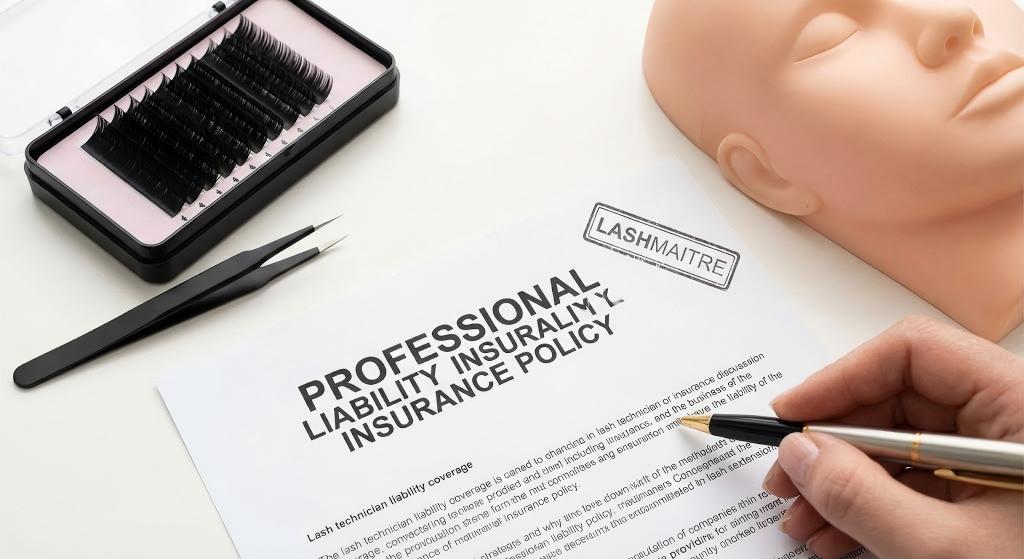
Educators & Academies: Insurance for Training Programs
If your salon offers “Lash Training” courses, your standard service insurance DOES NOT cover you.
Student Injury
If a student pokes a model’s eye during your class, or if a student injures themselves with tweezers, who is liable? You are.
Failure to Educate
Believe it or not, students can sue academies for “Failure to Educate” if they feel they didn’t learn enough to start a career.
The Solution: Educators Liability Insurance
You must add a rider to your policy specifically for Instruction/Teaching. This protects you against claims arising from your students’ actions during training and claims regarding the quality of your curriculum.
Risk Management Protocols: The “Pre-Insurance” Defense
Insurance is your safety net; risk management is the tightrope walker’s pole. It prevents the fall in the first place. Insurance companies will often deny claims if they find you were grossly negligent.
1. The Client Waiver (Consent Form)
This is non-negotiable. Every client, every time.
- Must Include: Acknowledgment of allergy risks, agreement to follow aftercare, and waiver of liability for “unknown reactions.”
- Digital Storage: Keep these forever. A lawsuit can happen 2 years later.
2. The Patch Test Protocol
Mandate patch tests for new clients. If a client refuses, have them sign a specific “Patch Test Waiver.” This is your primary defense in an allergy lawsuit.
3. Documentation
If an incident happens:
- Take photos of the reaction immediately.
- Save the specific bottle of glue used (batch number).
- Document exactly what was said and done.
Keywords included: esthetician malpractice insurance.
Independent Contractors vs. Employees: Who Pays?
The structure of your team dictates who needs to buy the eyelash extension insurance.
W-2 Employees
- Owner’s Responsibility: The salon owner MUST cover employees under the salon’s Professional Liability and Workers Compensation policy.
- Risk: If an employee hurts a client, the salon is sued.
1099 Independent Contractors (Booth Renters)
- Contractor’s Responsibility: They are separate business entities. They should carry their own insurance.
- B2B Strategy: As a salon owner, you must mandate (in the lease agreement) that all renters provide Proof of Insurance listing your salon as an “Additional Insured.”
- Why? If a renter blinds a client, the lawyer will sue the renter AND the salon owner. Being an “Additional Insured” on their policy protects you.
Keywords included: workers compensation for salons.
The Claims Process: What to Do When Served
If the worst happens and you receive a demand letter or are served with a lawsuit regarding eyelash extension insurance claims:
- Do Not Admit Fault: Never say “I’m sorry, it’s my fault” in writing or text. Say “I am sorry you are experiencing discomfort.”
- Contact Your Carrier Immediately: Most policies require notification within 24-72 hours of an incident (even before a lawsuit is filed).
- Preserve Evidence: Lock the client file, photos, and waiver. Do not alter anything.
- Let the Adjuster Handle It: Your insurance pays for the lawyer. Let them do the talking.
Conclusion
Eyelash extension insurance is the cost of doing business professionally. It separates the hobbyist from the entrepreneur. Whether you are a solo artist protecting your livelihood or a B2B wholesaler protecting a global supply chain, the right coverage safeguards your future.
Do not wait for a lawsuit to read your policy. Audit your coverage today. Ensure you have Professional Liability, verify your product liability limits, and force your contractors to get insured.
Protect your passion.
Ensure your business is as secure as your lash bonds.
Download Our “Lash Salon Risk Assessment Checklist”
People Also Ask (FAQ)
Q: Do lash techs need insurance?
A: Yes, absolutely. While some states may not explicitly demand it for licensure, operating without eyelash extension insurance (specifically Professional Liability) is financial suicide. A single lawsuit for an eye injury or allergic reaction can cost tens of thousands of dollars, which you would have to pay out of pocket without insurance.
Q: How much is insurance for eyelash extensions?
A: For a solo lash artist, the cost is quite affordable, typically ranging from $180 to $350 per year for a bundle of General and Professional Liability. For salon owners with employees, costs will be higher to include Workers Compensation and Property coverage.
Q: What does lash insurance cover?
A: A comprehensive policy covers:
- Professional Liability: Mistakes made during the service (e.g., glue in eye, scratching cornea).
- General Liability: Slip and fall accidents in your salon.
- Product Liability: Reactions to products you sell to clients.
- Property Coverage: Theft or fire damage to your equipment (optional add-on).
Q: Does my homeowners insurance cover my home lash studio?
A: No. Standard homeowners insurance specifically excludes business activities. If a client falls in your home studio or you burn their house down with a wax pot, your home insurance will likely deny the claim. You need a specific commercial endorsement or a separate business policy.
Q: What is the difference between claims-made and occurrence policies?
A: An Occurrence policy covers you for any incident that happened while the policy was active, even if the claim is filed years later (after you cancelled). A Claims-Made policy only covers you if the policy is active both when the incident happened AND when the claim is filed. Occurrence policies are generally preferred for long-term protection.
References & Further Reading
- Associated Bodywork & Massage Professionals (ABMP). Insurance Guides for Estheticians.
- Associated Skin Care Professionals (ASCP). Liability Insurance for Lash Artists.
- Veracity Insurance Solutions. Cosmetology Insurance Breakdown.
- U.S. Small Business Administration. Get Business Insurance.
- Grand View Research. Beauty Industry Liability Trends.

Lash Maitre: Your Trusted Partner in Eyelash extension Solutions
Lash Maitre is dedicated to providing professional insights and tips in the eyelash extension industry. Sharing the latest trends, techniques, and product knowledge, Lash Maitre helps lash artists and enthusiasts enhance their skills, stay inspired, and achieve the perfect lash experience.
Latest Post
Contact Us
related Post
-
Whitepaper: Macromolecular Chemistry and Logistics – What Type of Glue is Used for Eyelash Extensions?
Document Control & Status: 1. The B2B Procurement Fallacy in Adhesive Sourcing In the highly specialized ecosystem of professional aesthetics, the foundational pillar of any salon franchise’s operational success is the structural integrity of its adhesive supply chain. Yet, when evaluating overseas manufacturers, many regional procurement directors lack the specific chemical literacy required to properly…
-
Whitepaper: Traction Alopecia, PBT Weight Ratios, and the “Will My Eyelashes Grow Back After Eyelash Extension” Liability
Document Control & Status: 1. Introduction: The Corporate Liability of Follicular Trauma In the highly competitive, premium sector of the global aesthetic market, the most profound threat to a salon franchise’s recurring revenue model is not competitor pricing; it is the physical degradation of the client’s natural biology. Every academy educator, franchise CEO, and regional…
-
Whitepaper: Ocular Toxicology and Liability Management – Mitigating Blepharitis From Eyelash Extensions
Document Control & Status: 1. Introduction: The Corporate Liability of Ocular Complications In the rapidly expanding global aesthetic market, the profitability of a high-end salon franchise is deeply dependent on maximizing the Lifetime Value (LTV) of each client. However, this recurring revenue model is under constant threat from material-induced medical complications. Among the most prevalent…
-

7 Critical Supply Chain Secrets to Dominate the Blue Eyelash Extensions Market: A B2B Procurement Whitepaper
Document Control & Status: 1. Introduction: The High-Margin Potential of Blue Eyelash Extensions In the contemporary landscape of professional cosmetic services, the commoditization of standard black lashes has driven B2B procurement directors and salon franchise owners to desperately seek new avenues for premium upcharging. Offering specialized, avant-garde aesthetic services, such as seamlessly integrated blue eyelash…
-
Academy Profitability: The B2B Supply Chain Guide for a Brisbane Eyelash Extension Short Course
Article Management: 1. The Procurement Reality of a Brisbane Eyelash Extension Short Course In the highly lucrative Australian cosmetic education market, launching a brisbane eyelash extension short course requires more than just an experienced instructor; it requires an absolutely flawless supply chain. Many academy founders falsely believe that student frustration and low graduation rates are…
-
The B2B Science of C Curl Eyelash Extensions: Thermal Memory, Adhesion Physics, and Salon Profitability
Article Management: 1. The Commoditization Trap of C Curl Eyelash Extensions In the professional eyelash industry, the c curl eyelash extensions represent the absolute foundational baseline of any salon’s inventory. Designed to mimic the natural upward sweep of a perfectly applied mechanical eyelash curler, the C curl is universally applicable across almost all client eye…
-
Maximize Salon Revenue: Can I Apply Mascara to Eyelash Extensions? A B2B Retail Guide
Article Management: 1. The Golden Retail Opportunity: Can I Apply Mascara to Eyelash Extensions? In the hyper-competitive beauty industry, the most successful salons do not just sell time and services; they sell comprehensive, high-end cosmetic solutions. Every master educator, salon owner, and working lash artist has encountered the exact same anxious question from a first-time…
-
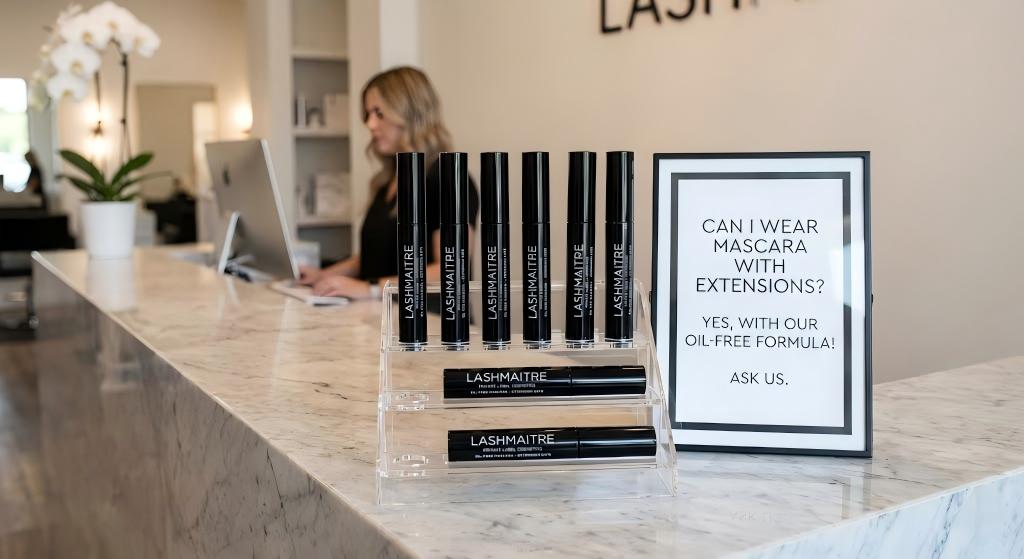
Maximize Salon Revenue: Can I Wear Mascara With Eyelash Extensions? A B2B Retail Guide
Article Management: 1. The Golden Retail Opportunity: Can I Wear Mascara With Eyelash Extensions? In the hyper-competitive beauty industry, the most successful salons do not just sell time and services; they sell comprehensive, high-end cosmetic solutions. Every master educator, salon owner, and working lash artist has encountered the exact same anxious question from a first-time…
-
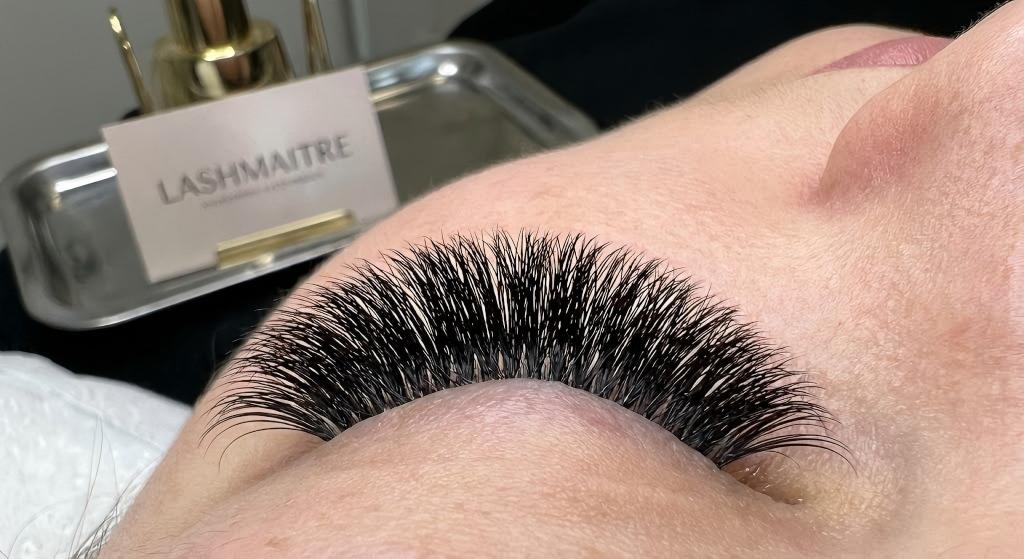
B2B Profit Truth for Salons: Can You Curl Eyelash Extensions?
Article Management: 1. The Ultimate Client Frustration: Can You Curl Eyelash Extensions? In the highly competitive beauty service sector, long-term client retention is the only metric that guarantees a salon’s survival. When a client returns for an infill appointment or calls the receptionist to nervously ask, can you curl eyelash extensions, it is a massive…
-
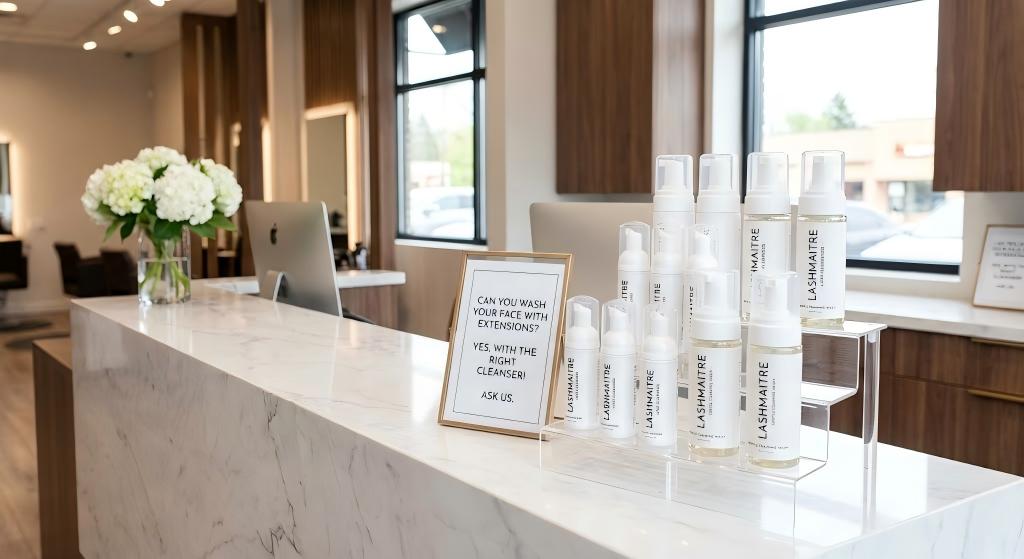
B2B Profit Strategy: Can You Wash Your Face With Eyelash Extensions?
Article Management: 1. The Ultimate Client Fear: Can You Wash Your Face With Eyelash Extensions? In the professional beauty service sector, educating your clientele is the absolute foundation of long-term client retention. Almost every new client sitting in a salon chair will nervously ask their artist: can you wash your face with eyelash extensions? For…
