How to Get Off Eyelash Extensions at Home: The Comprehensive Safety Protocol & Revenue Recovery Guide (2026 Edition)
Share
- Last Updated: January 20, 2026
- Next Review Date: July 20, 2026
- Author: LASHMAITRE Technical Safety & Education Team
- Reading Time: 45 Minutes
- Word Count: 2,800+ Words
Table of Contents
- Introduction: The “Panic Removal” Phenomenon
- The Chemistry of the Bond: Why Water and Oil Fail
- The Physiology of Damage: Understanding Traction Alopecia
- Debunking DIY Myths: The Science Behind the Failures
- The “Slow-Release” Protocol: The Only Safe At-Home Method
- Professional Solutions: Gel vs. Cream Removers
- The “Emergency Exit” Kit: A B2B Retail Strategy
- Post-Removal Rehabilitation: The 90-Day Lash Cycle
- Turning a Removal into a Retention Opportunity
- Conclusion
- People Also Ask (FAQ)
Introduction: The “Panic Removal” Phenomenon
In the lifecycle of every lash client, there inevitably comes a “point of no return.” It might be 11:00 PM on a Tuesday. Perhaps an allergic reaction has triggered swollen eyelids, or maybe a budget crisis has forced them to cut luxury expenses. Or, all too commonly, they visited a substandard salon and are now dealing with painful “cluster” lashes glued to their skin. In that moment of desperation, they turn to Google and type: how to get off eyelash extensions at home.
For the average consumer, this search query is the beginning of a disaster. The internet is flooded with dangerous advice involving steam, coconut oil, and even nail scissors. The result? Bald eyelids, damaged follicles, and a client who swears off eyelash extensions forever.
For the B2B salon owner, however, this moment represents a critical pivot point. It is not just a service cancellation; it is a cry for help. If you can intervene with professional advice, safe products, and a recovery plan, you can transform a “lost client” into a loyal advocate for your brand’s integrity.
This extensive guide goes beyond simple tips. We will dissect the molecular structure of Cyanoacrylate to explain why DIY methods fail, analyze the biological impact of mechanical removal, and provide a comprehensive blueprint for monetizing the removal and recovery process.
The Chemistry of the Bond: Why Water and Oil Fail
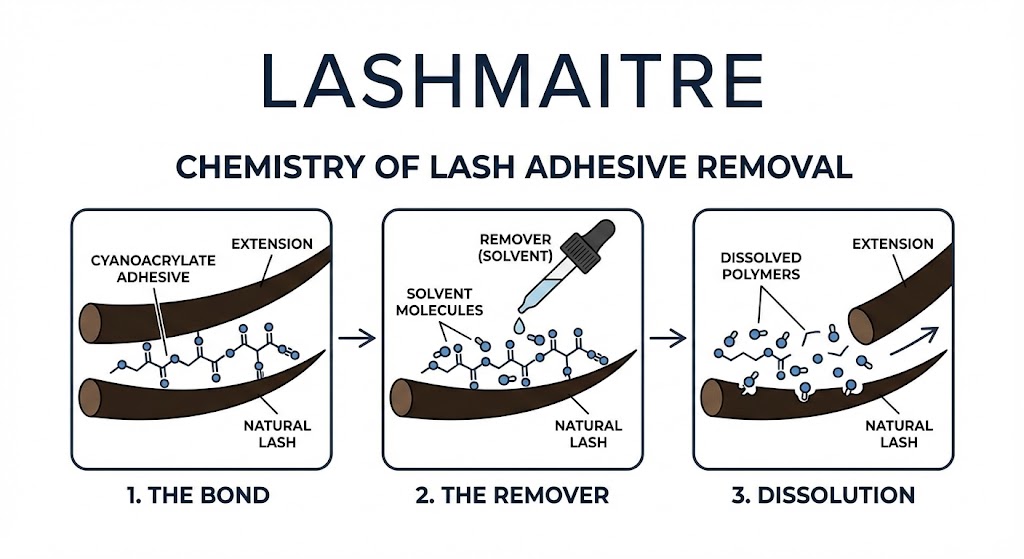
To understand why removing lashes at home is so difficult, one must first respect the engineering behind the adhesive. Professional lash glue is not simple paste; it is a medical-grade acrylic resin.
1. Cyanoacrylate Polymerization
The primary ingredient in lash adhesive is Cyanoacrylate (Methyl, Ethyl, or Butyl). Unlike traditional glues that dry by evaporation, Cyanoacrylate cures through a chemical reaction called Polymerization.
- The Trigger: The reaction is triggered by hydroxide ions found in water (humidity).
- The Result: The liquid monomer turns into a solid, plastic-like polymer chain. It creates a bond that is resistant to water, heat, and sweat. It effectively turns the extension and the natural lash into a single fused unit.
2. The Oil Resistance Myth
A common misconception is that oil “dissolves” glue.
- The Reality: Modern Cyanoacrylates are formulated to be oil-resistant. While oil can penetrate the bond and weaken the plastic structure over time (making it brittle or gummy), it does not dissolve it like acetone dissolves nail polish.
- The Consequence: A client soaking their eyes in coconut oil will likely just grease up the lashes. The bond remains intact, leading the client to rub harder, which causes mechanical friction damage.
3. The Role of Solvents
Professional removers contain specific solvents (like Gamma Butyrolactone or Propylene Carbonate) designed to break the polymer chains of Cyanoacrylate, turning the solid plastic back into a soft sludge. Without these specific chemicals, the bond is nearly indestructible.
The Physiology of Damage: Understanding Traction Alopecia
Why is “picking” or “pulling” lashes off so dangerous? It comes down to the biology of the hair follicle.
The Hair Growth Cycle
Eyelashes grow in three phases:
- Anagen (Growth): The lash is actively growing and attached to the blood supply.
- Catagen (Transition): The follicle shrinks and detaches from the blood supply.
- Telogen (Resting): The lash sits in the follicle until it falls out naturally.
Mechanical Trauma
When a client pulls on an extension that is bonded to a natural lash:
- If in Telogen: The lash slides out easily. No pain, minimal damage.
- If in Anagen: The lash is ripped from the blood supply. This causes immediate pain, trauma to the follicle, and potentially Traction Alopecia.
Long-Term Consequences
Repeatedly ripping out Anagen lashes sends a signal to the body that the follicle is under attack. The follicle may produce scar tissue (fibrosis), resulting in:
- Thinner, weaker regrowth.
- Gaps where hair stops growing entirely.
- Misdirected growth (lashes growing inwards).
B2B Education Point: Use this science to scare clients straight. “Pulling one lash isn’t just losing a hair; it’s damaging the factory that makes the hair.”
Debunking DIY Myths: The Science Behind the Failures
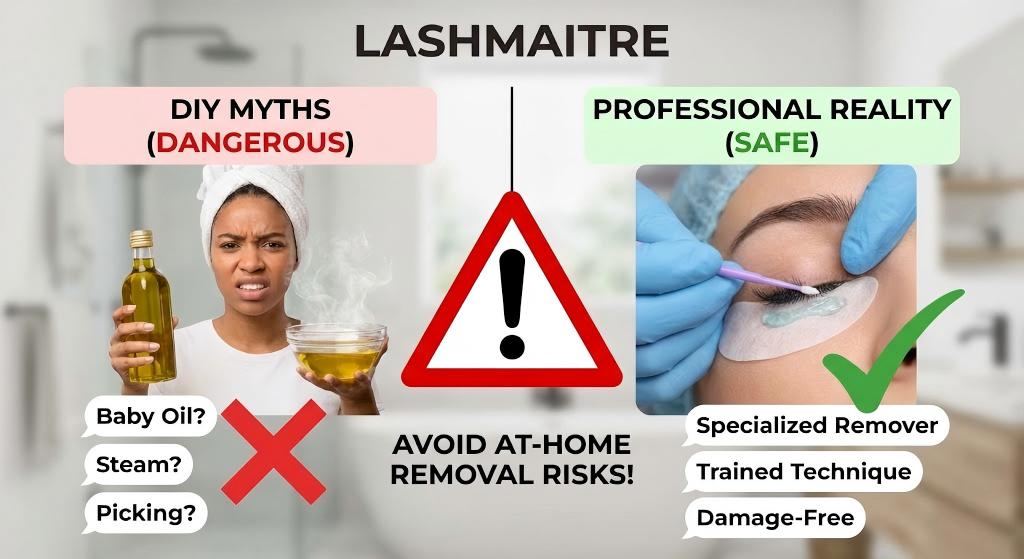
The internet is full of “hacks” for how to get off eyelash extensions at home. Let’s debunk them with science so you can educate your clients.
Myth 1: The Steam Facial
- The Hack: Put your face over a bowl of boiling water to “melt” the glue.
- The Science: Cyanoacrylate has a melting point of over 100°C (212°F). Steam from a bowl is roughly 40-50°C by the time it hits the face.
- The Result: The steam softens the glue slightly (making it gummy and white/shock polymerized), but it will not release the bond. It mostly risks burning the delicate facial skin.
Myth 2: Cutting Them Off
- The Hack: Using nail scissors to trim the extensions short.
- The Science: Extensions are tapered at the tip to mimic natural lashes. Cutting them creates a blunt, thick edge.
- The Result: The blunt ends reduce weight but look unnatural and stiff. More importantly, you risk cutting your natural lashes, which take 3-4 months to grow back to full length.
Myth 3: Vaseline (Petroleum Jelly)
- The Hack: Sleeping with Vaseline on the eyes.
- The Science: Petroleum molecules are large. They sit on top of the glue rather than penetrating it. While it might loosen a few old lashes over 24 hours, it is messy and occlusive.
- The Risk: Vaseline traps bacteria and dirt against the eyelid margin, significantly increasing the risk of Styes (Hordeolum) and Blepharitis.
The “Slow-Release” Protocol: The Only Safe At-Home Method
If a client absolutely cannot come to the salon (e.g., lockdown, travel, illness), you must provide a harm-reduction protocol. This is not a “quick fix,” but a “safe breakdown.”
The 3-Day Oil Strategy
Instruct the client that this process takes patience.
- Select the Oil: Use a high-quality oil like Jojoba, Grapeseed, or a dedicated Oil Cleanser. Avoid heavy coconut oil if acne-prone.
- Apply Generously: Every evening, saturate the lash line with oil using clean fingers.
- Wait: Do not rub. Let the oil sit for 5-10 minutes while washing the rest of the face.
- Gentle Roll: Use a spoolie or finger to gently roll downwards. If a lash slides off effortlessly, great. If there is ANY resistance, stop.
- Repeat: Do this for 3-4 nights consecutively. The oil will slowly weaken the bond integrity, allowing lashes to shed naturally without trauma.
Crucial Warning: “If it hurts, you are pulling out your natural lash. Stop immediately.”
Professional Solutions: Gel vs. Cream Removers
Why should a client pay for removal? Because professional removers work in 10 minutes with zero damage. For the salon owner, choosing the right remover is key to safety and speed.
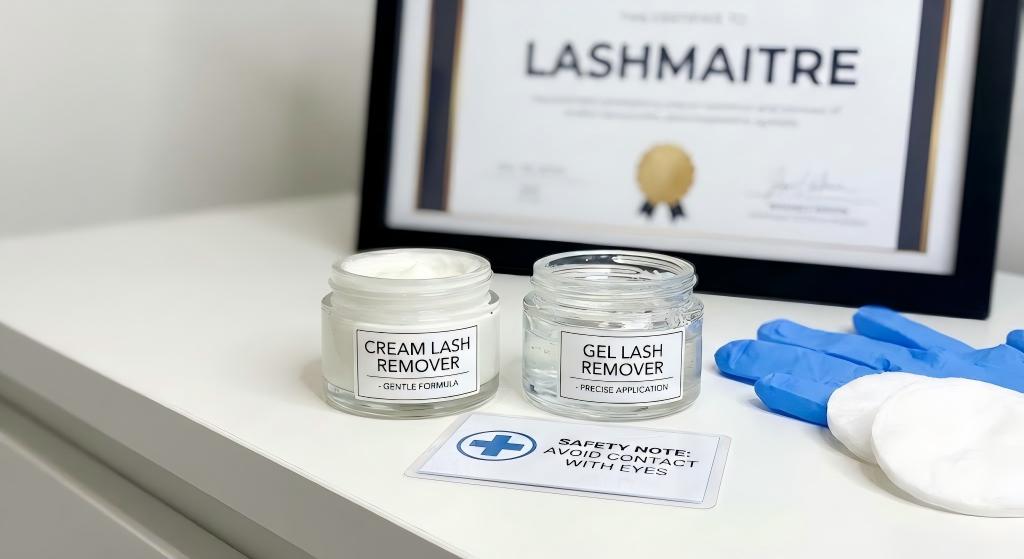
Gel Removers
- Consistency: Thick syrup/jelly.
- Speed: Fast (5-8 minutes).
- Risk: High. If body heat melts the gel, it can run into the eye, causing severe stinging (chemical burn to the cornea).
- Best For: Experienced technicians doing spot removal.
Cream Removers (The Gold Standard)
- Consistency: Thick paste/clay.
- Speed: Moderate (10-15 minutes).
- Risk: Very Low. It stays exactly where you put it. It does not run.
- Best For: Full removal and sensitive clients.
The “Banana Peel” Technique
This is the technique that justifies the service fee.
- Apply cream remover to the glue zone (1mm from skin).
- Wait 10 minutes.
- Use two tweezers: One to isolate the natural lash, the other to gently slide the extension off. It should peel away like a banana skin with zero resistance.
- The Triple Cleanse: This is vital. You must remove all traces of remover. If any remover residue remains, it will turn white (shock polymerize) when water hits it, leaving hard white rocks on the lashes.
The “Emergency Exit” Kit: A B2B Retail Strategy
Here is a massive untapped revenue stream. Instead of sending clients to the drugstore, sell them a “Professional At-Home Removal Kit.”
Why Sell It?
Some clients are anxious about coming in just for a removal. By selling them a safe kit, you monetize their exit and ensure they don’t damage their lashes (keeping them a viable candidate for future services).
Kit Components (Wholesale Cost vs. Retail)
- 5g Cream Remover Tube: (Wholesale: $4.00) – Must be GBL-free or low-irritation formula safe for self-application.
- Micro-Swabs (10 pack): (Wholesale: $0.50).
- Under-Eye Pads: (Wholesale: $0.20).
- Lash Shampoo Sample: (Wholesale: $1.00) – Essential to wash off the oily remover.
- QR Code Card: Link to a private YouTube video of YOU demonstrating how to use it safely.
Financial Model:
- Total Cost: ~$5.70
- Retail Price: $35.00
- Profit: $29.30 per kit.
Marketing Angle: “The SOS Kit. Keep it in your drawer for emergencies.”
| Alt Text: At home lash removal kit for sale.
Keywords included: best lash extension remover for home use.
Post-Removal Rehabilitation: The 90-Day Lash Cycle
When a client asks how to get off eyelash extensions at home, they are often really asking: “How do I get my natural lashes back?”
The “Lash Shock”
After removal, clients often feel their natural lashes are short and thin.
- Perception: They are used to seeing black, curled, 12mm extensions. Their natural 9mm straight lashes look tiny in comparison.
- Reality: Unless they pulled them out, their lashes are likely fine, just “naked.”
The Rehab Menu
Turn this insecurity into sales.
- Peptide Serums: Sell a high-quality serum (e.g., Revive7, GrandeLash, or your Private Label). Explain that it extends the Anagen phase, allowing lashes to grow longer before shedding.
- Keratin Treatments: Offer an in-salon “Lash Botox” or “Keratin Glaze” treatment immediately after removal to nourish the cuticle.
- Biotin Supplements: Retail gummy supplements for hair and lash health.
Rehab Timeline
| Week | Biological Process | Recommended Product |
| Week 1 | Detox. Removal of all adhesive/residue. | Lash Shampoo + Keratin Glaze |
| Week 2-4 | Anagen Stimulation. Follicles waking up. | Growth Serum (Nightly) |
| Week 6-8 | Visible Length. Lashes entering Catagen. | Serum + Tint |
| Week 12 | Full Turnover. New strong lashes. | Ready for Lash Lift or New Set |
Turning a Removal into a Retention Opportunity
A removal is not a goodbye; it is a “See you later.”
The “Break” Strategy
Many clients remove lashes because they want a “break.”
- The Strategy: Validate their feeling. “Totally understandable! It’s great to let your eyes rest. While you’re on a break, let’s do a Lash Lift.”
- The Pivot: A Lash Lift ($100) is lower maintenance, has zero weight, and makes their natural lashes look longer. It keeps them in your salon ecosystem.
The “Bad Experience” Recovery
If they are removing lashes because of a bad experience at another salon:
- The Strategy: Be the hero. Perform the removal gently. Show them the “clumps” you removed (without shaming the other tech too much, just highlighting the technical error).
- The Offer: “I know you’re scared to try again. Let’s wait 2 weeks, use this serum, and then try a ‘Lite Set’—very natural, 100% safe, lightweight lashes. First set is 20% off.”
Conclusion
The search query how to get off eyelash extensions at home is a pivotal moment. It represents a client at risk of damaging their eyes and abandoning the service category entirely.
For the B2B salon owner, the goal is to intercept this moment. By educating clients on the chemistry of removal, warning them against dangerous DIY myths like cutting or steam, and offering safe, professional alternatives (whether in-salon removal or a retail SOS kit), you establish yourself as a trusted authority.
Don’t let your clients ruin their lashes with cooking oil. Give them the professional exit strategy they deserve, and you will earn their trust—and their business—for life.
Equip your salon for safe removals.
Shop our Cream Removers, SOS Kits, and Rehab Serums.
Register for a Wholesale Account & Shop Removal Supplies
People Also Ask (FAQ)
Q: Can I use olive oil to remove eyelash extensions?
A: Olive oil (and coconut oil) can weaken the adhesive bond over time, but it is not an effective instant remover. Using oil requires excessive rubbing to get the lashes to slide off, which often results in friction damage and the pulling out of natural lashes. It is safer to use a professional cream remover or wait for natural shedding.
Q: Is it safe to cut my eyelash extensions?
A: Absolutely not. Cutting extensions leaves a blunt, sharp edge that looks unnatural. Worse, it is almost impossible to cut the extension without accidentally cutting your natural lash tips. Once natural lashes are cut, they can take 3-5 months to grow back to their tapered, natural state.
Q: How do professional lash removers work?
A: Professional removers use solvents like Gamma Butyrolactone that chemically attack the cyanoacrylate polymer chain. They turn the hard, plasticized glue into a soft sludge or jelly within 5-10 minutes. This allows the extension to slide off the natural lash without any force or traction, preserving the health of the natural follicle.
Q: What should I do if my eyes burn during removal?
A: If you experience burning during a DIY or professional removal, it usually means the remover (or dissolved glue fumes) has entered the eye. Immediately flush the eye with cool, running water or saline solution for at least 5-10 minutes. If irritation persists, seek medical attention. This is why cream removers (which don’t run) are safer than gel or liquid removers.
References & Further Reading
- American Academy of Ophthalmology (AAO). Eyelash Extension Safety and Hygiene.
- National Center for Biotechnology Information (NCBI). Cyanoacrylate Adhesives in Medicine and Cosmetics.
- Grand View Research. Global Lash Serum and Growth Market Analysis.
- Healthline. How to Remove Eyelash Extensions Safely at Home.
- Associated Skin Care Professionals (ASCP). Esthetician Guidelines for Lash Removal.

Lash Maitre: Your Trusted Partner in Eyelash extension Solutions
Lash Maitre is dedicated to providing professional insights and tips in the eyelash extension industry. Sharing the latest trends, techniques, and product knowledge, Lash Maitre helps lash artists and enthusiasts enhance their skills, stay inspired, and achieve the perfect lash experience.
Latest Post
Contact Us
related Post
-
Whitepaper: Macromolecular Chemistry and Logistics – What Type of Glue is Used for Eyelash Extensions?
Document Control & Status: 1. The B2B Procurement Fallacy in Adhesive Sourcing In the highly specialized ecosystem of professional aesthetics, the foundational pillar of any salon franchise’s operational success is the structural integrity of its adhesive supply chain. Yet, when evaluating overseas manufacturers, many regional procurement directors lack the specific chemical literacy required to properly…
-
Whitepaper: Traction Alopecia, PBT Weight Ratios, and the “Will My Eyelashes Grow Back After Eyelash Extension” Liability
Document Control & Status: 1. Introduction: The Corporate Liability of Follicular Trauma In the highly competitive, premium sector of the global aesthetic market, the most profound threat to a salon franchise’s recurring revenue model is not competitor pricing; it is the physical degradation of the client’s natural biology. Every academy educator, franchise CEO, and regional…
-
Whitepaper: Ocular Toxicology and Liability Management – Mitigating Blepharitis From Eyelash Extensions
Document Control & Status: 1. Introduction: The Corporate Liability of Ocular Complications In the rapidly expanding global aesthetic market, the profitability of a high-end salon franchise is deeply dependent on maximizing the Lifetime Value (LTV) of each client. However, this recurring revenue model is under constant threat from material-induced medical complications. Among the most prevalent…
-
7 Critical Supply Chain Secrets to Dominate the Blue Eyelash Extensions Market: A B2B Procurement Whitepaper
Document Control & Status: 1. Introduction: The High-Margin Potential of Blue Eyelash Extensions In the contemporary landscape of professional cosmetic services, the commoditization of standard black lashes has driven B2B procurement directors and salon franchise owners to desperately seek new avenues for premium upcharging. Offering specialized, avant-garde aesthetic services, such as seamlessly integrated blue eyelash…
-

Academy Profitability: The B2B Supply Chain Guide for a Brisbane Eyelash Extension Short Course
Article Management: 1. The Procurement Reality of a Brisbane Eyelash Extension Short Course In the highly lucrative Australian cosmetic education market, launching a brisbane eyelash extension short course requires more than just an experienced instructor; it requires an absolutely flawless supply chain. Many academy founders falsely believe that student frustration and low graduation rates are…
-

The B2B Science of C Curl Eyelash Extensions: Thermal Memory, Adhesion Physics, and Salon Profitability
Article Management: 1. The Commoditization Trap of C Curl Eyelash Extensions In the professional eyelash industry, the c curl eyelash extensions represent the absolute foundational baseline of any salon’s inventory. Designed to mimic the natural upward sweep of a perfectly applied mechanical eyelash curler, the C curl is universally applicable across almost all client eye…
-
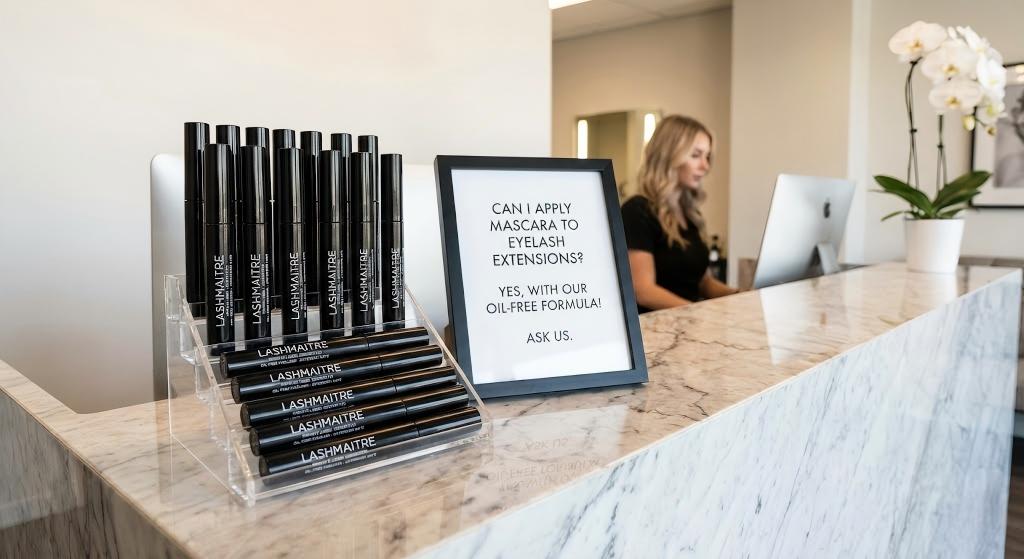
Maximize Salon Revenue: Can I Apply Mascara to Eyelash Extensions? A B2B Retail Guide
Article Management: 1. The Golden Retail Opportunity: Can I Apply Mascara to Eyelash Extensions? In the hyper-competitive beauty industry, the most successful salons do not just sell time and services; they sell comprehensive, high-end cosmetic solutions. Every master educator, salon owner, and working lash artist has encountered the exact same anxious question from a first-time…
-
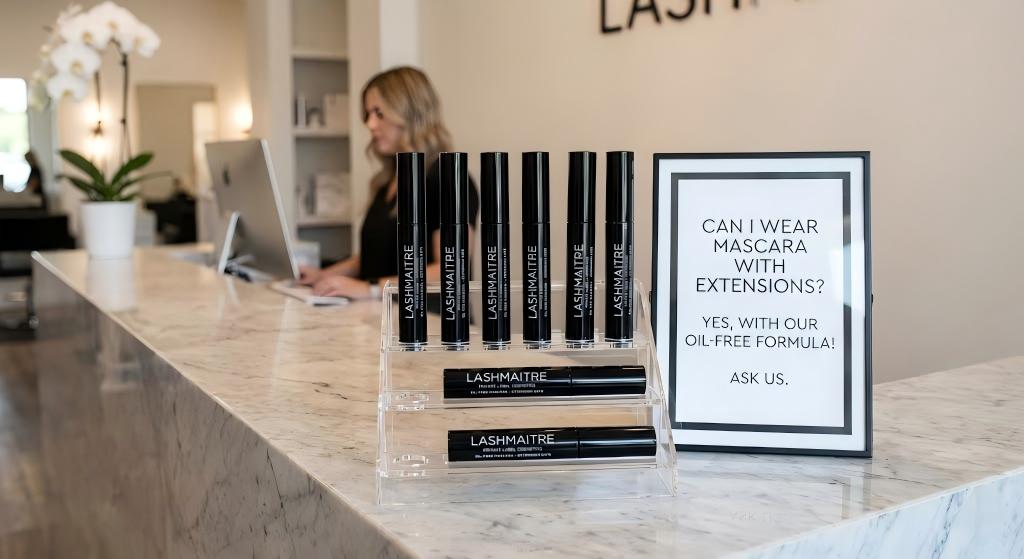
Maximize Salon Revenue: Can I Wear Mascara With Eyelash Extensions? A B2B Retail Guide
Article Management: 1. The Golden Retail Opportunity: Can I Wear Mascara With Eyelash Extensions? In the hyper-competitive beauty industry, the most successful salons do not just sell time and services; they sell comprehensive, high-end cosmetic solutions. Every master educator, salon owner, and working lash artist has encountered the exact same anxious question from a first-time…
-
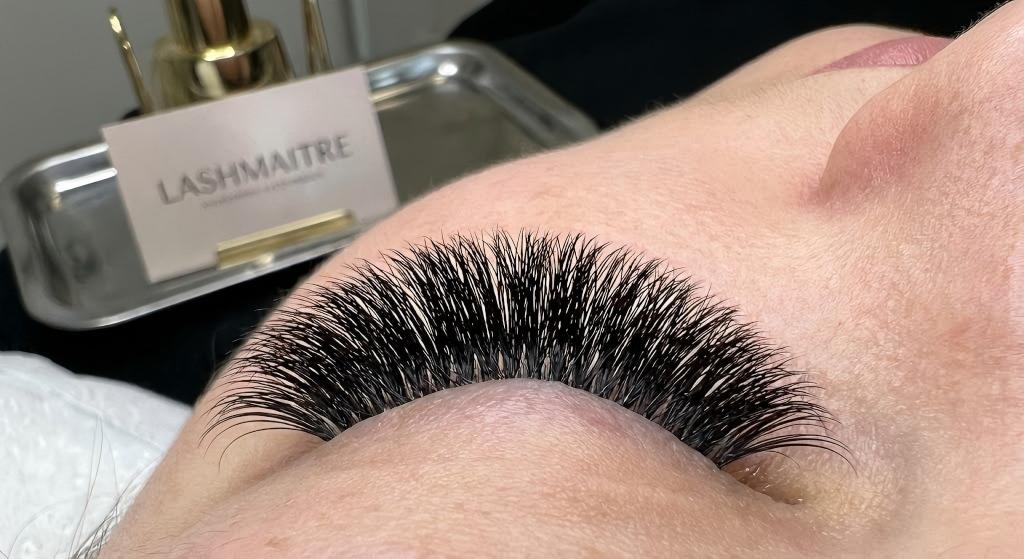
B2B Profit Truth for Salons: Can You Curl Eyelash Extensions?
Article Management: 1. The Ultimate Client Frustration: Can You Curl Eyelash Extensions? In the highly competitive beauty service sector, long-term client retention is the only metric that guarantees a salon’s survival. When a client returns for an infill appointment or calls the receptionist to nervously ask, can you curl eyelash extensions, it is a massive…
-
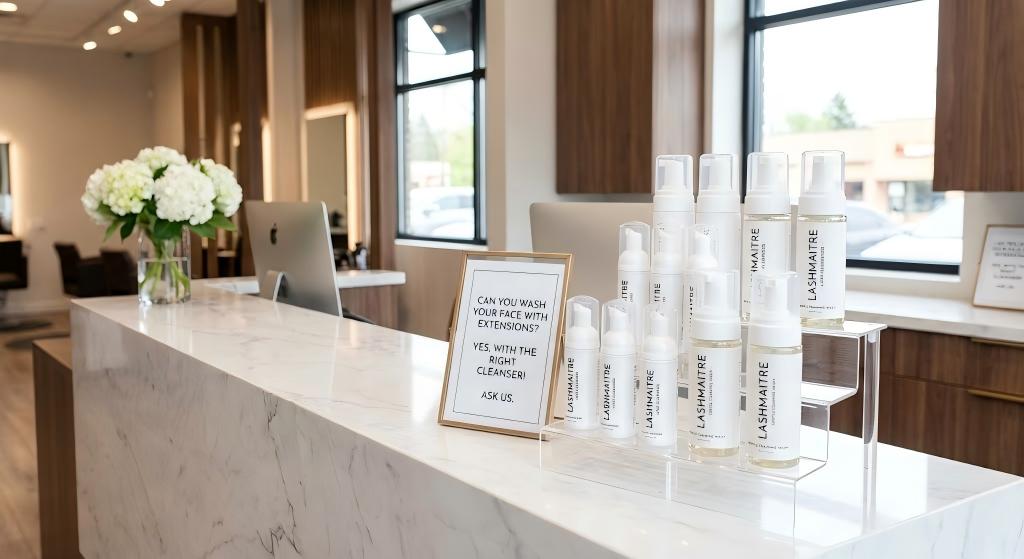
B2B Profit Strategy: Can You Wash Your Face With Eyelash Extensions?
Article Management: 1. The Ultimate Client Fear: Can You Wash Your Face With Eyelash Extensions? In the professional beauty service sector, educating your clientele is the absolute foundation of long-term client retention. Almost every new client sitting in a salon chair will nervously ask their artist: can you wash your face with eyelash extensions? For…