Can You Use Latisse with Eyelash Extensions? The 2026 Safety & Growth Guide
Share
Author: LASHMAITRE Safety & Education Team
Topic: Medical Safety & Retail Strategy
Reading Time: 25 Minutes
Introduction
In the quest for the ultimate lash look, clients often want it all: the instant gratification of extensions and the long-term biological boost of growth serums. One question we hear daily in salons across the US is: can you use latisse with eyelash extensions?
The short answer is yes. You can use Latisse (and its generic forms) while wearing extensions. It is a water-based solution that will not dissolve the cyanoacrylate adhesive. However, for salon owners and wholesalers, the answer is more nuanced. While safe for the bond, combining these two treatments creates a “Retention Paradox.” The accelerated growth caused by Latisse means extensions will grow out faster, twist sooner, and require more frequent maintenance.
This comprehensive guide will scientifically dissect the interaction between lash growth cycle and extensions, analyze the bimatoprost side effects that every lash artist must know, and explore why retailing lash serum safe for extensions (specifically peptide-based ones) is a smarter business move than recommending a prescription drug.
The Science of Growth: How Bimatoprost Works
To understand the interaction, we must understand the drug. Latisse is the only FDA-approved treatment for hypotrichosis (inadequate lashes). Its active ingredient is Bimatoprost.
The Mechanism
Bimatoprost is a prostaglandin analog. It works by:
- Extending the Anagen Phase: It keeps the lash in the active growth phase longer.
- Increasing Bulb Size: It stimulates the follicle to produce a thicker hair shaft.
- Increasing Melanin: It darkens the lashes.
Regulatory Citation: According to the U.S. Food and Drug Administration (FDA), Latisse was originally developed as a glaucoma drug (Lumigan). Its side effect of hair growth was repurposed for cosmetic use.
Natural Cycle vs. Latisse Cycle
| Phase | Natural Duration | Latisse Impact | Effect on Extensions |
| Anagen (Growth) | 4 – 6 Weeks | Extends to 8+ Weeks | Lashes grow longer, carrying the extension further from the lid. |
| Catagen (Transition) | 2 – 3 Weeks | Delays onset | Keeps lashes “active” longer. |
| Telogen (Resting) | 3 – 4 Months | Shortens phase | Rapid replacement of old lashes. |
The Retention Paradox: Faster Growth = Faster Shedding
Here lies the critical information for your B2B clients. While can you use latisse with eyelash extensions is a “yes,” it changes the salon’s schedule.
The Outgrowth Issue
- Normal Growth: Lashes grow approx. 0.12mm to 0.14mm per day.
- Latisse Growth: Can increase rate and length significantly.
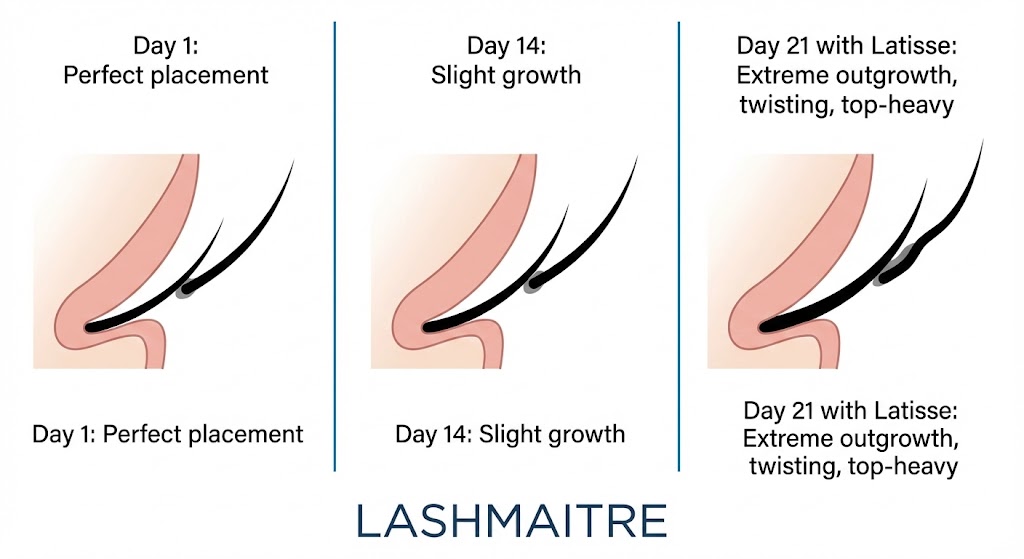
- The Result: An extension applied 1mm from the lid will be 3-4mm away from the lid in just two weeks. This causes the extension to become top-heavy, twist, and droop.
Data Insight
Research indicates that clients using growth serums require “fills” (touch-ups) every 2 weeks rather than the standard 3-4 weeks.
- Pros: More frequent visits = More revenue per client.
- Cons: If the client waits too long, the set looks messy and grown out, potentially damaging your salon’s reputation for quality.
Chemical Compatibility: Will Latisse Dissolve Glue?
A common myth among clients is that the serum itself will melt the glue.
The Chemistry
- Latisse: Is an aqueous (water-based) ophthalmic solution. It contains Benzalkonium Chloride as a preservative.
- Lash Glue: Cyanoacrylate is resistant to water once cured. It is vulnerable to Oils and Glycols.
- Verdict: Since Latisse is oil-free, it is chemically safe for the bond.
Application Protocol to Protect the Bond
- Wait 48 Hours: Do not apply Latisse for 48 hours after a fresh full set to allow the adhesive to fully polymerize.
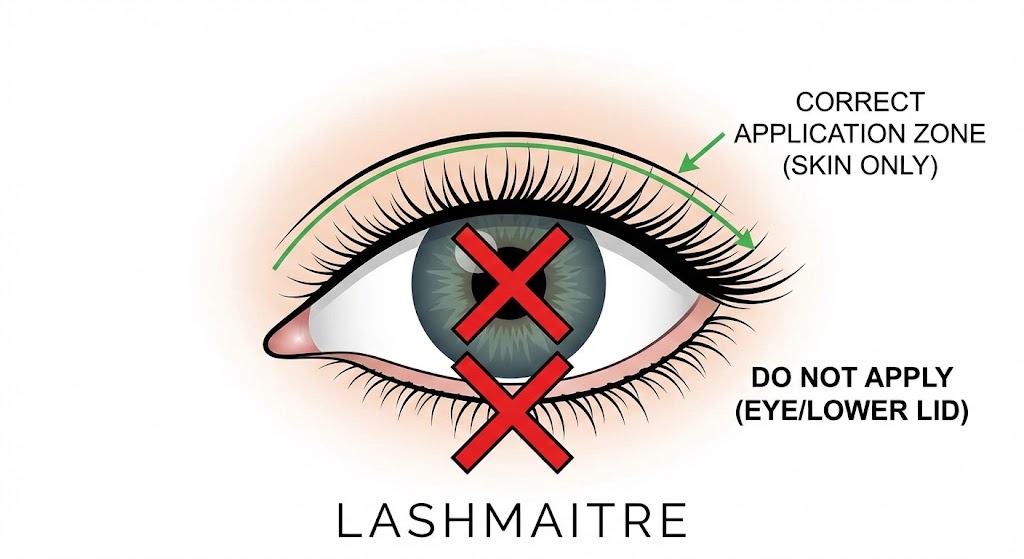
- Skin Only: Apply the serum to the skin of the eyelid margin, not the lashes themselves.
- Micro-Drop: Use a tiny amount. Flooding the lash line can cause “shock curing” (whitening) of the glue if it hasn’t fully set, or cause buildup.
The Risk Profile: Side Effects You Must Know
As a beauty professional, you have a duty of care. While you cannot prescribe Latisse, you must be aware of bimatoprost side effects to advise clients when to stop.
The “Sunken Eye” Risk
Prostaglandin analogs (like Bimatoprost) have been linked to Periorbital Volume Loss (PAP).
- What is it? The drug can cause the fat pads around the eye to atrophy (shrink).
- The Look: This creates a hollow, sunken appearance and can make the eyelids look darker and more wrinkled.
Medical Authority: The American Academy of Ophthalmology (AAO) lists iris pigmentation (permanent darkening of the colored part of the eye) and eyelid skin darkening as potential side effects.
The Retail Opportunity: Peptide Serums vs. Prostaglandins
This section is vital for your profit margin. Instead of sending clients to a doctor for Latisse, sell them a Peptide-Based Serum in your salon.
Why Peptides?
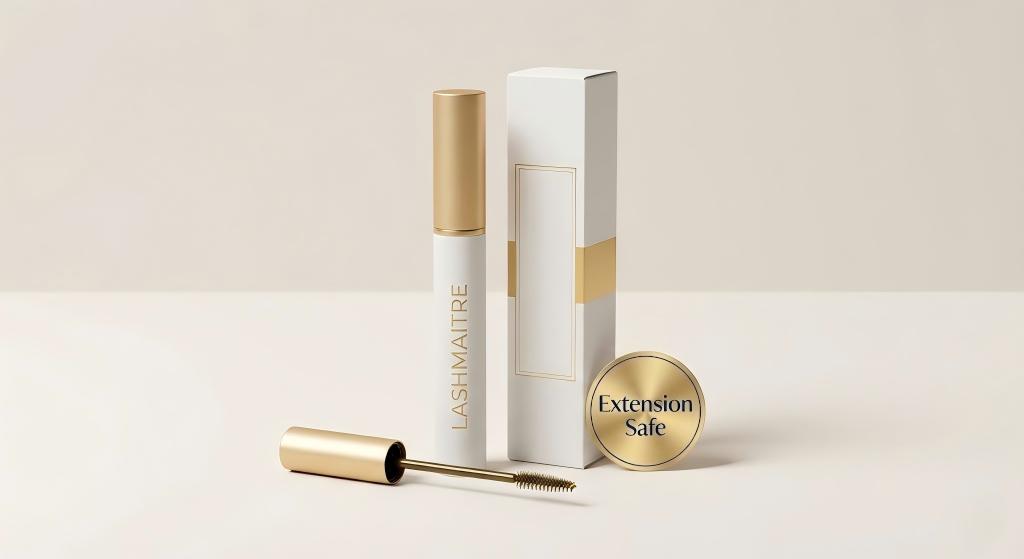
- Safety: They do not contain hormones or drugs. They use chains of amino acids (like Myristoyl Pentapeptide-17) to nourish the follicle.
- No Side Effects: No risk of changing eye color or fat loss.
- Extension Safe: Specifically formulated to be
lash serum safe for extensions.
The B2B Comparison (Selling vs. Prescribing)
| Feature | Latisse (Bimatoprost) | LASHMAITRE Peptide Serum |
| Classification | Prescription Drug (Rx) | Cosmetic (Retail) |
| Can you sell it? | No (Doctors/Pharmacies only) | Yes (High Margin) |
| Side Effects | High (Redness, Fat Loss) | Low / None |
| Price to Client | $150+ per month | $50 – $80 per month |
| Compatibility | Safe (Water-based) | Optimized (Conditioning) |
| Goal | Medical Growth | Health & Retention |
Business Logic: By answering “can you use latisse with eyelash extensions” with “Yes, but our Peptide Serum is safer and designed for extensions,” you capture revenue that would otherwise go to a pharmacy.
Application Protocol: Educating Your Clients
If a client insists on using growth serums, guide them on latisse vs over the counter lash serum usage.
The Daily Routine for Serum Users
- Cleanse First: Use an oil-free Lash Shampoo to remove makeup and sebum.
- Dry Thoroughly: The skin must be dry.
- One Dip: Dip the brush once for both eyes. Do not double dip.
- Precision: Paint a thin line along the base of the upper lashes only.
- Wait: Wait 90 seconds before applying skincare or sleeping to prevent the product from transferring to the pillow or lower lashes.
Sourcing Strategy: Adding Safe Serums to Your Menu
For wholesalers, adding a private label serum is a strategic move.
What to Look For
When sourcing a best lash serum for extensions to put your brand on:
- Oil-Free: Mandatory.
- Prostaglandin-Free: Avoid Isopropyl Cloprostenate if you want to avoid “drug” labels and side effects.
- Key Ingredients: Look for Biotin, Panthenol, Hyaluronic Acid, and Peptides.
Ingredient Watchlist
| Ingredient Type | Status | Function |
| Bimatoprost | Rx Only | Drug-induced growth |
| Peptides | Safe / Retail | Nourish and strengthen |
| Castor Oil | Avoid | Dissolves glue |
| Alcohol | Avoid | Dries out extensions |
| Panthenol | Safe | Hydrates lashes |
Conclusion: Growth with Guidance
In conclusion, can you use latisse with eyelash extensions? Yes. The chemistry allows it. However, the biology makes it complicated. The accelerated growth cycle requires more frequent maintenance, and the potential medical side effects are significant.
For the modern salon owner in 2026, the best strategy is education and alternatives. Inform your clients about the maintenance commitment of Latisse, but offer them a high-quality, peptide-based alternative from your own retail shelf. This protects their eyes, preserves their extensions, and boosts your bottom line.
LASHMAITRE offers premium, extension-safe peptide serums ready for your private label.
Ready to retail the safest growth solution?
Stock your shelves with science-backed serums.
Register for a Wholesale Account & Shop Lash Serums
People Also Ask (FAQ)
Q: Can you use Latisse with eyelash extensions?
A: Yes, you can use Latisse with eyelash extensions. Latisse is a water-based solution, so it will not dissolve the eyelash extension glue (which is typically vulnerable to oils). However, because Latisse speeds up the natural lash growth cycle, your extensions will grow out faster, meaning you will need to book “fill” appointments more frequently (every 2 weeks instead of 3-4).
Q: Does lash serum ruin eyelash extensions?
A: Not if you choose the right one. Oil-based serums will ruin extensions by breaking down the adhesive. However, water-based serums (like Latisse) or specialized peptide serums are lash serum safe for extensions. In fact, using a strengthening serum can help natural lashes support the weight of extensions better, preventing breakage.
Q: What happens if I stop using Latisse while wearing extensions?
A: If you stop using Latisse, your natural lashes will gradually return to their original growth cycle and length over several weeks or months. You may notice a period of shedding as the “extended life” lashes fall out to be replaced by normal ones. This can make your extensions look sparse temporarily, so you may need a fuller set during this transition.
References & Further Reading
- U.S. Food and Drug Administration (FDA). Latisse Prescribing Information.
- American Academy of Ophthalmology (AAO). Latisse: What you need to know.
- National Center for Biotechnology Information (NCBI). Prostaglandin analogs and periocular changes.
- PubMed. Efficacy and Safety of Bimatoprost.
📅 Content Administration
- Last Updated: January 17, 2026
- Changelog:
- v1.0: Initial publication. Content focuses on Bimatoprost chemistry and Retention Paradox.
- v1.1: Added “Side Effects” (Fat Loss) and “Peptide Serum” comparison.
- Next Review Date: July 17, 2026

Lash Maitre: Your Trusted Partner in Eyelash extension Solutions
Lash Maitre is dedicated to providing professional insights and tips in the eyelash extension industry. Sharing the latest trends, techniques, and product knowledge, Lash Maitre helps lash artists and enthusiasts enhance their skills, stay inspired, and achieve the perfect lash experience.
Latest Post
Contact Us
related Post
-

Whitepaper: Macromolecular Chemistry and Logistics – What Type of Glue is Used for Eyelash Extensions?
Document Control & Status: 1. The B2B Procurement Fallacy in Adhesive Sourcing In the highly specialized ecosystem of professional aesthetics, the foundational pillar of any salon franchise’s operational success is the structural integrity of its adhesive supply chain. Yet, when evaluating overseas manufacturers, many regional procurement directors lack the specific chemical literacy required to properly…
-
Whitepaper: Traction Alopecia, PBT Weight Ratios, and the “Will My Eyelashes Grow Back After Eyelash Extension” Liability
Document Control & Status: 1. Introduction: The Corporate Liability of Follicular Trauma In the highly competitive, premium sector of the global aesthetic market, the most profound threat to a salon franchise’s recurring revenue model is not competitor pricing; it is the physical degradation of the client’s natural biology. Every academy educator, franchise CEO, and regional…
-
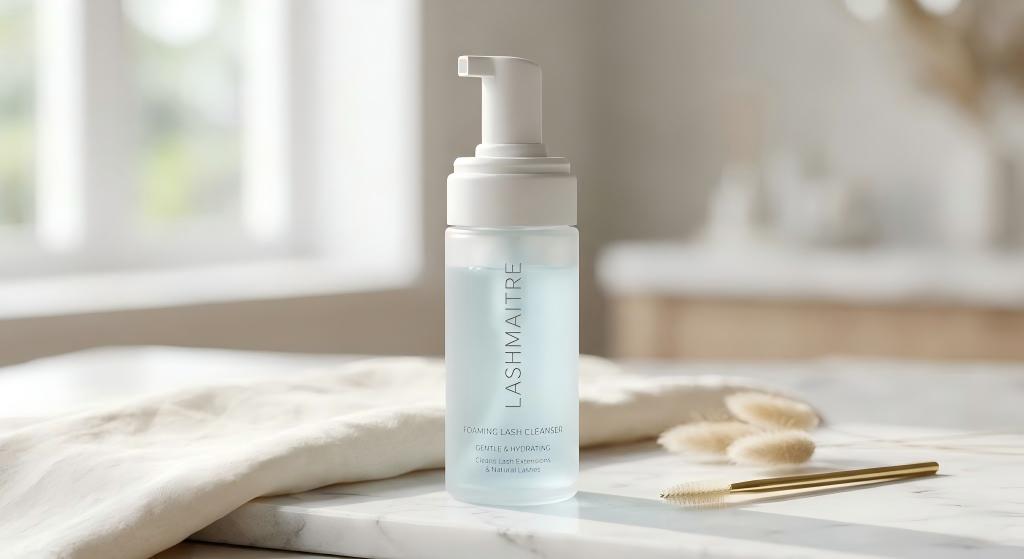
Whitepaper: Ocular Toxicology and Liability Management – Mitigating Blepharitis From Eyelash Extensions
Document Control & Status: 1. Introduction: The Corporate Liability of Ocular Complications In the rapidly expanding global aesthetic market, the profitability of a high-end salon franchise is deeply dependent on maximizing the Lifetime Value (LTV) of each client. However, this recurring revenue model is under constant threat from material-induced medical complications. Among the most prevalent…
-

7 Critical Supply Chain Secrets to Dominate the Blue Eyelash Extensions Market: A B2B Procurement Whitepaper
Document Control & Status: 1. Introduction: The High-Margin Potential of Blue Eyelash Extensions In the contemporary landscape of professional cosmetic services, the commoditization of standard black lashes has driven B2B procurement directors and salon franchise owners to desperately seek new avenues for premium upcharging. Offering specialized, avant-garde aesthetic services, such as seamlessly integrated blue eyelash…
-
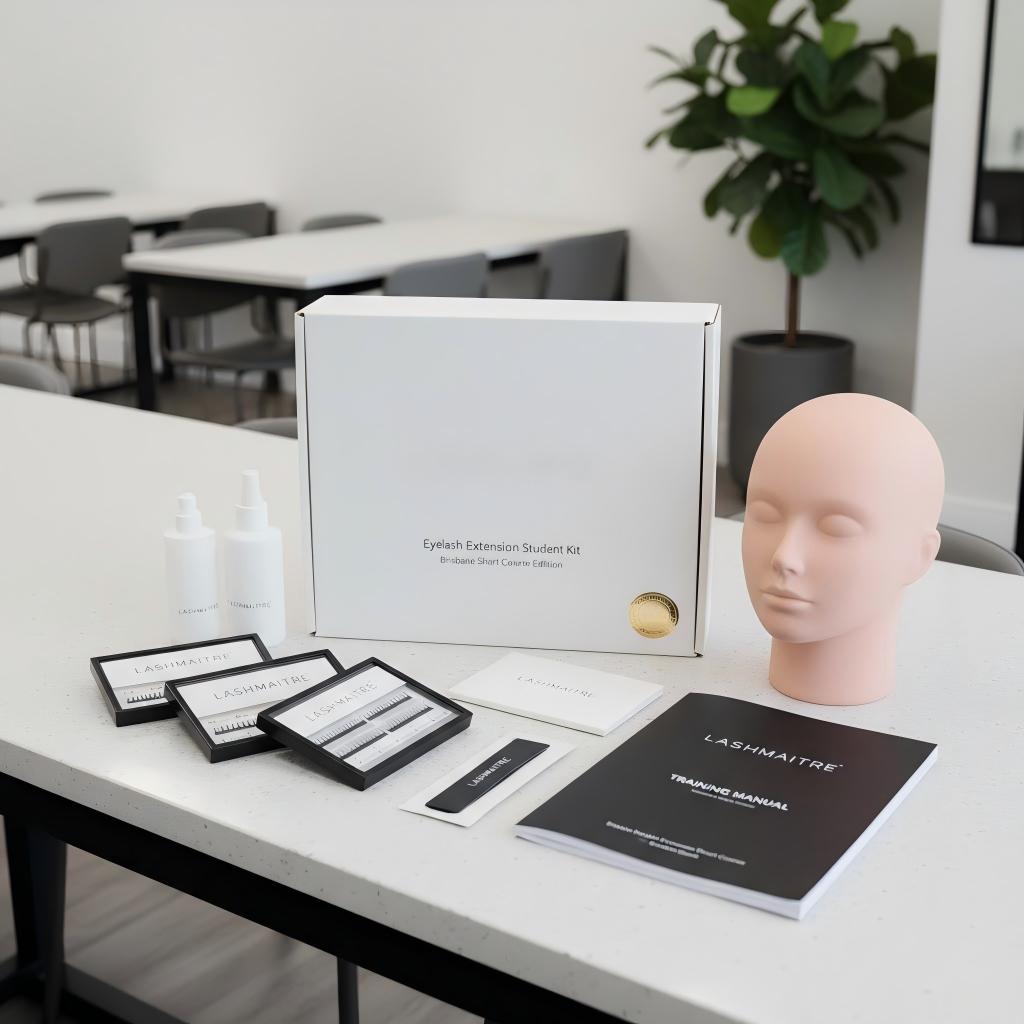
Academy Profitability: The B2B Supply Chain Guide for a Brisbane Eyelash Extension Short Course
Article Management: 1. The Procurement Reality of a Brisbane Eyelash Extension Short Course In the highly lucrative Australian cosmetic education market, launching a brisbane eyelash extension short course requires more than just an experienced instructor; it requires an absolutely flawless supply chain. Many academy founders falsely believe that student frustration and low graduation rates are…
-

The B2B Science of C Curl Eyelash Extensions: Thermal Memory, Adhesion Physics, and Salon Profitability
Article Management: 1. The Commoditization Trap of C Curl Eyelash Extensions In the professional eyelash industry, the c curl eyelash extensions represent the absolute foundational baseline of any salon’s inventory. Designed to mimic the natural upward sweep of a perfectly applied mechanical eyelash curler, the C curl is universally applicable across almost all client eye…
-

Maximize Salon Revenue: Can I Apply Mascara to Eyelash Extensions? A B2B Retail Guide
Article Management: 1. The Golden Retail Opportunity: Can I Apply Mascara to Eyelash Extensions? In the hyper-competitive beauty industry, the most successful salons do not just sell time and services; they sell comprehensive, high-end cosmetic solutions. Every master educator, salon owner, and working lash artist has encountered the exact same anxious question from a first-time…
-
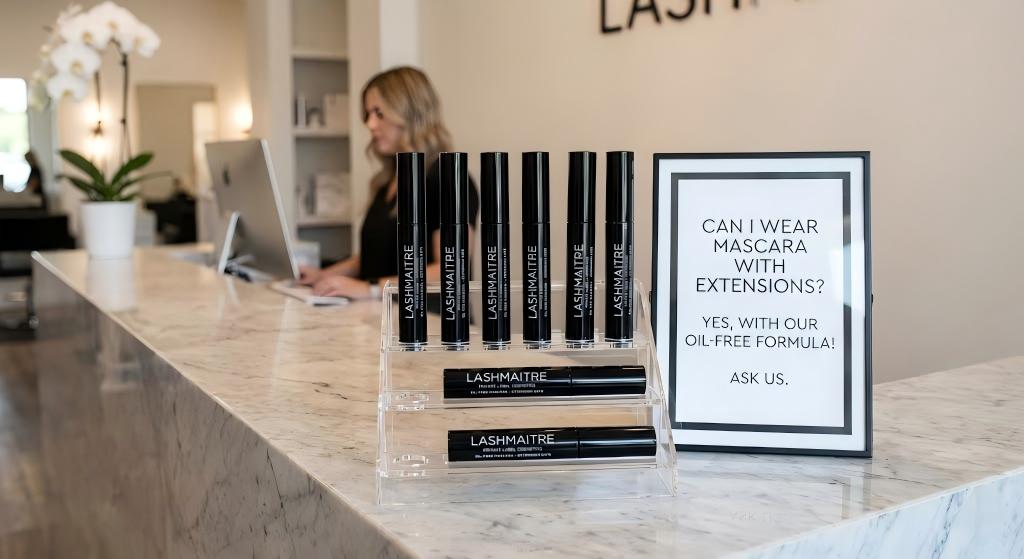
Maximize Salon Revenue: Can I Wear Mascara With Eyelash Extensions? A B2B Retail Guide
Article Management: 1. The Golden Retail Opportunity: Can I Wear Mascara With Eyelash Extensions? In the hyper-competitive beauty industry, the most successful salons do not just sell time and services; they sell comprehensive, high-end cosmetic solutions. Every master educator, salon owner, and working lash artist has encountered the exact same anxious question from a first-time…
-
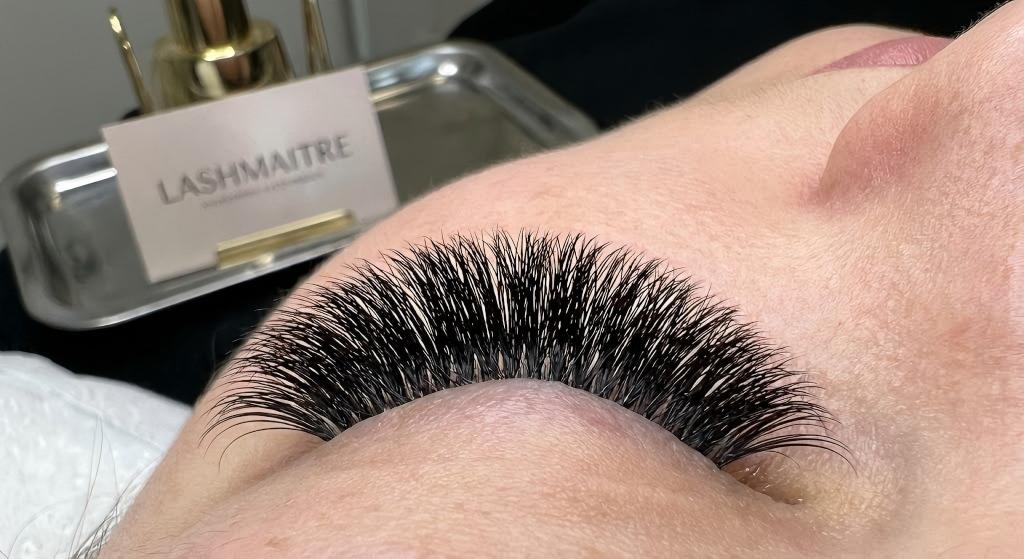
B2B Profit Truth for Salons: Can You Curl Eyelash Extensions?
Article Management: 1. The Ultimate Client Frustration: Can You Curl Eyelash Extensions? In the highly competitive beauty service sector, long-term client retention is the only metric that guarantees a salon’s survival. When a client returns for an infill appointment or calls the receptionist to nervously ask, can you curl eyelash extensions, it is a massive…
-

B2B Profit Strategy: Can You Wash Your Face With Eyelash Extensions?
Article Management: 1. The Ultimate Client Fear: Can You Wash Your Face With Eyelash Extensions? In the professional beauty service sector, educating your clientele is the absolute foundation of long-term client retention. Almost every new client sitting in a salon chair will nervously ask their artist: can you wash your face with eyelash extensions? For…
