Eye Infection from Eyelash Extensions: The Critical Prevention Guide 2026
Share
Author: LASHMAITRE Safety & Education Team
Topic: Medical Hygiene & Risk Management
Reading Time: 25 Minutes
Introduction
In the beauty industry, a stunning set of lashes is the goal, but safety is the baseline. An eye infection from eyelash extensions is the single most damaging event that can happen to a salon’s reputation. It goes beyond a bad review; it can lead to permanent vision damage for the client and devastating liability lawsuits for the business.
As we move into 2026, the standard for hygiene has evolved. Clients are hyper-aware of sanitation. For B2B wholesalers and salon owners, understanding the microbiology of the eye is no longer optional—it is a core competency.
This comprehensive white paper will dissect the causes of eye infection from eyelash extensions, ranging from bacterial buildup to parasitic mites. We will provide a definitive guide on preventing eye infections from lashes, detail the symptoms of infected eyelash extensions, and explain why stocking premium hygiene supplies from LASHMAITRE is your best insurance policy.
The Diagnostic Matrix: Infection vs. Allergy vs. Irritation
To treat the issue, you must identify it. A red eye is not always an infection. Misdiagnosing an eye infection from eyelash extensions as a simple allergy can delay necessary antibiotic treatment.
The “Pus” Factor
The key differentiator is discharge.
- Allergy: Watery, clear tears.
- Infection: Thick, yellow, green, or white mucus (pus).
The Ocular Triage Matrix
Use this table to train your staff on when to refer to a doctor.
| Feature | Eye Infection (Bacterial/Viral) | Allergic Reaction (Immune) | Irritation (Chemical) |
| Discharge | Thick, Yellow/Green Pus | Clear, Watery Tears | Watery Tears |
| Pain Level | High (Throbbing/Gritty) | Low (Itchy) | Medium (Stinging) |
| Eyelid Condition | Crusted shut upon waking | Puffy / Swollen | Normal or slightly red |
| Vision | Often Blurry | Normal | Normal |
| Contagious? | Yes (Highly) | No | No |
| Action | Refer to Doctor Immediately | Antihistamines | Saline Flush |
Medical Authority: The American Academy of Ophthalmology (AAO) states that bacterial conjunctivitis often presents with a “sticky” discharge that glues the eyelids shut during sleep, a critical sign for lash artists to recognize.
The “Dirty Lash” Syndrome: Understanding Blepharitis
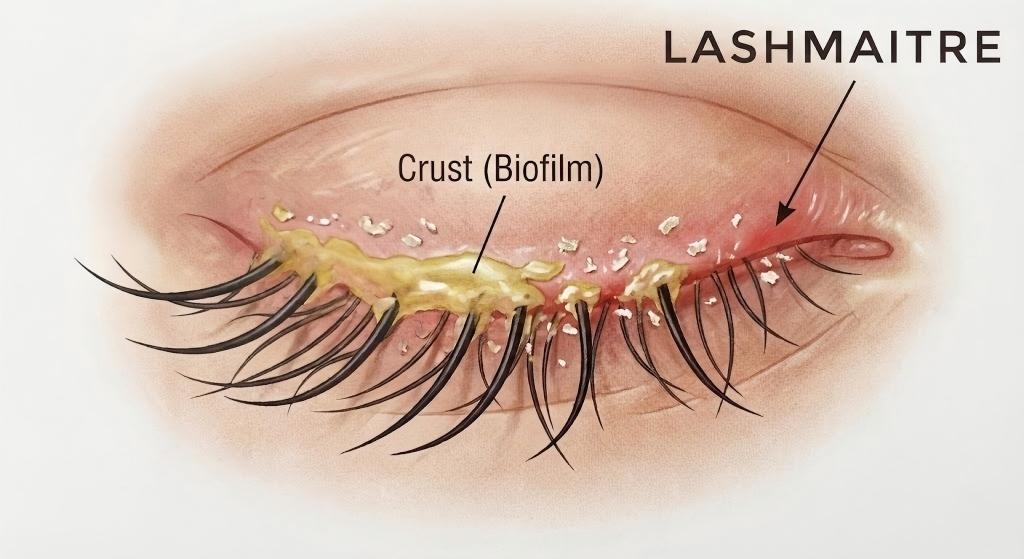
The most common precursor to an eye infection from eyelash extensions is a condition called Blepharitis.
The Biofilm Hazard
Natural lashes accumulate dead skin cells, oil (sebum), and makeup.
- Without Extensions: We rub our eyes and wash our faces vigorously, removing this debris.
- With Extensions: Clients are often afraid to touch their lashes. They stop washing them.
- The Result: A layer of bacteria and debris forms along the lash line, known as Biofilm. This biofilm eats into the skin, causing inflammation (
blepharitis treatment for lash extensionsoften starts with simply cleaning this off).
The Mite Factor: Demodex and Lash Lice
It is a nightmare scenario, but it is real. Lash lice and mites (Demodex) thrive in the environment created by poor extension hygiene.
The Parasitic Feast
Demodex mites are microscopic parasites that live in hair follicles. They eat dead skin and oil.
- Overpopulation: When clients do not wash their extensions, the oil buildup provides an “all-you-can-eat buffet” for mites.
- Symptoms: Intense itching at the base of the lashes, especially at night. Cylindrical dandruff (collarettes) around the lash root.
Data Insight: Infection Rates
A study published in PubMed (NCBI) found that Demodex infestation was significantly higher in patients with eyelash extensions compared to those without, primarily due to insufficient hygiene practices.
5 Common Types of Infections in Salons
Not all infections are “Pink Eye.” You must recognize the specific types of eye infection from eyelash extensions.
The Infection Identification Guide
- Bacterial Conjunctivitis (Pink Eye): The white of the eye turns bright red. Heavy yellow discharge. Highly contagious. Action: Stop service, sanitize everything.
- Stye (Hordeolum): A painful, red lump on the eyelid edge. Caused by a bacterial infection of an oil gland. Action: Do not lash over a stye.
- Keratitis: Infection of the cornea (the clear front part). Often caused by bacteria or fungi (
bacterial vs fungal eye infection). Can cause blindness. - Blepharitis: Chronic inflammation of the eyelid margin. Red, swollen, crusty eyelids.
- Corneal Ulcer: An open sore on the cornea, often from a mechanical scratch that got infected.
CDC Warning: The Centers for Disease Control and Prevention (CDC) warns that sleeping in contact lenses or having poor hygiene with eye accessories (like lashes) drastically increases the risk of Keratitis.
The Hygiene Protocol: Preventing Eye Infections from Lashes
Prevention is the only cure that matters for a business. Preventing eye infections from lashes starts with your salon’s hygiene SOP (Standard Operating Procedure).
Sterilization vs. Sanitization
- Sanitization: Cleaning visible dirt (Soap and water).
- Sterilization: Killing all bacteria and spores (Autoclave or High-Level Disinfectant).
The Salon Hygiene Checklist (B2B Guide)
Ensure your salon meets these standards to prevent liability.
| Item | Protocol | Frequency | LASHMAITRE Solution |
| Tweezers | Sterilize (Barbicide/Autoclave) | After EVERY client | Surgical Steel Tweezers |
| Mascara Wands | Dispose | Single Use Only | Disposable Eco-Wands |
| Eye Pads | Dispose | Single Use Only | Hydrogel Pads |
| Lash Tile | Sanitize | After every client | Acrylic/Glass Tiles |
| Bedding | Change | Dental bib/Sheet per client | Disposable Bed Covers |
| Hands | Wash + Sanitize | Before/After touching eyes | – |
Shop our Disposable Hygiene & Safety Supplies.
The Client’s Role: Selling Lash Shampoo as “Insurance”
You can sterilize everything, but if the client goes home and doesn’t wash their lashes for 3 weeks, they will get an eye infection from eyelash extensions.
The Retail Conversation
Do not sell Lash Shampoo as an “add-on.” Sell it as medical insurance.
- Script: “To prevent infection and mites, you must remove the daily buildup of oil and bacteria. Water is not enough; you need a surfactant to break down the biofilm.”
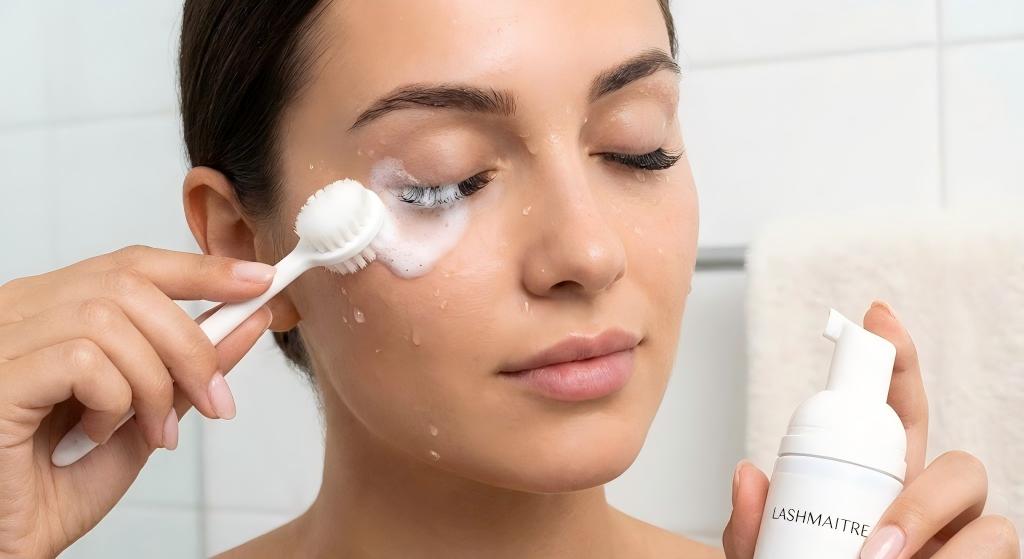
The Home Cleaning Routine
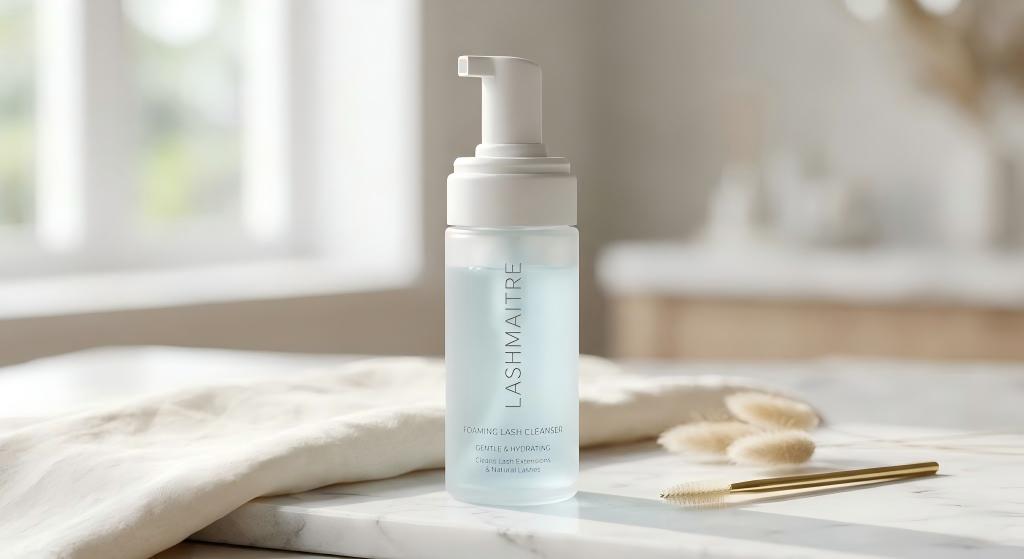
- Dispense: Use one pump of LASHMAITRE Foaming Cleanser.
- Agitate: Use a soft cleansing brush to work the foam into the lash line (downward motion).
- Rinse: Thoroughly rinse with cool water.
- Dry: Pat dry with a lint-free towel and brush with a spoolie.
Treatment Protocol: What to Do If a Client is Infected
If a client sends you a photo of a swollen, oozing eye, you must act responsibly. How to treat infected eyelash extensions is a medical question, but here is your operational role.
The “Do Not Touch” Rule
- Refuse Removal:DO NOT attempt to remove lashes if the eye is oozing, crusted, or extremely swollen.
- Why? Removal requires chemicals and touching the area. If you touch an infected eye, you may spread the infection or worsen it.
- Refer: Send them to a doctor immediately. They likely need antibiotic drops.
- Removal Later: Once the infection has cleared (usually after 5-7 days of antibiotics) and the swelling is gone, you can safely remove the extensions.
- Sanitize: If an infected client was in your salon, you must deep clean that station to prevent spreading it to the next client.
Mayo Clinic Advice: According to the Mayo Clinic, viral conjunctivitis is highly contagious for up to two weeks. Salons should have a strict “No Service” policy for clients with active symptoms.
Sourcing Safe Supplies: Antimicrobial Tools
For B2B buyers, the material of your tools matters. Cheap plastic can harbor bacteria in microscopic scratches.
Material Safety Comparison
| Material | Bacterial Resistance | Durability | Sterilization | LASHMAITRE Standard |
| Stainless Steel (304) | High (Non-porous) | High | Autoclave Safe | Standard for Tweezers |
| PBT Fiber (Lashes) | High (Synthetic) | High | Anti-bacterial coating | Used in All Lashes |
| Real Animal Fur (Mink) | Low (Porous) | Low | Impossible to sterilize | Banned / Not Sold |
| Plastic (Cheap Tools) | Low (Scratches easily) | Low | Melts in heat | Avoid |
Conclusion: Hygiene is the New Luxury
In 2026, the beauty industry is held to medical-grade standards. An eye infection from eyelash extensions is almost always preventable with the right combination of salon sterilization and client aftercare.
By understanding the difference between allergies and infections, identifying the risks of Blepharitis and Demodex, and stocking LASHMAITRE’s antimicrobial tools and cleansers, you build a fortress around your business.
Don’t let dirty lashes destroy your brand. Educate your clients, sanitize your tools, and lash with confidence.
Ready to upgrade your hygiene standards?
Shop the tools that keep your salon safe.
Register for a Wholesale Account & Shop Sterilization Supplies
People Also Ask (FAQ)
Q: Can eyelash extensions cause eye infections?
A: Eyelash extensions themselves do not cause infections, but improper hygiene does. The extensions can trap dirt, oil, and bacteria if not washed daily. This buildup (Biofilm) leads to conditions like Blepharitis and eye infection from eyelash extensions. Additionally, if a salon uses unsterilized tools, they can transfer bacteria between clients.
Q: What does an eye infection from lash extensions look like?
A: Symptoms of infected eyelash extensions include thick yellow or green discharge (pus), eyelids glued shut upon waking, extreme redness, pain, and swelling. This is different from an allergy, which is typically itchy and puffy but has clear, watery discharge.
Q: How do you treat an infected eyelash extension?
A: If you suspect an infection, do not try to remove the lashes yourself or go to the salon immediately. Go to a doctor or ophthalmologist first. You will likely need antibiotic eye drops. Only once the active infection and swelling have subsided should you return to the salon for professional removal.
References & Further Reading
- American Academy of Ophthalmology (AAO). Conjunctivitis: What Is Pink Eye?.
- Centers for Disease Control and Prevention (CDC). Bacterial Keratitis.
- PubMed (National Center for Biotechnology Information). Demodex blepharitis: clinical appearance and management.
- Mayo Clinic. Pink eye (conjunctivitis) – Symptoms and causes.
📅 Content Administration
- Last Updated: January 16, 2026
- Changelog:
- v1.0: Initial publication. Content focuses on Bacterial Biofilms, Demodex Mites, and CDC/AAO compliance.
- v1.1: Added “Ocular Triage Matrix” (Table 1) and “Hygiene Checklist” (Table 2).
- Next Review Date: July 16, 2026

Lash Maitre: Your Trusted Partner in Eyelash extension Solutions
Lash Maitre is dedicated to providing professional insights and tips in the eyelash extension industry. Sharing the latest trends, techniques, and product knowledge, Lash Maitre helps lash artists and enthusiasts enhance their skills, stay inspired, and achieve the perfect lash experience.
Latest Post
Contact Us
related Post
-

Whitepaper: Macromolecular Chemistry and Logistics – What Type of Glue is Used for Eyelash Extensions?
Document Control & Status: 1. The B2B Procurement Fallacy in Adhesive Sourcing In the highly specialized ecosystem of professional aesthetics, the foundational pillar of any salon franchise’s operational success is the structural integrity of its adhesive supply chain. Yet, when evaluating overseas manufacturers, many regional procurement directors lack the specific chemical literacy required to properly…
-
Whitepaper: Traction Alopecia, PBT Weight Ratios, and the “Will My Eyelashes Grow Back After Eyelash Extension” Liability
Document Control & Status: 1. Introduction: The Corporate Liability of Follicular Trauma In the highly competitive, premium sector of the global aesthetic market, the most profound threat to a salon franchise’s recurring revenue model is not competitor pricing; it is the physical degradation of the client’s natural biology. Every academy educator, franchise CEO, and regional…
-
Whitepaper: Ocular Toxicology and Liability Management – Mitigating Blepharitis From Eyelash Extensions
Document Control & Status: 1. Introduction: The Corporate Liability of Ocular Complications In the rapidly expanding global aesthetic market, the profitability of a high-end salon franchise is deeply dependent on maximizing the Lifetime Value (LTV) of each client. However, this recurring revenue model is under constant threat from material-induced medical complications. Among the most prevalent…
-
7 Critical Supply Chain Secrets to Dominate the Blue Eyelash Extensions Market: A B2B Procurement Whitepaper
Document Control & Status: 1. Introduction: The High-Margin Potential of Blue Eyelash Extensions In the contemporary landscape of professional cosmetic services, the commoditization of standard black lashes has driven B2B procurement directors and salon franchise owners to desperately seek new avenues for premium upcharging. Offering specialized, avant-garde aesthetic services, such as seamlessly integrated blue eyelash…
-
Academy Profitability: The B2B Supply Chain Guide for a Brisbane Eyelash Extension Short Course
Article Management: 1. The Procurement Reality of a Brisbane Eyelash Extension Short Course In the highly lucrative Australian cosmetic education market, launching a brisbane eyelash extension short course requires more than just an experienced instructor; it requires an absolutely flawless supply chain. Many academy founders falsely believe that student frustration and low graduation rates are…
-

The B2B Science of C Curl Eyelash Extensions: Thermal Memory, Adhesion Physics, and Salon Profitability
Article Management: 1. The Commoditization Trap of C Curl Eyelash Extensions In the professional eyelash industry, the c curl eyelash extensions represent the absolute foundational baseline of any salon’s inventory. Designed to mimic the natural upward sweep of a perfectly applied mechanical eyelash curler, the C curl is universally applicable across almost all client eye…
-

Maximize Salon Revenue: Can I Apply Mascara to Eyelash Extensions? A B2B Retail Guide
Article Management: 1. The Golden Retail Opportunity: Can I Apply Mascara to Eyelash Extensions? In the hyper-competitive beauty industry, the most successful salons do not just sell time and services; they sell comprehensive, high-end cosmetic solutions. Every master educator, salon owner, and working lash artist has encountered the exact same anxious question from a first-time…
-
Maximize Salon Revenue: Can I Wear Mascara With Eyelash Extensions? A B2B Retail Guide
Article Management: 1. The Golden Retail Opportunity: Can I Wear Mascara With Eyelash Extensions? In the hyper-competitive beauty industry, the most successful salons do not just sell time and services; they sell comprehensive, high-end cosmetic solutions. Every master educator, salon owner, and working lash artist has encountered the exact same anxious question from a first-time…
-
B2B Profit Truth for Salons: Can You Curl Eyelash Extensions?
Article Management: 1. The Ultimate Client Frustration: Can You Curl Eyelash Extensions? In the highly competitive beauty service sector, long-term client retention is the only metric that guarantees a salon’s survival. When a client returns for an infill appointment or calls the receptionist to nervously ask, can you curl eyelash extensions, it is a massive…
-

B2B Profit Strategy: Can You Wash Your Face With Eyelash Extensions?
Article Management: 1. The Ultimate Client Fear: Can You Wash Your Face With Eyelash Extensions? In the professional beauty service sector, educating your clientele is the absolute foundation of long-term client retention. Almost every new client sitting in a salon chair will nervously ask their artist: can you wash your face with eyelash extensions? For…
